The Concubine of Shanghai

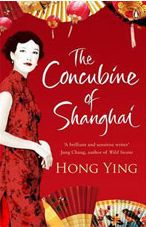
concubine1We  continue travelling through Old Shanghai based contemporary literature with one of the airport bookstores favorite, Hong Ying, The Concubine of Shanghai. To be honest, Hong Ying “K: The Art of Love” is probably more famous, but the title of this one was the attraction point. Although the book have been acclaimed and makes an excellent read, I have mixed feelings about it.

The original Chinese title was “上海王”, translating as “Shanghai Lord” that is probably more accurate, though surely less alluring from a marketing point of view. The main character is Cassia, a sixteen years old girl from Pudong sold to Madame Emerald, the owner of a Puxi high-class brothel located in the Chinese city, on the hedge of the French Concession. Too tall, with too big feet and curves for the fashion of the time, the girl is destined to remain a servant, when others become popular sing song girls. Her fate changes when she become the favorite girl of the leader of one of the main Shanghai secret societies. After his tragic death, Cassia falls back into poverty. She only comes back to Shanghai a few years later, leading a local opera band and rise to stardom in Shanghai. She is still involved with the underworld and manage through these connections to be one of its informal leaders.

The story of Cassia is the one of a lady struggling through life to rise to the top through her intelligence, hard work and persistence. Asia’s women are too often seen as submissive, but Cassia is a true Shanghai lady impersonating the legendary spirit and reputation of the city’s women. Although Cassia’s life in set in the 1930’s, her story and attitude reminds me of several women friend who have managed to reach  excellent business positions through hard work business sense. The book is not only about business and social achievement, but also about love and sexuality. Although modest by western standard, erotic scenes are numerous in the book and Cassia’s enjoyment of sex is very clear. In a country where sex was a taboo for many centuries, it must have been quite shocking for many readers. The book is really good literature, unfortunately research on real Shanghai history is seriously lacking.
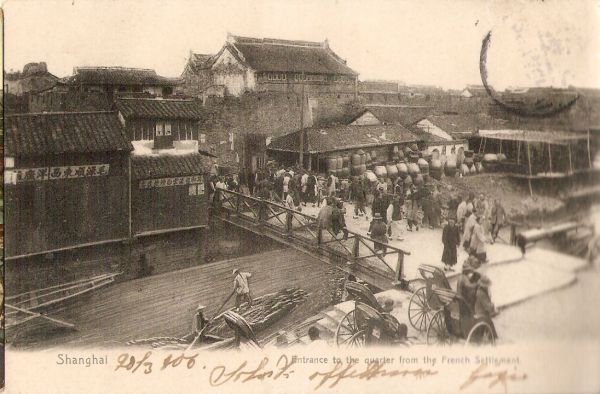
Border Chinese City with French Concession

First of all, the main location of book first part is a brothel located on the border line between the Chinese city and the French Concession. There is even a scene where characters entering from the Chinese city are able to escape through the back door to the French concession. Unfortunately, at that time the real Shanghai Chinese city was surrounded by the City Wall and moated (see picture left). This was all replaced later by a large Boulevard (today Ren Min lu and Zhong Hua lu). In a similar way, a large part takes place in a hotel located next to the Garden Bridge (or WaiBaiDu Chao) that could be the Astor House hotel. The name of the hotel is surely not the right one, and at the contrary to the book state this hotel was surely not owned or run by Chinese at that time.
Some of the events in the book are also clearly picked from real people life. For example, Cassia’s poverty is caused by a parent’s death and when she has become a star she cause back to her Pudong’s origin, creating a monument for her long deceased parents and giving out charity to build a children’s school. This is strongly inspired by part of Du Yue Sheng’s life, who actually became the real Lord of Shanghai’s underworld. In another chapter, 1926 is described as the 5th year of the Republic… when it was clearly the 15th (this may be a translation mistake).

Finally, there is very little about real Old Shanghai feeling in the book. Western Old Shanghai novels like “The Master of Rain” or “Last seen in Shanghai” tend to focus on historical details while missing filling and real people’s life. At the contrary “The Concubine of Shanghai” is high on feelings and emotion, but historical research  seems to have been done in 10 minutes, reading a two page leaflet for a local tour company. It is really a pity that attention to actual details (including in the translation) has been lacking so much, as it destroys most of its credit as a historical novel.
China Pearl

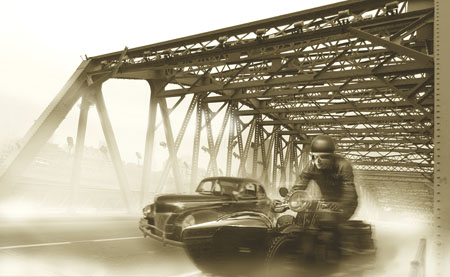
The sidecar picture
The sidecar picture

Finding about China Pearl was purely random but the story behind it is definitely worth a post. Looking for pictures about Old Shanghai on the internet, I found the picture left of Shanghai Wai Bai Du Qao (or Garden Bridge) with an old motorbike crossing it.  I have long been convinced that sidecars were used in Old Shanghai, long before the Chang Jiang motorbikes appeared thus discovering this picture seemed to be the missing link. Unfortunately, the picture turned out to be a fake after examination. Traffic in Old Shanghai was driving on the left side of the road and this sidecar is definitely designed for the right-side driving of today’s Shanghai. Still, the artwork was interesting enough for me to search more information about this picture. This is how I ran into Paul Draken story.

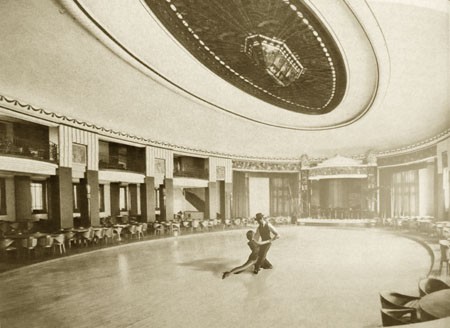
Paul Draken dancing in the Cercle Sportif Francais

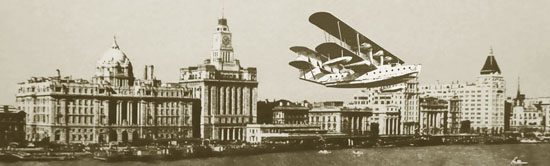
Paul Draken was a mixed child, half British and half Chinese born in Beijing in 1907. His father was Sir James Draken who led the British troop coming into Beijing to free the foreign diplomats after the 55 days of siege in the legations during the Boxer war. Growing up in early 20th century China, he managed to cross the path of Empress Dowager CiXi, then encountering revolutionary leader and first president of China Sun Zhong Shan. He even met with Russian Imperial family before the Russian Revolution. Paul Draken was living in Beijing, just at the time of the Mukden incident, while becoming an airplane pilot. Later on, he started an airline in Shanghai, flying one of the China clippers, those enormous hydroplanes of the time, called the China Pearl. His time in Shanghai was also marked by love affair with White Russian countess Anastasia as well as pursuit with Japanese spies. As he managed to flee the Japanese invasion just in time, he took part of the Flying Tigers fighting China enemy in the air. Escaping the Concession invasions in December 1941, he managed to rally North Africa to joined allied forces fighting general Rommel in the North African desert war. Paul Draken was also a hero of D-Day landing in Normandy. Paul Draken’s incredible story was behind most historical events in the first half of the 20th century.

Flying over the Bund

As you probably already realized, Paul Draken never actually existed. He is the central character of e-novel China Pearl by Taiwanese author Crayon Yao. China Pearl is available at: http://www.yaox.com/draken/cover.html. Unfortunately it is only available in Chinese, so most reader will have difficulties with it. The author used lots of research, good narrative and a number of photoshoped pictures like the ones above. The pictures really make the story believable and can be viewed at: http://www.yaox.com/draken/photos1.html. China Pearl is  like an Asian Indiana Jones novel with a touch of Forest Gump, taking place mostly in China. It must have attracted quite a hype as numerous blog articles have been written about it, like yblog.org/archive/index.php/5742 . I was surely not the only one to be confused by the e-novel and the pictures, as many readers in Taiwan got fiction and reality mixed up as shown in this article: http://www.chinapost.com.tw/taiwan/national/national-news/2011/02/28/292761/Fictional-novel.htm. Clearly an inspiration for my own Old China novel that has been brewing for years.

Shanghai Aerotropolis

Book Cover
Book Cover

It has been a few weeks since I wrote the last Shanghailander.net post, a delay very much caused by the number of Air Miles I flew in the last weeks. Taking me away from my favorite city and its history, I found myself confronted with its future. This post about New Shanghai if not future Shanghai.

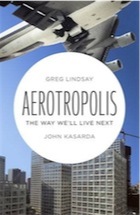
“Aerotropolis, the way we’ll live next” is a book I picked in Bangkok airport a few weeks ago and reading it has been fascinating since. My interest in it surely resonates with my background in transport studies (many years ago now) as well as my recent peak in airmiles flown. The basic theory of John D. Kasarda (the wisdom behind the book) is that cities are drawn around airports because of the need of speed and connectivity. Greg Lindsay (who actually wrote the book) uses many examples of such cities that have been built (mostly in the USA) or are being built (mostly in Asia) around airports.

The aerotropolis seems to be the answer to every problem from global climate change (even demonstrating that flying food around the World is more eco-friendly than growing it locally), to over population (as everybody will be so happy to live in these new mecca of speed and efficiency). Similarly, air transport will fuel the economy of the instant age, as internet purchase rapidly inflate the need for small parcels delivered worldwide as fast as possible. In a same way, facebook and social network will push people to connect face-to-face, using airplanes to bring the gap between continents. The pair finds direct application of their theory in Asia, for example in Singapore that is labelled as the typical aerotropolis. They also find in Bangkok success for passenger traffic, i.e. tourists. At the same time, its failure to create the surrounding aerotropolis environment is also an example of how not to create an aerotropolis from Kasarda’s point of view.

The Road to Shanghai Aerotropolis

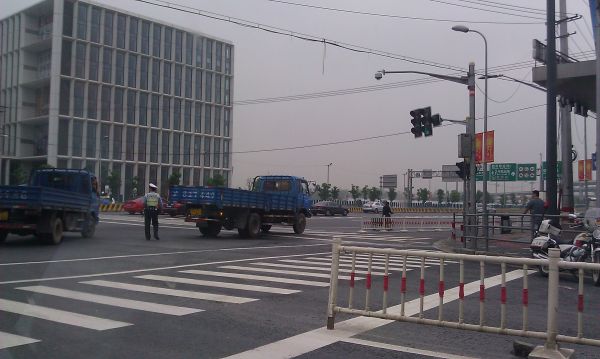
The nearest example to us is surely the new Hong Qiao area. Creating the Hong Qiao 2 terminal, combined with highspeed railway links and the land clearing miles around was definitely inspired by Kasarda’s theories. Just seeing the change in what used to be Puxi’s back waters transformed into the new hot development area is fascinating. Logistics companies, manufacturing and office complexes are all moving Westwards, attracted by this new magnet of competitiveness. Hotels, serviced apartments and residential areas are sure to follow, as all these people will need accommodation short or long term. In that sense, the aerotropolis is just working the way Kasarda predicted it. People are attracted by the airport and its economic opportunities… but whether it is really where people want to live is a different story. This probably the limit to the theory (see The Guardian review of the same book) as living in the aerotropolis seems more like living in Fritz Lang’s Metropolis than in new found paradise.

This is all good for Old Shanghai anyway. As the pressure to create new offices and residential real estate moves form the city center to the peripheral areas, it is likely that the destruction of our beloved city will slow down. Once money made, the winners of this new game will surely move to nicer areas like the Bund or the old French Concession. By contributing to their gentrification, they will hopefully want to protect their new found little paradise and help keeping part of Old Shanghai intact.