Boonna Cafe, Huai Hai Lu – 5 years of blogging

The first post in Shanghailander about Boonna Cafe was written about 5 years ago, being on the very first posts on the this blog.  The current one is like marking the 5th anniversary of Shanghailander, written in  the lastet Boonna incarnation. The original post was about this particular cafe, but also about the lack of similar places at that time. Boonna Cafe, along with Vienna Cafe and a very few others were a refuge from both the constant activity of the city and the ever growing empire of global brands such as Starbucks. The original Boonna Cafe on Xin Le lu has long beeing chased out by rent increase and the abundance of clothes shops on the former Rue Paul Henry. Fortunately, it has recreated itself a few time, the last incarnation being the South part of the former Avenue Joffre (today’s HuaiHai Lu). The current Boonna Cafe still has the same characteristics as its ancestor, being located in an old Shanghai house, red inside walls, hanging photographs and plain simple design although it is about twice as large.  The main change from my 5 years old post is probably the crowd.

2006 central Shanghai was still burgeoning, 2011 Shanghai is running full speed. Old Boonna’s consumers were often foreigners, trying to find a bit of home and comfort. Today’s Boonna’s consumers are mostly the young educated 20 something Shanghainese crowd. The cafe culture of Shanghai has come back with a vengeance and pioneers like Boona are not the only kid in town anymore. Besides the ubiquitous Starbucks coffee giants Costa has joined the game, followed by numerous other locals. Xin Tian Di is not the only mixed food, bar and retail area, as Tian Zi Fang as developed along with a few others. Opening of retail to foreigners and waves of oversease chinese and students coming back have created a new face for Shanghai shops and bars / restaurants. The local joint good for breakfast, lunch and any coffee and web browsing stop in the middle is not a rarity anymore, but rapidly becoming the norm in central Shanghai. The 2010 expo has not only left its traces to the city landscape, but also to the city’s culture bringing the world to the city as well as more foreign exposure. Another profound change is that buying power has increased enormously and the younger generation often has disposable income to spend, often in shopping and food.

Shanghai has not only moved on in terms of modernity, it has also got much more in touch with its past. Shanghai history was mostly the interest of scholars and a few crazy foreigners when this blog started. Multiple movies were since made taking place in old Shanghai (such as Tai Tang Kou, Shanghai) as well as TV series (such as Shanghai Shanghai). Novels from the period have been republished and are now really popular (see “Love in a fallen city” post). At the same time, numerous books about Shanghai history have been published both by foreigners who actually lived in the city (like Liliane Willens’ stateless in Shanghai) and local people showing an interest. Although I don’t really read it, I know numerous novels in Chinese have been published. The cherry on the cake being that copies of 1930’s sidecar have become cool thanks to a series of advertising for a chewing gum brand (view it on youtube). All of is has recreated a glamorous image of Old Shanghai, hopefully helping to preserve its remains (See post “Somebody finally got it”).

Shanghai in the last 5 years has deeply changed. It has become modern, more cool, more international and closer to its past. Although transforming, it is also becoming more like what the old Shanghai used to be, a city at the confluence of the East and the West,  the Chinese door for the West, one of the center of the XXIst century. Shanghai is definitely becoming one of the world cities.
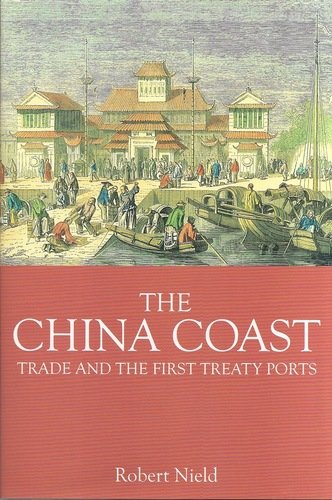
Robert Nield, The China Coast

Book Cover
Book Cover

With the summer coming and a little less traveling, I finally have to actually read the books I picked up during the Shanghai Literary Festival in last March. One of the most interesting event was the literary lunch with Robert Nield. As with all Old Shanghai related event, it attracted the usual crowd of Shanghai history enthusiasts and authors. I always enjoy is these events as they take me away from business questions and activities to get on a time travel for a few hours. The presentation was excellent as well as lunch and I was looking forward to read the actual book.

Robert Nield’s approach is quite similar to mine. He is not a cleric or a professional historian but a retired businessman who got interested in the topic of Asia colonial history. Readers are assumed to know little about the topic and that makes the book a very easy read. At the same time, the author has done in-depth research that make it really credible from an historical point of view. The aim of the author is to visit every single treaty ports in China, but the current book focuses on history of the trade on the China Coast before creation of the treaty ports, as well as Hong Kong and the 5 original ports (Canton, Xiamen, Fuzhou, Ningbo and Shanghai).

The first part of the book is focused on the pre-treaty port period, which has been much less studied than later treaty ports time, making the book even more interesting. Since Robert Nield is a business man, his point of view is oriented toward an economic view of history that is truly relevant to this case. The same period was studied from a different angle in Foreign Mud by Maurice Collis. However, The China Coast starts from a much earlier period describing the unsuccessful attempts from Portuguese, Spaniards, Dutch and British to be recognised as trading partner by China. Products such as tea, silk and porcelain (also called China!) were in the highest demand in Europe. Trade had been going on between Europe and China for centuries and traders were in the center of the political process that led to the Opium Wars and the opening of Treaty ports.  Through is position in Hong Kong, Robert Nield also had access to archives of the early trading companies and banks that were also part of the colonial process, including HSBC, Jardine & Matheson and Butterfield & Swire giving us information and illustration that was previously very difficult to find.

The second part of the book is focused on the history of the treaty port, that received each a chapter of equal length. This leaves very little space for well documented places such as Shanghai and Hong Kong, but the challenge was to find enough information about the other ports, in particular Foochow (today Fuzhou) and Ningbo. A lot of time and effort has been spent to find information about these smaller ports that never really reached a large size. Fuzhou was a place for shipping tea, but did not really succeed in it for a long time. Ningbo specialized in religious evangelists as trade was also not the best due to the competition of Shanghai and better places like Hangzhou. One of the most interesting part of the book is surely about Xiamen and Kulangsoo (Gu Lan Yu island today). Surprisingly, Kulangsoo international settlement and Xiamen British Concession were too separate entities. Trade in Xiamen was never really great due to the impoverished population of the hinterland but the scenery and location are some of the best in China and foreigners there enjoyed a great life. Ultimately, the port specialised in shipping people as Chinese coolies became in high demand after the ban of slavery in Africa, paving the way for the Chinese diaspora in Malaysia, Australia and many other locations.

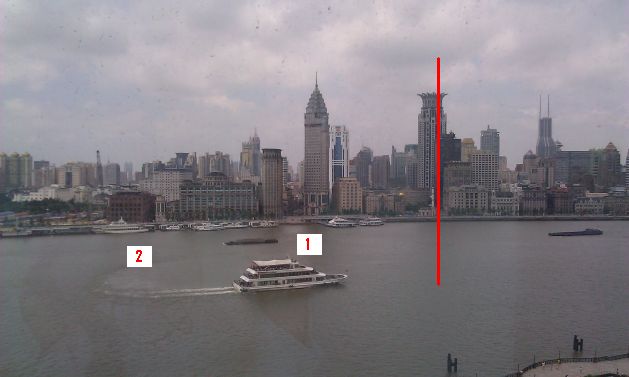
Best view of the French Bund

I rarely write about Pudong in this blog, as I focus on a time when Pudong was mostly warehouses and rice fields. Working in financial consulting, I often go to Lu Jia Zui financial district. During a recent meeting, I took the below picture through the office window, probably one of the best view of the French Bund.

Quai de France, Changhai

Concessions were first opened for trade, and access to the River was of prime importance. British arriving first in 1842, they took the best spot, the mouth of the Huangpu River and the Suzhou Creek. Americans arriving second in 1844, took what is now called the North Bund, on the other side of the Suzhou Creek. The British and American concessions were later merged to become the International Settlement. French arriving last in 1848, they could only take a small part between the British Settlement and the Chinese city (see map below). As written in a past post, the border between both concession was the Yang Jing Bang river, that was later transformed into today’s Yannan lu. Yannan lu reaches the Bund at the above red line, with the Guslav tower on the Bund being inside the French Concession. Buildings on the French Bund have been less preserved than on the British Bund, but there are still interesting pieces.

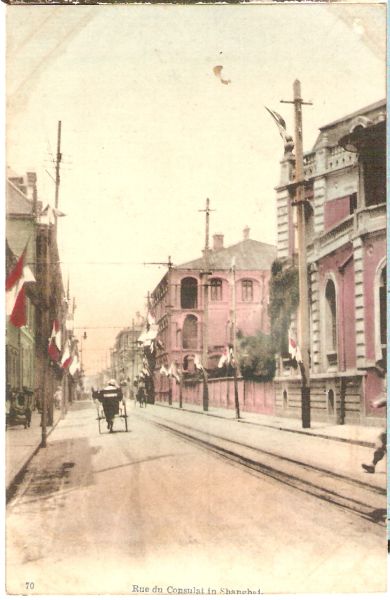
Rue du Consulat, Changhai

#1 is the entrance to the “Rue du Consulat”, today JingLing lu. The street was the main spot of the early French Concession, much earlier than later Avenue Joffre (today Huai Hai lu). Just like the British Consulate, the French Consulate was located on the Bund, at the corner of the Rue du Consulat and the French Bund. Picture left is a late 19th century view of Rue du Consulat, with a French Consulate building on the right side. The building was destroyed in the 1980’s to create a ugly building that has since been replaced by an art deco tower.

On the right side, is located the former headquarters of the “Messageries Maritimes“. The streamline building by Swiss firm Minutti was built in the mid thirties, showing to the World the importance of the French Lines. On the left side, there is now a fake beaux-arts style tower occupied by the Shanghai branch of Taipei’s boutique hotel Les Suites. The building behind is an old office building that was occupied during the 1930’s by the “Journal de Shanghai”, the French paper published in the city. Further on the street is located Saint-Josef Church, the original French cathedral (built years before Xu Jia Hui St Ignacius Cathedral), as well as the Hotel des Colonies. Further down is the new office building occupied by ICBC. From below picture, it must have taken the space of another large building.

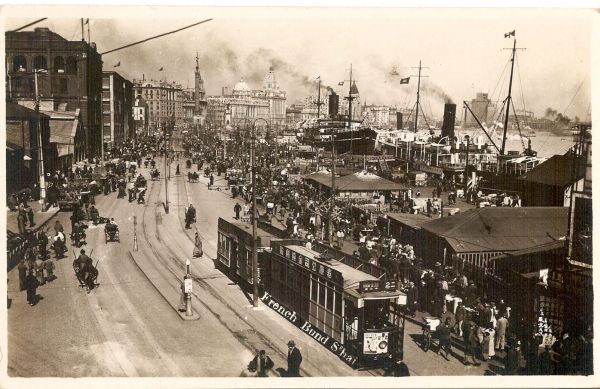
Tramways on the French Bund

#2 is the former building of the trading house “Butterfield & Swire”, or Taikoo in Chinese on Route Colbert. One of the oldest trading house in Shanghai, Butterfield & Swire was one of the main ones in Shanghai. Although they were a British firm, there office was established in the French Concession, as well as the Swire House, home of Lord Swire (today’s Xin Guo Hotel). Taikoo firm (the name in Chinese), is now famous for the sugar that it imports and distributes in China and its ownership of airline Cathay Pacific. The Butterfield and Swire Building is visible on the very left side of above picture, it has been renovated and his now known as Bund 22.