Shantou / 汕头 in Guangdong province is famous for its food and seaside. It is also the location of Swatow former concession. This was the opportunity for a short trip.
Although located half way between 1842 original concessions of Hong Kong et and Xiamen, Swatow was only opened as a treaty port in 1860 with the treaty of Tianjin. British and American consulate opened on Mayu island of the cost in 1860. The British Consulate later moved to Queshi, on the other side of the river to Swatow city. The American Consulate moved to Kia Lat area, on Tai-Malo street (today 外马路) area. Other consulates opened in the same area including Japanese, German, Norwegian and French, along with a Astor House hotel. At the time, the road was close to the river, but land has been reclaimed here since and the area has changed a lot.
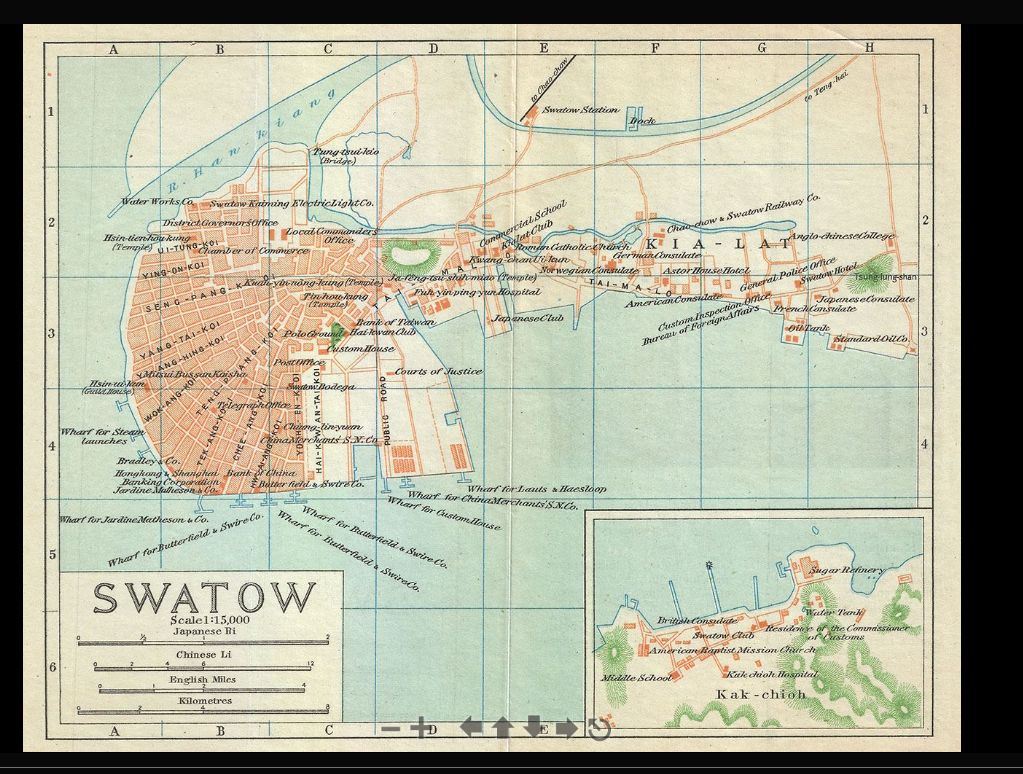
Large trading houses were located further West, around the most densely populated area. They included usuals Butterfield & Swire, and Jardine & Matheson as well as China Merchants. Banks such as HSBC and Bank of China were also located close to the keyside.
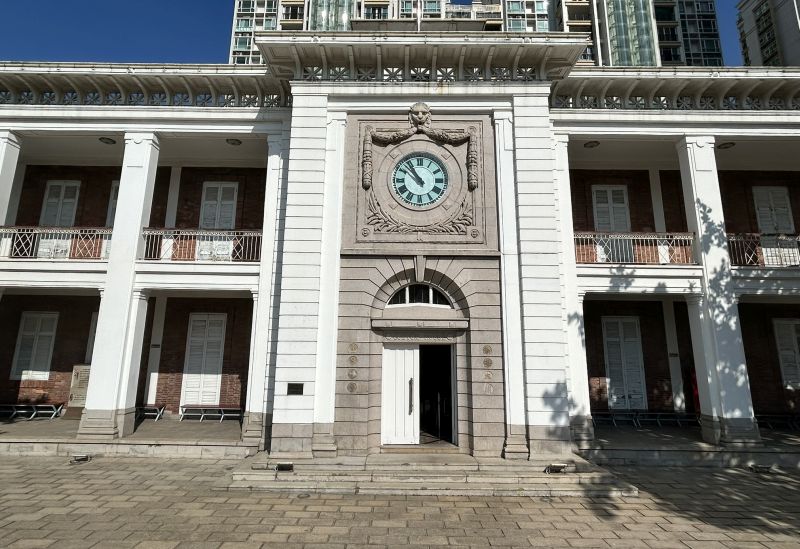
Although most of the sea side buildings have disappeared, the road going from the riverside inland has some interesting spots, starting with the Customs house on the riverside, that is now a museum. Hidden in the same area are the former customs quarter, but they are off limit for visitors. Further up is the Post Office that is still in use as its original function.
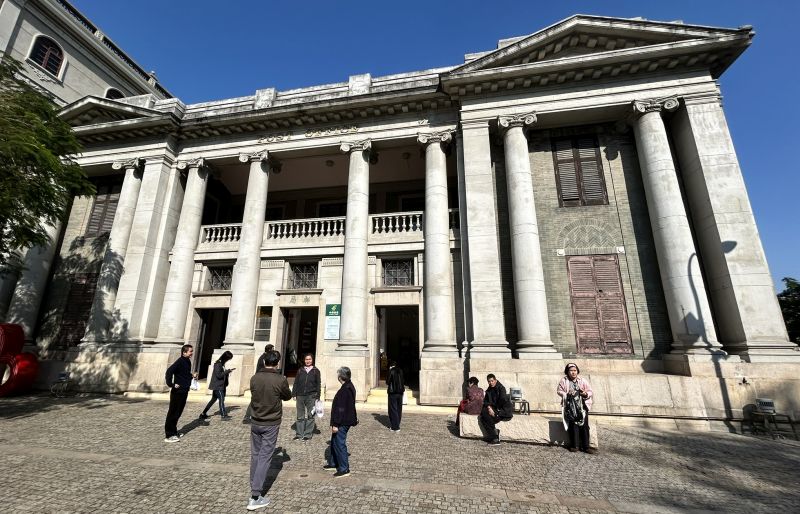
Going further up, one encounters the beautiful Art Deco Bank of Guangdong building built in 1935 by Guangzhou architect Yang Xizong 杨锡宗.
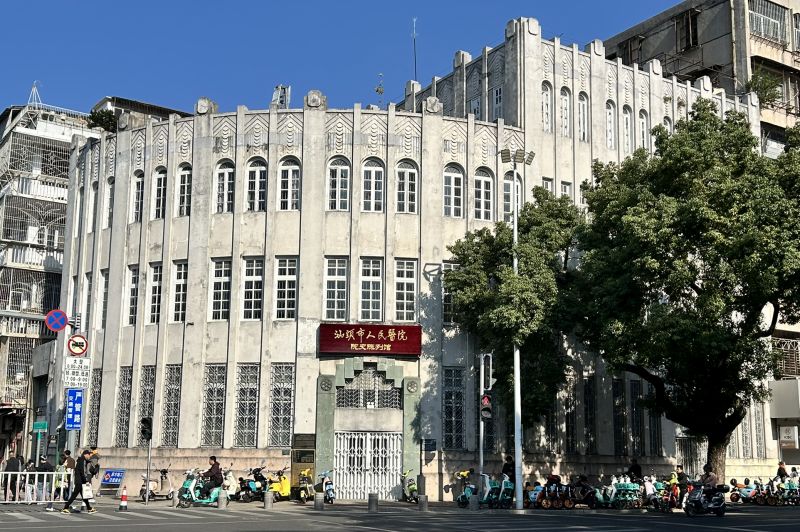
Further up is the beautiful guan yin miao 观音庙 temple and the old fire station with the hospital opposite to it (this is still the site of today’s Shantou hospital).
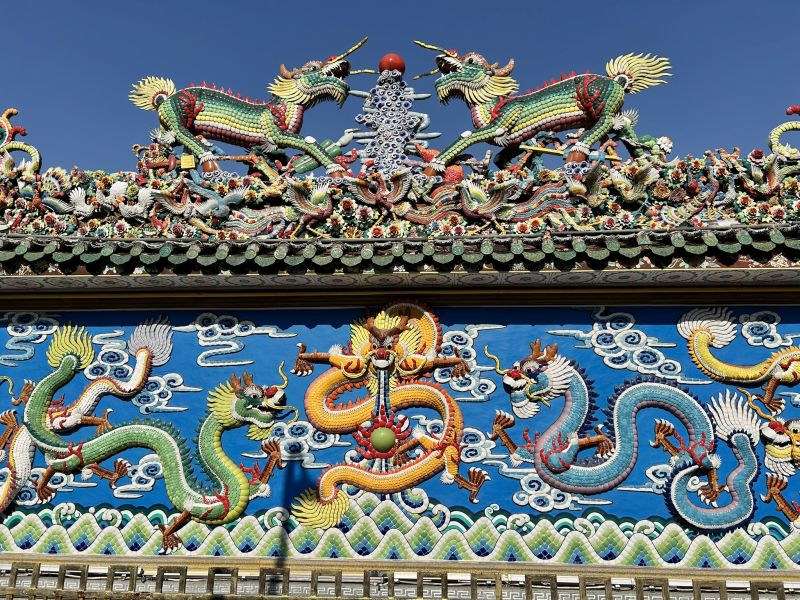
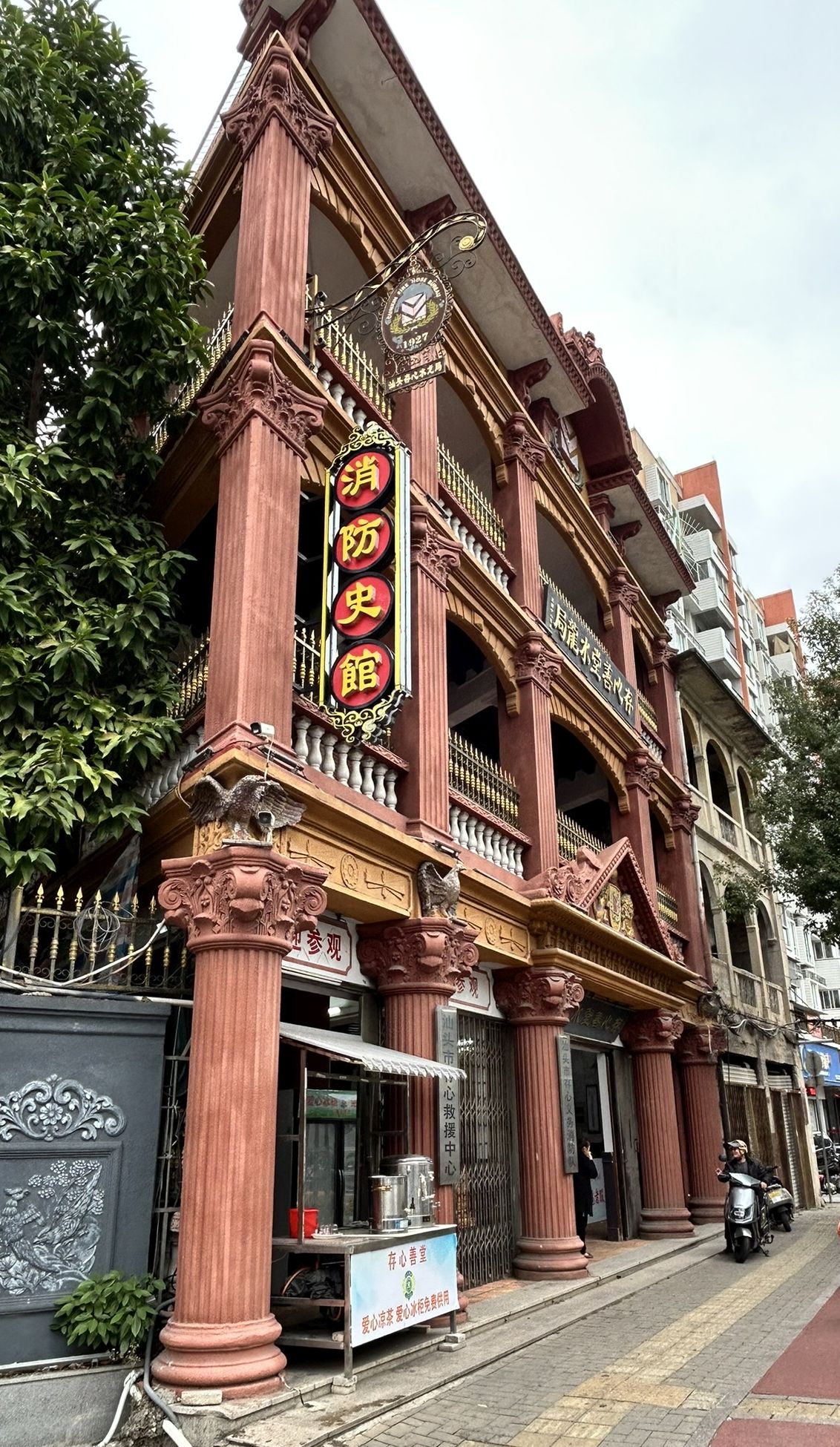
Further up on the road was the Consulate area. A French consulate official was dispatched in 1904 and the actual consulate opened in 1906. The building indicated on the 1924 map was built in 1923, located 11 Da Hua Road. Unfortunately, this building does not exist anymore.
Swatow did not have much trade with French companies, and France did not consider Swatow to be an important posting. Consular representative changed very frequently and often complained of the lack of activity. Looking into the foreign population of Swatow in 1933, I only found a few French people. Apart from PC Leblanc who was running the post office, and Jules Leurquin who was the French Consul, the only other French people were missionnaries.
This post focused on Tai-Malo street (today 外马路) were foreign consulates were located. Further posts will focus on Swatow old town and its beautiful architecture.
Shanghailander articles are published on an irregular basis. To be notified when a new article is posted, subscribe to the newsletter using this link, or follow the Shanghailander Facebook page.