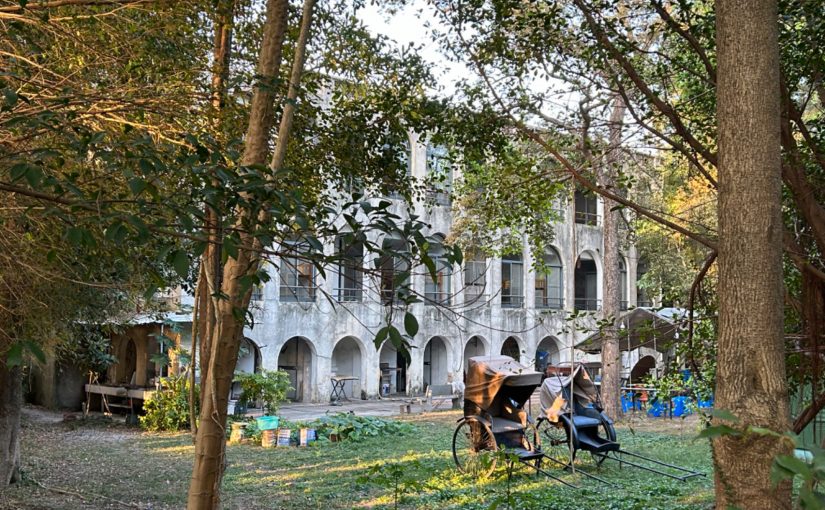
Xiamen/厦门, historically called “Amoy” after the local dialect pronunciation, had a long history of international trade before becoming one of the five “Treaty ports” in 1842 following the treaty of Tianjin. Foreign consuls moved from Amoy city to the island of Gulangyu (鼓浪屿), located opposite the city in 1902. The whole island became an international settlement, with land regulations and municipal council like in Shanghai and consulates from many nations. Gulangy (鼓浪屿) is one of my favorite places in China, and I have been to the island 5 times since 2005 (See posts “Night on Gulangyu“, “Rain on Gulangyu” and “The revival of Gulangyu” for more details). This new trip was an opportunity to search for the former Amoy French Consulate on the island.
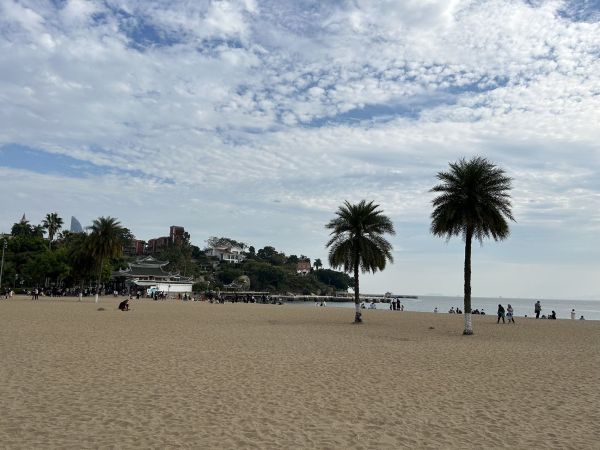
The backwater island I first saw in 2005 has now transformed into a tourism Mecca since getting on of the UNESCO protected heritage list in 2017. Although tourists have come in number, it is still possible to avoid massive crowds by visiting the island in the low season, like in the winter apart from Chinese New Year. With a little sun, temperature gets easily to 15-20 degrees, perfect for walking around. Most crowded roads are the one going along the coast overviewing Xiamen city, as well as the one going through the island to the main beach. They are best avoided in the afternoon, when most people come over.
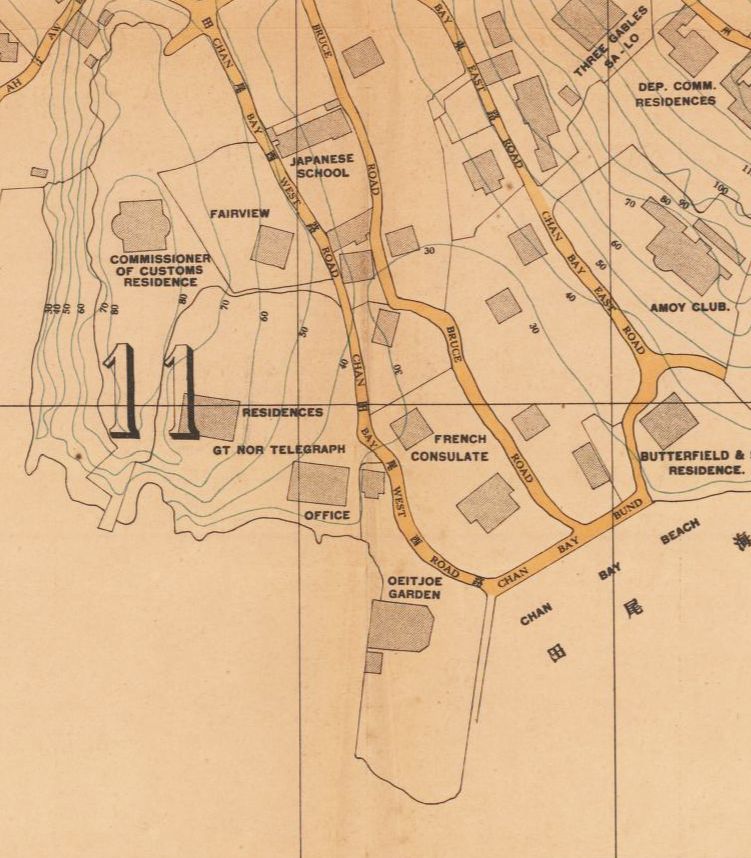
As per the old maps, the former French Consulate of Amoy (or “Consulat Français de Amoy” in French), was located on a secluded beach on the South West side of the island. The whole area around “11” on the map is now the Gulangyu Piano museum. The former Chan Bay West road (today Tian Wei Road) is blocked, as part of a large estate that was probably military zone a few years ago. Fortunately, today’s Tianwei Road splits into two branches, one of each is open leading to the former Danish Telegraph Office and former Oeitjoe Garden.
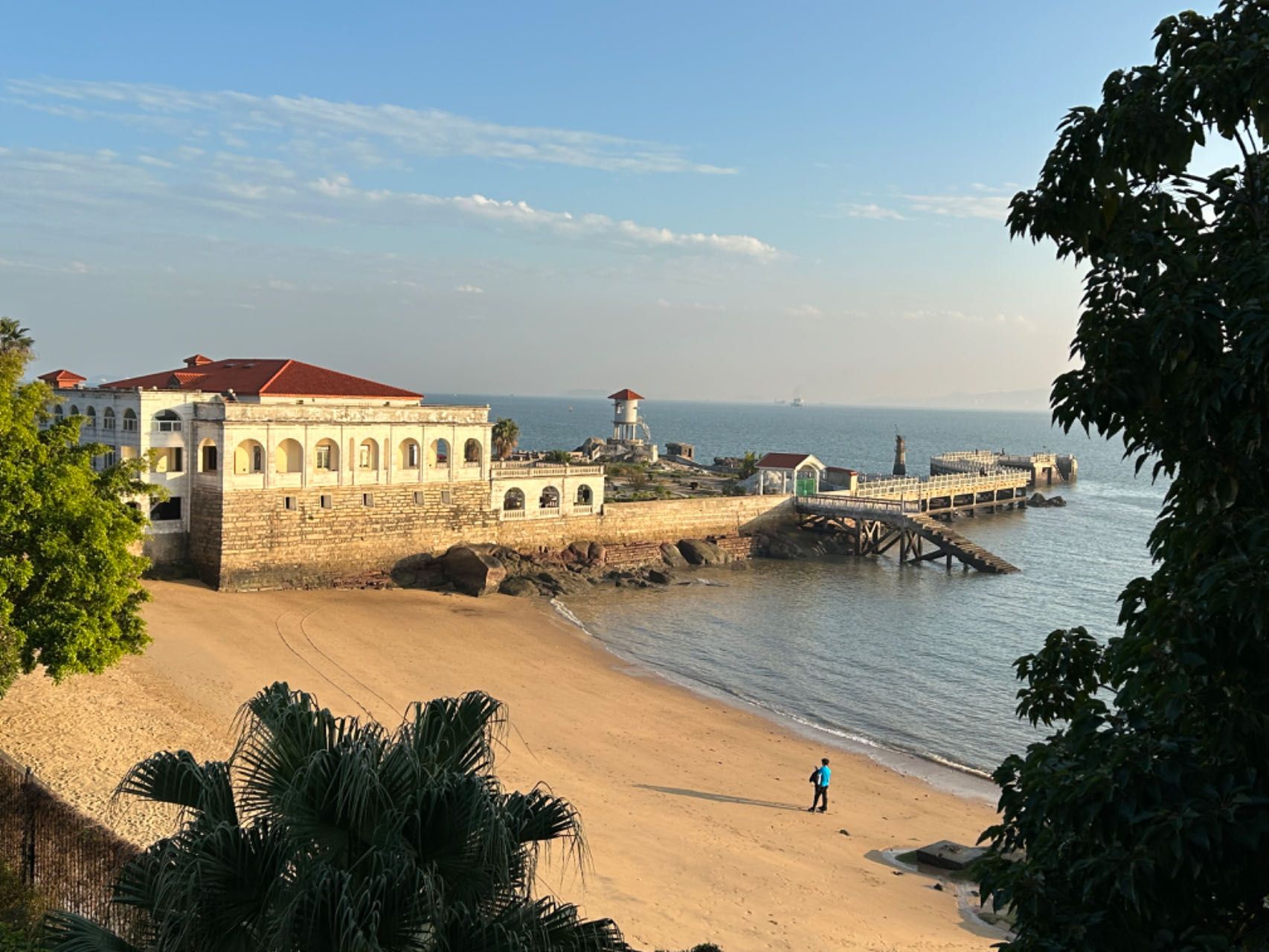
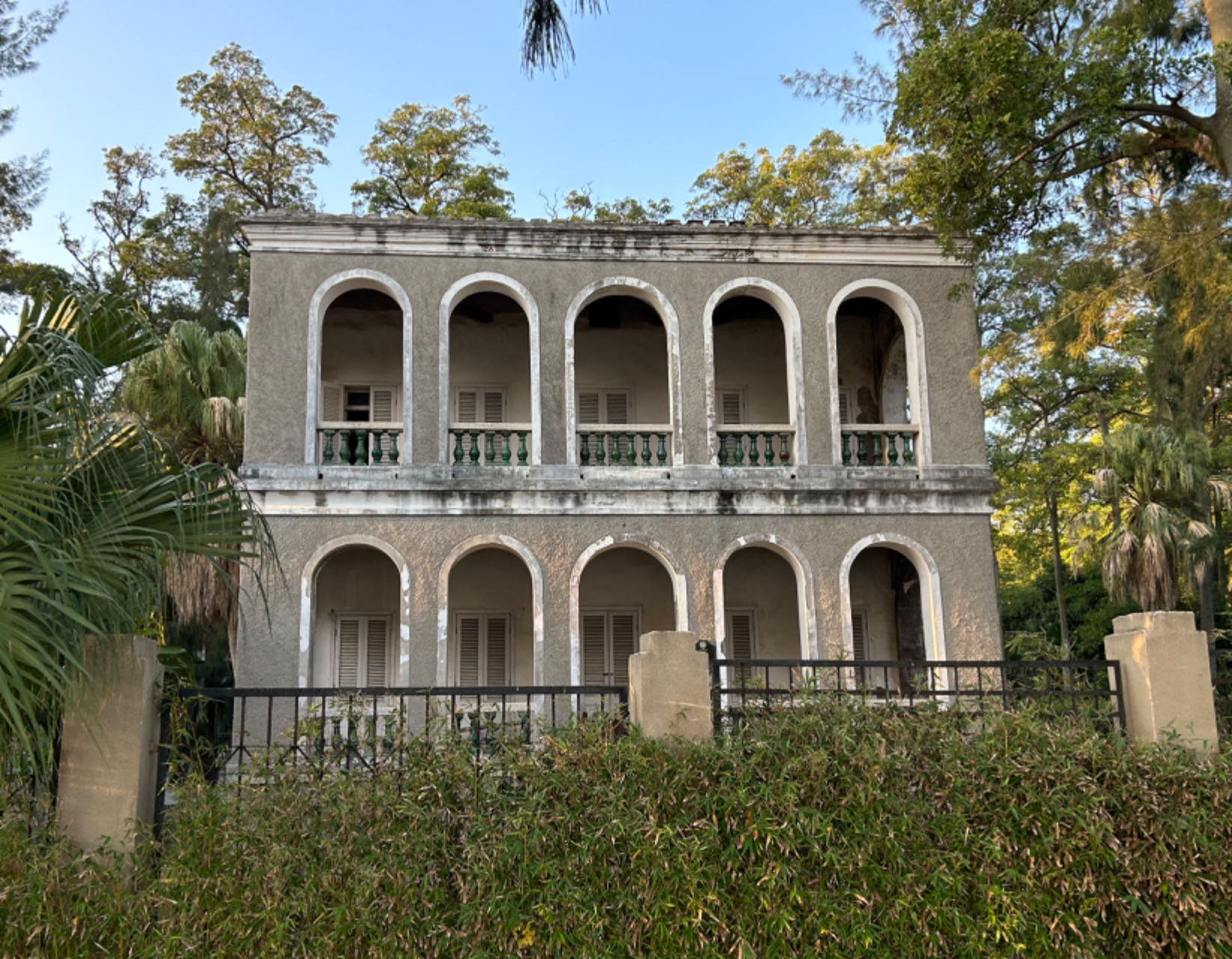
As indicated on the map, the former French Consulate is the building on the other side of the jetty, on the Chan Bay Beach. Although the building itself cannot be accessed, I managed to catch a picture (see below). A large plot of land around the former consulate was surrounded by large tents, and 2 rickshaws (!) were parked in the front. My guess is that it is currently used as a film set.
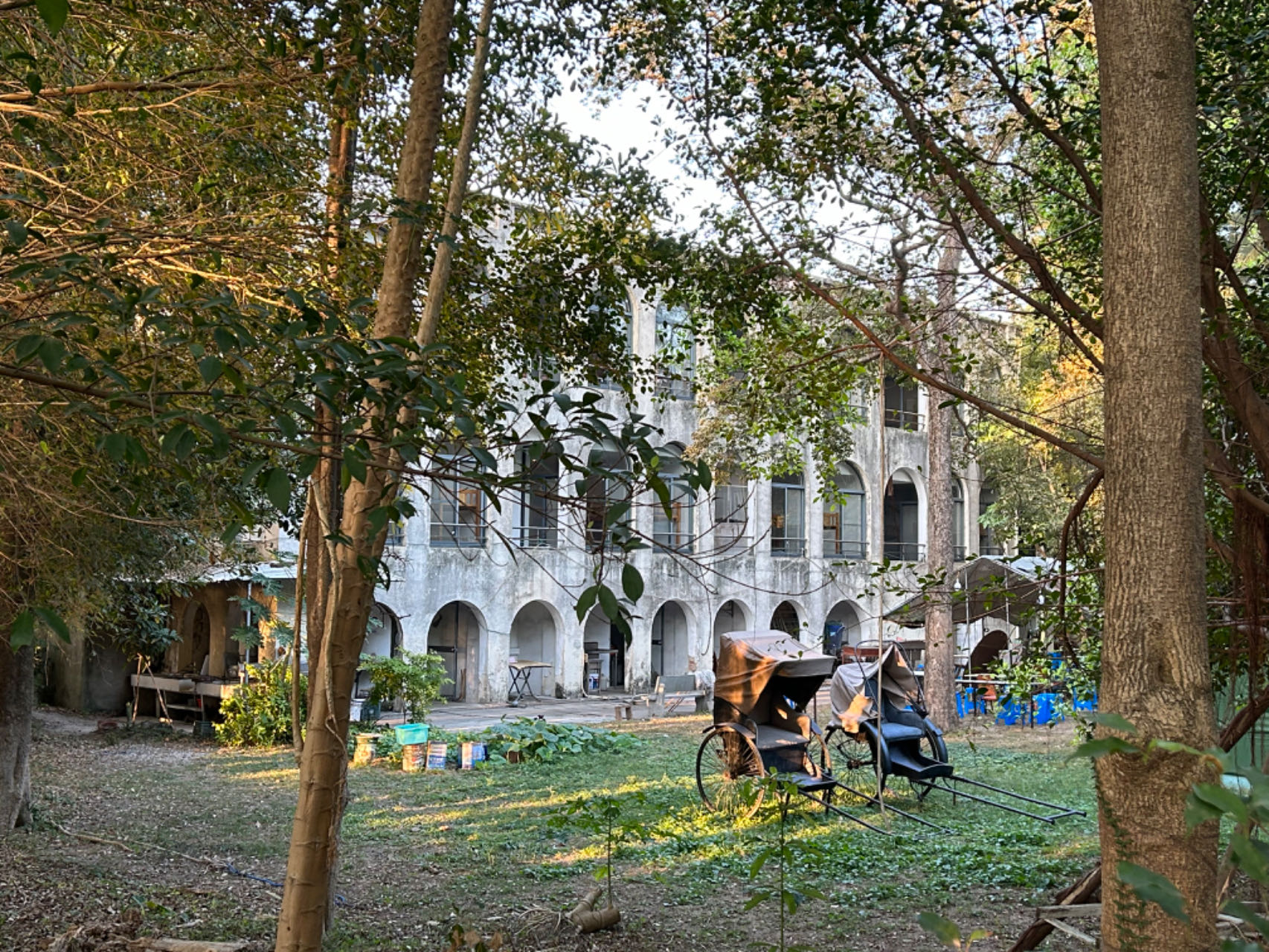
Although it has quite a vast plot of land, Amoy French Consulate was never really seen as important by the French administration. Very little information is available on the internet about it. After consulate closure in the late 1940s, the Consulate’s archives were kept at the French Embassy in Beijing until 1981, when they were brought back to France. As French historian Roger Pérennès explains, France had a presence in Amoy since 1901, with a vice-Consulate from 1906 to 1916. Below picture from the Australian University archives stating “Amoy, at the French Consulate” is dated from 1907.
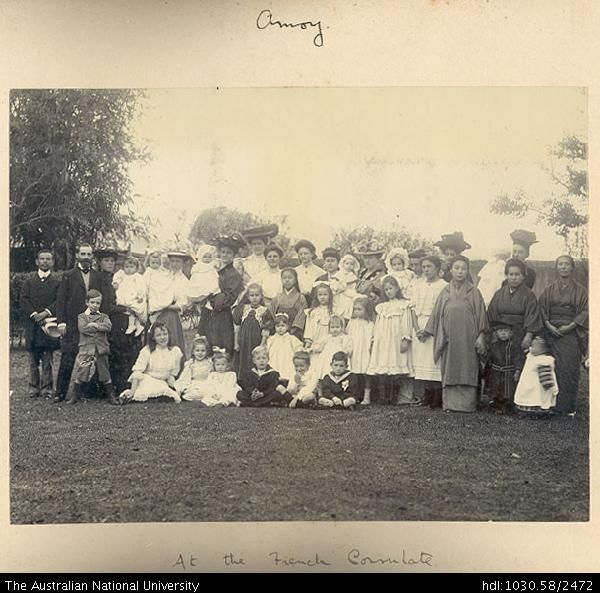
A proper consulate was only open on 1st December 1925, with Fernand Roy (1885-1967) being the Consulate for most of the time until end 1939. With little activity during WW2, the consulate finally closed down in February 1946.
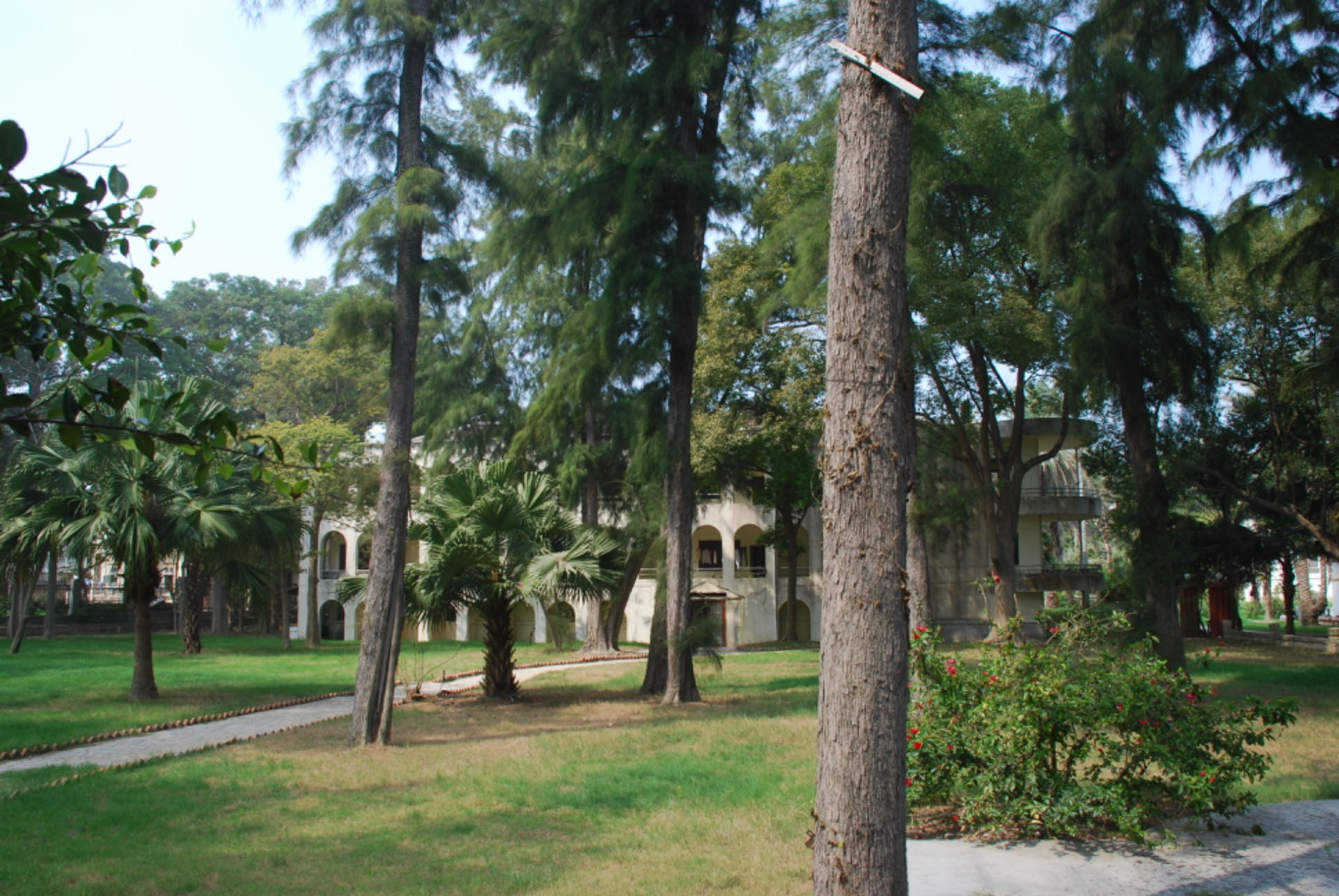
Since the consulate was actually open very much later than others, it could explain that the location is away from the main port, on a more secluded part of the island as better located ground were already taken. As a comparison, the American, British and Japanese Consulates were located on the other side of the island, overlooking Xiamen and the main port. I did not find any information about the construction of the French consulate building, but the building looks like it was “ruinovated” at some point later. Below is another picture I shot in 2009 in a previous visit that is mentioned in post “The revival of Gulangyu” when garden and the building was much better maintained.
The site of the French consulate is located near the former Northern telegraph office, which was built in 1918 in a somewhat similar style (see below).
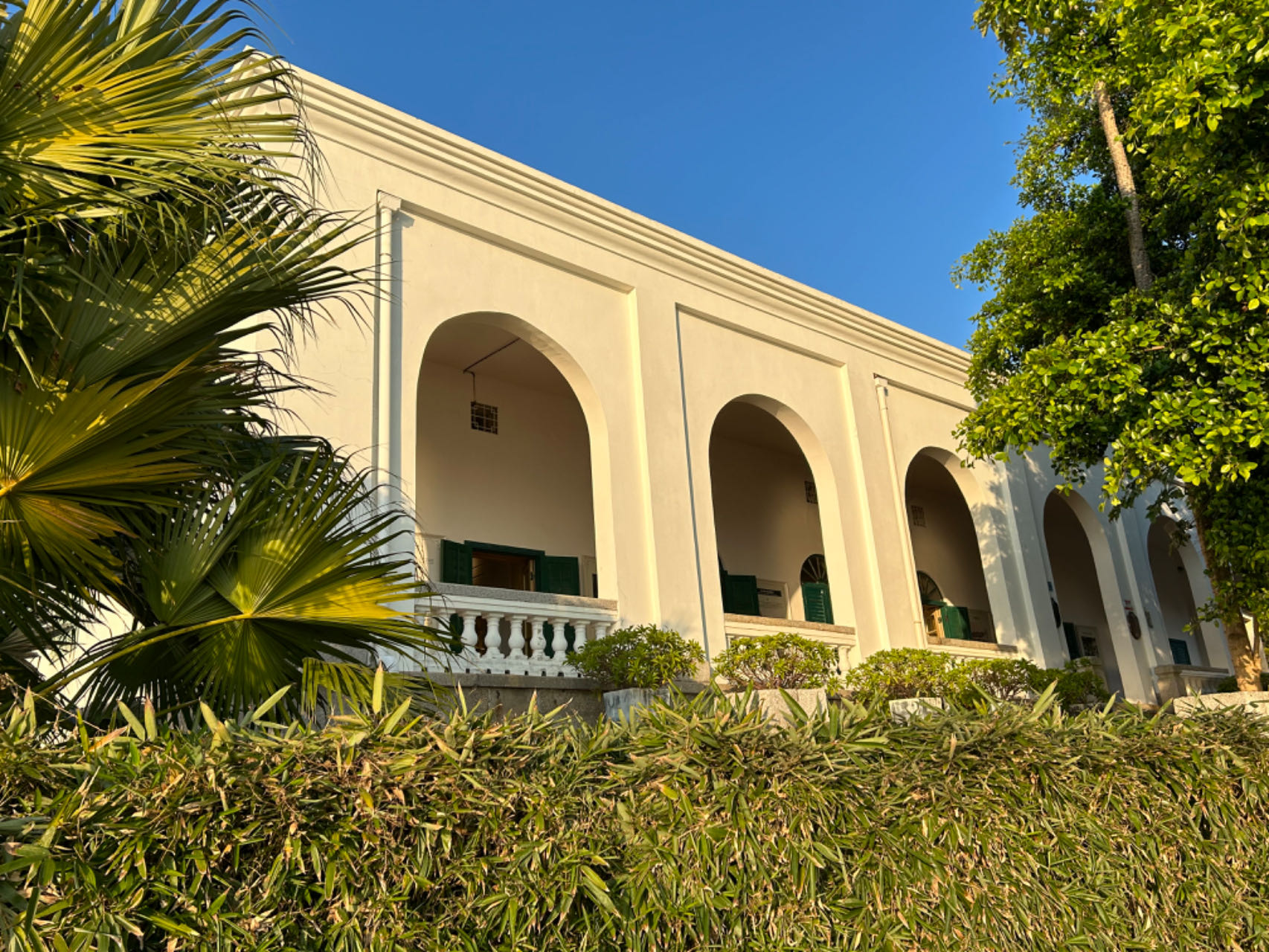
The next building on the road, shown on the map but with no mention, is also of similar style. It was probably built around the same time.
Hopefully more information will come up about the former French Consulate in Amoy as French archives and others are researched. I will definitely come back to my favorite Island Gulangyu. For more posts about this topic, see posts “Night on Gulangyu“, “Rain on Gulangyu” and “The revival of Gulangyu“.
For more information about French Consulates in Old China, see post “Former Shanghai French Consulate“.
Thank you! I passed by this building before but had no idea it was the former French Consulate in Xiamen, and it’s a fact that most locals here are unaware of this too. I’ve looked up some relevant information, and the following excerpts are translated from a Chinese book:
French Consulate in Xiamen
France held its bourgeois revolution in 1789, which overthrew the feudal system, and became a sovereign modern nation in 1843. By the late 19th century, it had evolved into a major colonial power worldwide. During World War II, France was occupied by Germany and regained its full sovereignty in 1944. In 1860 (the 10th year of the Xianfeng reign of the Qing Dynasty), France established its consulate in Xiamen at No. 46 Tianwei Road on Gulangyu Island. Jean-Jules de Roncières served as the first acting consul, Thomas Walsh —a British national— as the second vice consul, and Félix Fleury as the third consul. Later, the consulate was relocated to three villas owned by Huang Zhongxun on Tianwei Road: two were used for official affairs, and the other as the consular residence. Over the 86 years from 1860 to 1946, France appointed a total of 23 personnel (including acting appointees) to serve as consuls, acting consuls and vice consuls in Xiamen. The consulate officially ceased all operations in June 1946.
Chan Bay was one of the landing sites on Kulangsu by the British fleet on August 26, 1841, during the Opium War, after which British warships were stationed there. Literally meaning the end of the paddy fields, Chan Bay was first cultivated by the Hong clan. After Amoy was opened as a treaty port, the area was leased to Dait & Co., and later developed into an upscale residential quarter for foreign expatriates. Facing the estuary of the Jiulong River and South Amoy Bay, it features a gentle slope and lush greenery, making it an idyllic and scenic residential area.
I plan to verify on-site whether the current address of this former consulate is still No. 46 Tianwei Road. By the way, it is close to the Gouliao Retort Hotel at No. 18 Tianwei Road, which was established by converting the western-style mansions near Tianwei Road into a cadre sanatorium after 1949. The hotel is now operated by Xiamen C&D, a renowned enterprise engaged in wine import, supply chain and tourism business, with the reservation hotline: +86-592-2567035. Bruce Road now exists as an internal road within the hotel premises; it has been shortened and no longer extends to the former consulate area or the Bund. Except for the former Japanese School building, all other buildings of the hotel are non-original reconstructions.
To the right of the hotel lies the yet-to-open Seaview Garden, which is home to the former Girls’ Middle School of the American Reformed Church Mission (ARCM). Its red-brick buildings are well-preserved and listed as part of the World Heritage Site. The 2025 Chinese TV drama Silent Glory filmed most of its key scenes right here.
To the right of the former girls’ middle school stand the former British Consul’s Residence (No. 5 Zhangzhou Road), the Residences of the Amoy Deputy Commissioner of Customs and the Amoy Club. The former British Consul’s Residence has recently undergone renovation and will soon be open to the public as a gallery.
The other two historic buildings located above the Bund and to the right of Bruce Road are now marked as No. 1 and No. 38 Tianwei Road on Baidu Maps. The former Butterfield & Swire Residence is unmarked on many maps, and I will also check its situation on-site during my next visit.
All in all, this is such a fascinating little slice of local history!
Mac Royee in Amoy
My great grandfather Benito Siy Cong Bieng was once the owner of the land where the French Consulate was situated.
Fantastic. I would love to hear more about this story and your great grandfather!