As founder of the Guomintang and Chinese revolutionary, Sun Yat Sen has shaped a lot of Chinese modern history. Leading China after the 1911 revolution, he later retreated in Gangzhou when the country was fragmented. He died in Beijing on 12th march 1925.
As a symbol of unity of Republican China, a mausoleum was a great way to carry on his legacy. As he wanted to be burried in Nanjing, the project was started in 1925 and design was completed in 1926. The chosen site for the Sun Yat Sen Mausoleum was the Purple mountain or Zijishan / 紫金山, close to Ming emperor tombs. The mausoleum was designed by Chinese architect Lu Yangzhi / 呂彥直 who got the project by winning a national competition in 1925. The project started in 1926. Lu Yangzhi supervised the it until his death at 28 years old in 1929. Fellow architect Poy Gum Lee took over the complete the project.
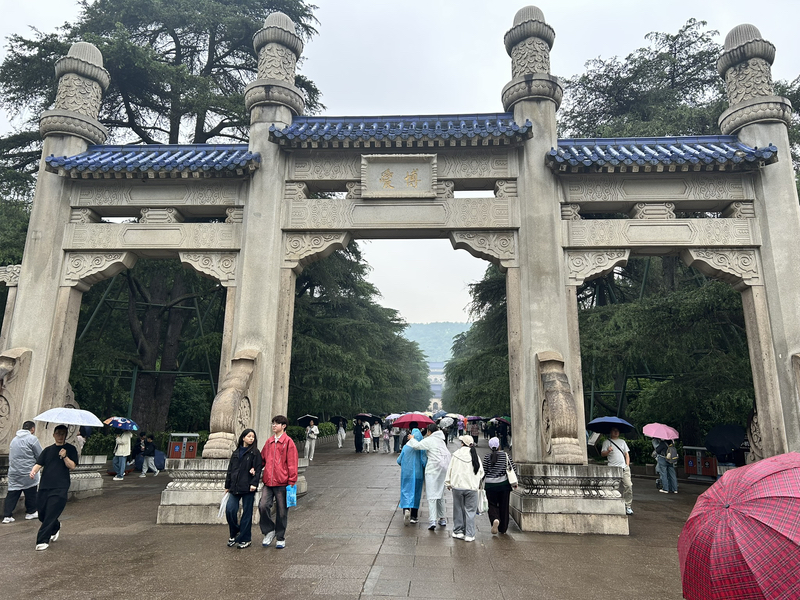
After the 1927 Northern and the victory of the Guomintang, new China ruler Chiang Kai Shek had moved the capital from Beijing / 北京, the Northern capital, to Nanjing / 南京, the Southern Capital. The location was no random, as Nanjing had been the capital of China several times, the latest period being during the early part of the Ming dynasty, from 1368 to 1421. This was also briefly the capital of China right after the revolution, when Sun Yat Sen was president and to be burried in the Mausoleum then under construction.
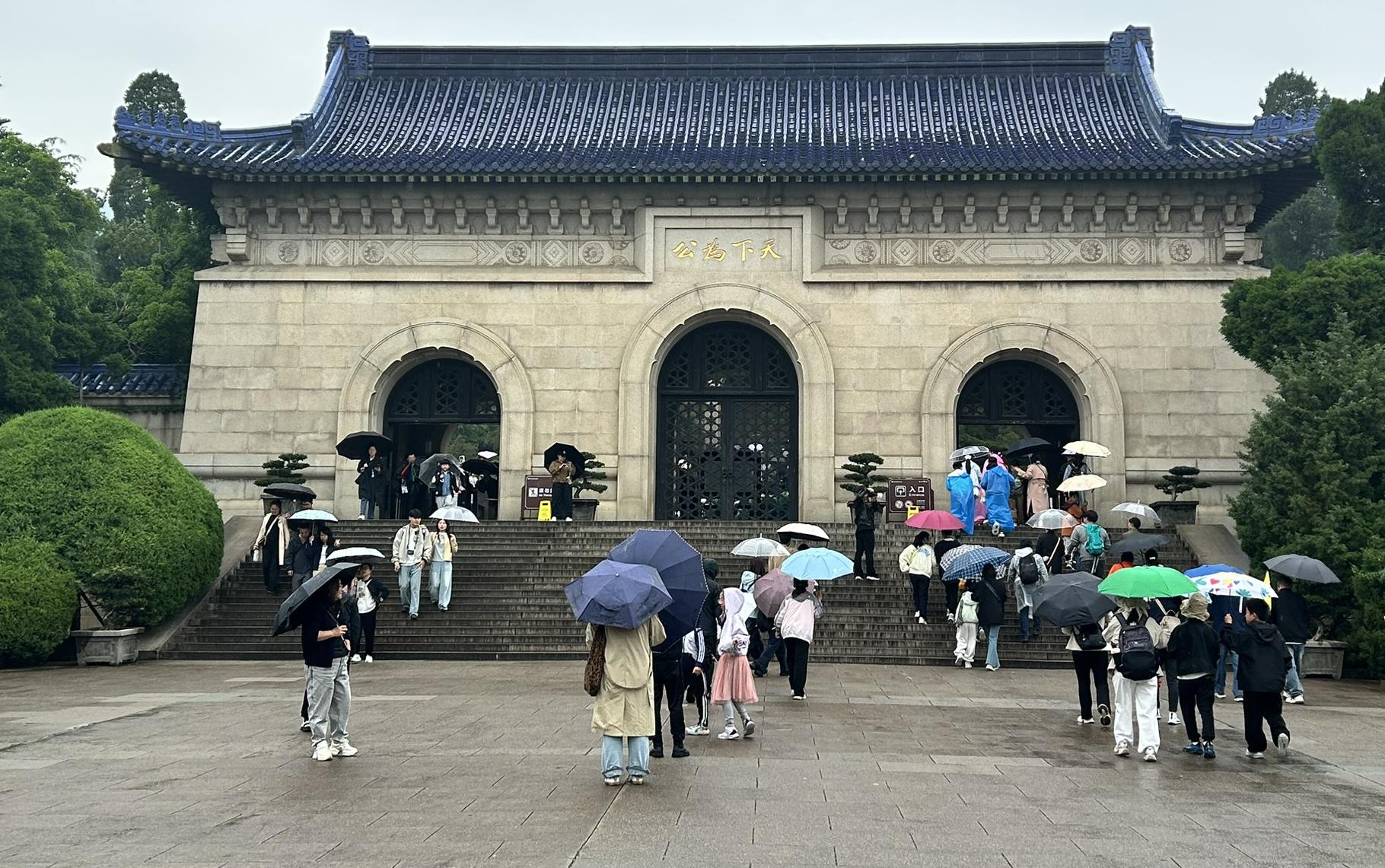
The Mausoleum itself is of republican style, also called neo-confucian style. This style is a mix of traditional Chinese architecture and modern construction methods. It follows the same codes as followed by Chinese architects for centuries. At the same time, introducing reinforced concrete pillars and stone building instead of wood allows for more durable and more spectacular buildings. It is a good metaphor for Republican China, that wanted to go towards modernity, while maintaining tradition.
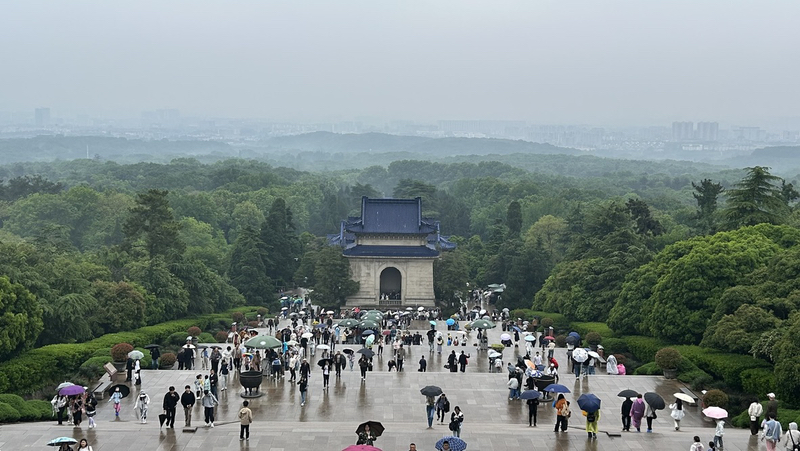
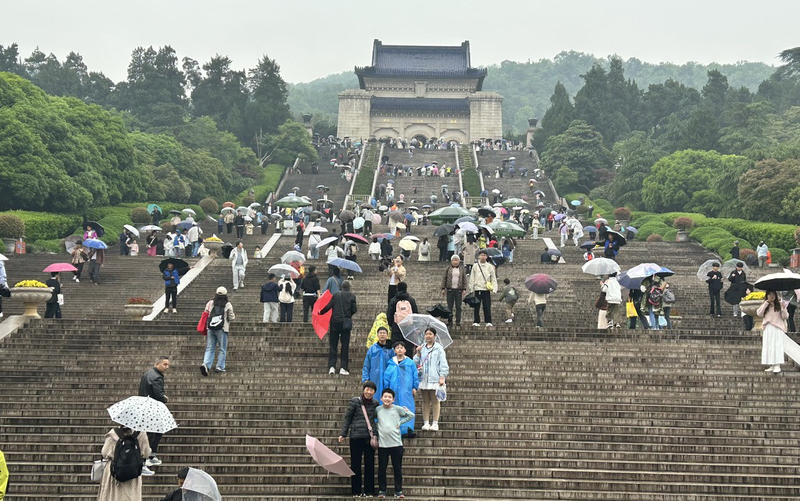
The Mausoleum is made of three stations on the mountain, linked by 392 steps. Following the tradition Chinese tombs, the final station offers a great view from the mountain, following Chinese fenghui. On a rainy day, the view was splendid as a light myst covered the new constructions afar, creating a feeling of timelessness.
Most visitors go to the see the inside of the memorial at the third station. Pictures are not allowed there. The hallway is dominated by a large statue of Sun Yat Sen. It is a marble copy of the original bronze statue by French sculpture artist Paul Landowski, who also made the Christ statue in Rio. (see post “From Boulogne to Nanjing” for more details). The original bronze statue is at the Sun Yat Sen Memorial hall, at the bottom of the hill.
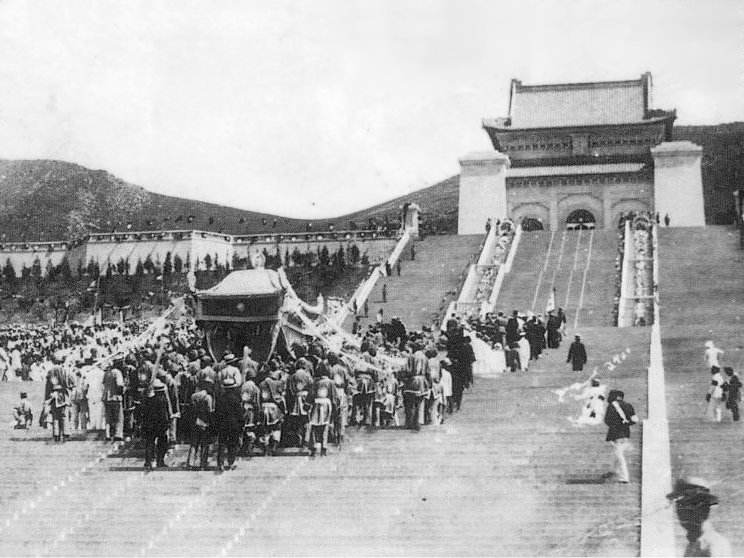
The body of Sun Yat Sen was brought to the mausoleum on 1st June 1929. It is located in the marble sarcophagus located at the back of the main station, which was not open to the public when I went. Nanjing has a lot more to offer in terms of Republican architecture and I will surely go there again.
Shanghailander articles are published on an irregular basis. To be notified when a new article is posted, subscribe to the newsletter using this link, or follow the Shanghailander Facebook page