I have been researching the story of the book and movie “Love and duty” / 恋爱与义务 since more than 3 years. This movie was lost in the 1930s and found again in Uruguay in the 1990s. How did this happen?
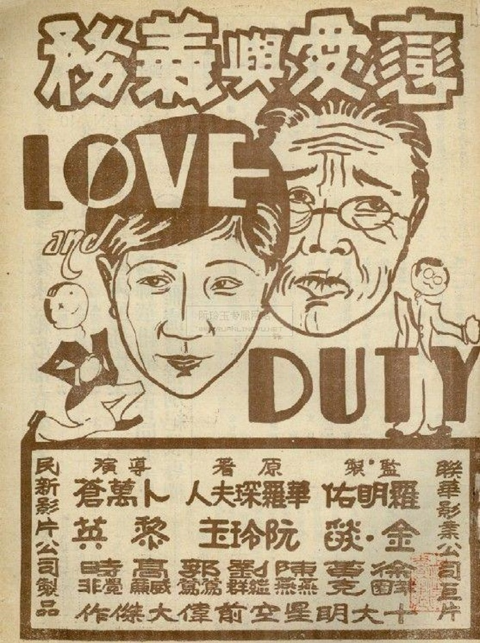
The movie “Love and duty” was out in 1932, a few years after the book publication in 1924. Like the book, the movie was a great success. The story of the fight between tradition and modernity, as well as the melodramatic theme of the movie attracted the public attention. At the same time, the amazing performance of leading actress Ruan Lingyu helped to turn the movie into a block buster.
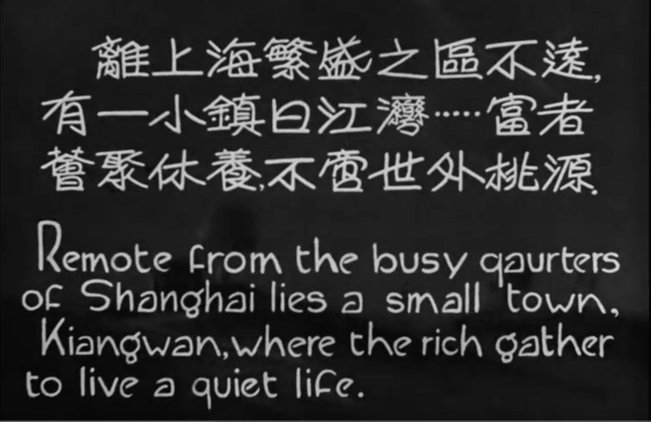
As a silent movie, it contained some written dialogues both in Chinese and in English, showing an interest for non Chinese audiences and export outside of China. The Lianhua movie company was registered in Hong Kong and Malaysia-Singapore was an easy target for export. Although I did not find proofs that “Love and Duty” was shown there, it is highly plausible as Chinese was spoken by many people and the link between mainland China and South-East China has long been very strong.(see post “Xiamen, the South East Asia connection”). The movie was shown at the Sino-International Library in Geneva. It is possible that it was also shown in other places in Europe or the USA, but no trace of this has been found either. So how did a copy end up in Uruguay?
Physical films used in the 1920s to make movies were very fragile and many movies were lost during this period. Using highly flammable nitrate-based material, the movie sometimes burned down during processing or projection. The actual film could also lose its images when not properly stored. It is estimated that 75% of all silent movies were lost. Love and Duty was lost, no copy of the movie was known to have survived.
This all changed when a nearly full copy of the movie was found in 1993, in Montevideo in Uruguay. This small country of South America, crushed between Brazil and Argentina, was the probably the least predictable place where to find a lost Chinese movie from half of a century ago.
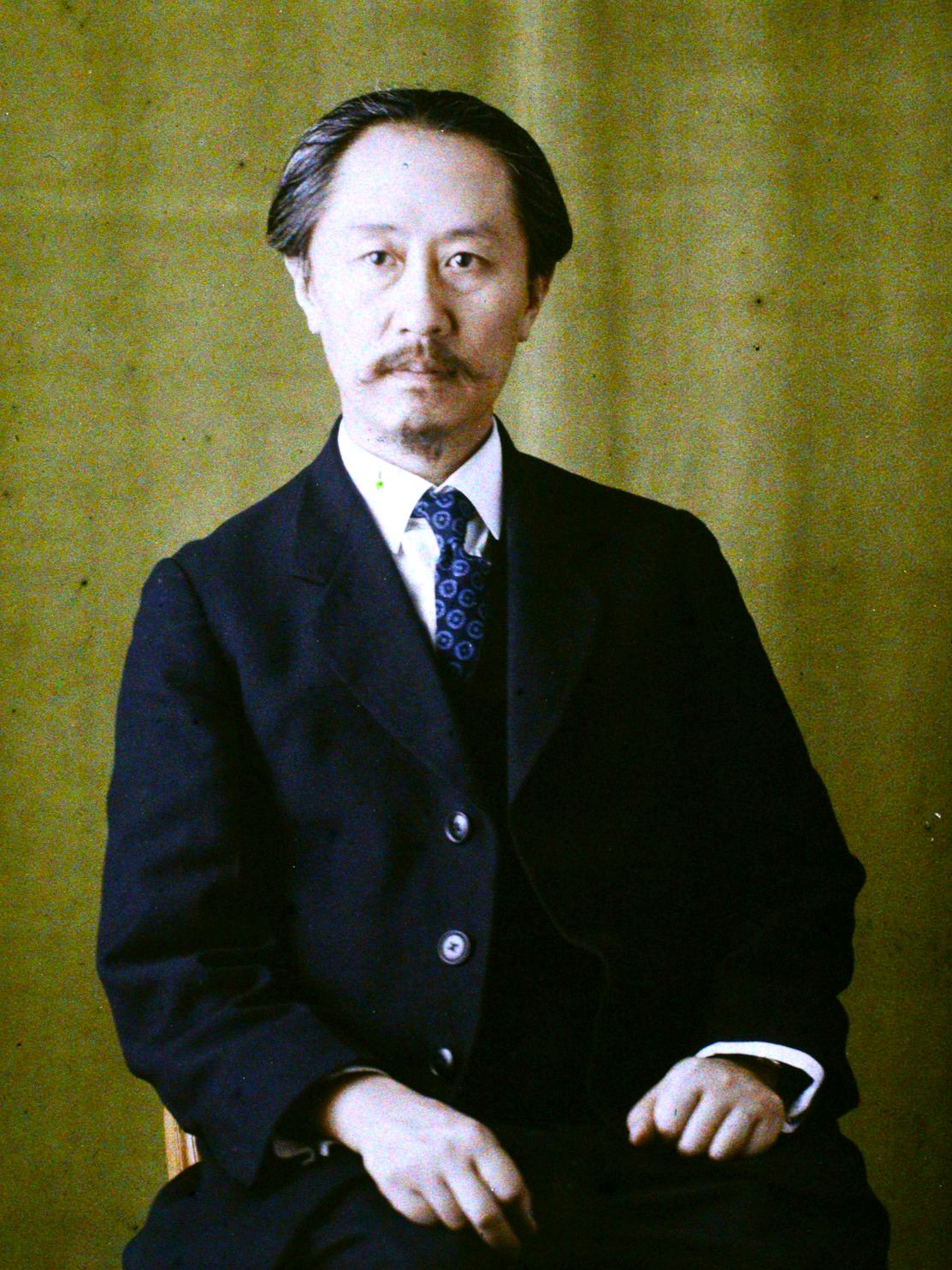
The main character of this story is another Chinese who spent time in France is the early 1900. Born in 1871, Li Shizeng / 李石曾 was an educator and a politician. He moved to France in 1902 to study French intensely before studying in 1903, at agricultural school Ecole Pratique d’Agriculture du Chesnoy, south from Paris. After graduation three years later (1906), he went to study botanics at Sorbonne University. He focused the properties of soy, surely crossing the path of Stephanie Rosen-Hoa who also studied botanics at Sorbonne University around the same years. (see post “Stephanie Rosen-Hoa at Sorbonne University” for more details).
Li Shizeng also took part of the publication of a magazine in Chinese and esperanto, like Hau Nan Gui and Stephanie Rosen-Hoa. As Chinese students in Paris were few, it is highly probable that he was friend with them during Sorbonne time, as they shared a passion for changing Chinese society and politics as well as for esperanto.
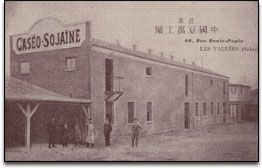
He created a soy processing and tofu factory in La Garenne-Colombes, in Paris suburb, in 1908. Called “Usine de la Caseo-Sojaïne), it was visited by Sun Yat Sen in 1909. Li Shizeng came back to China in 1911, before the revolution. He and initiated the work-study program along with Cai Yuan Pei and returned to France in 1913 to organise it from Montargy. This program would later enrol many high profile Chinese youth, including Deng Xiaoping and Zhu Enlai.
Li Shizeng returned to China in 1919 to teach at Peking University and at the Sino-French University, the sister institution of Institut Franco-Chinois in Lyon. As a French and esperanto speaker in education circle, he was surely in touch with Hua Nan Gui and Stephanie Rosen-Hoa, forming part of their litterary circle, along with Cai Yuan Pei. (see post Horose litterary circle for more information). In 1924, he was appointed manager of the Palace Musuem in Beijing, the former emperor’s forbidden city.
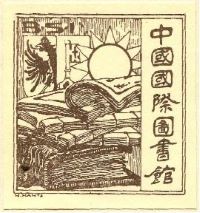
One of the main figure of education in China, Li Shizeng also created the “Bibliothèque Sino-Internationale” (BSI) or Sino-International Library in Geneva in 1932 during a stay in Switzerland. The organisation was designed to promote Chinese culture around the World, it was funded by the Nationalist goverment. It was a tool of promotion of China to Europe, in particular to the League of nations also located in Geneva. In 1932, the library moved to the Chateau de Montagère.
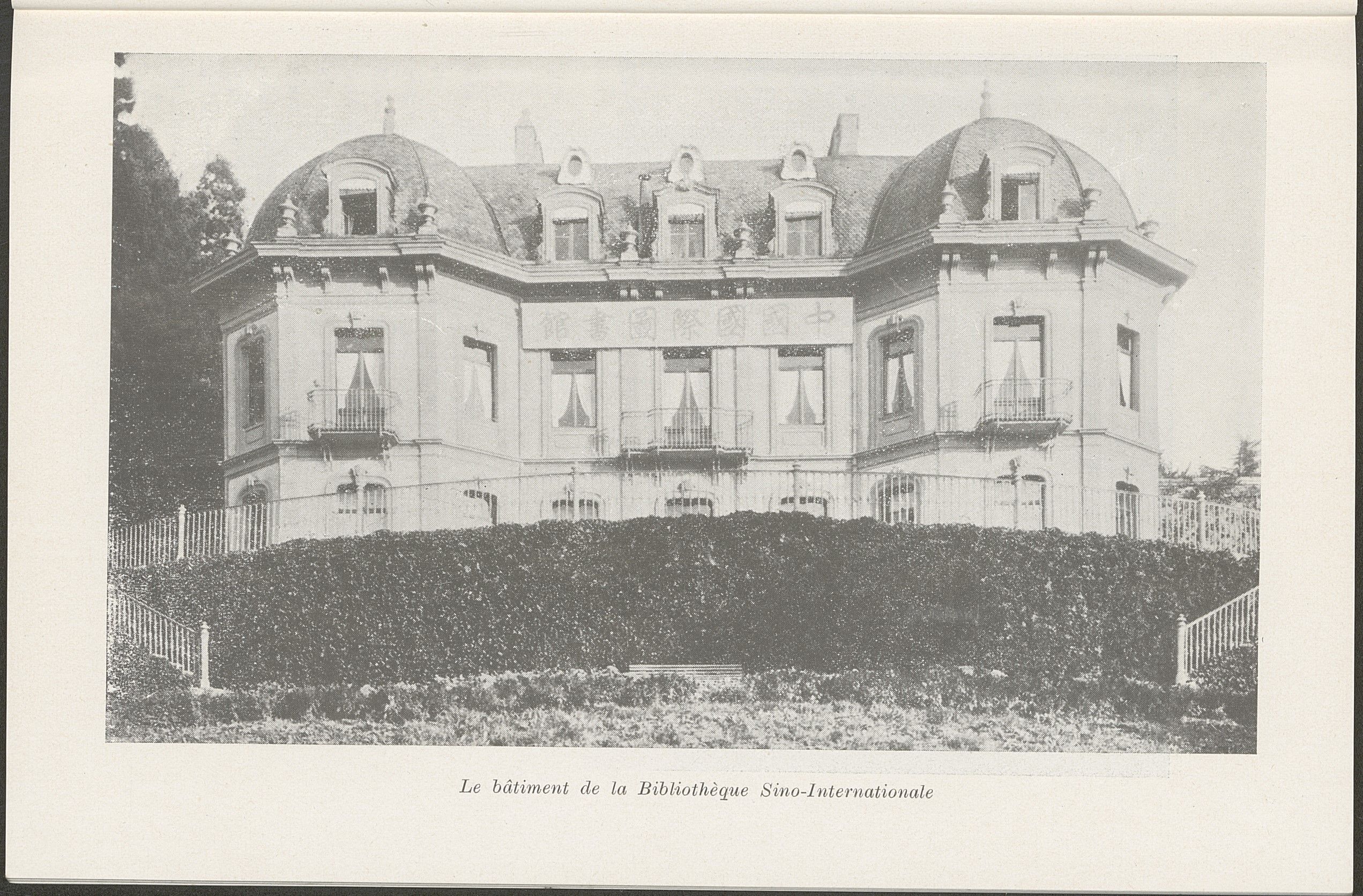
The movie Love and duty was shown at the Geneva branch of the BSI on 7th October 1935. As Li Shizeng was a friend of Hua Nangui and Stephanie Rosen-Hoa, he included a copy of the 1931 movie in the collection. A Shanghai branch (Section de Shanghai) of the BSI was located at Route Fergusson 393 in the former French Concession, and a New York branch was planned but was never created.
Li Shizeng spent much of WW2 in the USA with some trips to Chongqin. In 1948, he returned to Geneva, as the communist troops where approaching Beijing. In 1950, Switzerland became one of the first country in Europe to recognise the new People’s Republic of China. Li Shizeng moved along with the 200.000 books of the Sino-International Library to Montevideo in Uruguay. The collection was hosted by the Uruguayan National Library. Li Shizen moved to Taipei in 1954 and died there in 1973. The collection Library stayed in Montevideo.
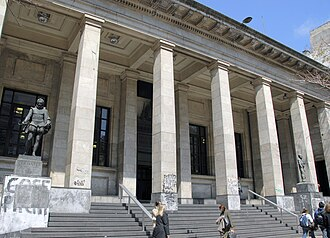
In 1993, the core content of the library was brought to the National Central Library in Taipei. It contained approximately 100.000 books, including ancient Chinese books. It also contained the 6000 volumes of the Gujin Tushu Jicheng (古今圖書集成), the Chinese encyclopedia from the QIng dynasty, newspaper and magazines from the library, and 3000 photographs. A copy of the movie “Love and duty” was also discovered among those documents. The lost movie was found back.
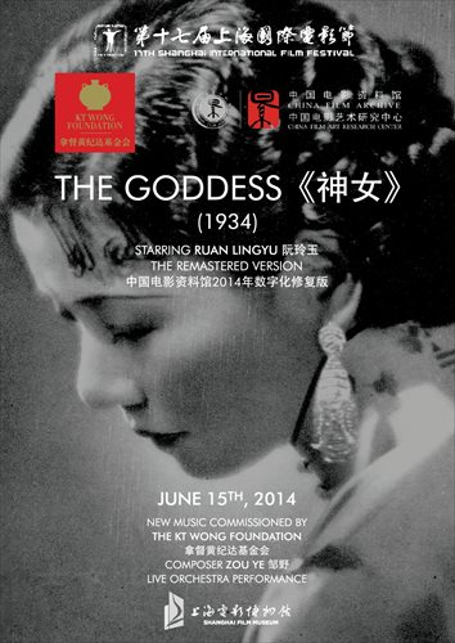
Restoration was done by Cineteca di Bologna’s L’immagine Ritrovato laboratory in 2013. The movie shown along with the Godess, another Ruan Lingyu major movie, at the 2014 Shanghai Film Festival. This marked the return of the movie to Shanghai, nearly 80 years after being filmed in the city.
No other movies seem to have been included in the library. Due to his connection with the couple Hua Nan Gui – Stéphanie Rosen-Hoa, it was probably Li Shizeng’s personal decision to take a copy of the movie with him, probably as a showcase of Chinese modernity in the 1930s, as the film was a major block buster then.
Researching this article, I found that a similar story happened to one of my favorite movie. Art Deco masterpiece, Metropolis from Fritz Lang, had a 25 minutes section lost… that was retrieved in 2008 in Argentina.
Shanghailander articles are published on an irregular basis. To be notified when a new article is posted, subscribe to the newsletter using this link, or follow the Shanghailander Facebook page