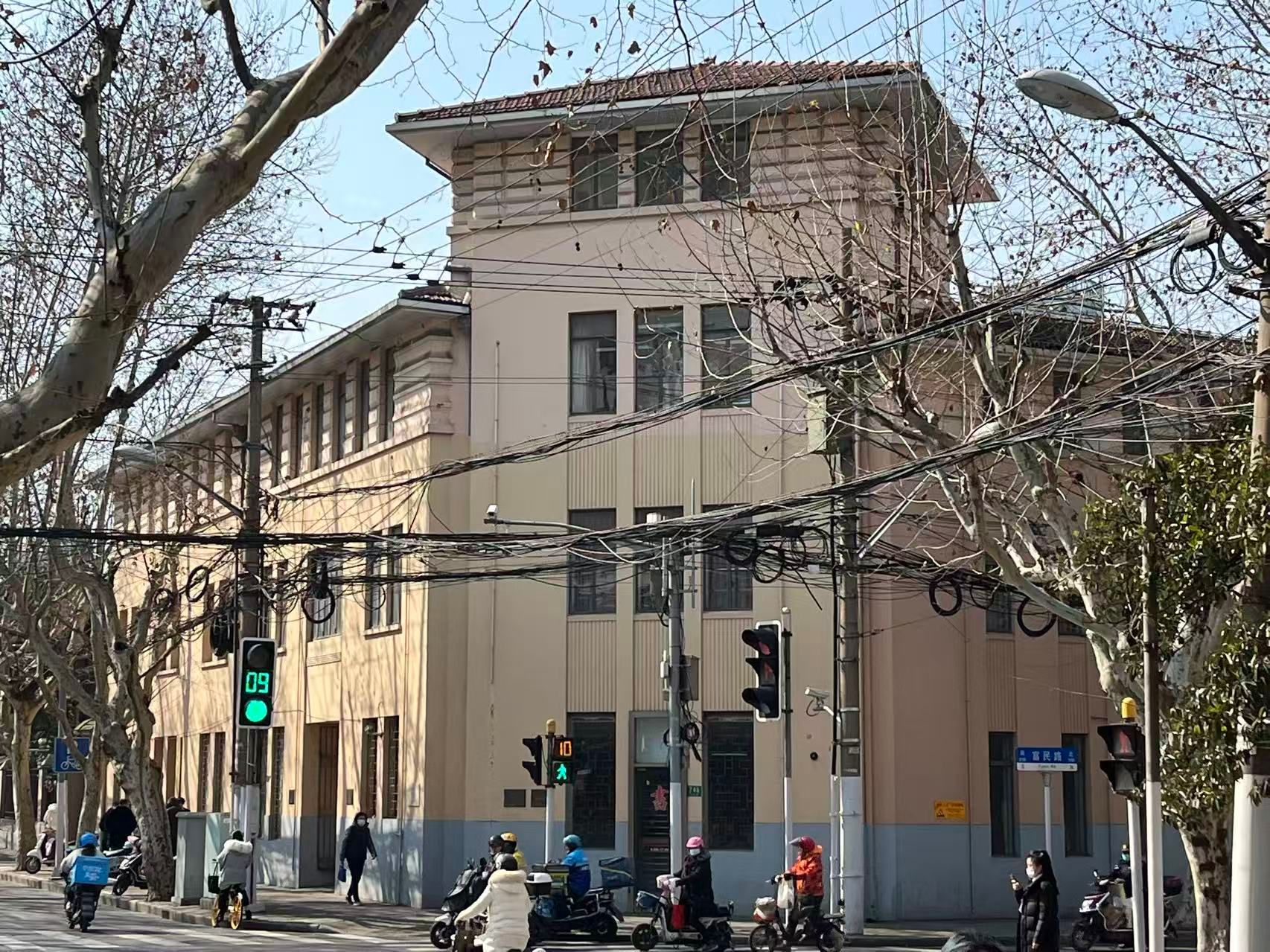
Hezhong library building, corner of Changle lu and Fumin lu
I have passed hundreds of times in front of the building at 746 Changle lu, at the corner of Rue Bourgeat (now Changle lu) and Rue Amiral Courbet (now Fumin Lu). Although an old building, it is quite large with a modernistic style, occupying a large plot at the streets corner. Here is its story.
This remarkable modernist / art deco building was built for the Hezhong library / Hou Chung library / 合众图书馆. The library was created in 1939, by industrialist Ye Jingkui, together with Zhang Yuanji and Chen Taoyi. Ye Jingkui was a great collector of books and he wanted to pool private collections in a safe place. At that time, Shanghai was already occupied by Japan, apart for the International Settlement and the French Concession. The massive collection of Shanghai’s Oriental library had been destroyed along with the Commercial Press building in 1932. The group wanted to preserve Chinese culture and historical book collections. It is then no surprise that the library was built in the French Concession, a place that was safe at the time.
Besides the founder’s collections, the library acquired rare books as well as manuscripts, correspondence, inscriptions and rubbings, periodicals, photographs and made them available for researchers. At that time, libraries were the real receptacle for knowledge and were highly treasured. Other exemples of important libraries in Shanghai included the Shanghai branch of the Sino-International library, the Hung Ying library, the Royal Asiatic Society Library and Jesuits library in Xu Jia Hui. In 1958, the Hezhong library’s collection was merged into Shanghai library, probably along with the above mentionned.
The library building dates from 1940. It takes elements of Chinese traditional symbols with modern western architectural structure. As it is higher than the neighbors and located in a street corner, it really stands out.
Terrazzo patterns on the building floor
It was designed by Chinese architect Chen Zhi / 陈植, who was born in Hangzhou. He first studied in Tsing Hua university in Beijing, before being sent to the USA to study architecture at Pennsylvania University in 1923. He completed his study in 1928, after winning an architectural competition in 1926. He worked one year in Ely J.Kahn architect firm in New York, which is famous for some the New York skyscrapers.
The three founders of Allied Architects
Chen Zhi returned to China in 1929, reaching Shanghai in 1930. He then founded Allied Architects / Huagai Architects / 华盖建筑师事务所 along with other fellows from Tsinghua / Penn State University, Zhao Shen and Tong Jun. Together, they designed several famous buildings, including the Metropol Theater, the lyric theater (now Huangpu Theatre, 黄浦剧场), Zhong Shan hospital and several official buildings in Nanjing.
Hezhong library staircase
The building has been renovated in 2025, while keeping an original feel. It is free to visit and also enclose a small museum about the original Hezhong library. Too bad it is only in Chinese.
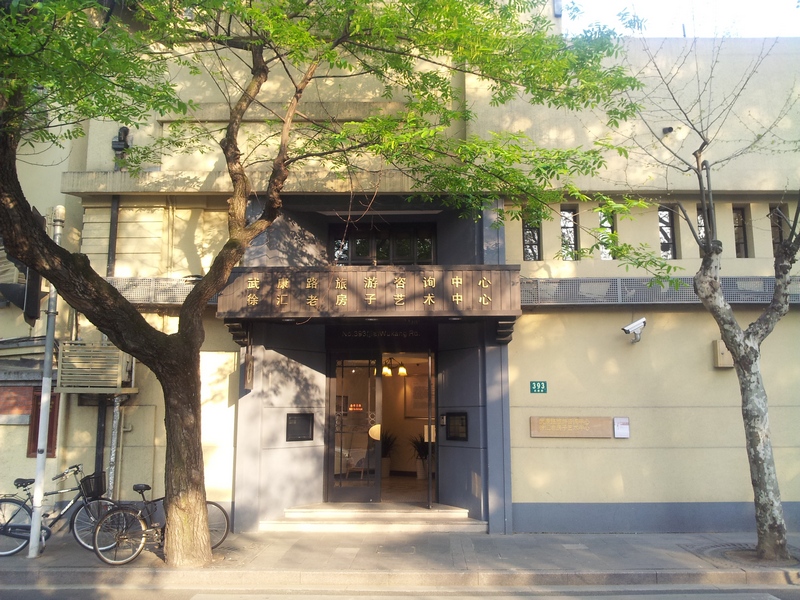
The house located on 393 Route Ferguson, today 393 Wukang lu, is often featured as an example of Shanghai Art Deco. Although I passed by it many times, I only recently discovered its amazing history.
This specific address came up in previous post “How did Love and duty come to Uruguay?“. It was the Shanghai branch of the Geneva based “Bibliothèque Sino-International” (BSI) created in Geneva in 1932 by Li Shizeng / 李石曾. This Sino- International library aimed at display and share Chinese culture to the World and in particular to Europe. It had a Shanghai branch, located 393 Fergusson lane, a property bought by Li Shizeng at the end of the 1920s. Its goal was to put Chinese people in touch with foreign culture by making foreign books available to the Chinese public.
Wukang Lu 393
Libraries were the great cultural tool at the time, long before the internet. Several other libraries in Shanghai had a similar mission, like the Yong Yin Library a few hundreds meters from the BSI. Other examples include the Hezhong Library, and the library of the Royal Asiatic Society.
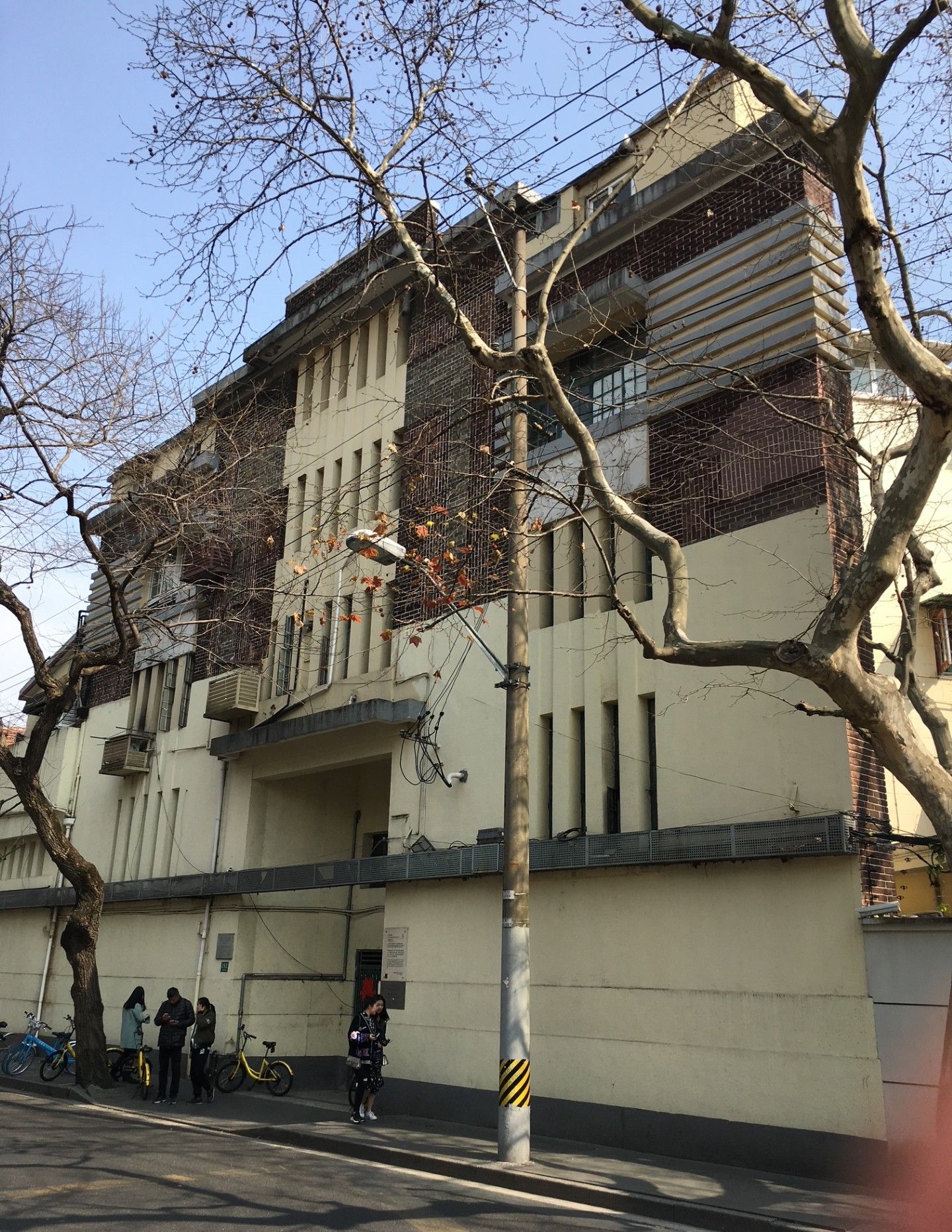
Located a few steps behind the Normandy building (called nowadays 武康大楼), 393 Wukang lu is a long and the building with 2 different parts. It was constructed in 1933. The flat part now hosts the Wukang lu tourist information center. Entrance to this part is on the left side of the building and was the entrance to the BSI.
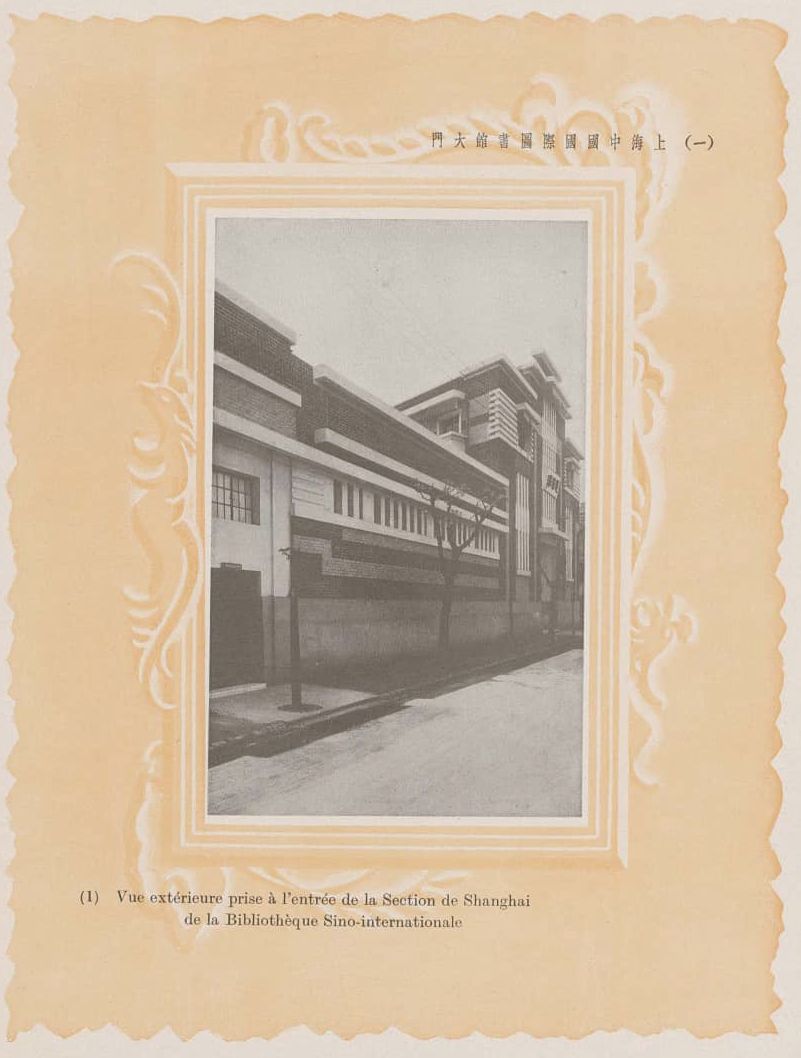
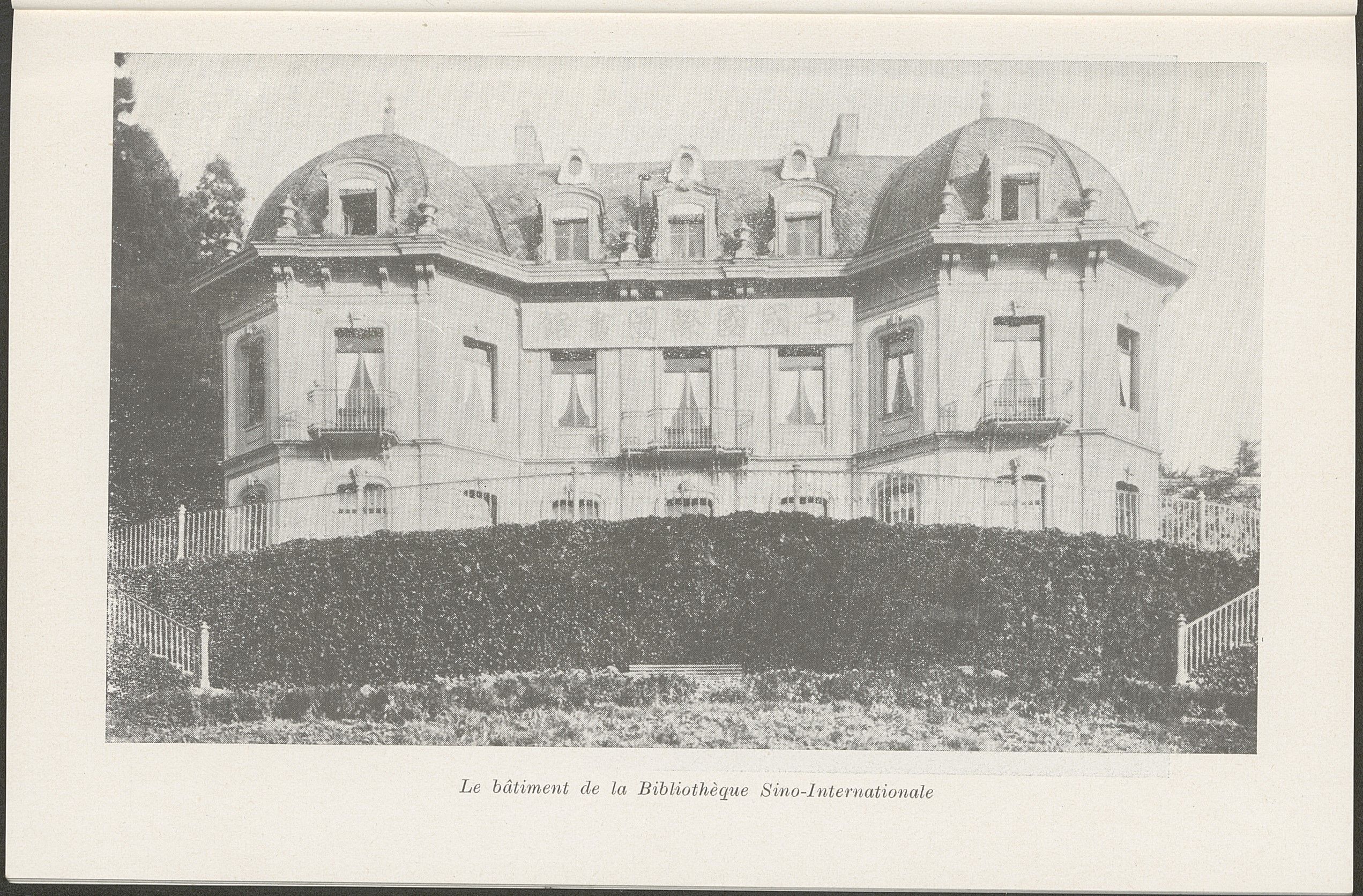
Thanks to researcher Xavier Bouvier, the location is confirmed by below picture from an original brochure from 1934 about the BSI both Geneva and Shanghai branch, that he shared with me.
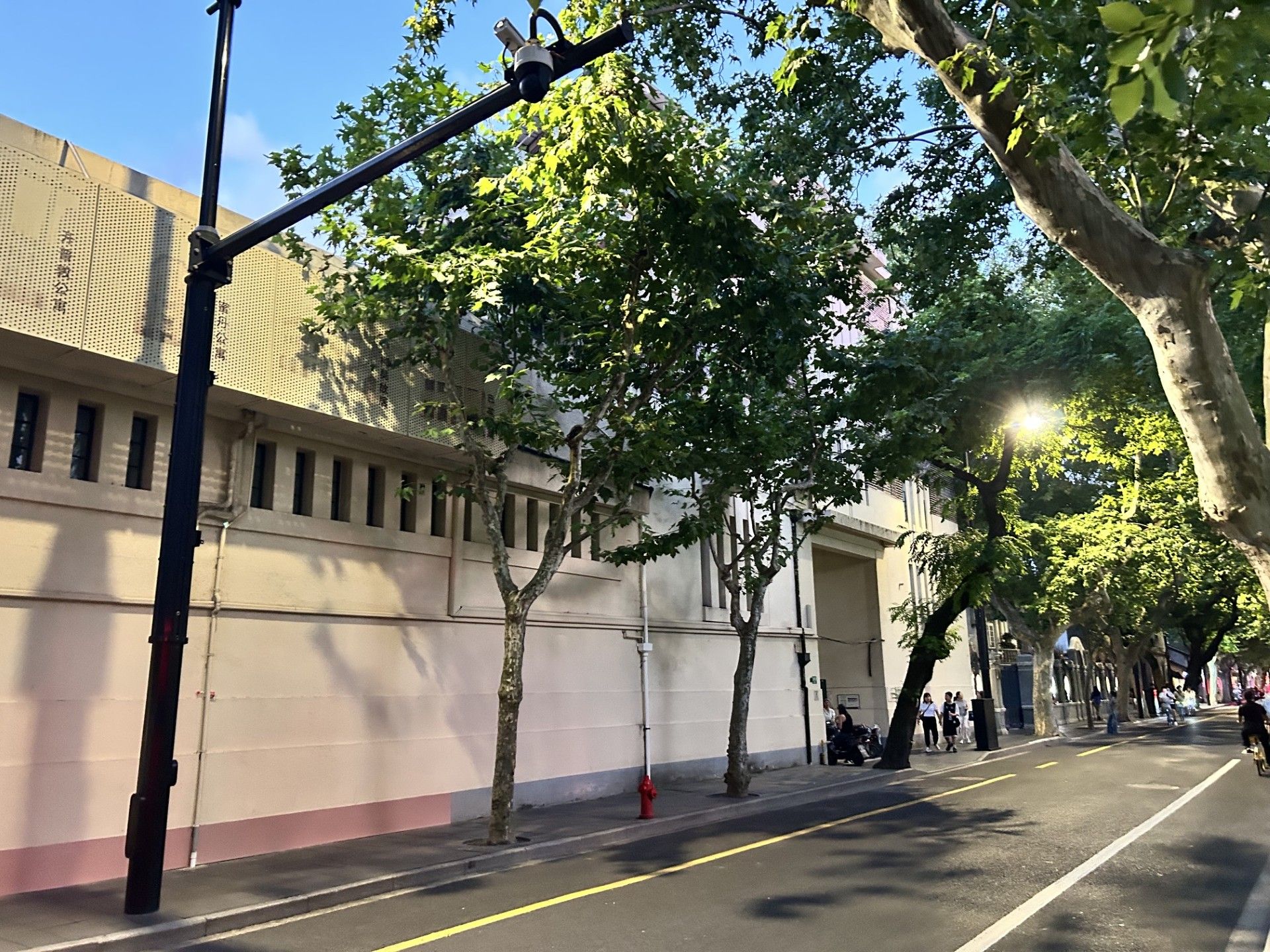
Trees have grown since then, but the view is quite similar. The right part of the building is an apartment building.
The BSI in Geneva contained 200.000 books in Chinese. The Shanghai branch of the BSI contained about 50.000 books in mostly French and German. About 2000 of them originated from a donation of the “Club Diderot”, led by Alexandra Roubé-Jansky. She travelled to several times China between 1932 and and 1935 before spending some time as Shanghai correspondant for French daily Paris Soir in 1936.
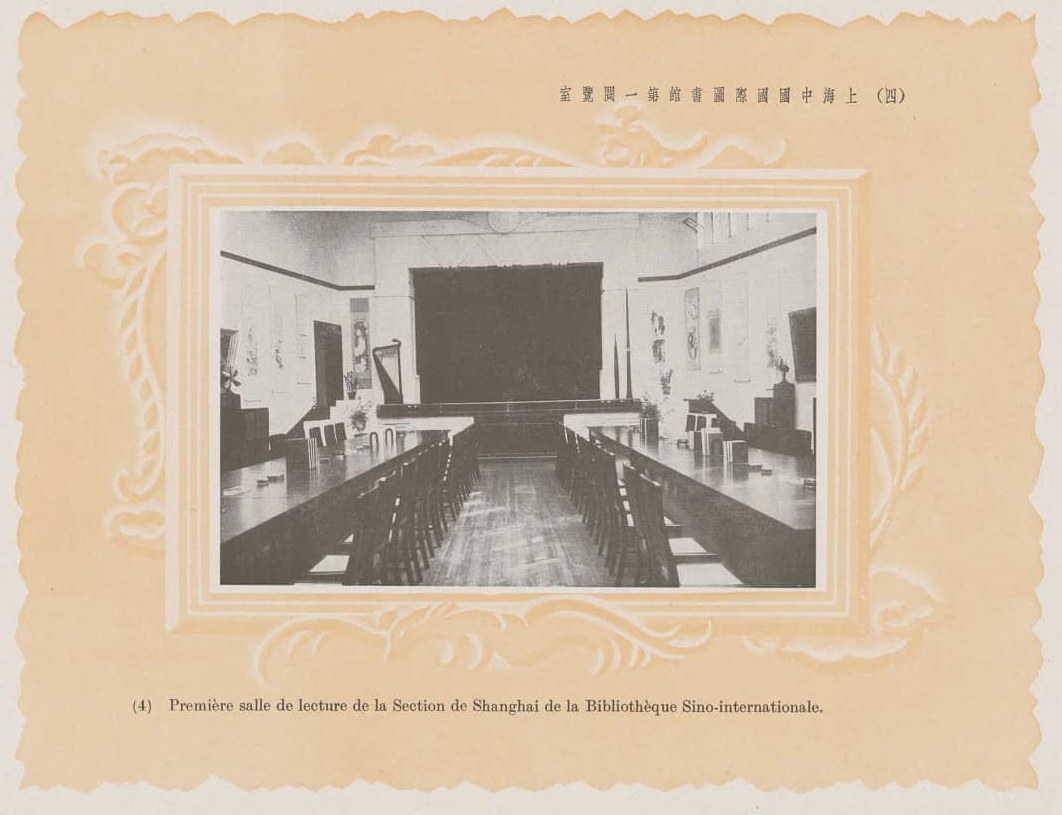
The inside of the building included a number of reading rooms, as well as storage rooms for books. The inside of the building has been remodeled and is now the Wukang Lu Tourist center. As the space is now fully open, it clearly shows that the building of the BSI is of triangular shape. Originaly, the space was devided in several rooms. As shown on picture below, the number 1 reading room of the Shanghai branch had high up windows facing the street. This must have been on the right-hand side when coming into the library.
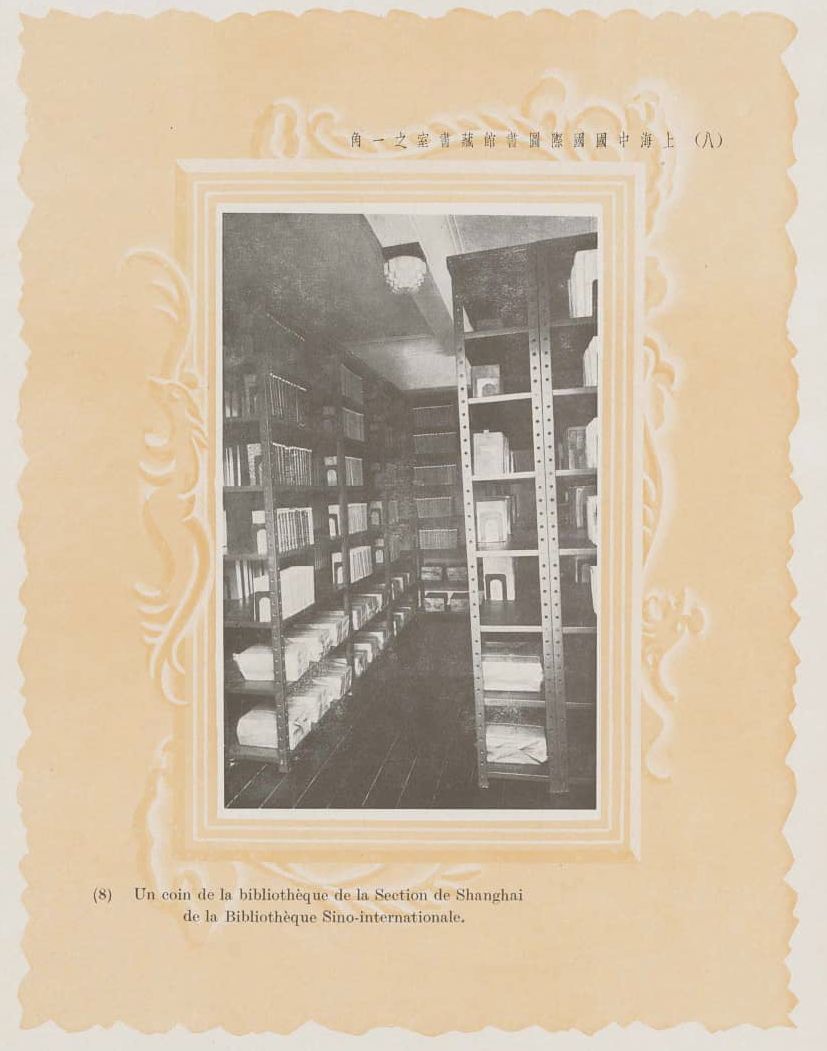
Another picture shows rows of books, in the library. Clearly 50.000 books needed quite a lot of space for storage.
The apartment building on the right side of the building has a separate entrance from the BSI. Its façade is noticable with its high entrance and narrow windows.
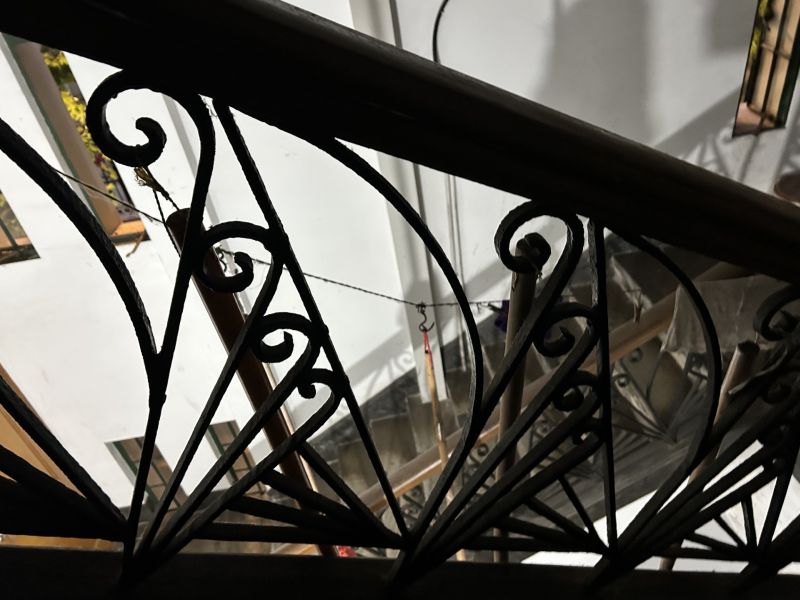
Interior shows a spiralling staircase with wrought iron art deco guardrail. The narrow windows are very specific to this building.
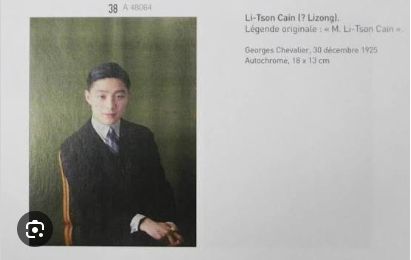
Thanks to Shanghai journalist Michele Qiao, we know that the architect of the building was Li Zongkan / 李宗侃 (1901-1972), who studied at Ecole Speciale d’architecture in Paris. He was the nephew of Li Shizeng. Li Zongkan also supervised the construction of the Nanjing Great Hall of the people, the former National assembly building of the Republic of China built in 1936.
Autochrome of Li Zongkan – 1925
Li Shizeng was a connection of Hua Nangui and Stephanie Rosen-Hoa from their time in Paris. It is safe to assume that Stephanie Rosen-Hoa came to his house during her regular trips to Shanghai, particularly in 1930-31 when making the movie version of Love and duty. She probably also visited the BSI new building after completion.
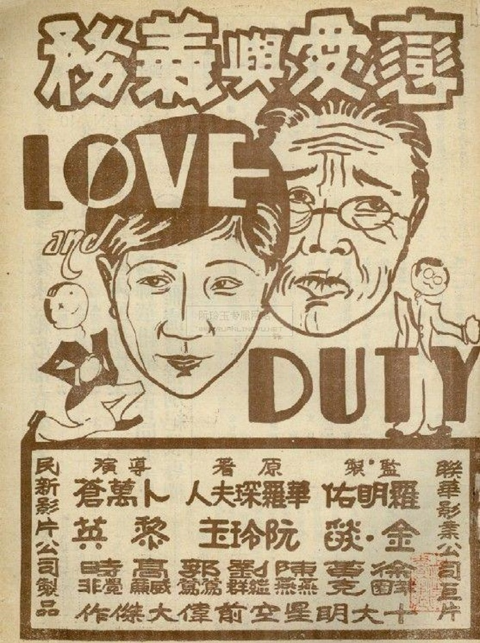
I have been researching the story of the book and movie “Love and duty” / 恋爱与义务 since more than 3 years. This movie was lost in the 1930s and found again in Uruguay in the 1990s. How did this happen?
The movie “Love and duty” was out in 1932, a few years after the book publication in 1924. Like the book, the movie was a great success. The story of the fight between tradition and modernity, as well as the melodramatic theme of the movie attracted the public attention. At the same time, the amazing performance of leading actress Ruan Lingyu helped to turn the movie into a block buster.
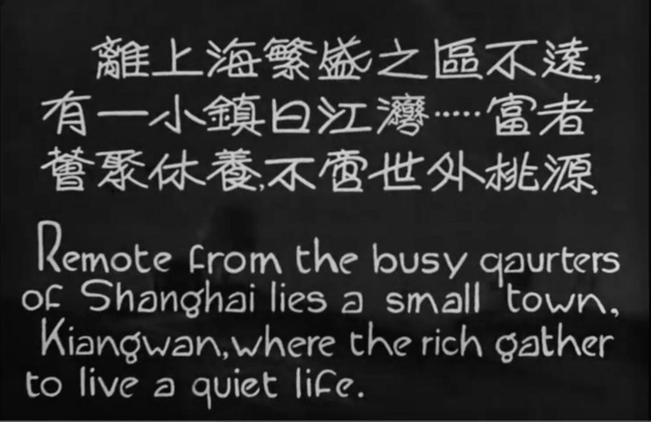
As a silent movie, it contained some written dialogues both in Chinese and in English, showing an interest for non Chinese audiences and export outside of China. The Lianhua movie company was registered in Hong Kong and Malaysia-Singapore was an easy target for export. Although I did not find proofs that “Love and Duty” was shown there, it is highly plausible as Chinese was spoken by many people and the link between mainland China and South-East China has long been very strong.(see post “Xiamen, the South East Asia connection”). The movie was shown at the Sino-International Library in Geneva. It is possible that it was also shown in other places in Europe or the USA, but no trace of this has been found either. So how did a copy end up in Uruguay?
Intertitle of the movie love and duty in Chinese and English
Physical films used in the 1920s to make movies were very fragile and many movies were lost during this period. Using highly flammable nitrate-based material, the movie sometimes burned down during processing or projection. The actual film could also lose its images when not properly stored. It is estimated that 75% of all silent movies were lost. Love and Duty was lost, no copy of the movie was known to have survived.
This all changed when a nearly full copy of the movie was found in 1993, in Montevideo in Uruguay. This small country of South America, crushed between Brazil and Argentina, was the probably the least predictable place where to find a lost Chinese movie from half of a century ago.
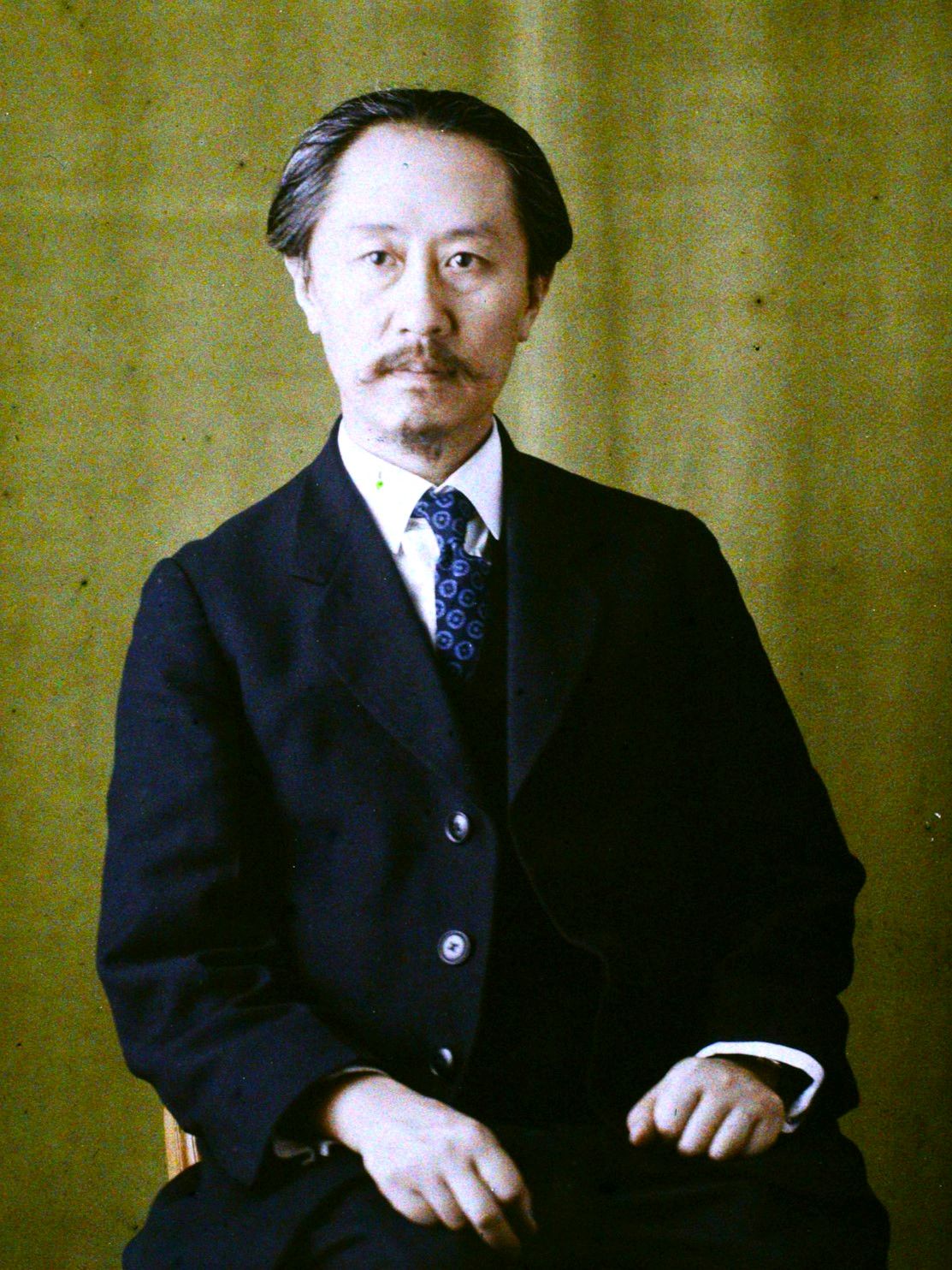
Autochrome of Li Shizeng from 1928
The main character of this story is another Chinese who spent time in France is the early 1900. Born in 1871, Li Shizeng / 李石曾 was an educator and a politician. He moved to France in 1902 to study French intensely before studying in 1903, at agricultural school Ecole Pratique d’Agriculture du Chesnoy, south from Paris. After graduation three years later (1906), he went to study botanics at Sorbonne University. He focused the properties of soy, surely crossing the path of Stephanie Rosen-Hoa who also studied botanics at Sorbonne University around the same years. (see post “Stephanie Rosen-Hoa at Sorbonne University” for more details).
Li Shizeng also took part of the publication of a magazine in Chinese and esperanto, like Hau Nan Gui and Stephanie Rosen-Hoa. As Chinese students in Paris were few, it is highly probable that he was friend with them during Sorbonne time, as they shared a passion for changing Chinese society and politics as well as for esperanto.
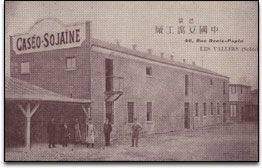
Usine Caseo-Sojaine (source wikipedia)
He created a soy processing and tofu factory in La Garenne-Colombes, in Paris suburb, in 1908. Called “Usine de la Caseo-Sojaïne), it was visited by Sun Yat Sen in 1909. Li Shizeng came back to China in 1911, before the revolution. He and initiated the work-study program along with Cai Yuan Pei and returned to France in 1913 to organise it from Montargy. This program would later enrol many high profile Chinese youth, including Deng Xiaoping and Zhu Enlai.
Li Shizeng returned to China in 1919 to teach at Peking University and at the Sino-French University, the sister institution of Institut Franco-Chinois in Lyon. As a French and esperanto speaker in education circle, he was surely in touch with Hua Nan Gui and Stephanie Rosen-Hoa, forming part of their litterary circle, along with Cai Yuan Pei. (see post Horose litterary circle for more information). In 1924, he was appointed manager of the Palace Musuem in Beijing, the former emperor’s forbidden city.
One of the main figure of education in China, Li Shizeng also created the “Bibliothèque Sino-Internationale” (BSI) or Sino-International Library in Geneva in 1932 during a stay in Switzerland. The organisation was designed to promote Chinese culture around the World, it was funded by the Nationalist goverment. It was a tool of promotion of China to Europe, in particular to the League of nations also located in Geneva. In 1932, the library moved to the Chateau de Montagère.
The movie Love and duty was shown at the Geneva branch of the BSI on 7th October 1935. As Li Shizeng was a friend of Hua Nangui and Stephanie Rosen-Hoa, he included a copy of the 1931 movie in the collection. A Shanghai branch (Section de Shanghai) of the BSI was located at Route Fergusson 393 in the former French Concession, and a New York branch was planned but was never created.
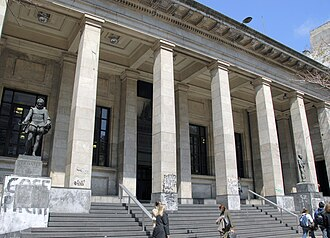
Li Shizeng spent much of WW2 in the USA with some trips to Chongqin. In 1948, he returned to Geneva, as the communist troops where approaching Beijing. In 1950, Switzerland became one of the first country in Europe to recognise the new People’s Republic of China. Li Shizeng moved along with the 200.000 books of the Sino-International Library to Montevideo in Uruguay. The collection was hosted by the Uruguayan National Library. Li Shizen moved to Taipei in 1954 and died there in 1973. The collection Library stayed in Montevideo.
Uruguay National Library in Montevideo
In 1993, the core content of the library was brought to the National Central Library in Taipei. It contained approximately 100.000 books, including ancient Chinese books. It also contained the 6000 volumes of the Gujin Tushu Jicheng (古今圖書集成), the Chinese encyclopedia from the QIng dynasty, newspaper and magazines from the library, and 3000 photographs. A copy of the movie “Love and duty” was also discovered among those documents. The lost movie was found back.
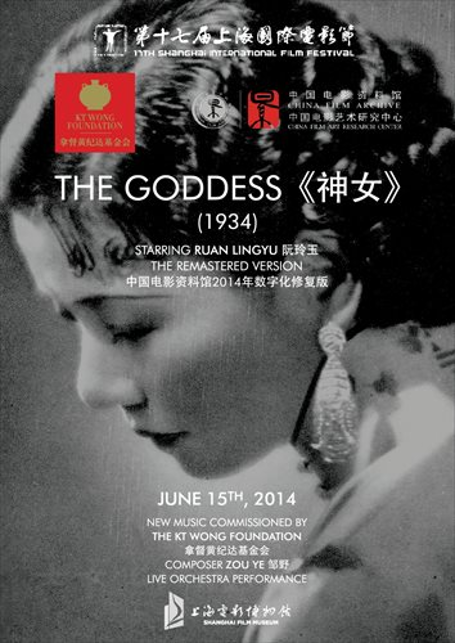
Restoration was done by Cineteca di Bologna’s L’immagine Ritrovato laboratory in 2013. The movie shown along with the Godess, another Ruan Lingyu major movie, at the 2014 Shanghai Film Festival. This marked the return of the movie to Shanghai, nearly 80 years after being filmed in the city.
No other movies seem to have been included in the library. Due to his connection with the couple Hua Nan Gui – Stéphanie Rosen-Hoa, it was probably Li Shizeng’s personal decision to take a copy of the movie with him, probably as a showcase of Chinese modernity in the 1930s, as the film was a major block buster then.
Researching this article, I found that a similar story happened to one of my favorite movie. Art Deco masterpiece, Metropolis from Fritz Lang, had a 25 minutes section lost… that was retrieved in 2008 in Argentina.
Located at the corner of Huai Hai Xi lu and Fuxing Xi Lu, the Xu Hui Art Museum is located in an old mansion renovated around 2005. Hosting various art exhibition, it is quite different from the previous tenant of the building… a Sichuan Restaurant. There is little in English about the history of this building and its original occupant, but I happened to find more by complete random. Here is the story of the house located on 1413 Avenue Joffre, and its uncommon owner Ye Hong Ying.
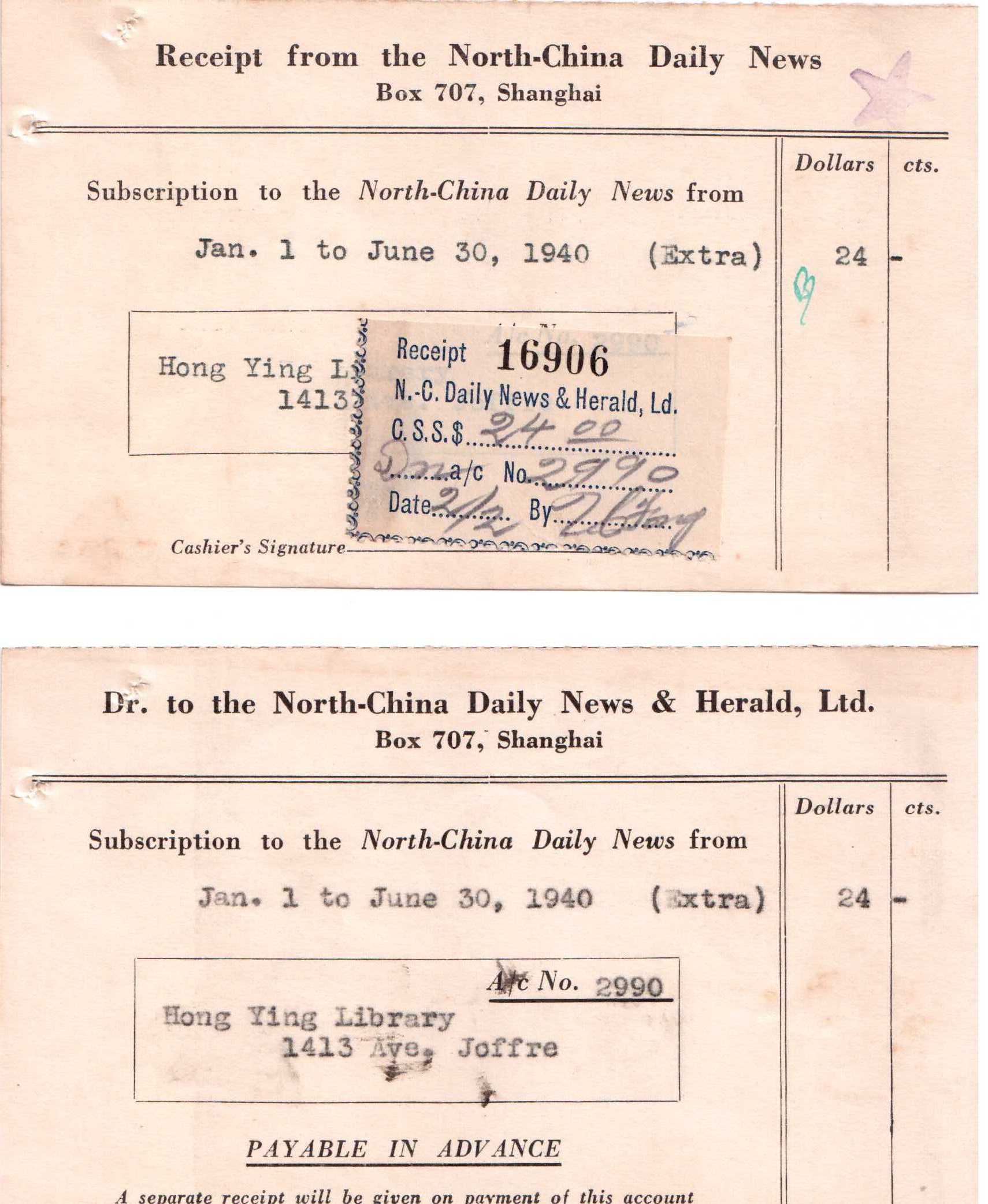
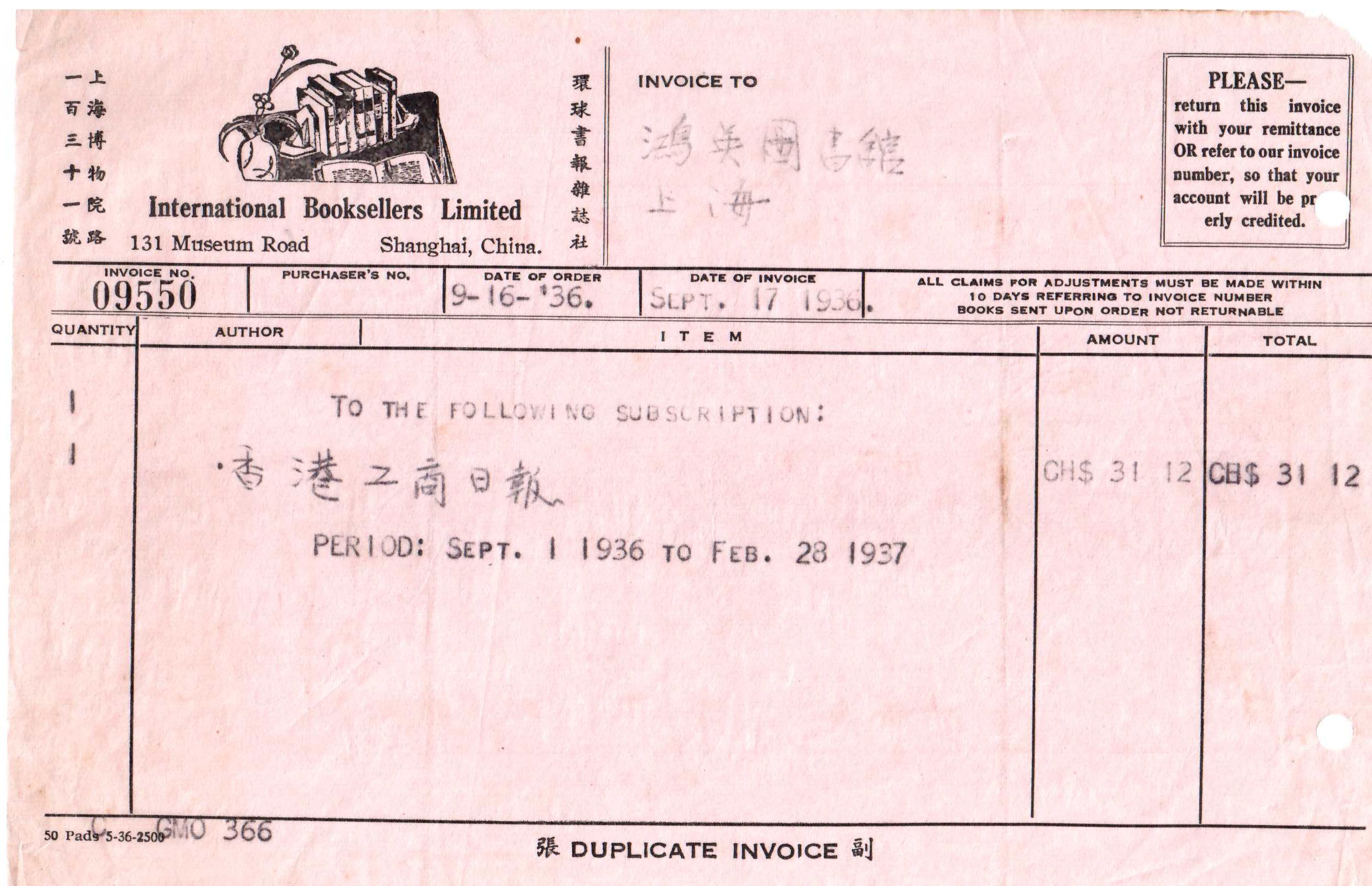
With them came a significant number of subscription invoices to major English Newspapers published in Shanghai, starting with the most important one, the North-China Daily News. They also included other titles such as the Shanghai Herald, the Shanghai Times and The China Weekly Review. Finally, I also found bills from famous publishing companies such as Kelly & Walsh, The Commercial Press, The China Press, as well as “International Booksellers Limited”, a bookstore on Museum Road. Since all the bills were addressed to “Hong Ying Library”, it was clear that the location was a library in the 1930’s but there was very little information about the establishment or who Hong Ying was.
No results were found on the English internet, however the Chinese one gave the answer and details about this gentleman and his library.
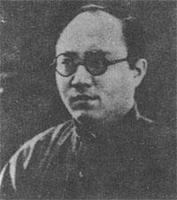
Ye Hong Ying
Born in 1860 in Xiamen, Ye Hong Ying moved to Shanghai with his family in 1867. He went to Japan to learn the trade of sea food in 1877, coming back to Shanghai in 1881. From that point on he became a major trader in sea food, abalones and other sea delicacies, as well as exporter or various commodities. He was an adviser to the ministry of commerce of the Beiyang government, as well as director of the Shanghai Chamber of Commerce. By the mid-30’s his empire included cotton mills as well as banks and insurance companies. He spoke Chinese, Japanese and probably English as well.
In 1933, he set aside the amount of 50 million Chinese Dollars to create a English language library. The establishment became known as the “British Library” or Hong Ying Library. It officially opened in 1934, containing more that 150.000 books, 3600 magazines and subscriptions to many dailies (including the ones mentioned above) . Unfortunately, it did not last for long as the content was transfered to the Shanghai library in the 1950’s.
Libraries the main point of spreading culture and information at that time. Other major libraries in the same area of Shanghai included the Hezhong Library, the Shanghai branch of the Sino-International library, the Jesuits library in Xu Jia Hui as well as the library of the Royal Asiatic Society. The Hong Ying Library was a major source for English books in old Shanghai. Most importantly, it was open by Chinese people who were eagerget news and input from the rest of the World, getting the knowledge close to home. As such, it was surely a place often visited by modern English speaking Chinese and probably foreigners as well.
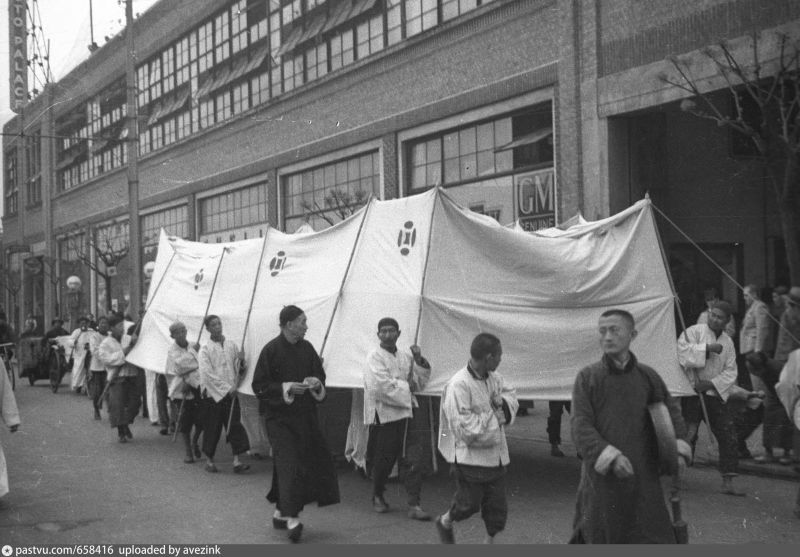
Ye Hongying funeral was quite a big event of the time. The above picture is taken on Changle lu / Rue Bourgeat.
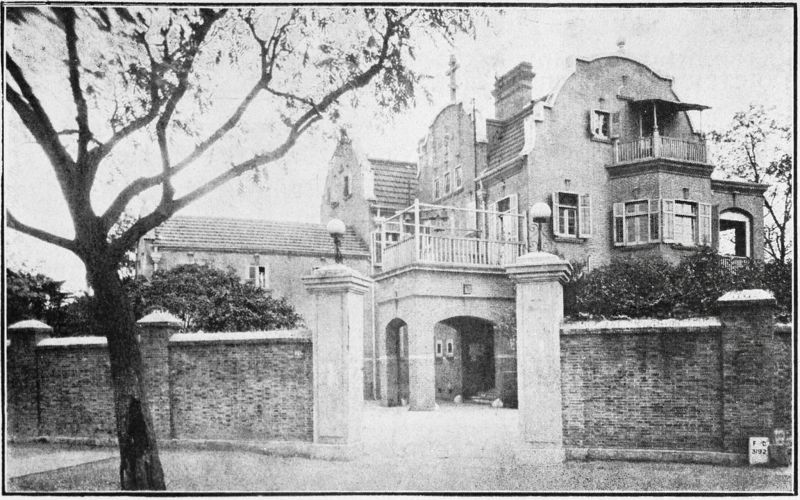
Shanghai researcher Katya Knyazeva has recently come up with some amazing information about the same building. In the 1910s, the same building was the home of the famous Soong family. As shown on above picture, it looked very different at that time. In the 1930 to 1932 period, the same building was a temporary Russian church, before becoming the Ye Hongying library. This building definitely had multiple usage over the years, everchanging while remaining the same… just like Shanghai.