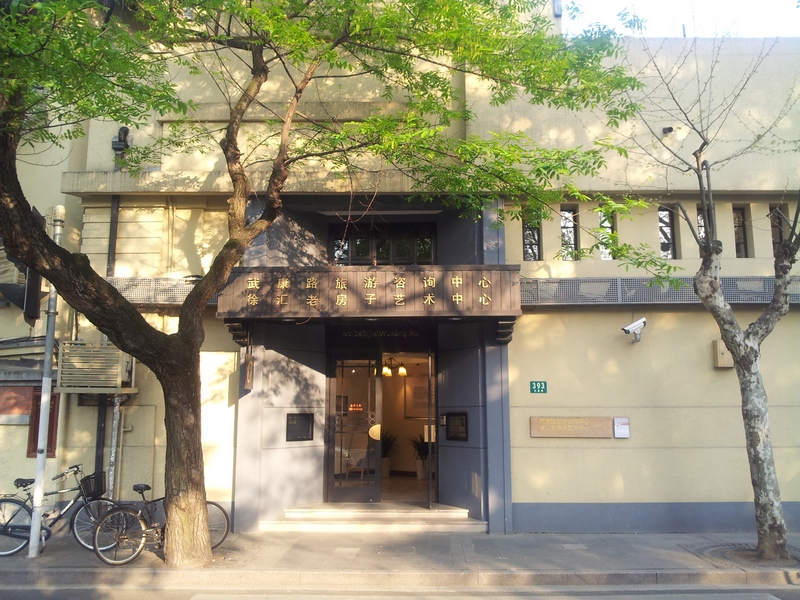
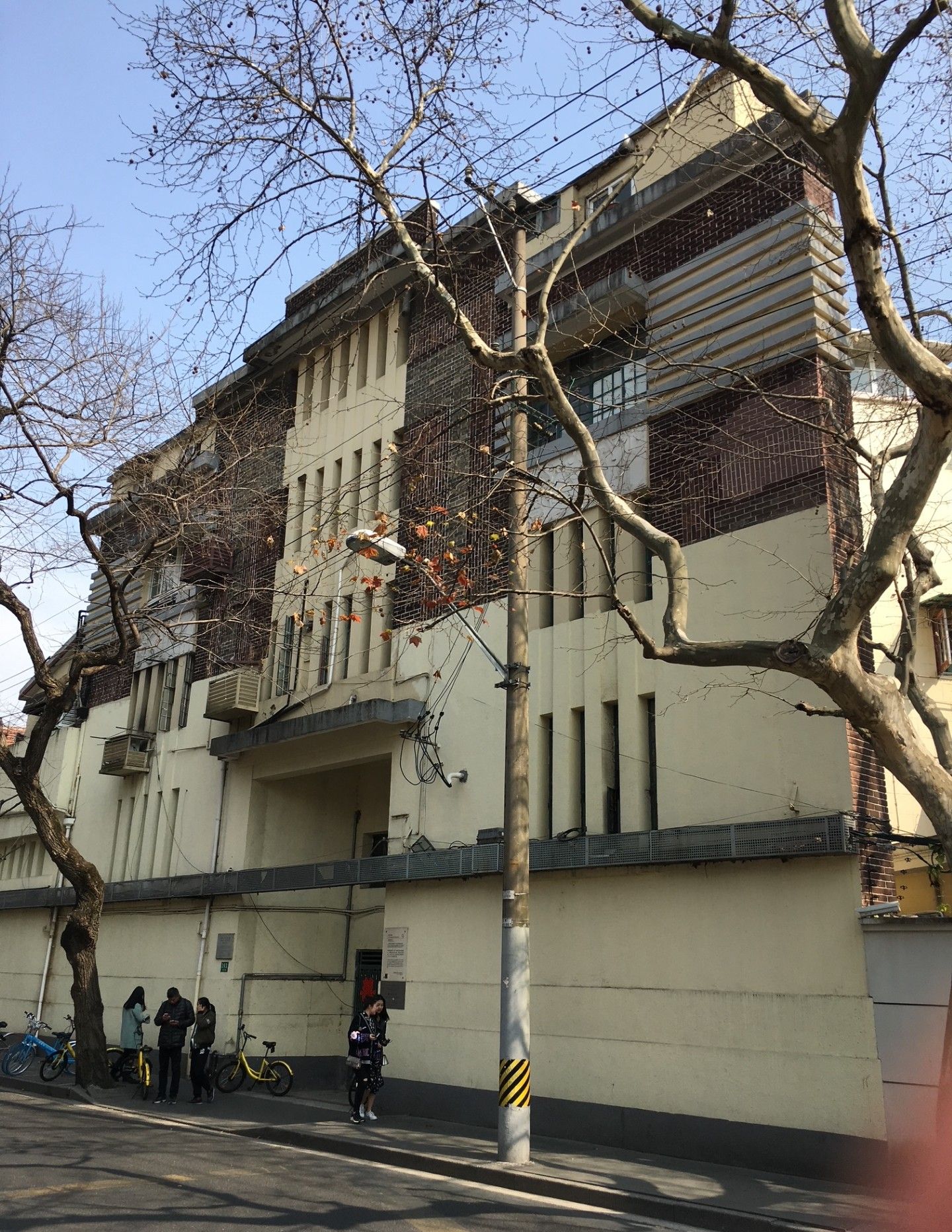
The house located on 393 Route Ferguson, today 393 Wukang lu, is often featured as an example of Shanghai Art Deco. Although I passed by it many times, I only recently discovered its amazing history.
This specific address came up in previous post “How did Love and duty come to Uruguay?“. It was the Shanghai branch of the Geneva based “Bibliothèque Sino-International” (BSI) created in Geneva in 1932 by Li Shizeng / 李石曾. This Sino- International library aimed at display and share Chinese culture to the World and in particular to Europe. It had a Shanghai branch, located 393 Fergusson lane, a property bought by Li Shizeng at the end of the 1920s. Its goal was to put Chinese people in touch with foreign culture by making foreign books available to the Chinese public.
Libraries were the great cultural tool at the time, long before the internet. Several other libraries in Shanghai had a similar mission, like the Yong Yin Library a few hundreds meters from the BSI. Other examples include the Hezhong Library, and the library of the Royal Asiatic Society.
Located a few steps behind the Normandy building (called nowadays 武康大楼), 393 Wukang lu is a long and the building with 2 different parts. It was constructed in 1933. The flat part now hosts the Wukang lu tourist information center. Entrance to this part is on the left side of the building and was the entrance to the BSI.
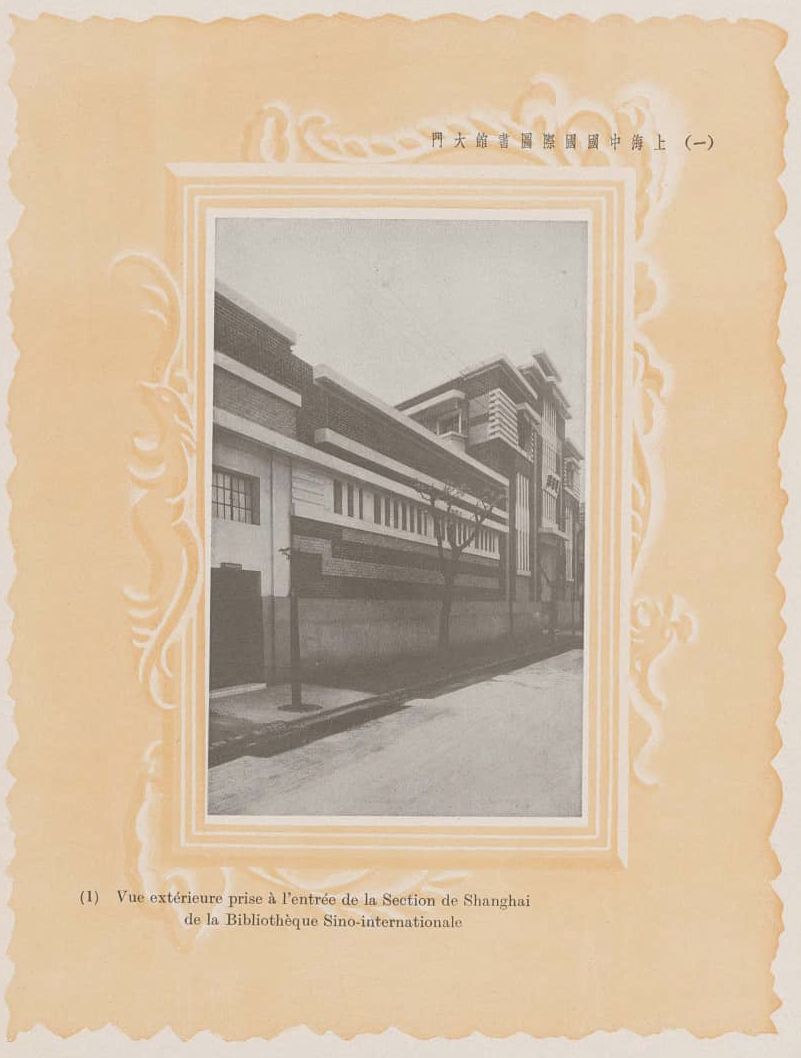
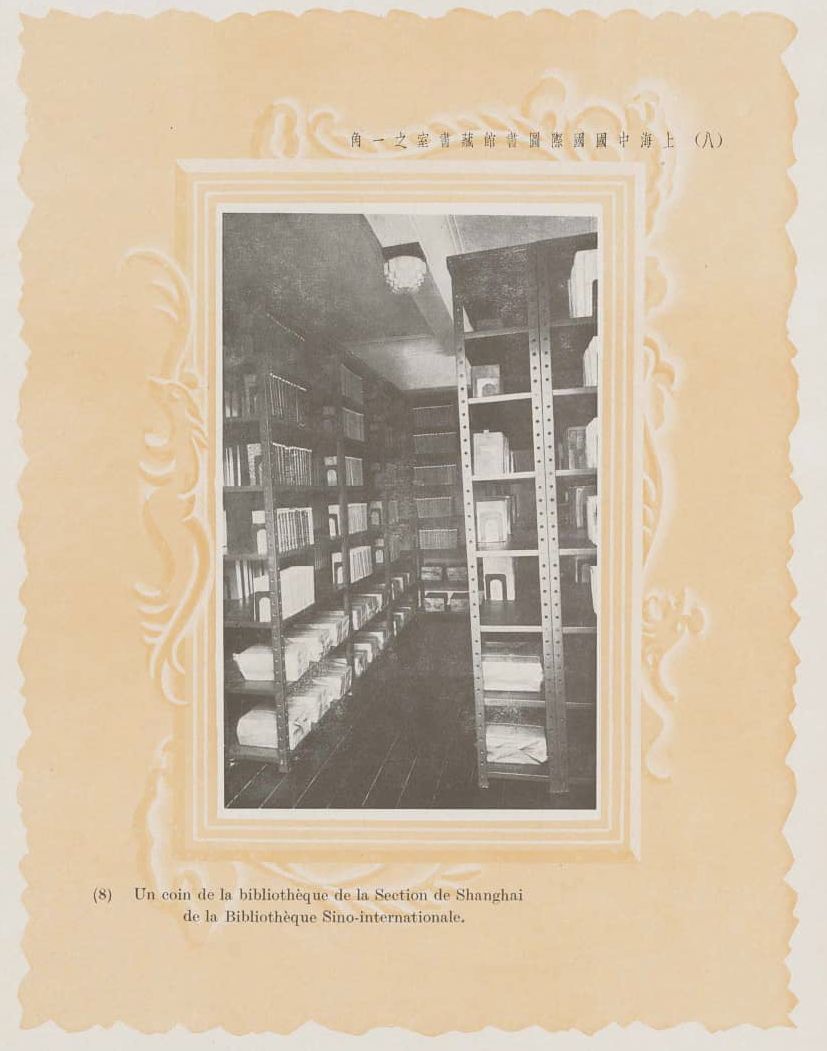
Thanks to researcher Xavier Bouvier, the location is confirmed by below picture from an original brochure from 1934 about the BSI both Geneva and Shanghai branch, that he shared with me.
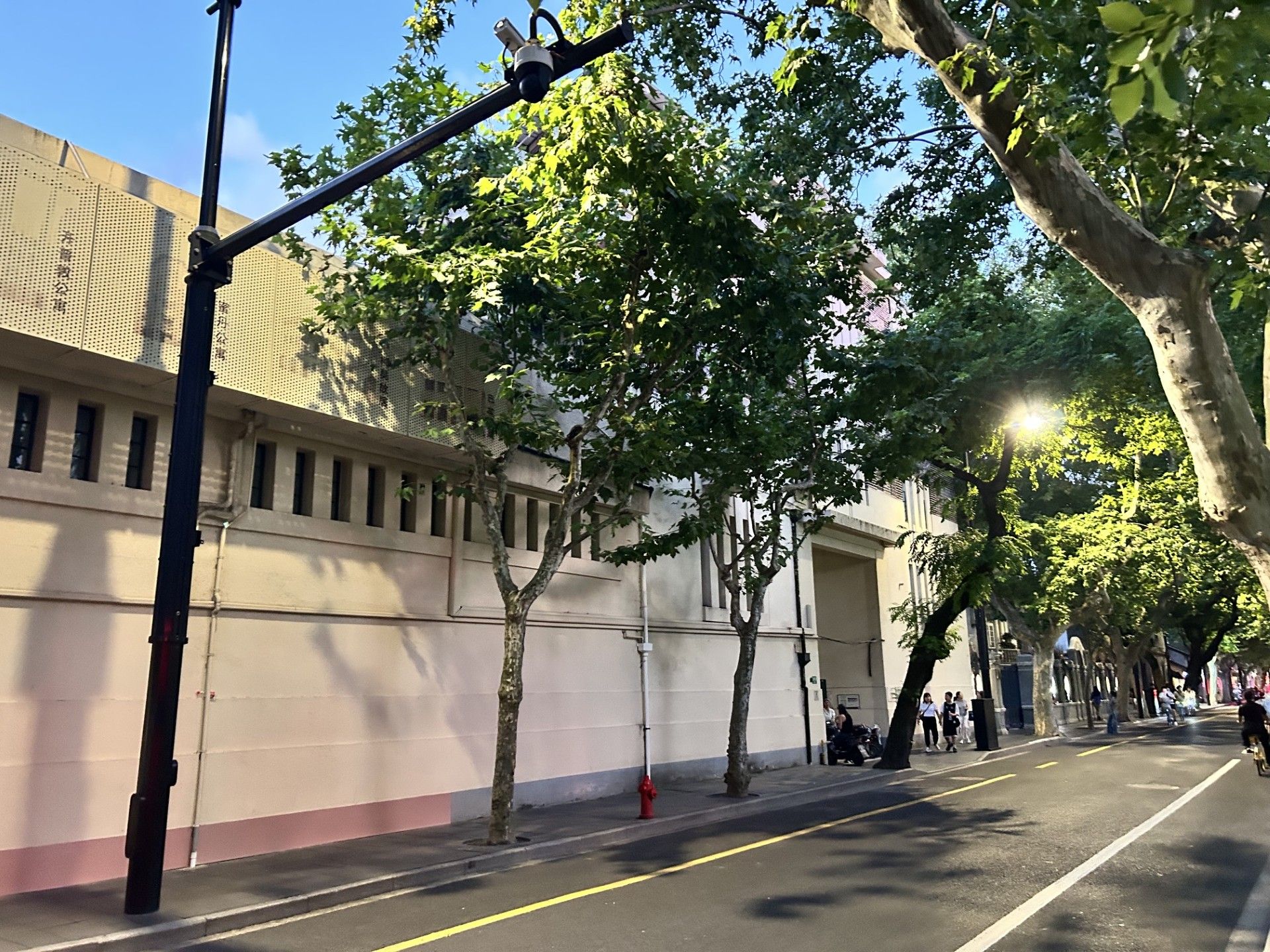
Trees have grown since then, but the view is quite similar. The right part of the building is an apartment building.
The BSI in Geneva contained 200.000 books in Chinese. The Shanghai branch of the BSI contained about 50.000 books in mostly French and German. About 2000 of them originated from a donation of the “Club Diderot”, led by Alexandra Roubé-Jansky. She travelled to several times China between 1932 and and 1935 before spending some time as Shanghai correspondant for French daily Paris Soir in 1936.
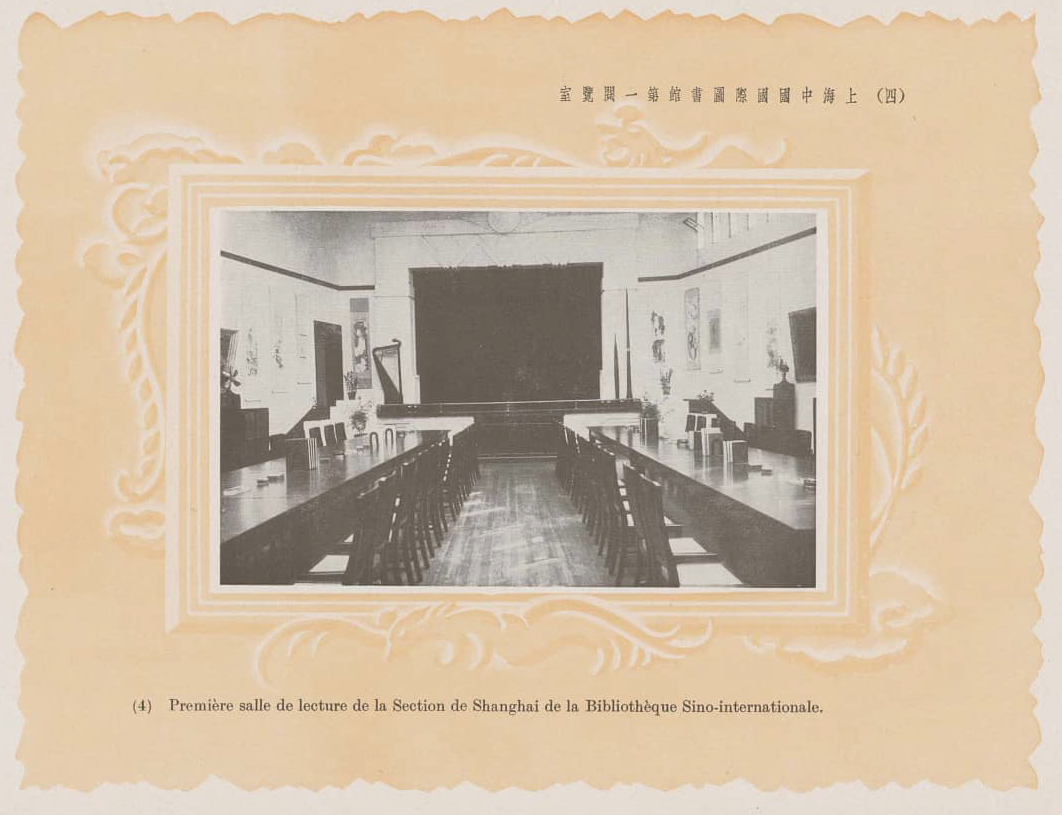
The inside of the building included a number of reading rooms, as well as storage rooms for books. The inside of the building has been remodeled and is now the Wukang Lu Tourist center. As the space is now fully open, it clearly shows that the building of the BSI is of triangular shape. Originaly, the space was devided in several rooms. As shown on picture below, the number 1 reading room of the Shanghai branch had high up windows facing the street. This must have been on the right-hand side when coming into the library.
Another picture shows rows of books, in the library. Clearly 50.000 books needed quite a lot of space for storage.
The apartment building on the right side of the building has a separate entrance from the BSI. Its façade is noticable with its high entrance and narrow windows.
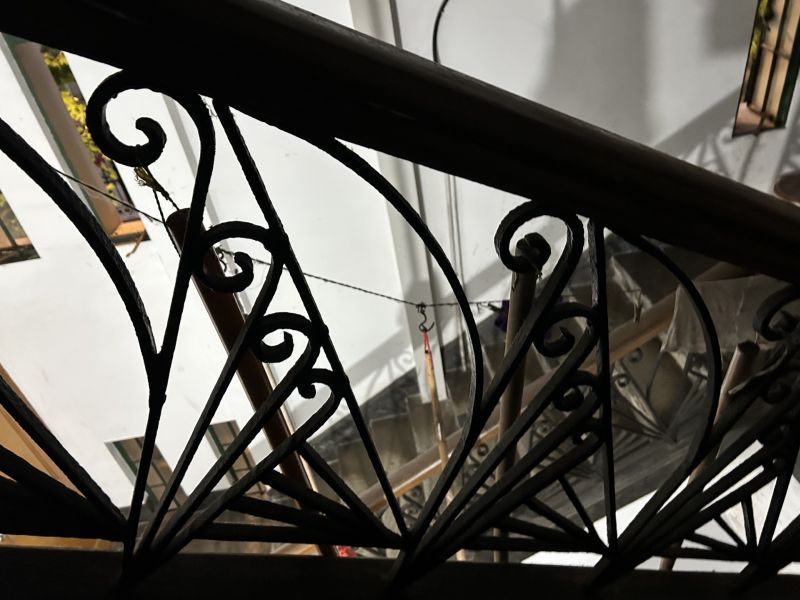
Interior shows a spiralling staircase with wrought iron art deco guardrail. The narrow windows are very specific to this building.
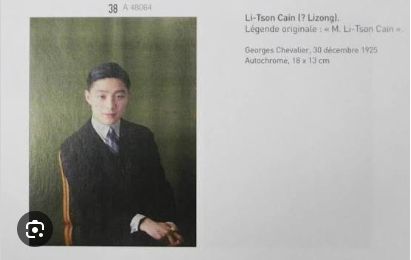
Thanks to Shanghai journalist Michele Qiao, we know that the architect of the building was Li Zongkan / 李宗侃 (1901-1972), who studied at Ecole Speciale d’architecture in Paris. He was the nephew of Li Shizeng. Li Zongkan also supervised the construction of the Nanjing Great Hall of the people, the former National assembly building of the Republic of China built in 1936.
Li Shizeng was a connection of Hua Nangui and Stephanie Rosen-Hoa from their time in Paris. It is safe to assume that Stephanie Rosen-Hoa came to his house during her regular trips to Shanghai, particularly in 1930-31 when making the movie version of Love and duty. She probably also visited the BSI new building after completion.
Shanghailander articles are published on an irregular basis. To be notified when a new article is posted, subscribe to the newsletter using this link, or follow the Shanghailander Facebook page