1920s and 1930s Shanghai was a very special place in China with foreign influences mixing with Chinese culture and modernity. Foreign articles about Shanghai history mostly focus on the former international settlement and French Concession. In depth knowledge about the whole of China in the 1920s and 1930s is what attracted me to this recent book, by Xavier Paulès, “The Republic of China”. As this is also the main period when Stephanie Rosen-Hoa lived in China, thus a great help to understand the background of her story.
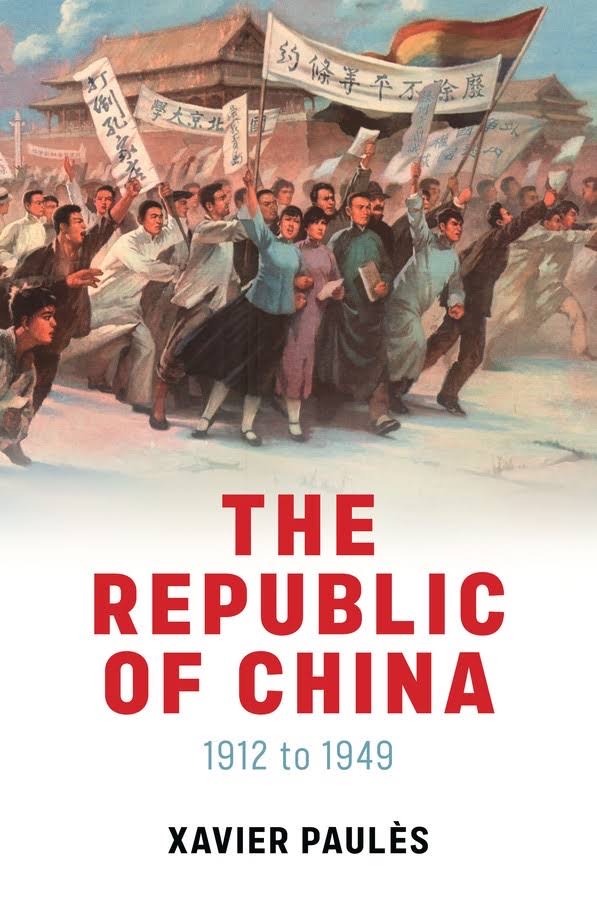
French Sinologist Xavier Paules has already published several books on China’s history. The book is divided into two parts. The first half is a very detailed history of the China from the late 1800 to the 1950. Attention is put not only on the main events but into in-depth analysis between historical figures. The second part focuses on several topics over the whole period.
First chapter is focused on the 1911 revolution and the role of Sun-Yat-Sen and Yuan Shikai. This period is closed with the death of Yuan Shikai in 1916. This is also the period when Stephanie Rosen-Hoa and Hua Nangui settled down in Beijing.
Second chapter is focused on the “ Warlord period”, 1916-1928. Paulès is very good at synthesising the complex Beijing politics of the time, dominated by the fight between Shandong master Wu Peifu and Manchouria general Zhang Zuolin. This part is also well illustrated in Albert Londres’ “Madness in China“. This is the same period as the 1924 Jiangsu-Zhejiang war, for controlling of the Chinese part of Shanghai. Paulès shows how China managed to improve it international stature during the time, exactly when the government was extremely unstable. Finally, he underlines the influence of student lead movements in 1919 Beijing also called may 4th movement, to the whole society. The dean of the Beijing University where the movement initiated from, was no other than Cai Yuanpei. This is particularly interesting to me as he was also a close friend of Hua Nangui and Stephanie Rosen-Hoa, the author of best seller “Love and Duty”. Being based in Beijing during all this period, they lived through this hectic period of the history of China.
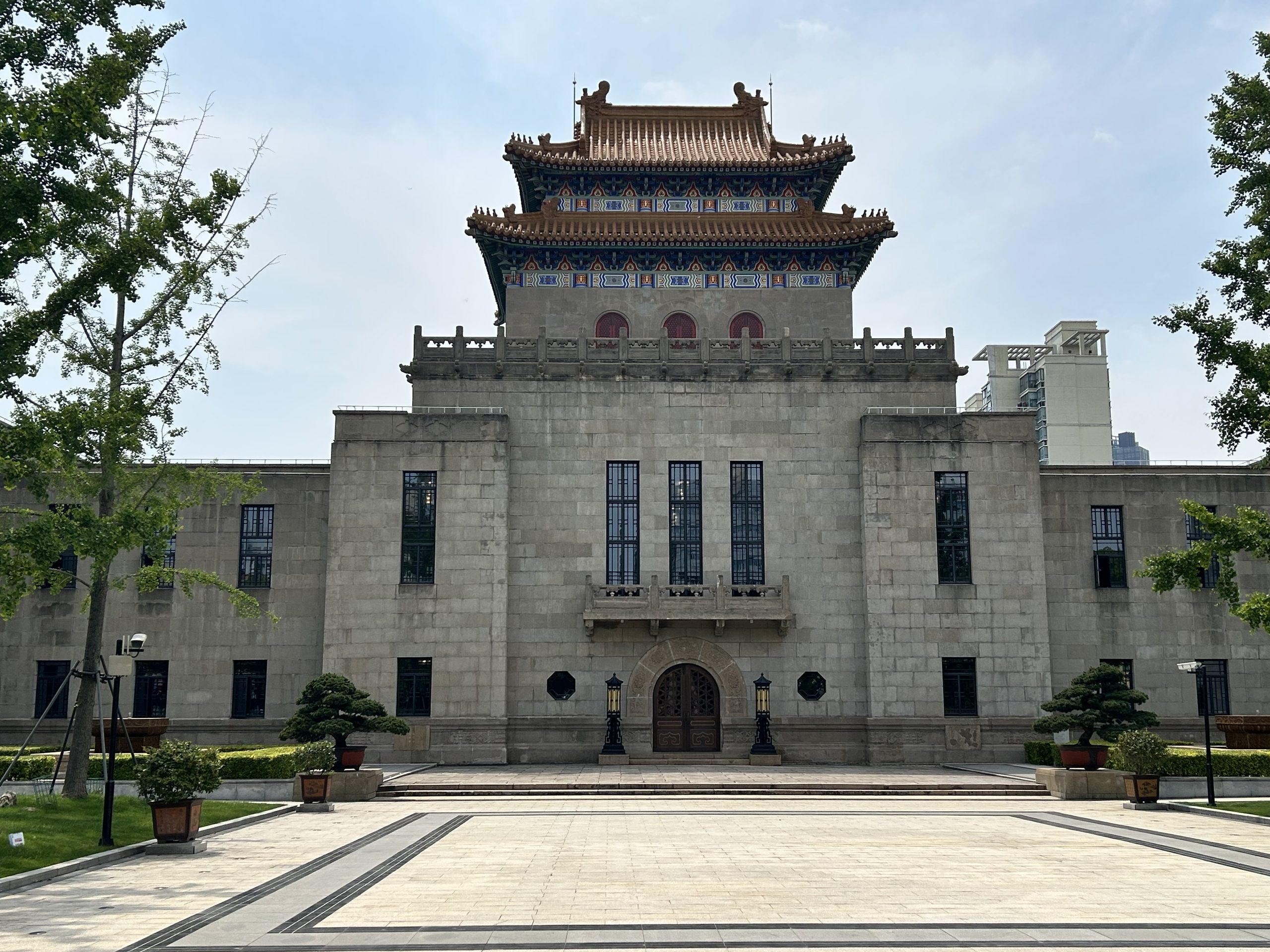
The following chapter is focused on the Nanjing decade, 1928-1937. The period was marked by a return to stability on the coastal part of China. This is visible through the construction of many public buildings including the new Jiangwan district in Shanghai and the reconstruction of Nanjing as a capital city. This is also a time of major economic growth in Shanghai, with the foreign concessions and the Chinese converging to form a city of 3 million people. Last two chapters are focused on the sino-Japanese war, and then the civil war ending in 1949.
The second part of the book has four chapters, focusing on specific issues: Chinese economy, building of the state, changes in society and cultural renaissance. They make the book really valuable and I got really interested in the last two.
In terms of society, one of the massive change was the will to abolish arranged marriages. For marriage to come from the free will of people, as opposed to a contract made by two families without much consideration for the couple, was a central topic in the society at the time. This is one of the central themes of the book “love and duty” and was surely one of the reason of its success. First published in 1921 in a literary magazine, it was turned into a book in 1924 and was a great success. Arranged marriage was formally banned by 1931 new civil laws, but remained common practice, apart for a small share of the population.
One of the main point of the new culture was the usage of vernacular language (or baihuawen / 白话文 in Chinese) for literature. This was advocated by a number of authors or educators who are also considered as the forefathers of May fourth movement, including Lu Xun, Cai Yuanpei and Hushih. Stephanie Rosen-Hoa and Hua Nangui were close to them, as shown in post “Horose litterary circle“, which probably influenced their writing.
The book is a great study of the republican period of China. It is very well documented while remaining easy to read. It gave me a lot of information to understand the political, social and intellectual background in China and its influence on Shanghai. The book was published both in French and English. I recommend it to anybody interested in the period.
Shanghailander articles are published on an irregular basis. To be notified when a new article is posted, subscribe to the newsletter using this link, or follow the Shanghailander Facebook page
An excellent book indeed! You may also wish to refer to the interview with Xavier Paulès that I had the pleasure of conducting in June, as part of the Société d’Histoire des Français de Chine (SHFC) podcast series, which is available on our website.
Yes indeed! The interview of Xavier Paulès (in French) is available at the following link: https://podcasts.apple.com/fr/podcast/histoire-de-chine/id1688918975?l=en-GB&i=1000770813270