Savage destruction of old cities is nothing unusual for people living in today’s China. We all have witnessed the fast disappearance of the Hutongs of Beijing and of the Shikumens in Shanghai. These are the most well known examples of what has been happening in China since the 50’s. Commercialization and economic opening have accelerated the process since the late 90’s, fueled by the appetite of mega real estate companies. They eagerly transform century old ways of communication into "Prime real estate location" with great potential return. In the meantime, they forget that the value of the land was mostly created by the generations that walked these streets before, much more than by the cheaply built concrete stacks they added up on the top of it. This is clearly supported by all kind of authorities whose interest in the process varies from genuine (but sometimes misplaced) will to propel people into a brand new world… to more direct lucrative personal interest. Often both are closely intertwined, the former being an excellent excuse for the later.
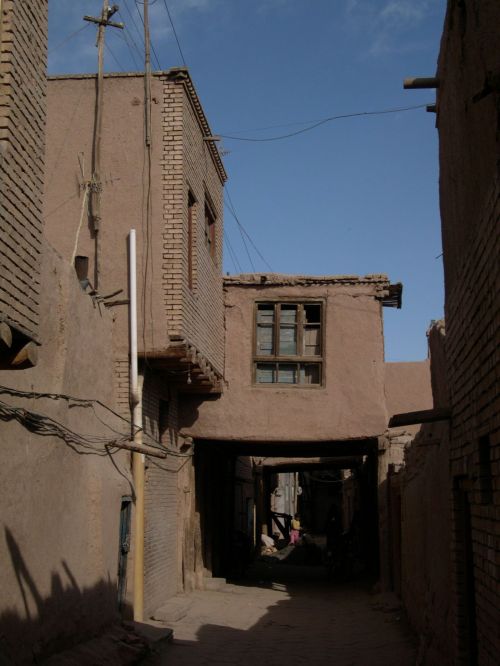
Kashgar’s case is even more touching, as one can easily feel the ideological touch behind it. Walking in the old city, you fell like you are somewhere between Tehran or Marrakesh, as far away from Beijing as you can be. The last remains of the century old city walls are used as junkyards and old tombs are being surrounded by concrete blocks. A Chinese city that looks totally out of place was created next to the old Kashgar. It is still possible to see really old remains but one really has to look for it out of the fast reducing central old quarter. Most of them are one or two floors buildings surrounded by concrete blocks with blue windows and white tiles… they are scheduled for destruction soon. The most ridiculous of it all is the Aldous Huxley’s Brand New World style new city that is standing empty in the middle of the countryside. Designed to host people living in the old city, it remains unused as the inhabitants refuse to leave traditional habitat. The new argument to move them out is the scare of earthquake, somewhat reminding of the destruction of Bam in Iran in 2003. This is surely a real danger, but I somehow doubt whether the quickly built concrete blocks would resist any better to an earthquake that traditional constructions.
Fast destruction of Kashgar is such a remainder of the fast destruction of my beloved Shanghai. Replacing traditional houses with concrete blocks seems the instant solution to urbanization questions at each end of the country.
Life at the end of the lane

Old Zhang is sitting in his home, at the end of the lane,
looking at the cranes tearing down the street. “I was born in this street, and
now they break it down. It does not look so good but I am used to it and to
this neighborhood. ‘Your house is not just a shag, it’s a jewel of XIXth
century colonial architecture.’ I’m not sure what it means, but it’s what a
passing by foreigner told me with his terrible Chinese. He also told me that
the cube of a house next door was a jewel of Art Deco. I am not sure what he
meant about either but this all seamed pretty important for him. It does not
matter anymore, he has gone away and they torn down this house last week.
They told me that it’s for the best, that our life in a far
away suburb, in a new high rise building will be so much comfortable. It’s surely true,
but I don’t want to go. It’s not the little money they want to give us to move
away, that will be enough in any case. I can’t remember the name of this new
place and I don’t even want to learn it. All my friends will be lost, spread
into various districts, and I will loose all my life with it. It’s maybe the
future, but I’m not sure I want to be part of it. The past was tough some
times, but not always so bad. I am so sad for Shanghai and my home that the skyscrapers are
rapidly eating.
My son already moved to this new apartment and loves it. He
often comes by to take me there, but I still refuse to go. Old Ma, my old
neighbor, moved into one of this new tower about a year ago. He was the first
ones to go, moving with a smile on his face, realizing the long life dream to have a place of his own. He
had been promised long time ago to get an apartment and it finally came. He
disappeared for a while, and then started to come back. He comes here everyday
now. It takes him hours to cross the whole city, just to enjoy old friends and
familiar places. He says life is comfortable there, but there is nobody to talk
to. My life has always been at the end of this lane and I can’t imagine it differently.
Seeing it disappear makes me feel that I am also going to die soon.
Budapest old and new
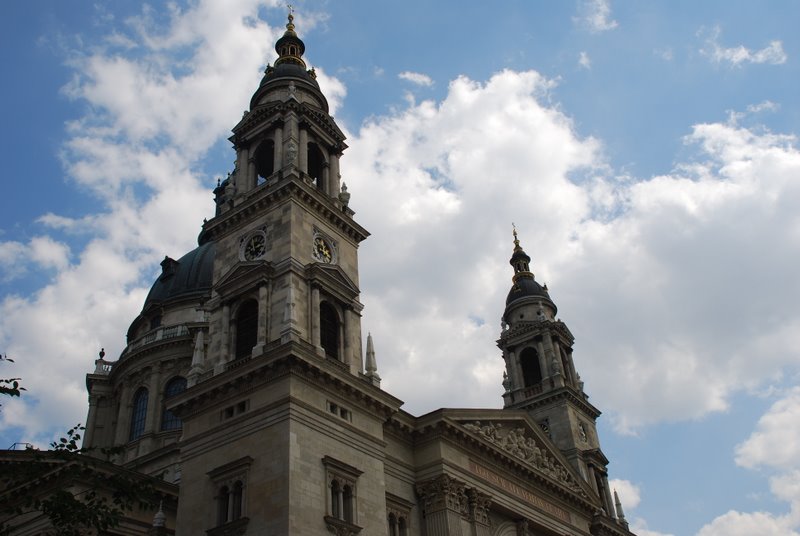
As much as a I love Shanghai, it was not the first city I fell in love with. Getting used to the Chinese megalopolis in 2004 was actually not easy coming from the charming Central European City of Budapest. I have spent more than 5 years walking the paved streets of this XIXth century beauty. I knew about every corner of several districts, in particular the 6th district, home of numerous theatres and cafés where I lived most of the time. Though I left the city about 4 years ago, I have managed to come back regularly (see post in love again), being able to keep a strong link with my old community of friends. The city still feels like home, though the more time passes the more my memories get separated from reality.
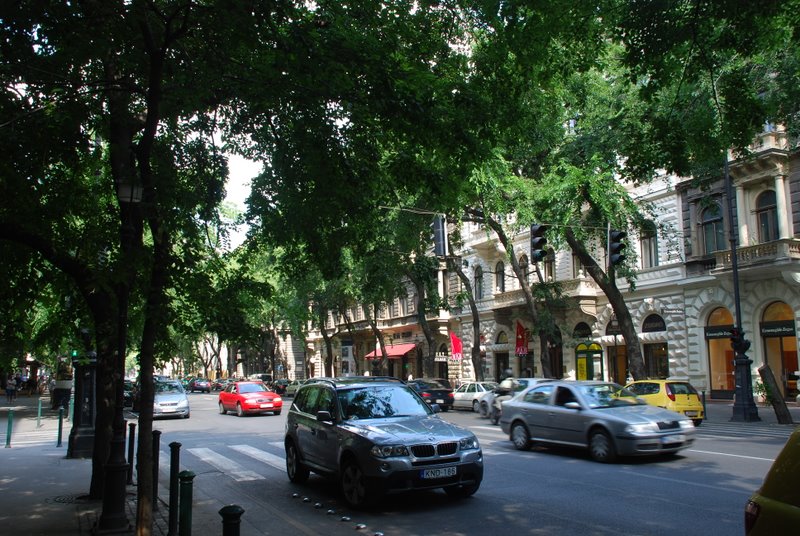
The pioneer spirit that pushed a lot of foreigners to come to Hungary 10 years ago seems to have somehow vanished… adventurers go to China nowadays. The community of foreigners who arrived in the early – mid 90’s in Budapest is getting smaller and smaller. We had a real group of friends, most of us are gone away… just like me. The remaining ones are busy climbing the corporate ladder or heavily involved in raising their kids. Their daily life is far remote from the group of bachelors and young couples that we used to be. We still meet sometimes online or on a few reunions, but news update are getting rarer. To my surprise, some of my friends there now only meet when I am in town. Since I don’t come that often from China, they really live lives apart within this small city. Although I feel happy to be back, I miss the speed and energy of today’s Shanghai after a few days. The Budapest that I lived in was full of hopes and new energy, most of it seems to have vanished.
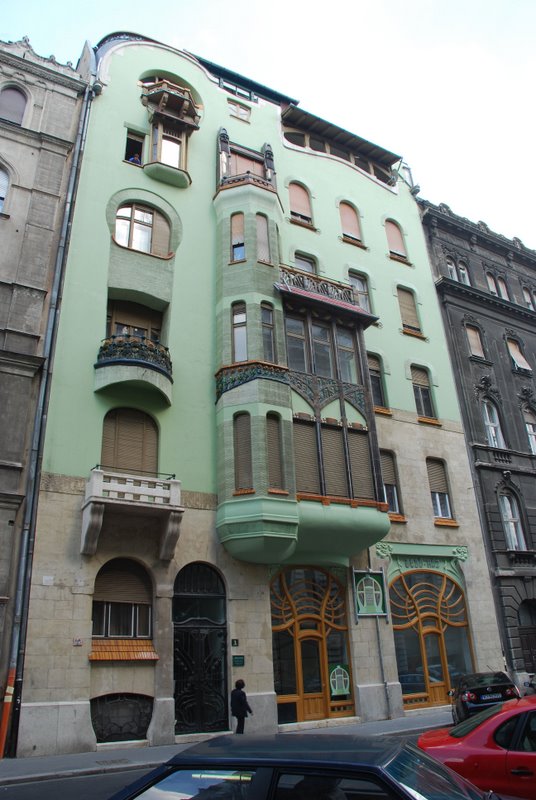
The city is getting more beautiful, transformed from a dark and intriguing labyrinth to a colorful tourist paradise. Thanks to a current real estate boom, old buildings are being renovated into former glory, or torn down to be replaced by new. The mix creates a nice atmosphere that is catching up with Vienna or Munich. It has become a nice Central Europe city within the European Union, as opposed to this mysterious and dark city that me and many others came to look for. I am sure new people still arrive and create there own little world here… but it’s just not the same for me. Budapest is still a great place to visit and I always invite my overseas friends to go there but Shanghai is where my life has moved to.
So many things to do… so little time


In an age of light speed communication, I did not take the
time for month to write a post on this blog. It’s always the same spiral, when
one loses the habit, try to catch up and ends up forgetting about at the end.
It’s not that I did not want any more, time seems to have just
fly these last months. Work has been intense in the first half of the year, and
two major changes have been swallowing most of my free time including the one
dedicated to blog writing.
First of all I have to introduce my girlfriend Jiajia to my readers.
We have been together since late last year and our relationship is going
strong. Although she does not write it, Jiajia has a major influence on this
blog. She is one of the very few Chinese people that I know who is actually
interested in Shanghai’s
history. We go to markets together, bargaining with sellers and discovering even
more interesting things. As a matter of fact, my research into the old Shanghai has become a lot of our research into the old Shanghai. I have also become the president of the French Speaking
association of Shanghai
(www.cerclefrancophonedeshanghai.com).
Although I am highly honored to be elected at this post, it swallows an
enormous lot of my time, again competing with other activities such as reading
books and writing this blog. I have been kind of submerged by it and it’s now
only that I am on vacation that I finally find time to actually write. It’s not
that I missed ideas, as the stack of my old documents related to Shanghai has increased a
lot since the time I stopped writing… but other priorities came along. I
also had to stop my Chinese lessons and I am not sure that I will be able to
restart them anytime soon. I will try to be more thorough about this from now
and catch back with writing this blog.
Quelques grammes de culture dans un monde de brutes
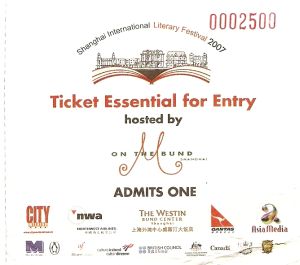
The above title refers to a famous French TV 1980’s advertising. Lindt chocolate was described as “Quelques grammes de finesse dans un monde de brute” (that could be translated as “a few moments of light in a very dark world”). This really applies to the Shanghai International Literary Festival. As much as I like Shanghai, this city is not a cultural center, but the festival brings a lot of it to us.
Shanghai International Literary Festival was taking place this month. As a literature fan and heavy reader, I spent most of my weekends at the conferences. Events take place in the wonderful atmosphere of Glamour Bar, giving it a real touch of the old Shanghai. The old building of Bund #5, renovated by lovers of Old Shanghai with a touch of modernity is the perfect cradle for the event. In the city of modern skyscrapers, electronic billboard advertising and constant marketing noisy aggression taking about a “old” media like book was a blessing. The weather was foggy, modern towers in the other side of the river were disappearing through the mist. Looking at the next door building (3 on the Bund), it felt like we were back in the days of old Shanghai. We were listening to a single person talking about their love of writing and books, just like our predecessors must have done decades ago. I enjoyed the conferences tremendously, as well as the highly cultural atmosphere.
I have to admit that I did not read most of the books that were discussed before the sessions, but I left with a massive stack of reading to do. Conferences I enjoyed including Qiu Xialong (writer of the chief inspector Chen), Amy Tan (“The Joy Luck Club”), Arlette Shleifer (“Le Bar Rouge” which ends on the Bund), Xiaolu Guo (“A Concise Chinese-English Dictionary for lovers”) and many others. The closing session of the festival was the launching of the new guide to the Bund by Peter Hibbard.
Shanghai is not the city of culture, but the literary festival definitely brings a lot on that field. Thanks to this great event, Shanghai is becoming a little bit more of a world cultural city.
City of the flat world
"The World is flat" is a book from Thomas Friedman about globalization and the changes it is bringing to the world, companies and individuals. The main point is that the World has become a level playing field on a worldwide basis.
The collapse of Marxist Leninist style of regimes has allowed 3 billions of people (Russia, China, India and others) to join the capitalist system. The Internet and other technologies have made communicating with the whole word something easy. Work flow software allows to cut service work into pieces that can be separated and done anywhere in the world, before being put together. This was previously only possible with production of goods. Manufacturing is now "off-shored" to places like China. Services can be "outsourced offshore". Most people connected to the Internet can "upload" their creations or point of view in such things as this blog, or wikipedia (that is very difficult to access in China because it’s banned). All data and information created by humans can be accessed and searched via search engines and the Internet.
I read this book within a few days mostly in the plane as I was traveling between Asia and Europe. For most people involved in international business, it’s very clear that the world has actually gone flat. Although, the book did not bring much news to me, it’s still enjoyable to read an analysis of this phenomenon that is influencing our lives so greatly. The version I read was the one from 2006, that was already revised, though I think one point was missing. Friedman explain clearly that the information is becoming much more diverse, with a very large share of the Internet being in other languages than English… but the reasoning does not go to the logical conclusion, i.e. that native English speakers should also learn foreign languages instead of waiting for others to learn there, being able to master it along with their own.
During the whole reading, I could not stop thinking about Shanghai today. This city is the center of the business battlefield for the largest market in the world. Any company of a respectable size has to be in China and most multinational companies make it the center of their growth for the next decades. As a consequence, the city is full with foreigners from any nationality you can think of. Shanghai today is one of the metropolis of the flat world… and will maybe become it’s capital though there is still a long way to go. Thanks to Friedman’s "flattening factors" Shanghai is everyday becoming more of a world city.
Xian Qiang Fang
Walking around Wing On I have tried to find the restaurant on 4th and 5th floor of the Wing On department store that I mentioned in a previous posting. The old Wing On has only restaurants on 6th and 7th floor, that are not inspiring at all. The New Wing On has a restaurant on the 7th Floor that is called 7th Heaven. This place seems to have been really famous in the old Shanghai, but the renovation has not left much of the old atmosphere.
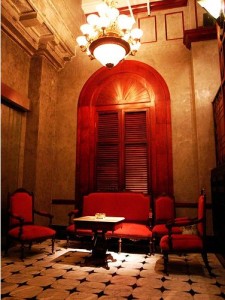
Going around the old building for a last look, I was attracted by a groups of tourists going through a back door with a restaurant sign above it. Because of the long queue to get into the lift, I climbed the 5 floors of stairs noticing that they were very well renovated… This was little compared to the beauty of the restaurant itself, Xian Qiang Fang.
The great renovation of what used to be the restaurant and ballroom of the Wing On was a wonderful surprise. It has been done with a lot of taste, a lot of attention to details and great preservation of history of this building. Most of the original flooring has been preserved, as well as the radiators, doors and other equipment. Some modern touch has been added without changing the grandeur feeling of the place. The main restaurant room features a high ceiling and old style furniture, giving a real classic touch. Food is great and well served by an effective staff. Many tourists are dining in the private room, but they don’t really invade the main space.
Xian Qiang Fang was made by the same group than Yong Fu Elite and The Door, others famous restaurants in Shanghai. This restaurant is perfectly re-creating the 1920’s and 1930’s Shanghai atmosphere. This is by far the best part of the visit of Wing On and a great addition to it. It also proves that the grandeur of Shanghai’s history can be brought back with a modern touch.
Unfortunately, Xian Qiang Fang closed during CoVid time. The location has been taken over but it does not meet the standard of the previous owner… too bad. The Gubei location called “The door” has also closed down in the same period. Only Yong Fu Elite Club from the same group still remains in operation.
Shanghailander articles are published on an irregular basis. To be notified when a new article is posted, subscribe to the newsletter using this link, or follow the Shanghailander Facebook page.
Wing On
Shanghai has always been the place where new developments where brought to China. Department stores were one of the main features, starting to populate Nanking Road from 1913. Wing On was the third shop to open in 1918 after Whiteaway Laidlaw & Co (1913) and Sincere (1917). It was created by the Kwok family, originaly from Guangzhou that had to moved to Australia and operated fruit stores there. They saw a great opportunity when moving to Shanghai. Wing On was clearly one of the most influential department stores in China, setting the trend for others in Shanghai such as Karoly Gonda designed Sun Sun and Art deco wonder Sun Dept store, as well as in other cities in China. Fortunately, the Wing On building still exists and is still a department store and the shop is now called Wing On again.
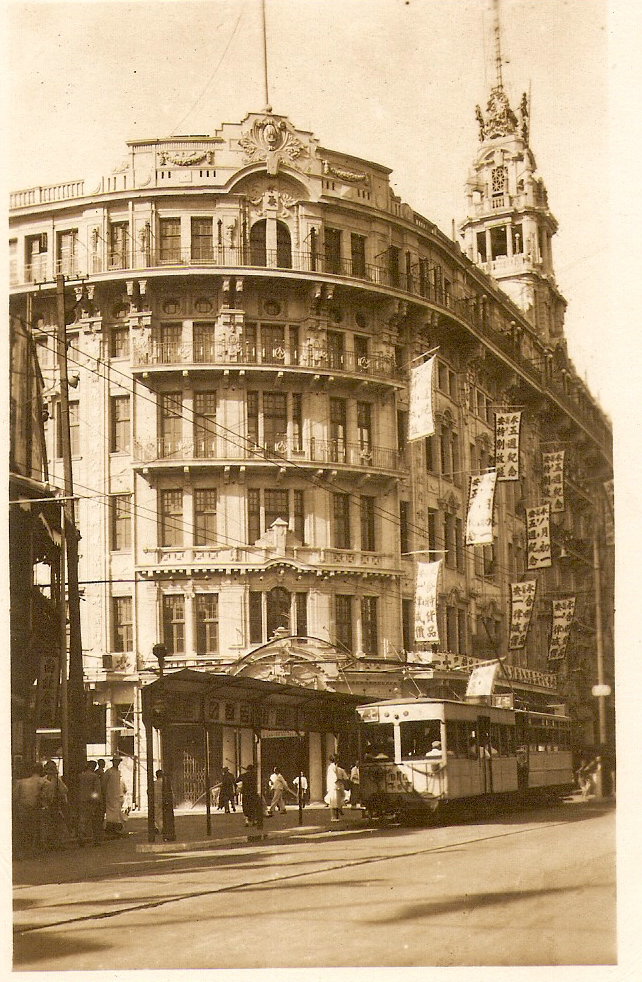
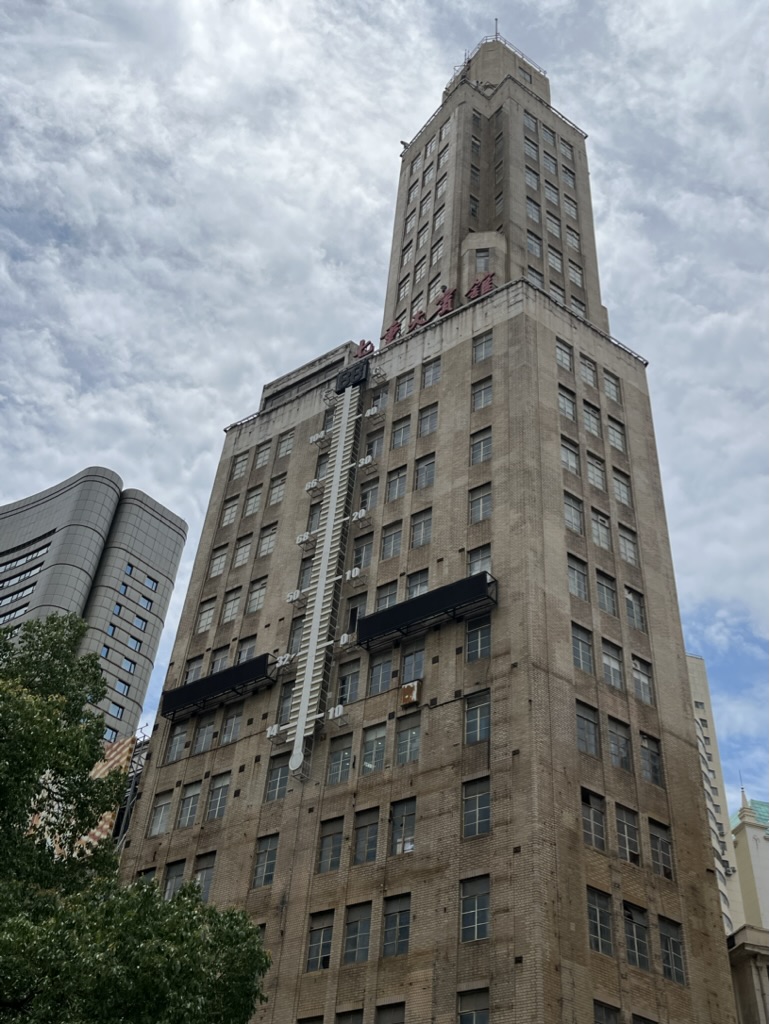
The exterior has been recently renovated, making it once again one of the stars of Nanjing Road. An additional building was erected in the 1930s next to the original one. The base is relatively small, but it is topped by an Art Deco tower that was dominating Shanghai sky. It also has a shopping center on the bottom (now hosting a massive Giordano shop), with an hotel above it. Both buildings are linked by two bridges that do not seem to be used anymore.
Unfortunately, renovation of the interior of both buildings has left very little of the original construction. They look just the same as the brand new shopping centers built in other parts of the city. The old time spirit has been completely lost, though the 4th and 5th floor have been turned into the great Qian Xiang Fang restaurant (now closed… too bad). Wing On and Sincere (the opposite department store) used to feature various animals and displays to attract people to the shops. Wing On seems to have restarted the trend, as they had 3 peacocks and a few other birds in a large cage in front of the shop in early March this year. This was attracting a lot of attention from people passing by, renewing an old tradition.
Sliding doors
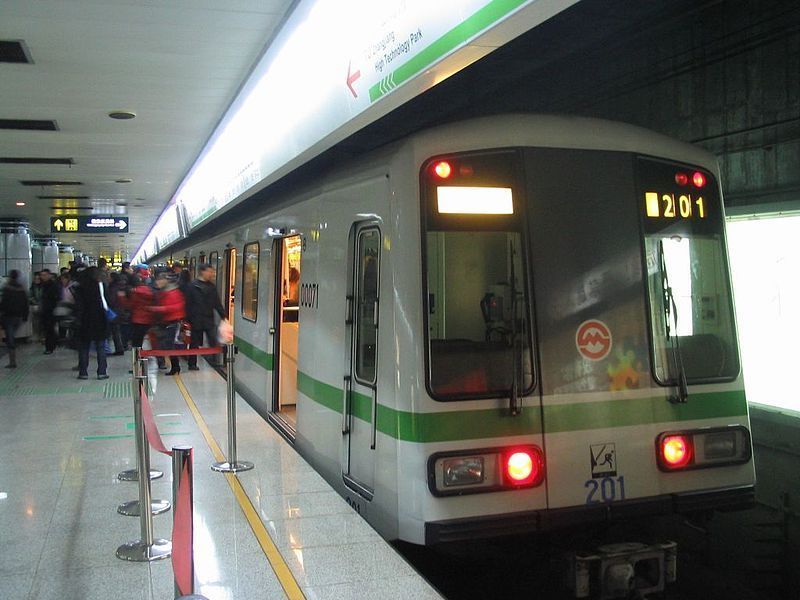 Shanghai underground train is one of the feature of the city. As opposed to Beijing which metro was started in the 50’s with Soviet help, Shanghai Metro was only started in the 90’s. New lines are being built at fast speed, opening the one after the other. The first time I was in Shanghai in 1998, line 1 was just starting with only a few stations. Line 1 has been expended, line 2, 3, 4 and 5 have been put into actions. The Shanghai Metro authority just opened the extension of line 2 towards Hong Qiao.
The only real node was People Square station for a long time. Peak hours in the corridor going from Line 1 to Line 2 is just like going through a sea of black hair. Riding the metro then always involves a lot of pushing around in the very dense crowd. The trains and stations get packed and everybody is jut trying to keep a little space for him/herself, and trying not to fall on other people. No politeness or manners in here and people nearly climb on each other sometimes. It feels a little like Paris metro on strikes days, when the number of trains is drastically reduced. The most funny or annoying is that people climbing in the train often don’t let people go out first. This always creates a mess, and one has to sometimes push people out to be able to escape. I have to admit that education campaigns seem to have an effect as now people step out more often if they are blocking the way, as well as (sometimes) give up their sit for elderlies or women with kids.
Until last year, the Shanghai Metro was relatively simple. The older stations were not really fancy, but pretty effective in carrying tens of thousand people a day. Since then, Shanghai metro has embark on a campaign for modern and fancy look by adding glass sliding doors on the platforms. I am not so sure what is the reason for it. Local people say that people have regularly jumped on the tracks, needing a brand new wall to stop that. As incidents and delays do not seem that frequent I am just convinced that Shanghai metro wants to look like a “world city metro”.
Like in HongKong and Singapore, they need sliding glass doors. This is where the Shanghai twist comes in. Work was started in some of the stations, without any announcement. There was very little protections for the passengers on the platform. Even better, the glass partitions were installed, but the doors were not operational. This made passengers feel very safe behind the glass protection… until realizing that there was no door. This generally happened when the next train was arriving. This whole mess made it look pretty disorganized and even dangerous for unaware passengers. Not all the doors are functioning yet, but after a few months of being interrupted while unfinished, work has restarted. Major stations on line 1 have been equipped and completion now seems near. I am sure the people selling glass doors and separations must have had great connections with the metro authorities. They must now be celebrating. With glass doors and separations in its metro, Shanghai is trying to become a little more of a world city.
Hotel des colonies
The French settlement in Shanghai was started in 1884, but it did not grow as fast as the British (then international) next to it. When the international settlement was busy with traders shipping things in and out of China, the French settlement remain a much quieter place, eventually extended to become the residential and garden city of Shanghai.
One of the few prominent buildings of the French settlement, was the “Hotel des colonies”, the only hotel of the French settlement for quite a long time. It was located on “Rue du Consulat” near the “Quai de France”, the French part of the Bund located South from the Bund itself. “Hotel des colonies” is mentioned in “Les Francais de Shanghai” and was clearly an important location both for traders coming to Shanghai and for the community. Some of the traders based in Shanghai even lived there for years.
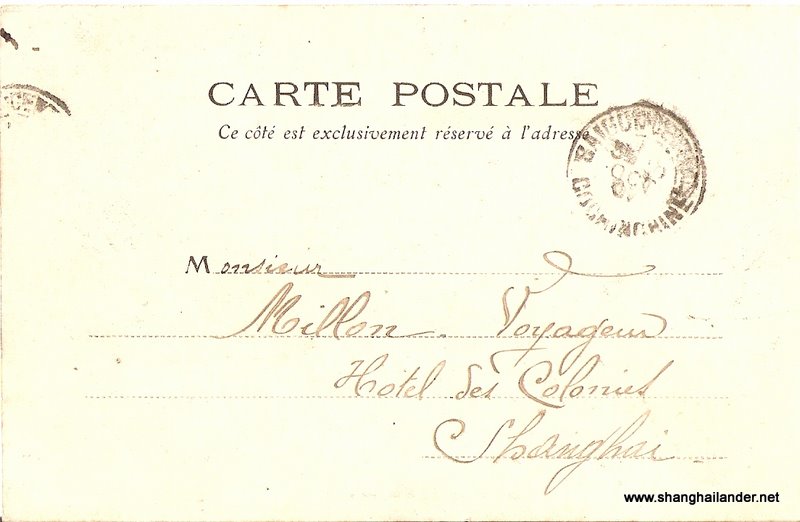
I found the enclosed postcard in an antic shop in Malacca. It was written in Saigon and sent to Shanghai by the post, carried by ship to Shanghai French Concession. More than the picture on the front, it’s the address on the back that caught my attention. The postcard is simply addressed to “Monsieur Millon, Voyageur, Hotel des Colonies, Shanghai”. No street, no number only the hotel’s name, where the card would wait for the traveler to arrive and collect it from the counter. “Poste restante”, i.e. letter sent to a post office and remaining their until the receiver collects it used to be quite a popular mean of sending letter, although it’s quite difficult to imagine it today. It’s just nice to think about a time when time schedule was so relaxed, that people would just post the letter and wait for months until an answer arrive… what a change from today’s email. I was still quite happy to be able to check my email in the old port of Malacca. The modern world also has advantages.
For more research into postal services in old Shanghai, go to post “Letter from Shanghai Municipality” and Shanghai general post office.