British Prime minister tasting 蝴蝶酥

On his January 2026 visit to China, British Prime minister Keir Starmer had a special taste of Old Shanghai. He had the opportunity to buy and taste the Shanghai pastry, butterfly cake or hudiesu / 蝴蝶酥.
Butterfly cakes have been around in Shanghai since the early 20th century, probably introduced by French bakers as they are directly related to French palmiers cakes. They survived through all the changes in China and are still a Shanghai delicacy, as shown in 2010 post “Tasting old Shanghai“.

Effort to promote Shanghai culture by local authorities have changed this local delicacy into a Shanghai icon. Tourists from all over China and the World are now tasting it while visiting Shanghai. With Keir Starmer visit, it gets new attention.

French luxury brand Longchamp has recently made a new special edition Shanghai edition of its pliage bag with a giant 蝴蝶酥 on it.
Another revisited symbol of Shanghai is the iconic former Normandy building by Laszlo Hudec, today name Wukangdalou / 武康大楼 where thousands of people get their photo taken nowadays. I used to live in this area 10 years ago and not many people paid attention then. It was recently the focus of a VR exhibition attracting many tourists (see post Normandy building VR exhibition) in the WuKang Lu tourist information center.
Taking pictures in front of the Normandy building

Both are items of western culture that have been appropriated by Shanghai. They both are true symbol of the mixed culture of the city, the Shanghai style or Haipai / 海派.

Shanghailander articles are published on an irregular basis. To be notified when a new article is posted, subscribe to the newsletter using this link, or follow the Shanghailander Facebook page.
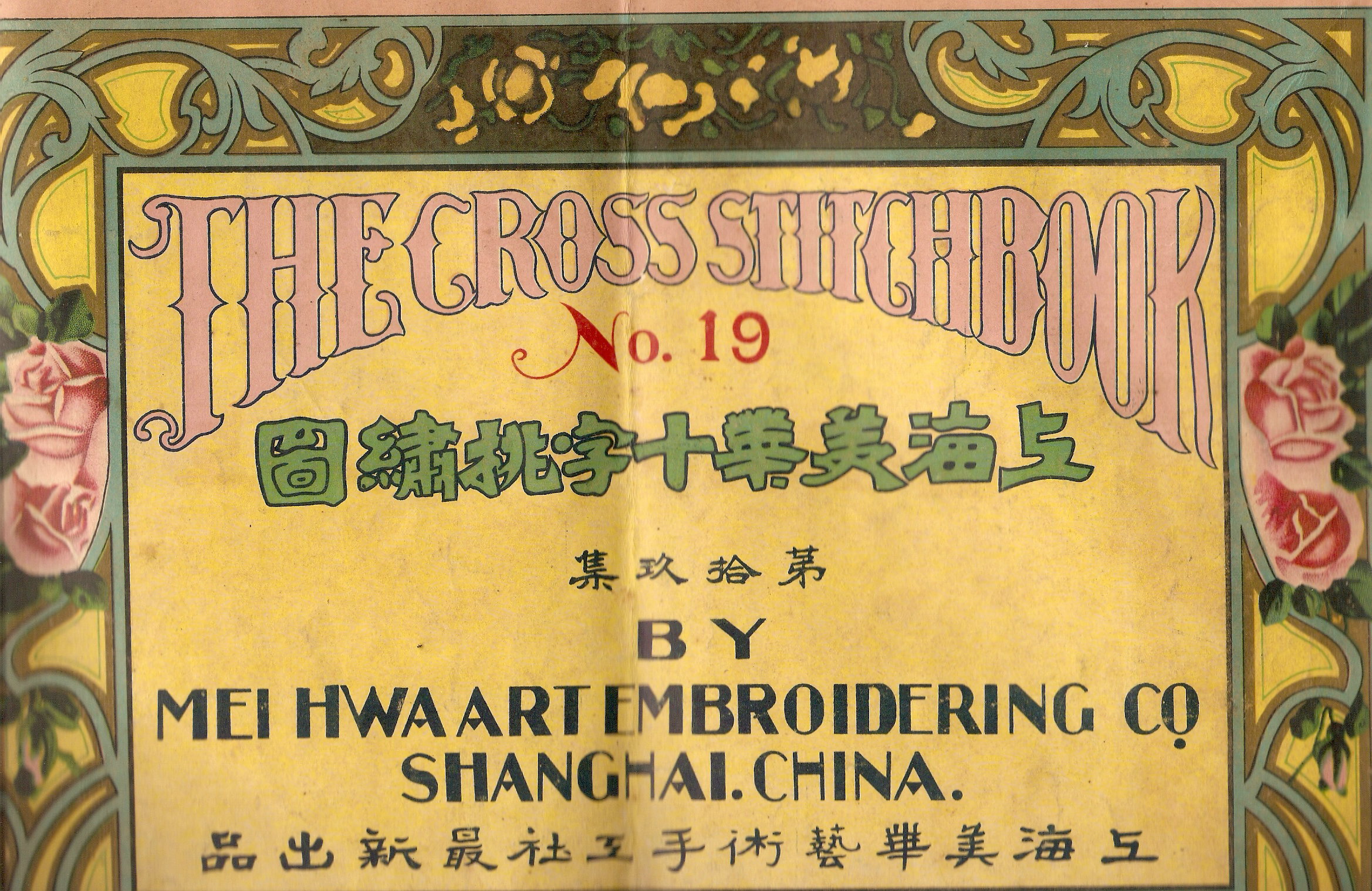
Embroidery pattern book

Traditional Embroidery has been used as decoration for fabrics in China for centuries. European style embroidery was imported in China by foreigners and must have gained popularity in Old Shanghai. The below book is an embroidery pattern book combining western cross-stitch technique with Chinese style design, found in an antique market a few year ago. This must have been a popular publication as this particular one is N 19.

Old Shanghai embroidery pattern book

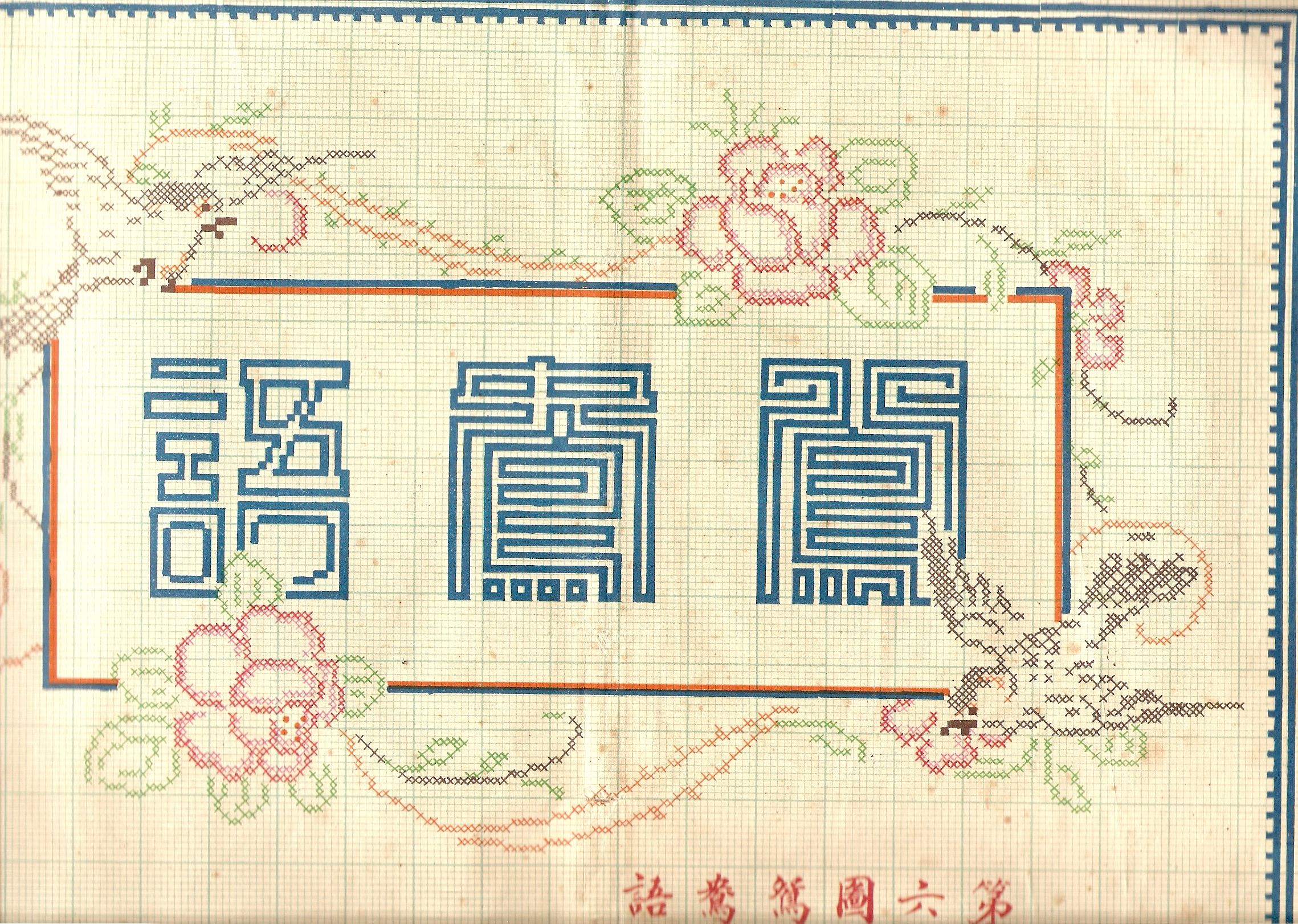
This book was clearly not an import, but a Shanghai creation. Spinning was one of the major industry in Shanghai, creating embroidery books helped sell their products. (All names are written from right to left, as it as written at the time).

鸳鸯语

The Mandarin Duck speach character combination is a traditional Chinese way to wish harmony in the couple.

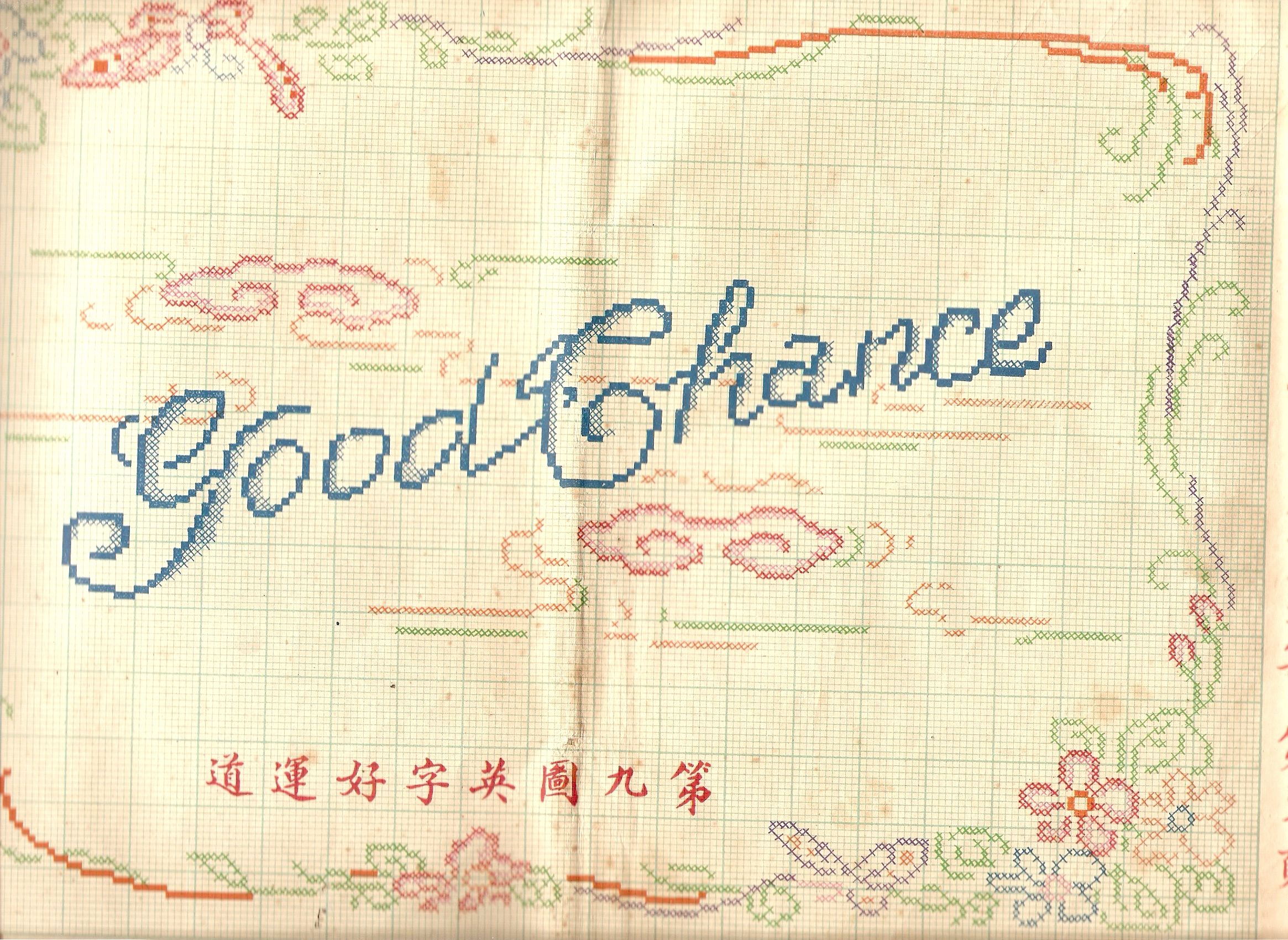
Good Chance embroidery pattern

Although some English text was used in the booklet, it was not designed for foreigners. It even includes an explanation in Chinese of the meaning of “Good Chance”, which is actually not proper English as the expression actually means “high probability” as opposed to “good luck” as implied in the pattern.

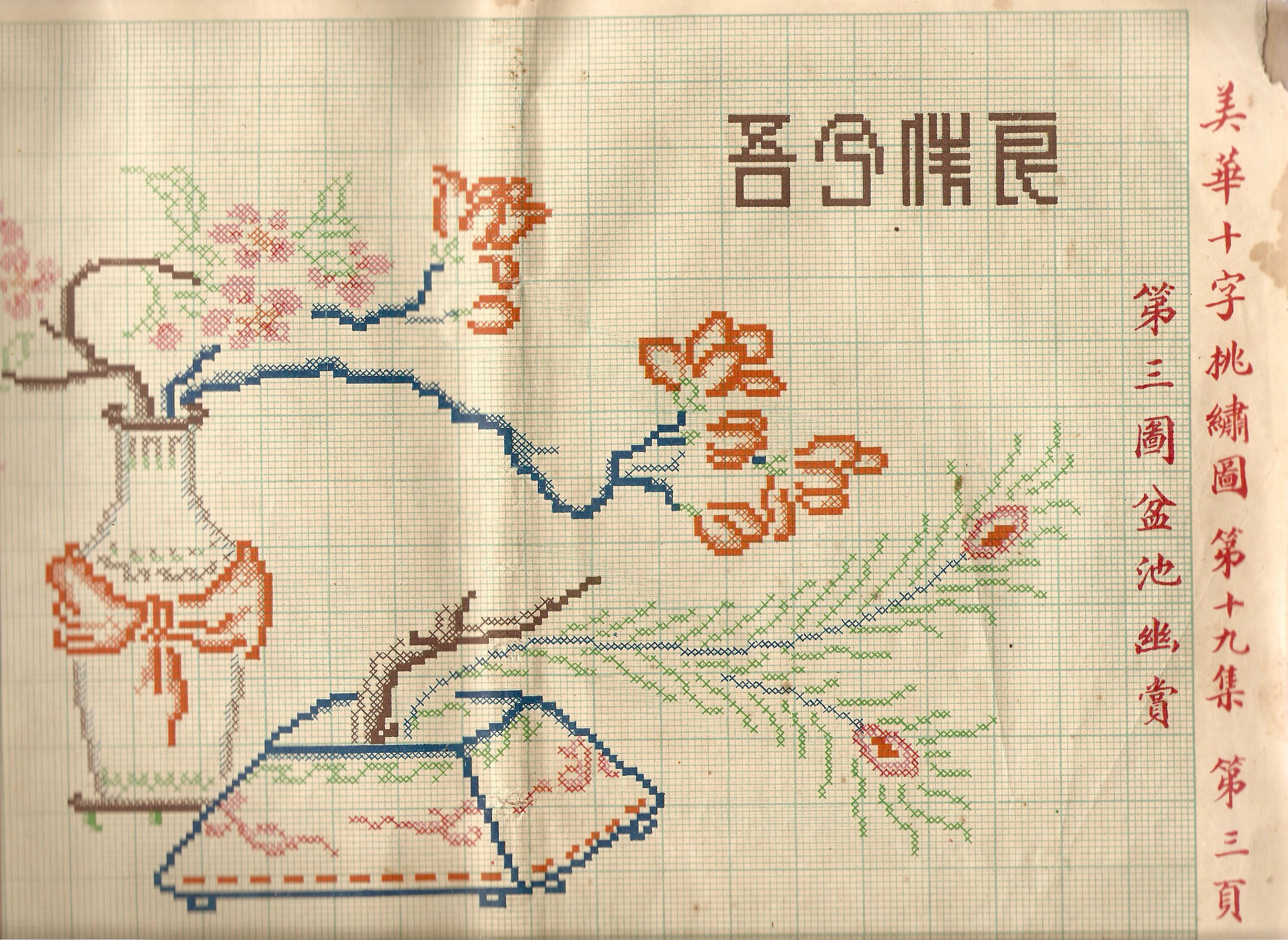
Bonzai cross-stitch pattern

Finaly the last illustration is of Bonzai, another traditionnal motifs in Chinese culture.

I did find embroidery thread in an antique market, but they were imported ones from France. Locally made sewing thread was locally manufactured, as shown in post “Made in Shanghai“.

Old Shanghai was a fascinating place were traditionnal Chinese culture (in particular South West China) tradition was mixing with Western Culture. The specific style of the period was known as Haipai ( 海派) style, the Shanghai style. Another exemple of Haipai style object can be found in post “The Haipai Ruler“, or in cigarette advertising like the one for “Russian-China Tobacco Ltd“.