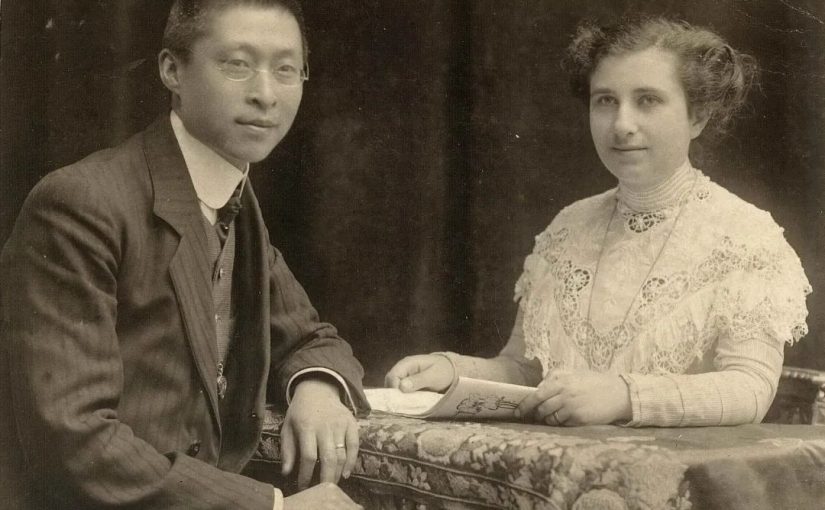
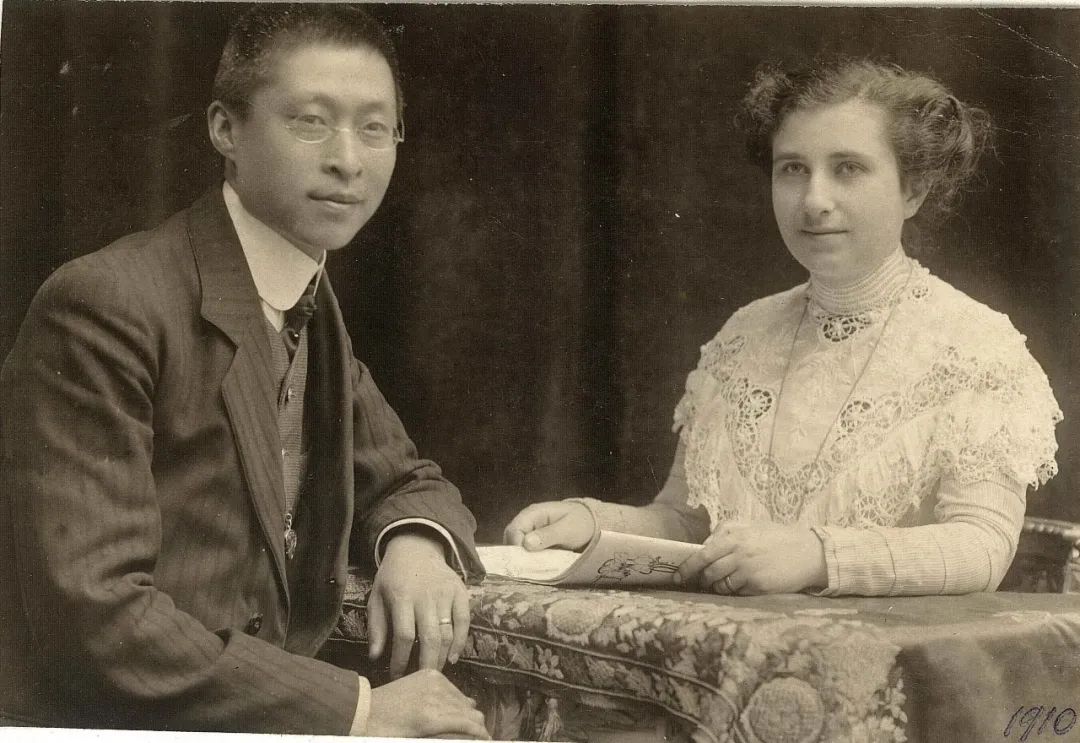
The story of Stephanie Rosen-Hoa, aka Horose who wrote the China best seller “恋爱与义务” , later published as Love & Duty in Shanghai has been a field of my research for a while (see post “The story of Horose or S. Rosen-Hoa” to the original post on this topic). Information has been difficult to find, but a breakthrough has recently come up with some surprises.
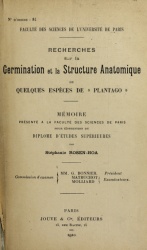
We know that Stephanie Rosen-Hoa studied at Sorbonne University, as she published her thesis there. The thesis was about germination and anatomical structure of plantago (also called Plantin). This plant has been long used to make remeades.
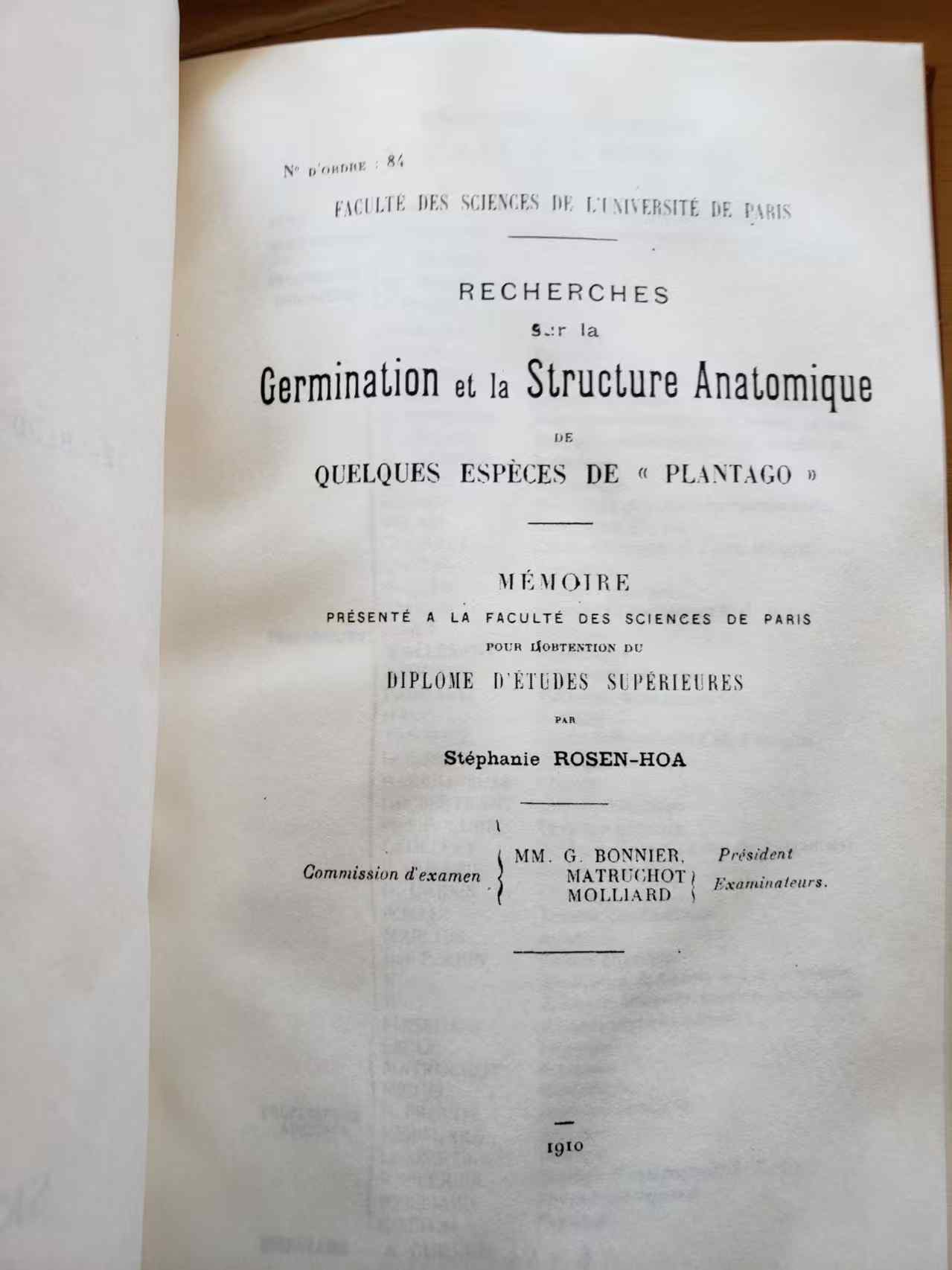
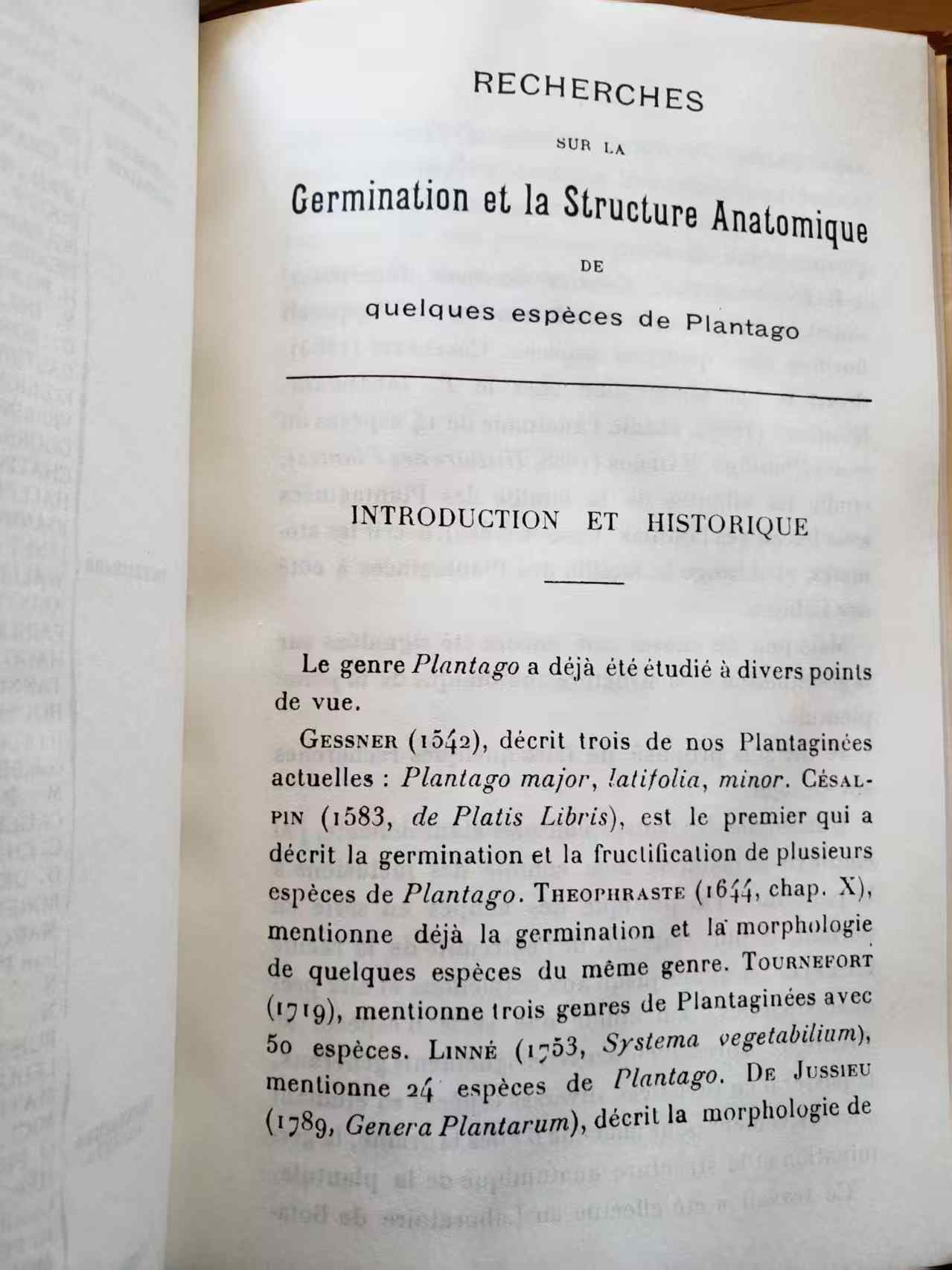
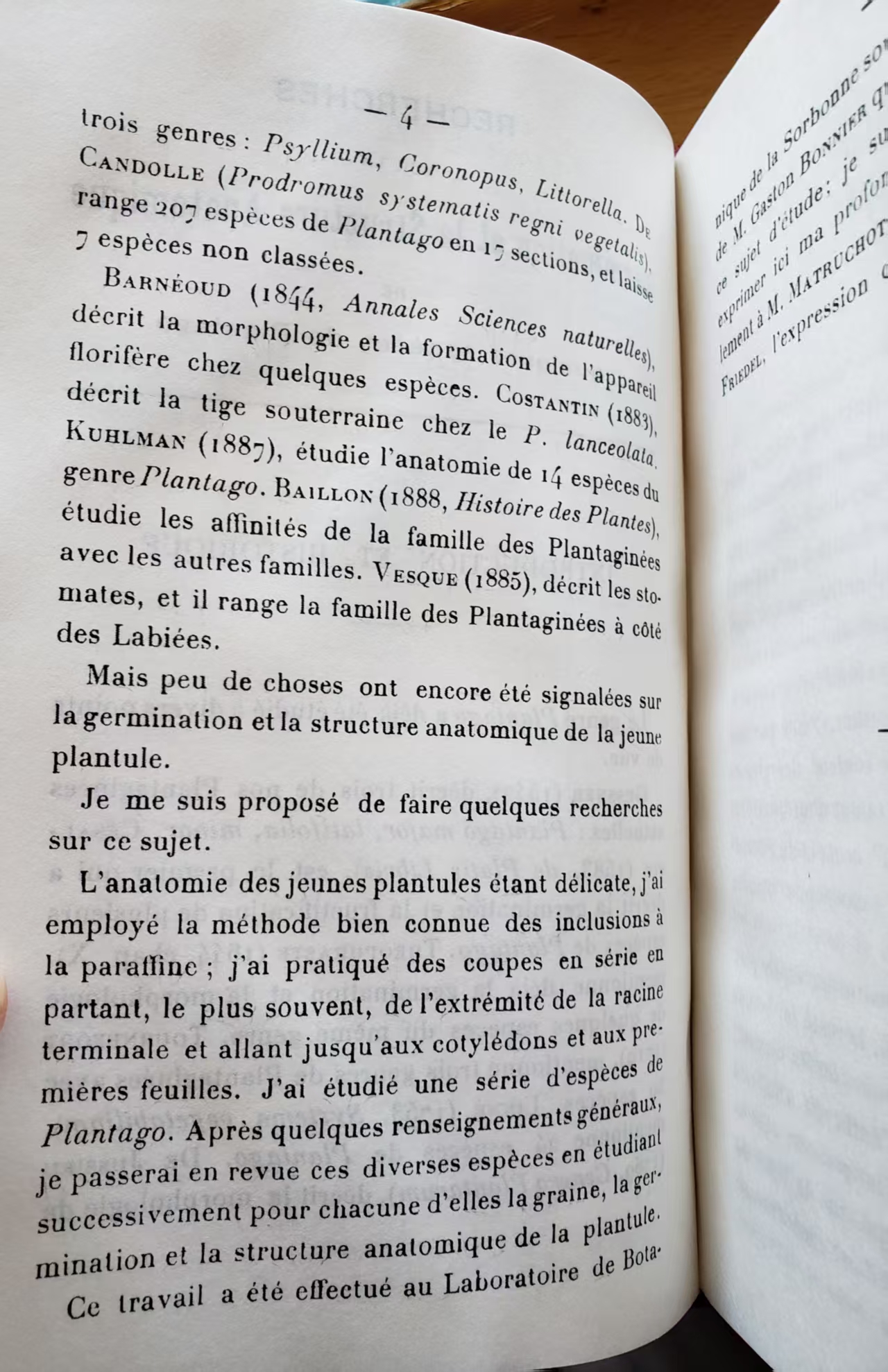
The thesis is dated from 1910. At that time, Sorbonne University offered two different tracks on scientific studies. One was focused on mathematics (differential and integral calculation, mechanics and astronomy), the other one on physics (phyics, chemistry, mineralogy-geology, botanics and zoology). Stephanie Rosen-Hoa clearly attended the physics track, focusing on botanics. Her thesis director was M Louis Matruchot, a French specialist of mushrooms who was a conference master at Sorbonne University.
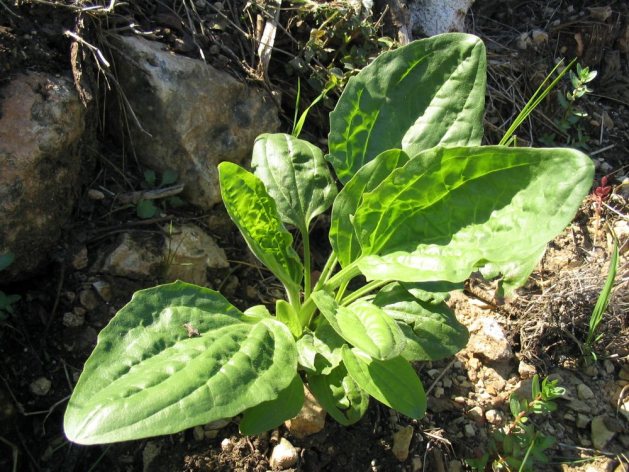
Although Stephanie Rosen-Hoa went to Sorbonne University a long time ago, I have asked the French national archives to extract the student records. It took a while to come, but it was worth the wait as in brought some surprises.
First of all, I only got the student record for year 1910. The name used in the record is “Madame Rosen-Hoa”, as Stephanie Rosen-Hoa was already married to Hua Nan Gui since 1908. The first surprise is that Stephanie Rosen-Hoa is noted as born in “Wielun, Russie”. This is a different city from Kalisz, where the Rosenthal family was supposed to be. Wielun is about 80 km from Kalisz, which at that time probably took one to two days. Wielun was a smaller city than Kalisz, with about 8.000 inhabitants, when Kalisz has more than 20.000 then. Both cities were located in the Russian part after the split of Poland in 1793, although Kalisz was much closer to the border with Prussia.
Both city had a substantial jewish population, with the jews making the majority of the artisans. Archives of jewish families in Wielun show 512 record for the family name Rosenthal, making it quite a common name. The family of Stephanie Rosenthal must have moved to Kalisz sometimes after her birth, as Stephanie always mentioned Kalisz as the city where she grew up.
The other important information from this record is the actual birthdate of Stephanie Rosen-Hoa. It is indicated as 21st October 1883, which is slightly different as the one from her death certificate (27th September 1883).
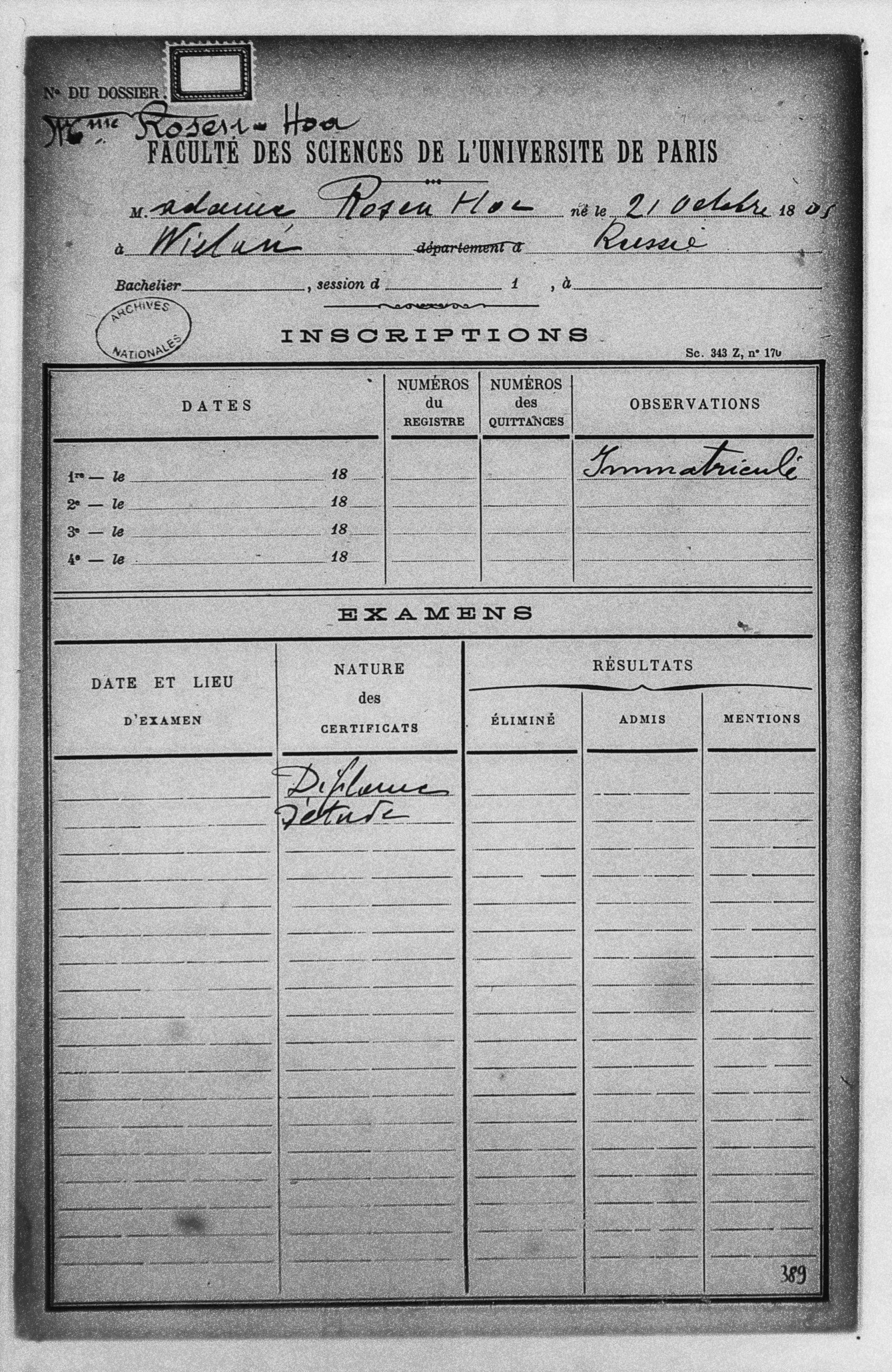
Stephanie Rosen-Hoa was registered as studying for the “diplôme d’étude”. This must be the “Diplôme d’étude supérieur” , a diploma requiring one year of study after the license diploma which itself took two years to complete. From that, I can assume that Stephanie Rosen-Hoa spent at least 3 years at Sorbonne University, entering the university in 1907, possibly earlier. It is probable that she actually came to France a few years before, probably around 1900-1905, but I have found no proof so far.
The other part of the records focuses on lab attendance. As Stephanie Rosen-Hoa was researching botanics, she had to do some lab work. Those experiments were not free as show by below records, counting the payments for using the “Laboratory of Mr Bonnier”, the president of the jury for Stephanie Rosen-Hoa thesis.
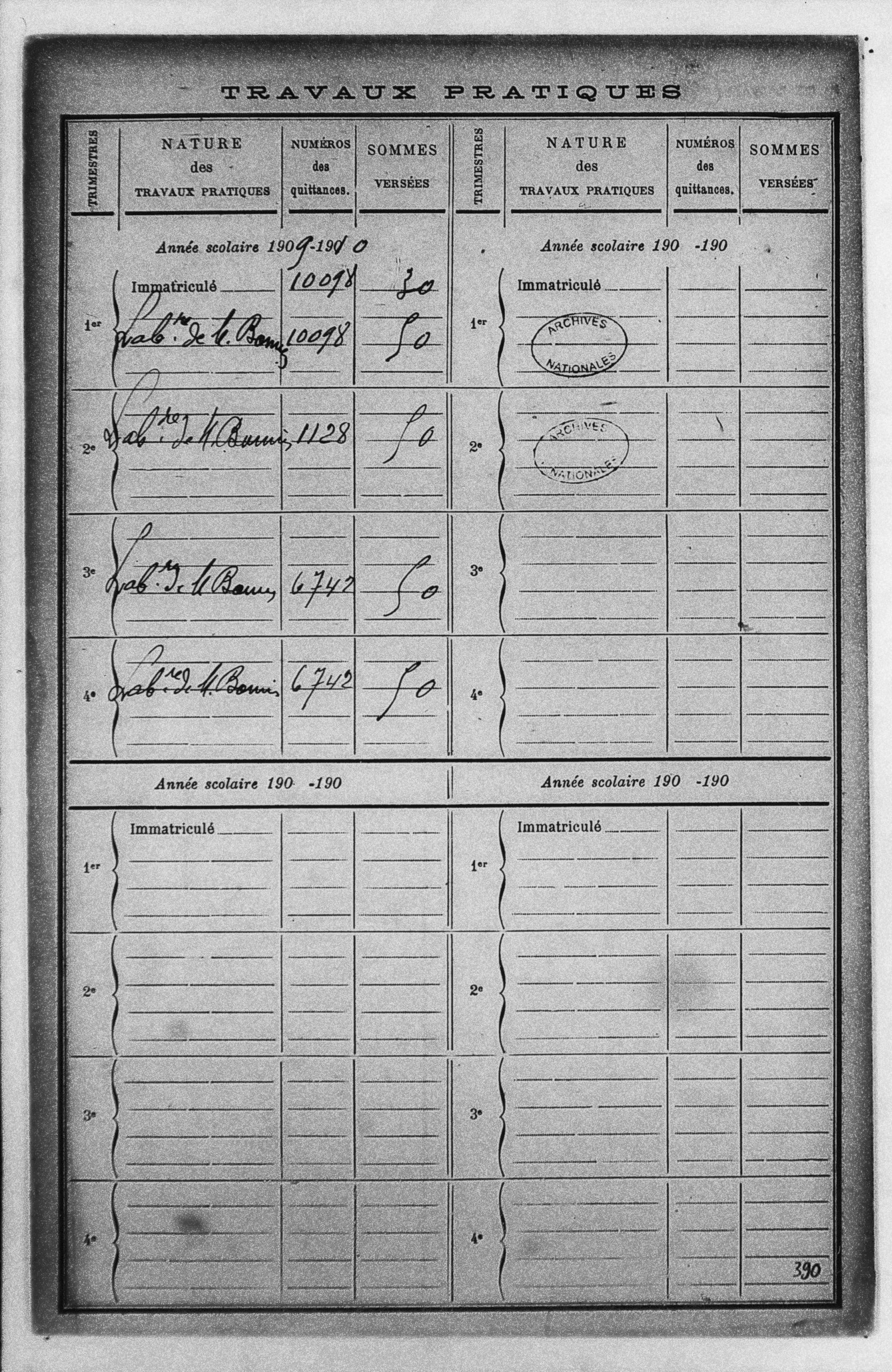
Thanks to Sorbonne records, I was able to get more information about the studies of Stephanie Rosen-Hoa at Sorbonne university.
Chinese politician Li Shizeng also studied in Sorbonne university around the same years. He joined Sorbonne University in 1906, also in botanics, studying the properties of soya and ended up creating the first tofu factory in Europe. With a Chinese connection on the top of the university connection, it is clear that Li Shizeng, Ha Nangui and Stephanie Rosen-Hoa knew each other during study times. Li Shizeng was also very close to Cai Yuan Pei, who wrote the foreword for the book version of Love & Duty.
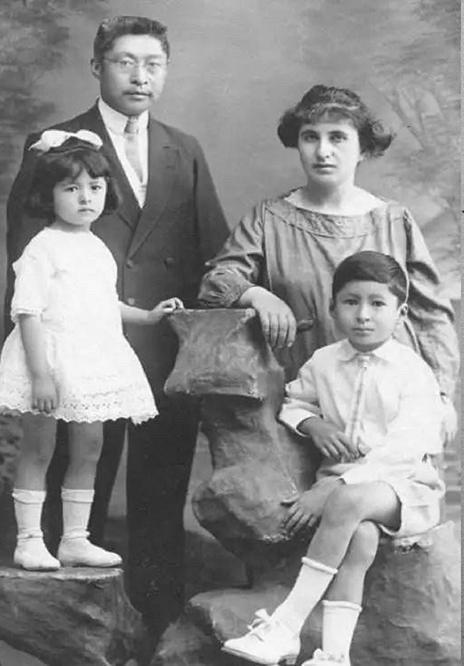
The search continues for more details about the life of this fascinating lady and her French/Polish-Chinese family. For more posts on this topic, please follow this link.
Shanghailander articles are published on an irregular basis. To be notified when a new article is posted, subscribe to the newsletter using this link, or follow the Shanghailander Facebook page.