Hung Ying Library, 1413 Avenue Joffre

Located at the corner of Huai Hai Xi lu and Fuxing Xi Lu, the Xu Hui Art Museum is located in an old mansion renovated around 2005. Hosting various art exhibition, it is quite different from the previous tenant of the building… a Sichuan Restaurant. There is little in English about the history of this building and its original occupant, but I happened to find more by complete random. Here is the story of the house located on 1413 Avenue Joffre, and its uncommon owner Ye Hong Ying.

1413 Huai Hai Lu
1413 Huai Hai Lu

It all started in an antic market, when I encountered a stack of  bills all for the same location, 1413 Avenue Joffre. They were normal utility bills from the 1930’s including electricity bills from the “Compagnie Francaise de tramways et d’éclairage électrique de Shanghai” and “Shanghai Telephone Company“.

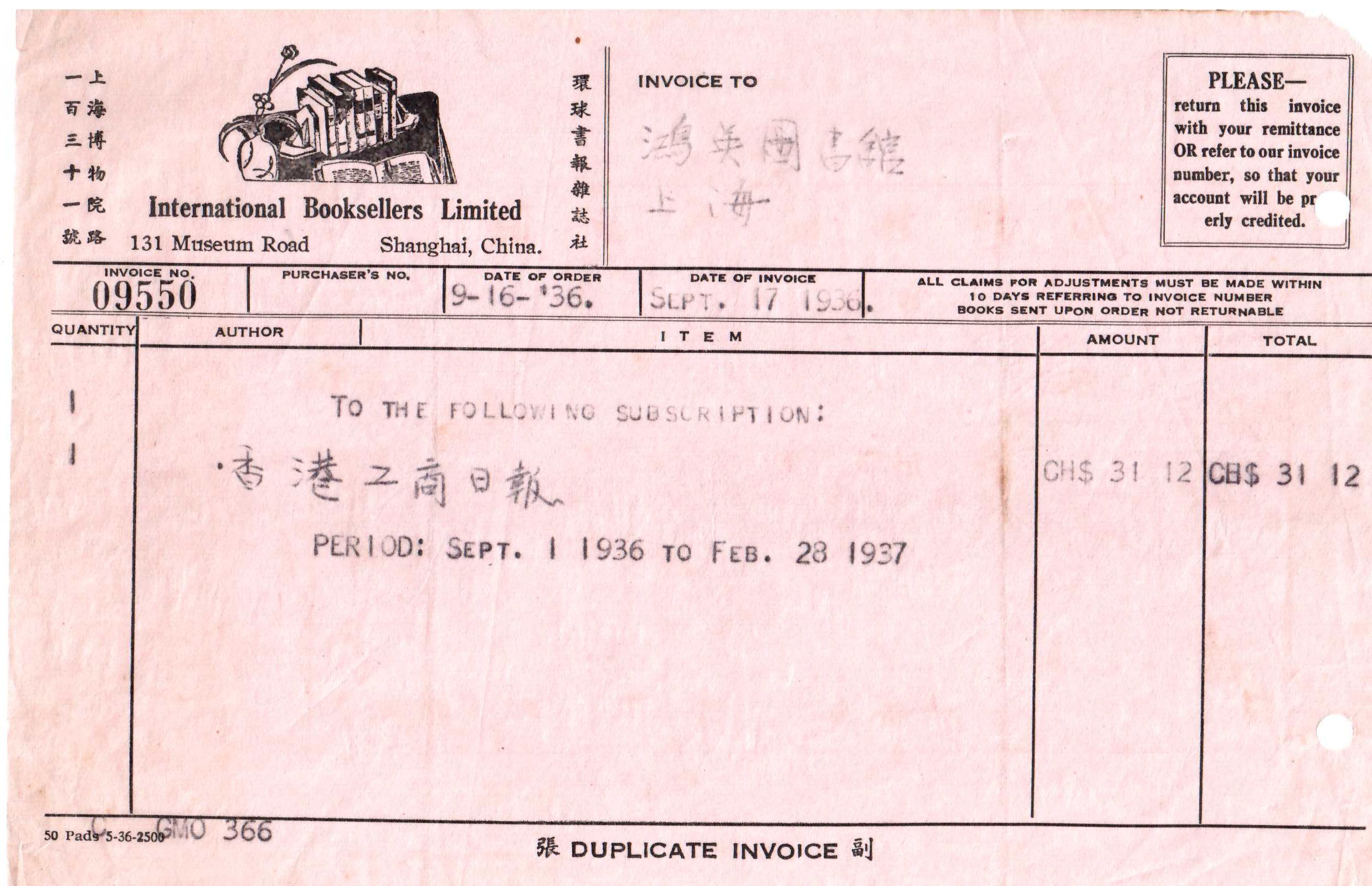
With them came a significant number of subscription invoices to major English Newspapers published in Shanghai, starting with the most important one, the North-China Daily News.  They also included other titles such as the Shanghai Herald, the Shanghai Times and The China Weekly Review.  Finally, I also found bills from famous publishing companies such as Kelly & Walsh, The Commercial Press, The China Press, as well as “International Booksellers Limited”, a bookstore on Museum Road. Since all the bills were addressed to “Hong Ying Library”, it was clear that the location was a library in the 1930’s but there was very little information about the establishment or who Hong Ying was.
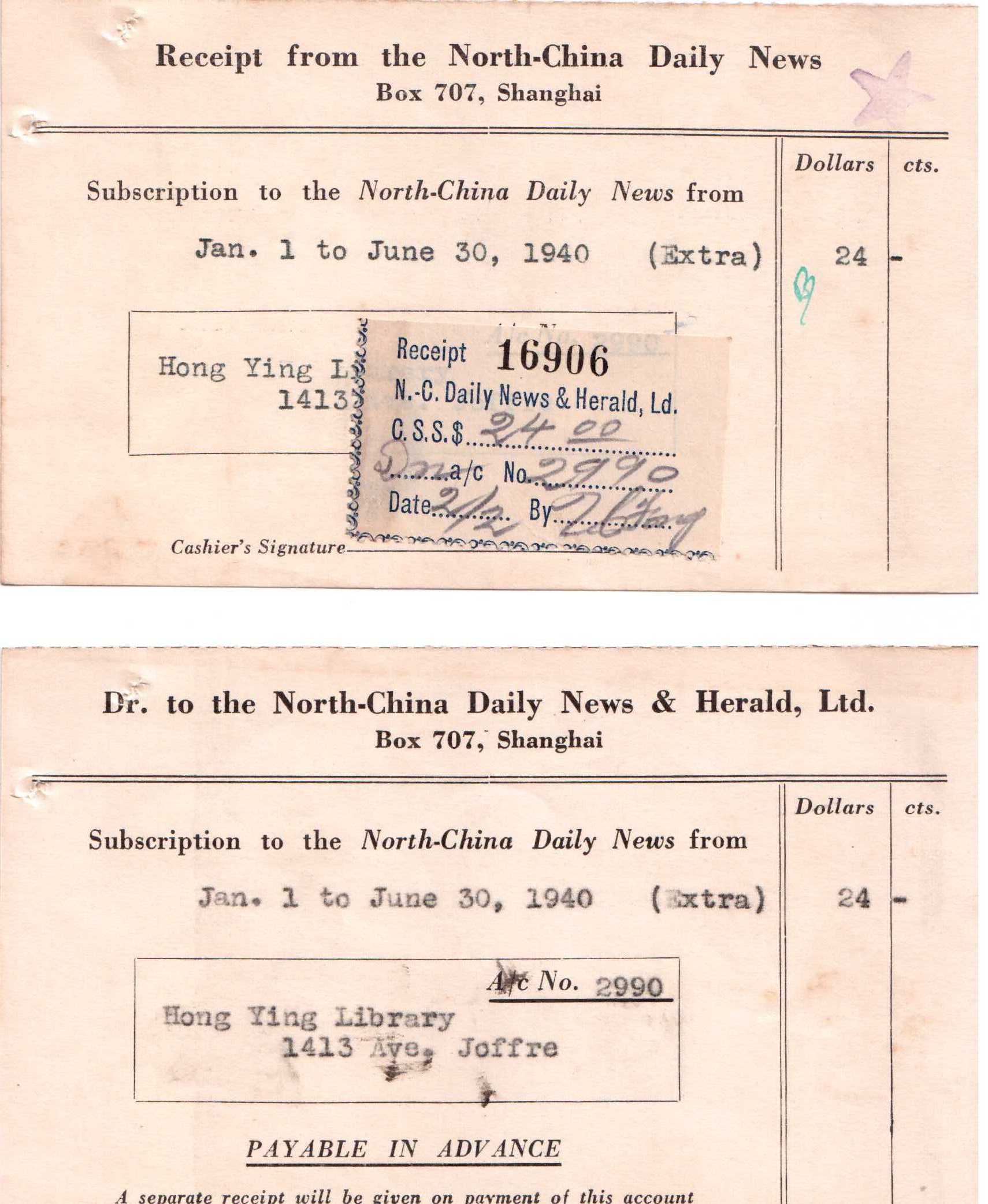
No results were found on the English internet, however the Chinese one gave the answer and details about this gentleman and his library.
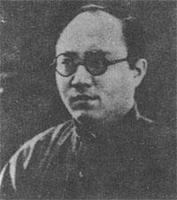
Ye Hong Ying
Ye Hong Ying

Born in 1860 in Xiamen, Ye Hong Ying moved to Shanghai with his family in 1867. He went to Japan to learn the trade of sea food in 1877, coming back to Shanghai in 1881. From that point on he became a major trader in sea food, abalones and other sea delicacies, as well as exporter or various commodities. He was an adviser to the ministry of commerce of the Beiyang government, as well as director of the Shanghai Chamber of Commerce. By the mid-30’s his empire included cotton mills as well as banks and insurance companies. He spoke Chinese, Japanese and probably English as well.
In 1933, he set aside the amount of 50 million Chinese Dollars to create a English language library. The establishment became known as the “British Library” or Hong Ying Library. It officially opened in 1934, containing more that 150.000 books, 3600 magazines and subscriptions to many dailies (including the ones mentioned above) . Unfortunately, it did not last for long as the content was transfered to the Shanghai library in the 1950’s.

Libraries the main point of spreading culture and information at that time. Other major libraries in the same area of Shanghai included the Hezhong Library, the Shanghai branch of the Sino-International library, the Jesuits library in Xu Jia Hui as well as the library of the Royal Asiatic Society. The Hong Ying Library was a major source for English books in old Shanghai. Most importantly, it was open by Chinese people who were eagerget news and input from the rest of the World, getting the knowledge close to home. As such, it was surely a place often visited by modern English speaking Chinese and probably foreigners as well.
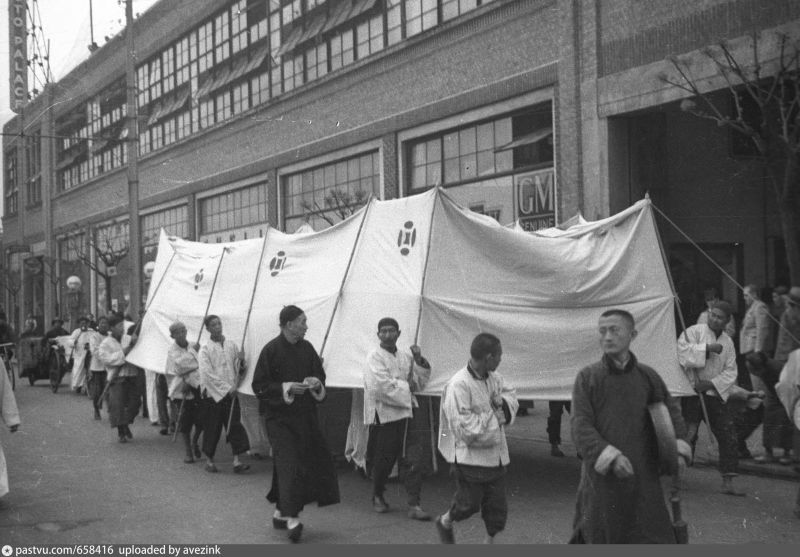
Ye Hongying funeral was quite a big event of the time. The above picture is taken on Changle lu / Rue Bourgeat.
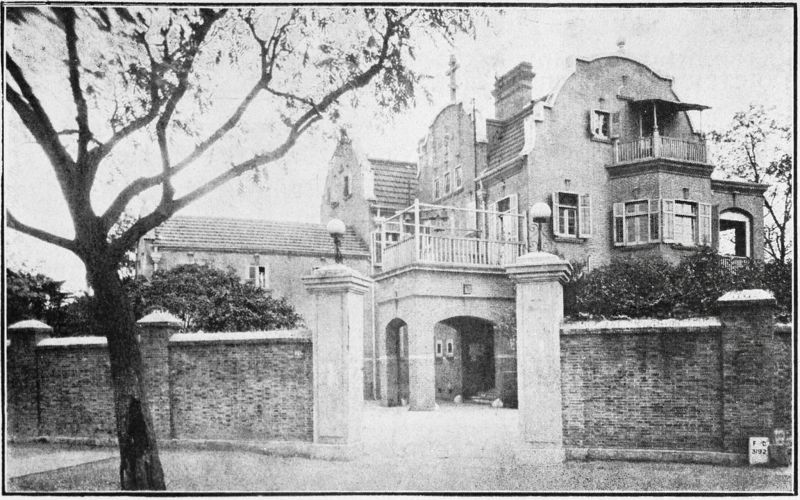
Shanghai researcher Katya Knyazeva has recently come up with some amazing information about the same building. In the 1910s, the same building was the home of the famous Soong family. As shown on above picture, it looked very different at that time. In the 1930 to 1932 period, the same building was a temporary Russian church, before becoming the Ye Hongying library. This building definitely had multiple usage over the years, everchanging while remaining the same… just like Shanghai.

Shanghailander articles are published on an irregular basis. To be notified when a new article is posted, subscribe to the newsletter using this link, or follow the Shanghailander Facebook page.
Rue Massenet to Sinan Lu

Street names mark the lives of people and are very difficult to change in the common mind. There are numerous example of streets that reverted back to their old names after political changes, notably in Eastern Europe. As in all cities, street names in Shanghai carry the city’s history with them.

massenet

Most large streets in the old concessions were created with reference to the British and French powers of the day. Each street had a foreign name and a Chinese name that sometimes had a similar sound, sometimes not. Today’s Nanjing Xi Lu was called Bubbling Well Road, thanks to the springing fountain that was somewhere near Jing An temple. Chinese called it (very pragmatic as always) Jing An Si Lu as the road was leading to Jing An Temple.  The big change came in 1949, with the communist ideology takeover. Avenue Joffre (or Sha Fei lu in Chinese) became known as Huai Hai Lu, one of the most important communist victory of the civil war. Avenue Edouard VII / Avenue Joffre became known as Yanan Lu, the refuge of Mao Ze Dong during the 1930’s. Route des soeurs became Rui Jin Lu, the location of the first communist republic in China in the 1920’s.

It took me a while to spot the ones that did not change… and there are surely some that I am missing. The first one that I found was Route Cohen in the former French Concession. Cohen being obviously a Jewish name, the street was surely named after an important French Jewish citizen of Changhai, but until now I did not find who he was. Some suggested that it could be Morris Abraham “Two-gun” Cohen who was a famous aide-de-camp to Sun Yat Sen, but I find it very unlikely. The translation of Cohen in Chinese is GaoLan… just like Gao Lan Lu today which is the former route Cohen. Interestingly enough, Route Cohen kept its name, the Chinese name continues to be used today.

One of the forgotten pieces

The most interesting so far is the story of Rue Massenet. While Route Cohen is a 1930’s street in the back of the French Concession, Sinan lu is an early street probably built around 1912. It is contemporary of the crossing Rue Vallon (today Nanchang Lu), named after the first person to fly an airplane over Shanghai sky and died in a plane crash in 1911. Vallon’s name did not survive, but Massenet’s did. Sinan in Shanghainese is pronounced “seney”, sounding very similar to (Mas)senet in French, so the Rue Massenet / Seney lu became Sinan lu in today’s Shanghai. Through the ages and name changes, Rue Massenet’s Chinese name survived and is still used today. The Massenet name has resurfaced recently, being used for the fancy “Hotel Massenet” part of renovation project “Sinan Mansions”. The survival of Massenet’s name is probably due to the personality of Jules Massenet, a very famous French music composer in late XIX and early XXth century. He reached world fame thanks to his opera, in particular Manon and Werther and died in 1912 around the time Sinan Lu was built. There are Rue Massenet in Paris and other French cities as well. His style went out of fashion soon after his death with all the changes in life and fashion that followed WWI. His name is only known today by music specialist and although his work is still played abroad, he is virtually unkown in today’s France… but his name has survived in Shanghai. Another reason for the street name never to be changed is probably that both Sun Yat Sen and Zhu En Lai lived on the street at the time of the street name change. Sometimes the wave of change just stops right before the rulers doorsteps.

Shanghai flashbacks

First of all, I want to wish all readers a happy new year with this first post of 2011.

This entry is not so much about Shanghai, but about sight, locations and feelings that reminded me of Old Shanghai during my recent trip to Europe. Navigating old Shanghai is often about trying to find in Shanghai, buildings and artifacts that are similar to the ones from Europe and other parts of the world. Coming from Shanghai, a trip to Europe becomes the opportunity to look at European cities, looking for  Shanghai flashbacks. Such trips are also often opportunities to go back to places I have lived in, as well as to re-connect with friends and family. This one was no exception.

Budapest Art Deco
Budapest Art Deco

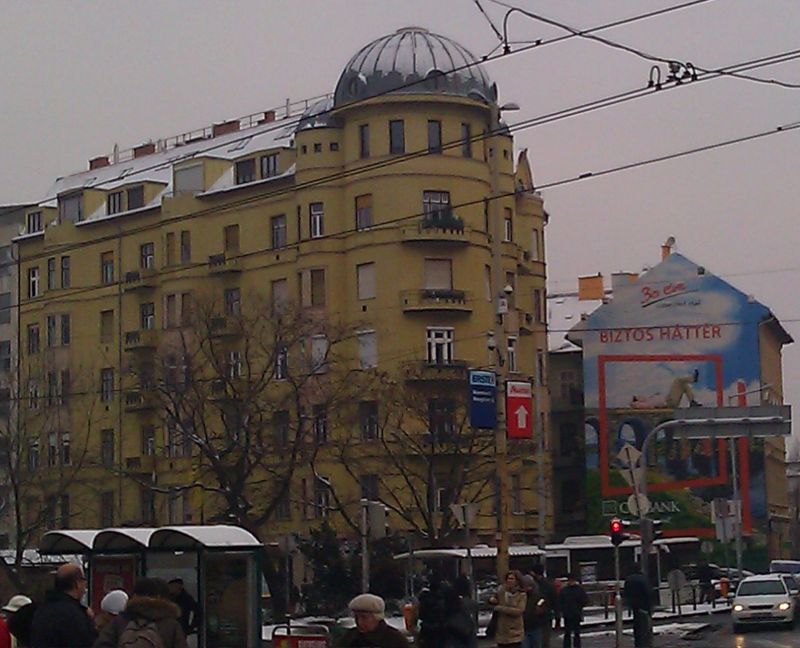
First step of the trip was in Budapest where I have lived many years. Most buildings there are either no-classical, or art Nouveau as most of the city was built in the late XIXth century and early XXth century. Post WWI was not a great time for Hungary, so the city has very few art deco building, though I managed to spot one near Moskva Ter, one of the more recent part of the city. Art Deco there is very recognizable, with the lack of ornaments compared to the neighboring earlier buildings, as well as the use of geometrical lines. It could argue that this building is also Bauhaus style, which sometimes looks very similar to art deco. Funny enough, Art Deco in Shanghai was mostly developed by a Hungarian architect in the same period, Laszlo Hudec. I discovered more Art Deco buildings in a later trip to the city, see post “Budapest Art Deco” for more details.

My time in Budapest was mostly about spending time in cafes, enjoying friend company. When I came to Shanghai from Budapest in 2004, one of the things I missed the most were cafes, the right places to meet friends and spend a few hours in the afternoon. At that time, the only approximation was Xin Tian Di’s Starbucks, and later Vienna Cafe (that I like so much because it reminds me of Budapest). 7 years later, Shanghai has a large choice of bars and cafes, often located in the old houses of the French Concession. Cafe culture has come back to Shanghai, and I love it… this is what I think sitting on some of the Budapest Cafes.

Savoy Apartments, Shanghai

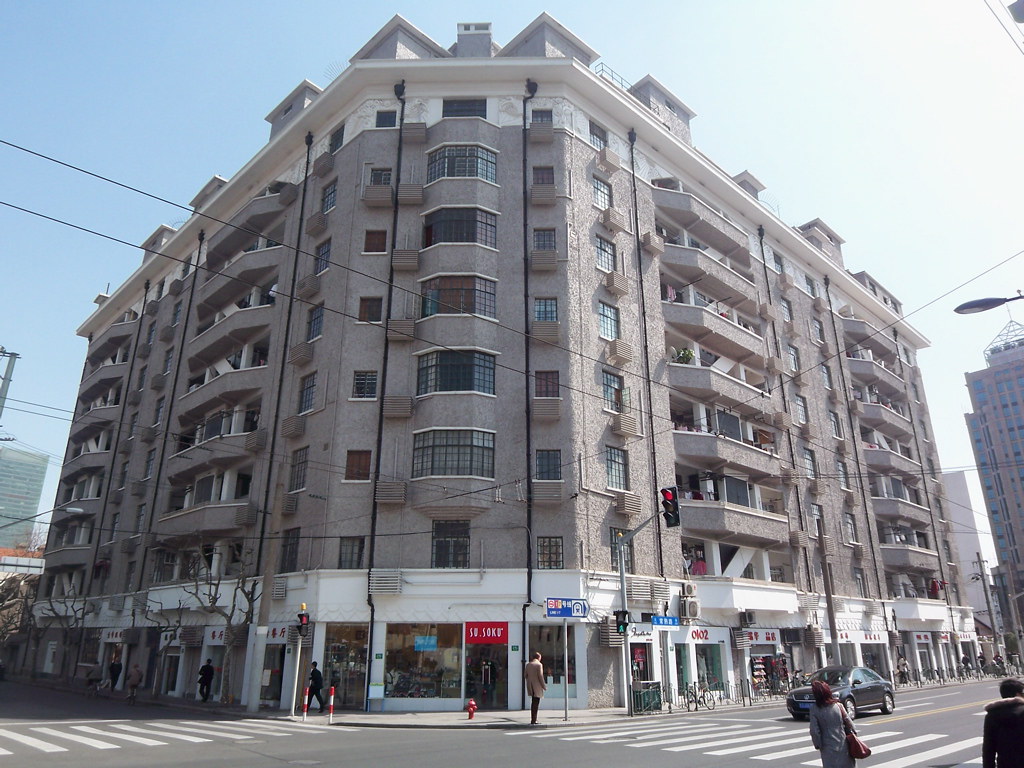
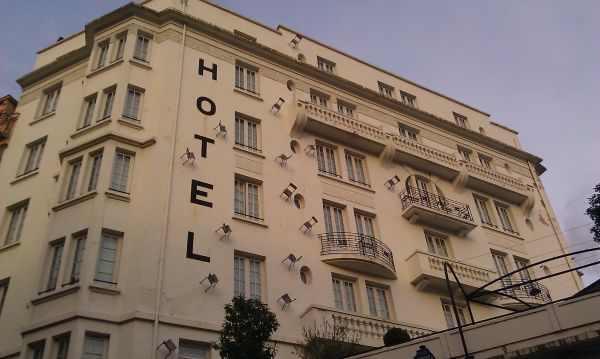
The trip continued to Lyon, that was built much earlier than art deco time but a number of art deco building can be found. One of the best example is surely the “hotel college” in Saint-Jean. Located in the medieval district, the 30’s building is just out of place in the decor, probably as much Broadway Mansions or Savoy Apartments was when they were built. The first element to be seen is the incredible art Deco door, a wonderful work of iron, similar to some found in Shanghai. The building itself is art deco, somewhat similar to the Savoy apartment on Chang Shu lu. It is also very similar to some of the long gone buildings on avenue Dubail (today the North South elevated highway), that were destroyed in the 90’s. Just like seeing European architecture is Shanghai reminds me of Europe, seeing similar architecture in Europe…. reminds me of Shanghai, bringing one of those Shanghai flashbacks.