Her Lotus year, by Paul French

I have never found any interest in the life of British Royals. As Paul French looked into Wallis Simpson stay in Shanghai in his new book: “Her Lotus year”, this attracted my attention into this episode of Royal history.
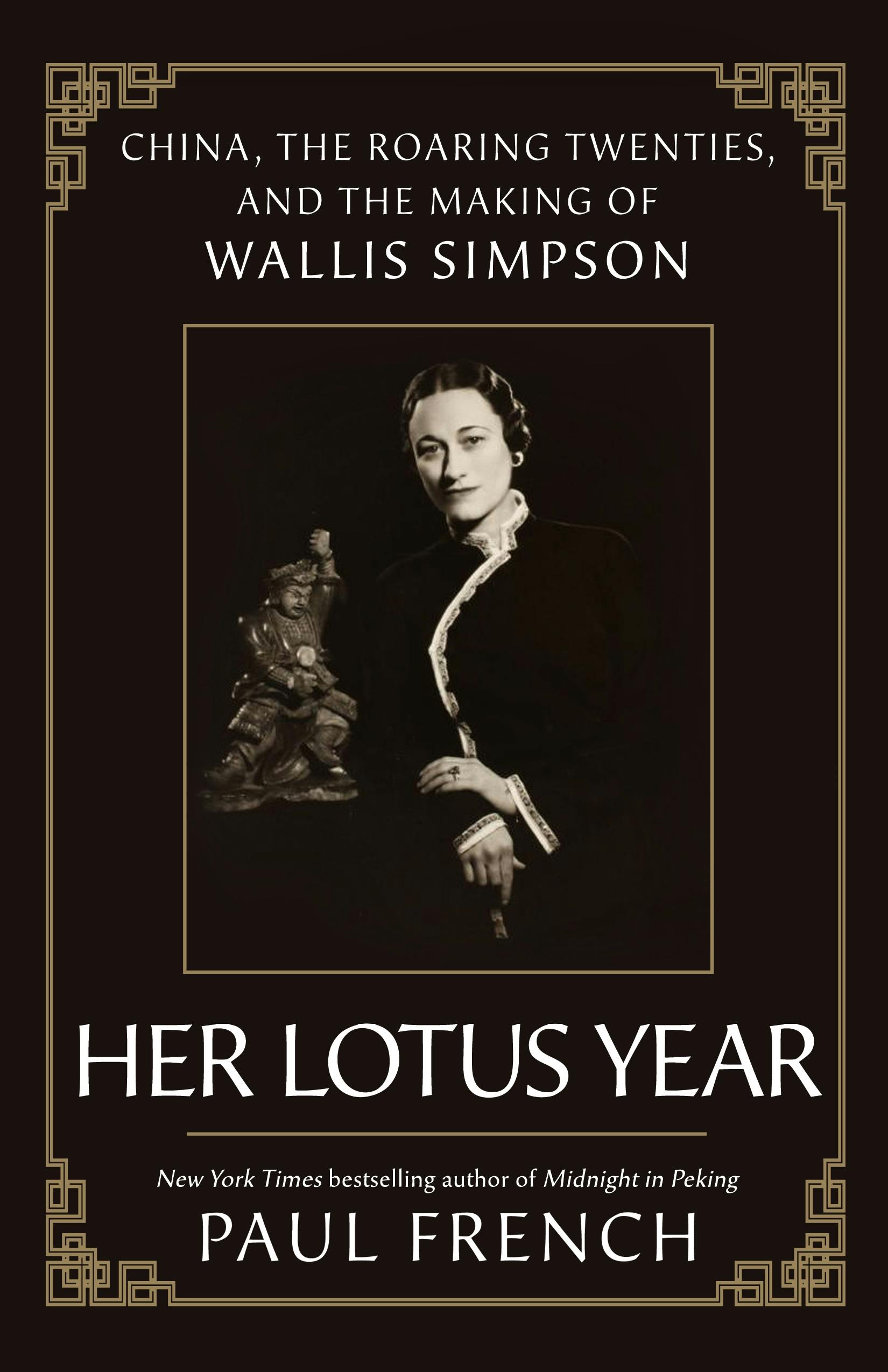
Having spent years living in Shanghai, Paul French is no new comer to Old Shanghai and author of several deeply researched books on the topic. Those included “The Old Shanghai A-Z“, Carl Crow’s biography “A tough Old China hand” and “City of devils, a Shanghai noir”. He then turned on to Beijing, investigation a 1937 crime in “Midnight in Peking“. This made him the perfect candidate to investigate Wallis Simpson stay in China, a part that was mostly overlooked from other biographers.

Wallis Simpson arrived in Hong Kong in September 1924, rejoining her husband, an american navy officer, in an attempt to revive their marriage. The reunification failed and she embarked on daring trips to Canton, Shanghai and Beijing. China political situation at the time was chaotic at best, as the country was nearly in civil war. Several armies were fighting for controlling the country, in what became known as the warlord period. The complete chaos of China at the time is well described by journalist Albert Londres who travelled to China at the same time and related his trip in book “La Chine en folie“. Travelling as a single women, Wallis Simpson was probably on missions carrying important documents for the US army or administration, shown by the monetary and logistics support she received.

Arriving in Shanghai in November 1924 on Canadian ship “Empress of Russia”, she stayed at the high end Palace Hotel on the Bund, close to the American consulate. Wallis Simpson quickly integrated the top of Shanghai foreign society, with the help of “Robbie” an English architect who later designed the new Shanghai Race Club building in 1934. He took her to the Majestic Hotel, to the horse races, and among the powerful people of city. In December 1924 she departed to Beijing. She only spent a few weeks in Shanghai, and none of the rumors seem true, apart from Wallis Simpson easily befriending people in the higher tier of society.
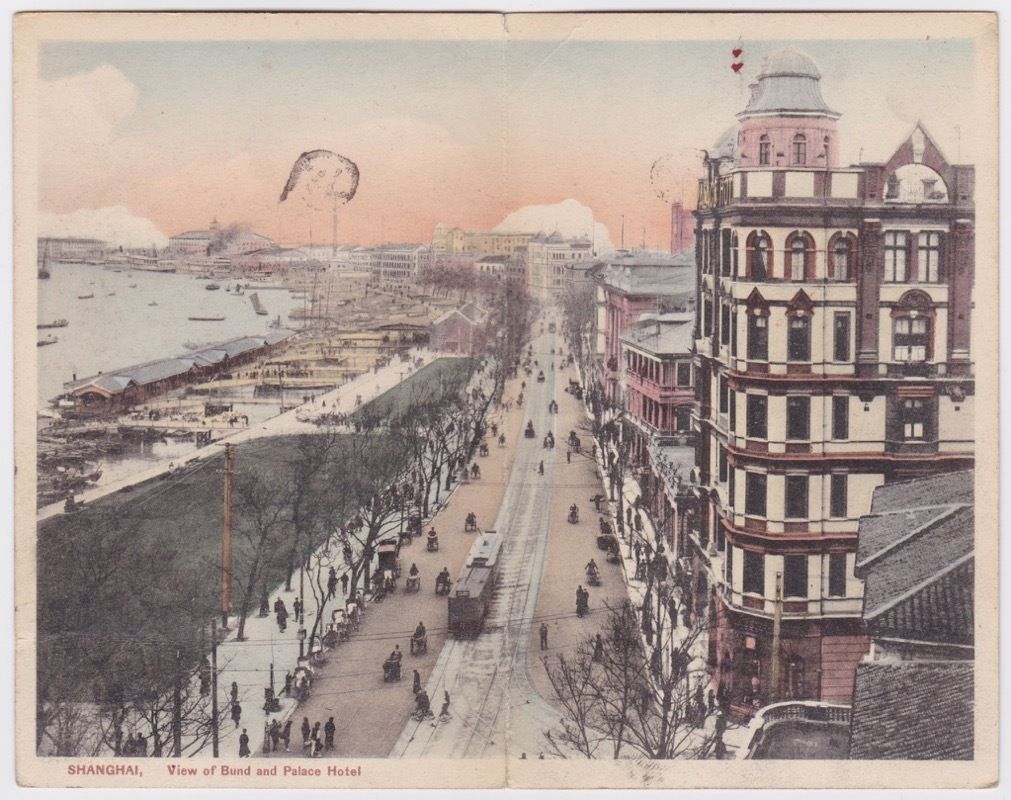
The Shanghai Bund in the 1920’s, looking at the Palace Hotel

One of the recurring theme about Wallis Simpson is the “China dossier” compiled by the British secret services, showing how scandalous she was. She was rumored to have had affairs with multiple men, even selling sexual services and using the exotic skills learned in Asia to capture her preys. The “Shanghai grip” was particularly talked about, “The ability to make a match stick feel like a cigar”. Paul French rigorous inquiry shows that most of those rumors where unfounded, but cleverly crafted so as to be made easily believable. A number of the stories were actually true, referring to other women living in China in the same period. Confusion was easily spread, supported by the Western fascination for the exotic East.

Paul French conclusion is that the whole China Dossier was falsely created to destroy the reputation of Wallis Simpson and discourage her marriage with future King Edward the VIII. In the end, the King abdicated a few days after his coronation, to be able to marry her. In retrospect, this was a perfect outcome as Edward VIII seems to have had a lack of judgment if not strong sympathies for Nazi Germany, even visiting Adolf Hitler in October 1937.
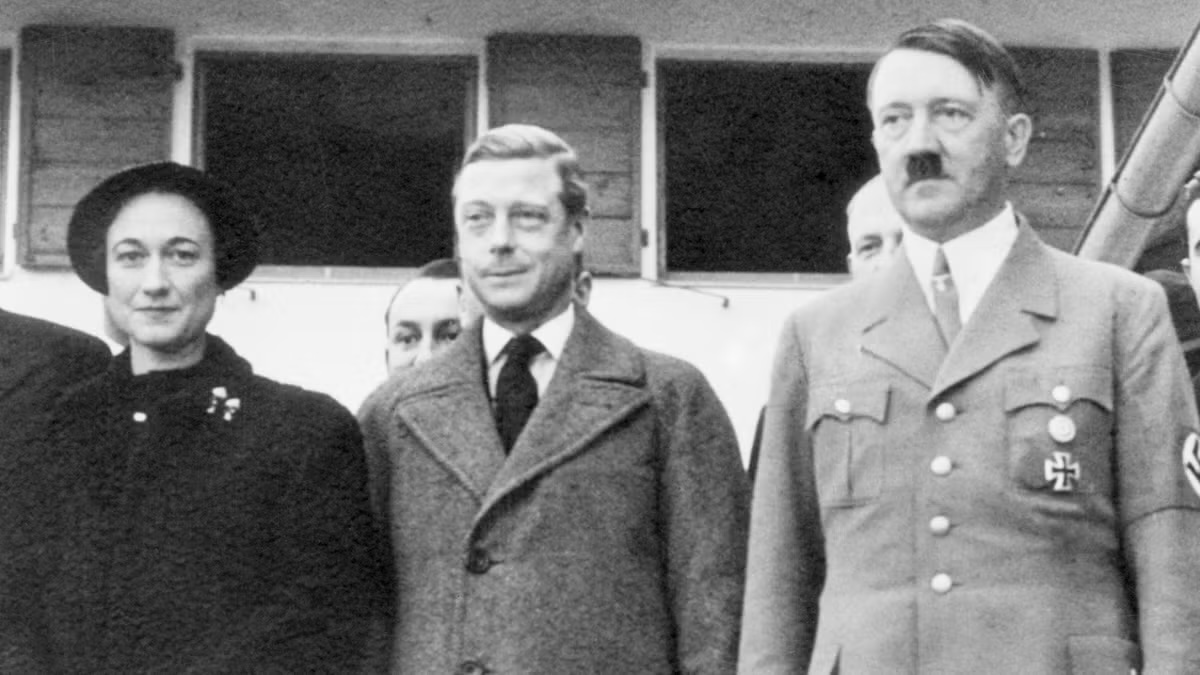
Wallis Simpson, Edward VIII and Hitler

With little actual facts, Paul French is great at filling the gaps of the story and gives a lot of background information thanks to his in-depth knowledge of Shanghai and Beijing at the time. The books make an entertaining and easy read, while being supported by in-depth research. Besides the Wallis angle, it is also a great introduction to foreigners life in Beijing in the 1920s, where Wallis Simpson spent most of her China time.

For more books by Paul French, follow this link.

Shanghailander articles are published on an irregular basis. To be notified when a new article is posted, subscribe to the newsletter on the left column of this page, or follow the Shanghailander Facebook page.
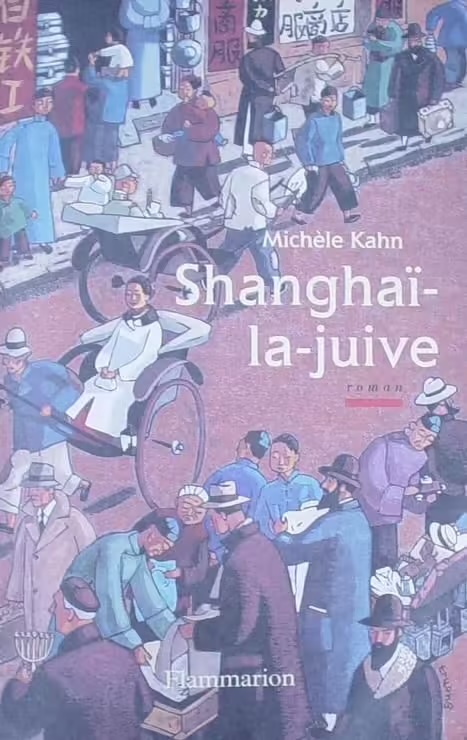
Shanghai-la-Juive

“Shanghai-la-juive” by Michèle Kahn had been on my bookshelves for years. I finally took the time to read it this summer, and I wish had done it earlier.

Published originally in 1997, the novel tells the story of Walter Neumann, a young Austrian Jew who reached Shanghai in 1938. Arriving without a penny like many other in Shanghai at that time, he finds his way through the city during this hard time and the following years of WW2. He climbs the back streets of Hongkou districts, the Wiener Café in the French Concession, to the Luxury of Grosvenor House, falling back again to the Hongkou Ghetto. Torn between his chinese girlfriend and his Russian jew fiancée, his crosses the path of many interesting characters. This gives the reader of view of various backgrounds and layers of society.

As made clear by the title, the novel is focused on the Jewish community in Shanghai. It tells the story of the approximately 20.000 Jews that escaped persecution in Central Europe and took refuge in Shanghai. Most of them were from Germany and Austria, but also from Poland and Lithuania. As many were housed in Hongkou (Hongkew then) district, this part of the city soon saw many shops opened by the newcomers and became known as little Vienna. A big part of the book is taking place there.

Little Vienna in Hongkew district

The book also shows the relationship between the different Jewish communities including those that were in Shanghai before the massive influx of refugees. Characters mostly come from Central Europe and China. Very little is said about other western communities that were running Shanghai apart from historical background. As Shanghai was very well divided along social and national lines, various nationalities or social strata did not mix much, just like in the book.

Tragic events in Europe are in the mind of most people, with some desperately waiting for news of relatives back in Europe that they never received. Like for the rest of the World, the real extend of the holocaust only came clear at the end of the WW2, but it is constantly in the background. The story of the Shanghai Jewish refugees was not well known in the 1990s and this book was surely a revelation for many at that time. This story has since been told in books and articles, often by actual people who lived those events, like Rena Krasno and Liliane Willens and many others. One of the notable documentary on the topic is Shanghai exodus. Israeli journalist turned tour guide Dvir Bar Gal has intensely researched the topic and toured thousands of people in the old Hong Kou district that has now sadly mostly disappeared. The only remaining part is the former Ohel Moshe synagogue, that is now the Shanghai Jewish Refugee Museum.

Michele Kahn research has clearly been very deep, as shown by the bibliography and the numerous Shanghai survivors she interviewed. I particularly like the way she introduces historical background in the story with a light and very natural touch, unlike other Old Shanghai novel that feel like a boring history lesson.

Although focused on a very specific time and community in Shanghai, I find Shanghai-la-juive a really good read, while standing on an in-depth and well documented research. The book was a success when published, having received good reviews from critics. It sold well and was republished several times. Written in 1996, it still felt very fresh nearly 30 years later. Unfortunately, it does not seem to have published in any other language than French so far.

Shanghailander articles are published on an irregular basis. To be notified when a new article is posted, subscribe to the newsletter using this link, or follow the Shanghailander Facebook page.

More Dijon Art Deco

The summer of 2025 was an opportunity to spend more time in my home city, Dijon, and to revisit its art deco heritage. With more time at hand, I could explore more areas, expanding from my original post from 2013 (see post “Dijon Art Deco” for more details). This is a side post from the main topic of the blog, Old Shanghai.

Although its traces go back to the Roman Empire, the city is mostly known for its medieval architecture, built during the Duke of Burgundy time in the 14th and 15th century. 16th and 17th Century renaissance architecture saw the rise “hôtels particuliers” or private mansions closely inspired by Paris ones like Hotel Sully. The city was called “small Paris” for a while. Dijon population grew rapidly in the 1920s, creating opportunities for construction. The style in vogue was modernistic, part of it is now called Art Deco.

Modernist building on 9 Rue Dr Chaussier

One of the most noticed Art / Deco modernist building is on 9 Rue Dr Chaussier, from 1938. The U shaped design with double exposure creates a lot of light in the apartments. The inside staircase is clearly streamline design and architect P. Leroy used floor patterns similar to the one used on the MS Normandy, as well as some LVK buildings in Shanghai (see post “Deja vu from Paris to Shanghai” for more information).

Unfortunately, the building was taken over by the Gestapo after June 1940 and used as its headquarter for the city. Brand new and located close to the German authorities headquarters in the city, it was an easy prey for the invaders. This story is quiet similar to the one of “Bridge House” in Shanghai, a great Art Deco building that became the headquarter of the Japanese Kempeitai.

Another great art deco building in the city center is the newly renovated Hotel Central by Dijon Architect Gaston Paris.

The city historical architecture was mostly protected, so Art Deco building in Dijon are mostly found in the suburbs of the time. Besides the Montchapet district seen in post “Dijon Art Deco“, the area of rue de la Maladière was also built during the 1920s and 1930s. In this area, the “Eglise du Sacré Coeur” is an art deco festival.

Started in 1933 and finished in 1938, the church combines some regional features (mostly the Burgundy style rood), with modernism of the time. Apart from the 50 meters clock tower, the main point is the giant fresco of Jesus over the heart of the Church.

The design of the side chapels and the stain glasses also has a strong Art Deco feeling.

The Sacre Coeur church of Dijon is on the great Art Deco churchs, built around the same time than Vichy’s Notre-Dame des malades (1925-1931), Paris Saint-Jean Bosco church in Paris (1933-1937). It is also a similar time line to Hudec Moore Church in Shanghai.

There are many more Art Deco apartments building in Dijon, including the massive Art Deco apartment building on 33 Rue Sambin, by Dijon Architects Joseph and André Favre.

For information on Dijon Art Deco, please go to post “Dijon Art Deco“. Although Shanghai Art Deco is not the same a Dijon’s, they have a lot in common in terms of time period and style. Looking for Dijon Art Deco is like keeping the link with old Shanghai when I am away.

Shanghailander articles are published on an irregular basis. To be notified when a new article is posted, subscribe to the newsletter using this link, or follow the Shanghailander Facebook page.