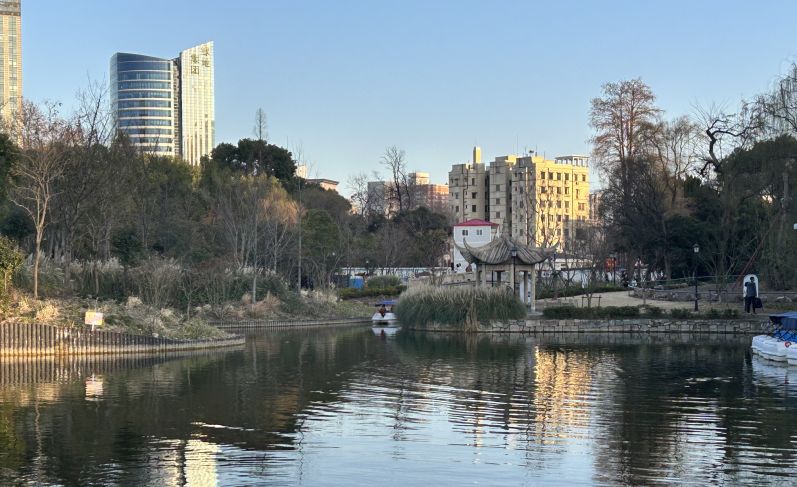
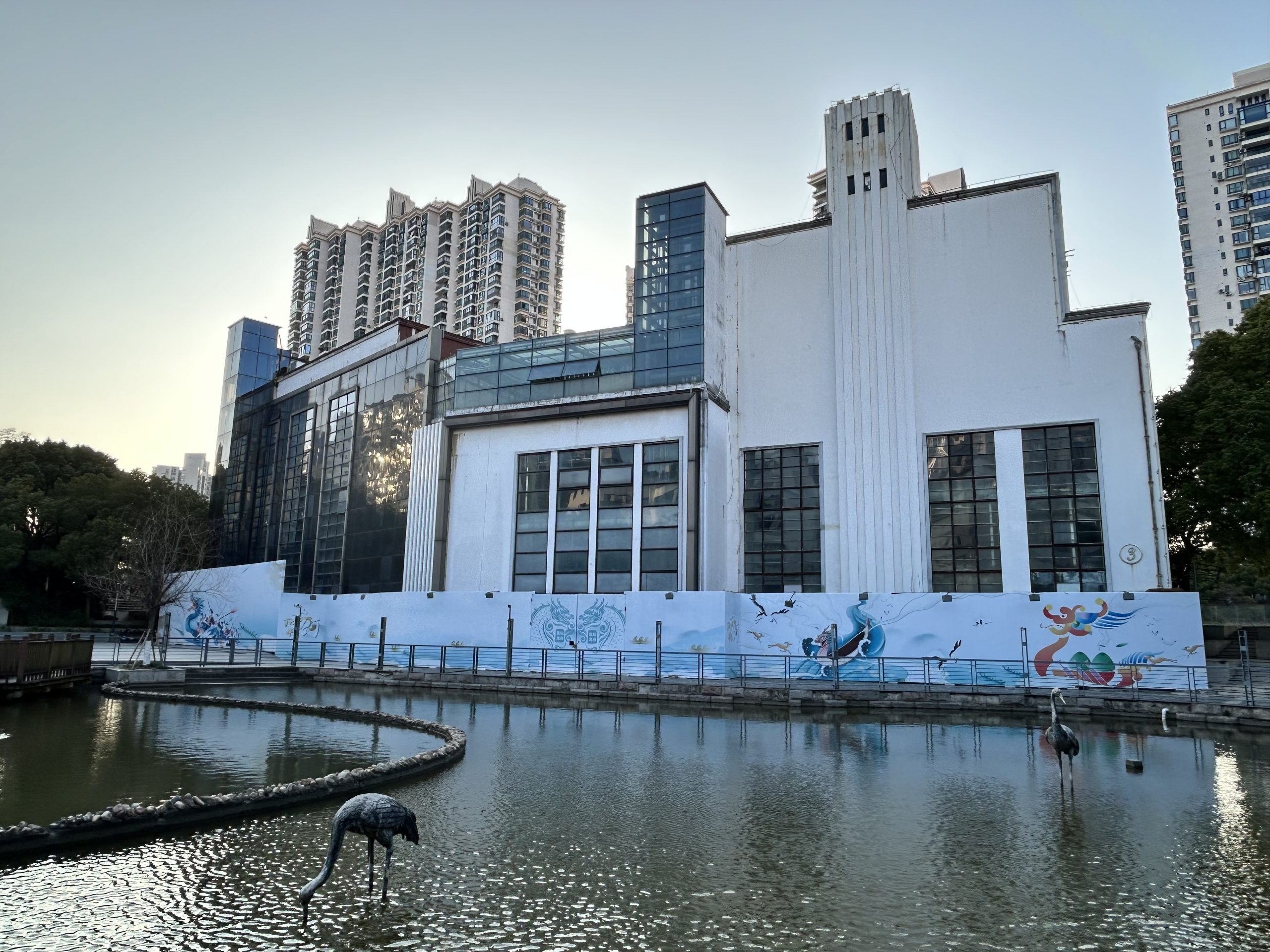
As spring has come to Shanghai, many people go to the park for a bit of fresh air. One of the city’s favorite is Zhong Shan Park, but many people don’t know it has been there for more than a century, originally under the name of Jessfield Park.
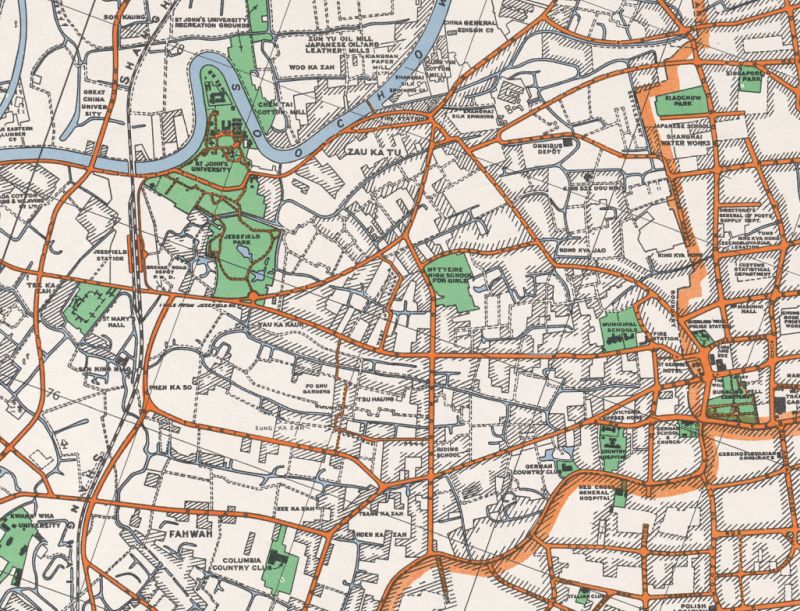
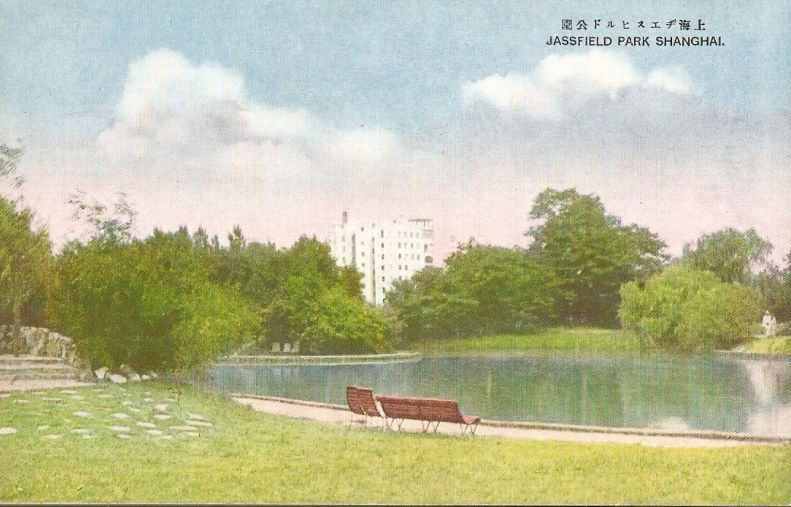
Although Shanghai has changed a lot since 1935, the above Jessfield park is still recognisable on today’s Shanghai map. Saint-John University on it’s North side is also still there. Originally used as a military field, this plot of land was turned into a park in 1914.
Picture virtualshanghai.com
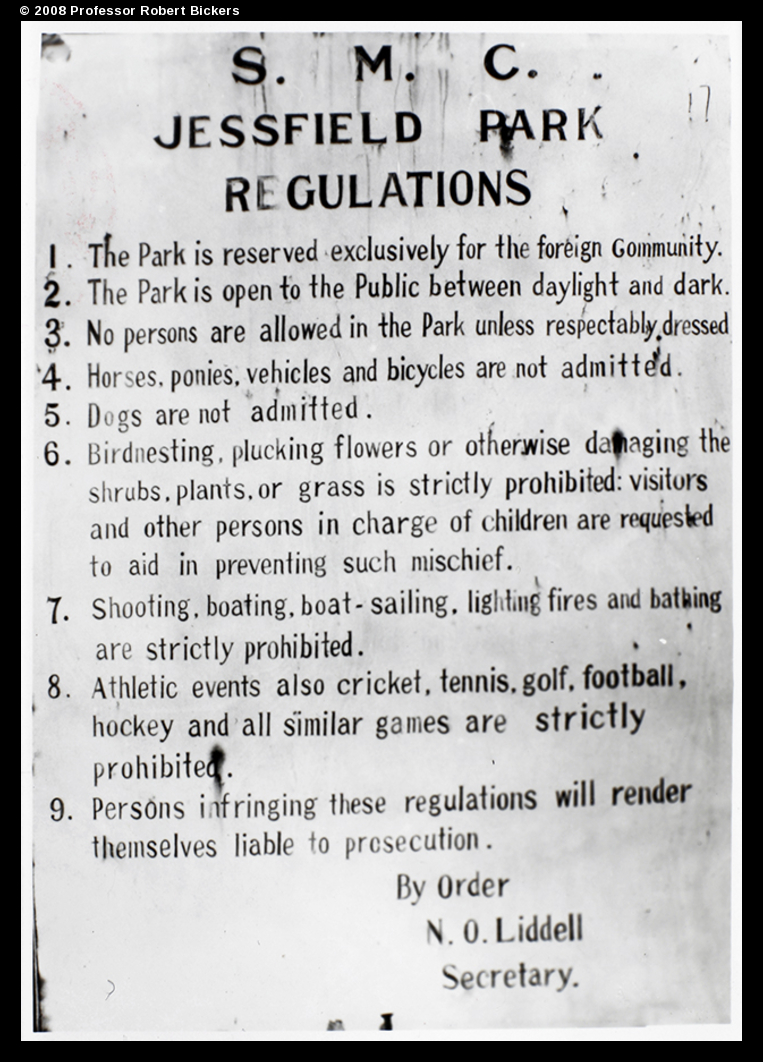
The park was named Jessfield Park, it was located at the end of Jessfield road (today Wan hang du lu / 万航渡路). Just like the Bund garden, it was first restricted to foreigners, but became open to all people from 1928.
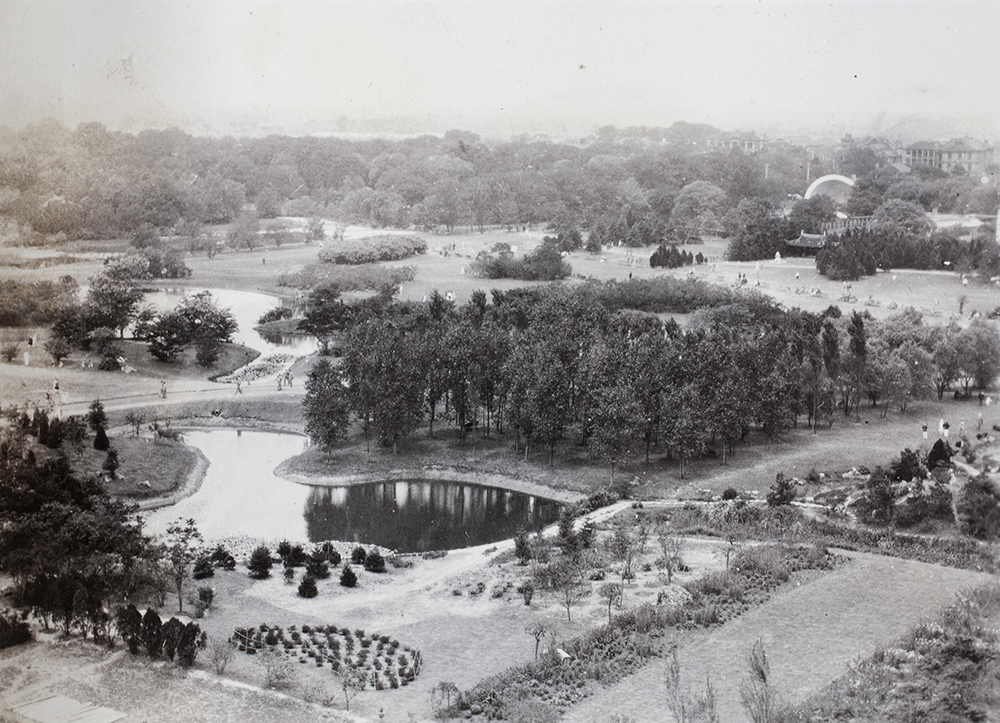
Jessfield Park, Shanghai, 1932, Ephgrave Collection, Ep01-216 (thanks to Paul French)
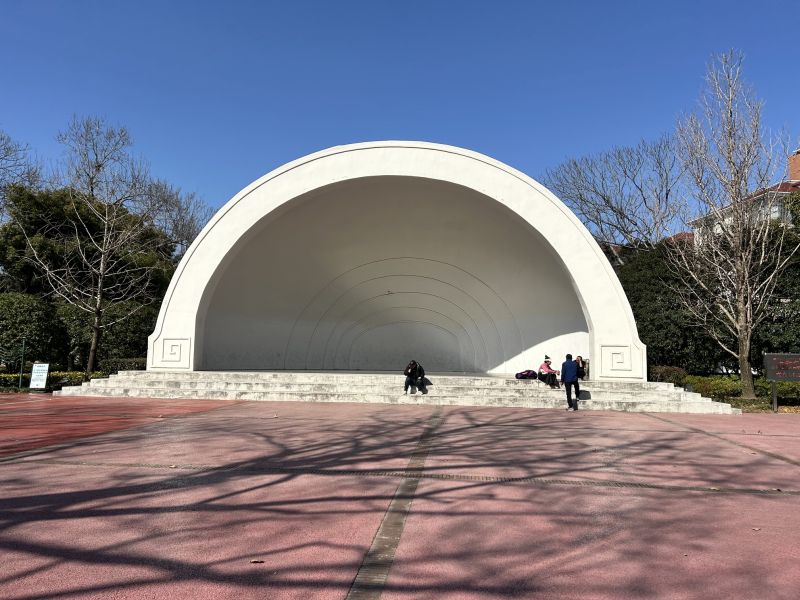
The park was of English style with grass, trees and ponds. Regular concerts from the municipal took place in the park. Long before electric amplification, sound of the band was amplified by a bankshell, a special structure designed to amplify sound. Those were very popular in the 1920s and 1930s, before the rise of electric sound amplification. The original can be seen on the top righ corner of above picture. It is still standing today, as shown on picture below. Designed in art deco style, it probably dates from the late 1920s or early 1930s.
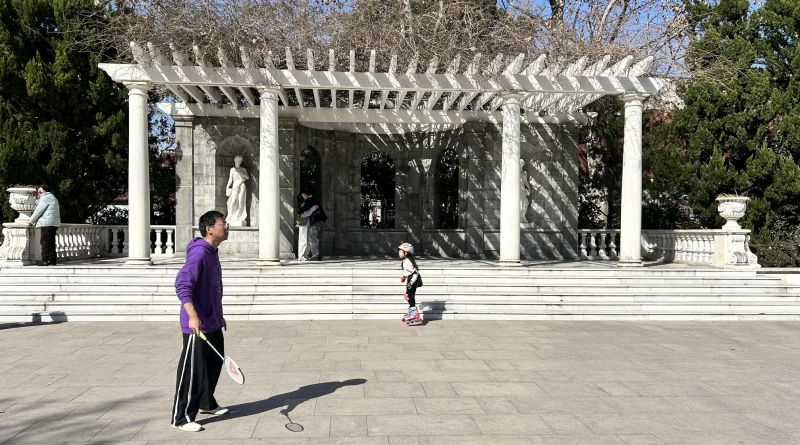
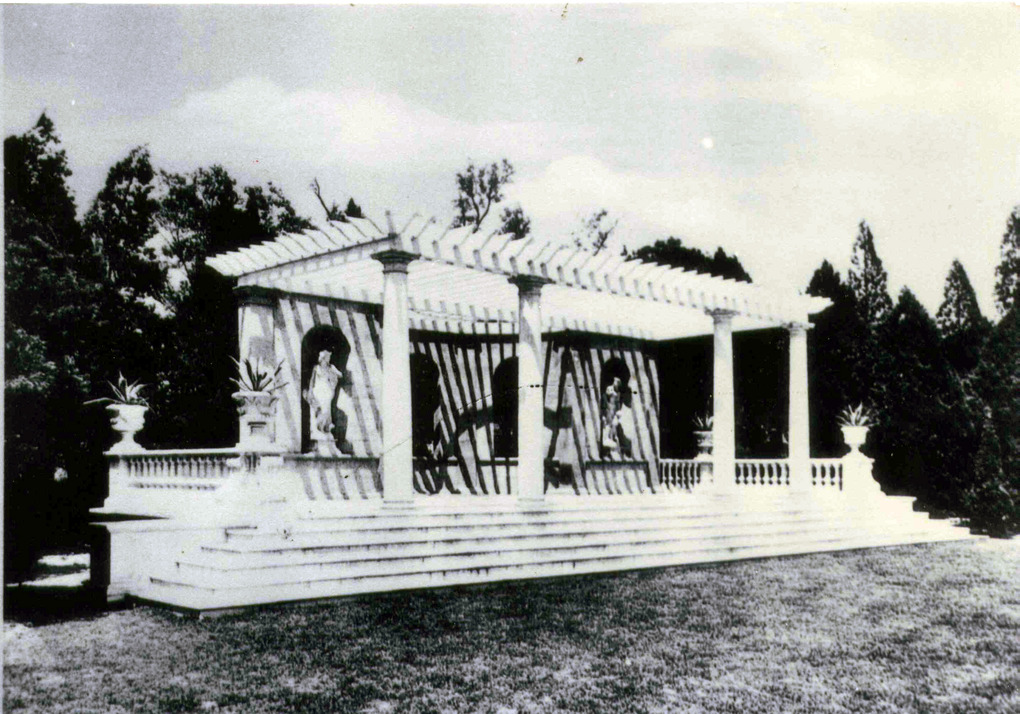
Few people noweadays seem realise what the original purpose of this construction was. Next to the main lawn of the park, stands of little pergola surrounded by statues.
This construction is the original that was completed in 1935. It survived turmoils of history very well.
Jessfield park pergola (picture virtual Shanghai)
As the city expanded Westward, houses where built around the park. The tallest apartment building then was West Garden apartments. The building from 1928 was designed by Russian architect Alexander Yaron.
Jessfield park with view over West Garden apartments (Shanghailander collection)
This particular building still stands today, although it is now surrounded by much taller towers.
A recent trip to Shanghai Ecological park along the Suzhou Creek was the opportunity to go and revisit the former Union Brewery factory, a Hudec building that has mostly been forgotten.
The 28.800 sqm area also included a large streamline design building. The right part with the angle is very typical of streamline design, echoing Paris Callot building completed in 1933 (see post Paris streamline building).
Comparing the 1937 British map and today satellite, it is clear that the area was surrounded by factories, in particular cotton mills. All those factories were using the river water and dumping used water in it. The Suzhou creek was not as clean and nice as today and sometimes had weird color due to textile dying process in the factories on its sides.
Above sketch shows that only a few buildings remain. The pond on above photos is probably where the main building once stood.
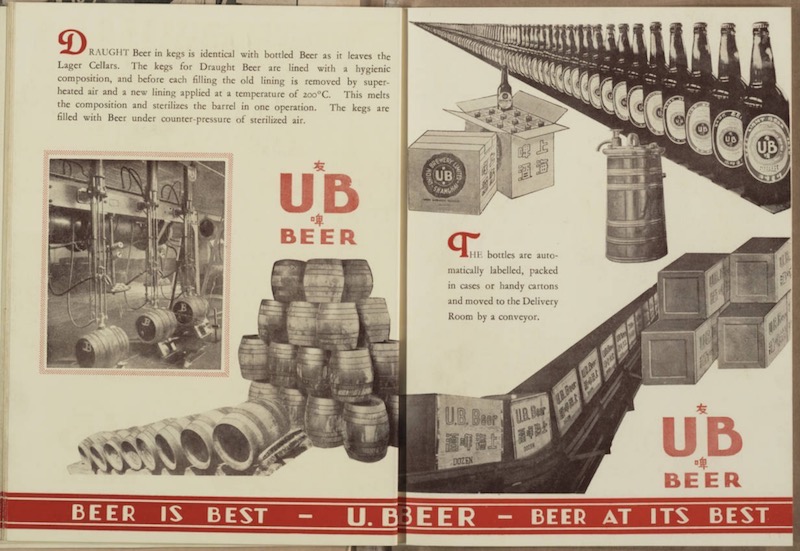
The above add gives a sense on how the beer factory looked inside. Surely very modern and efficient at the time of construction. It had the production capacity for 1 m crates of beer / year, and claimed to be the largest in Asia.
Union Brewery was one of the leading beer brand in Shanghai, along with its competitor Ewoo beer, owned by Jardien & Matheson (Ewoo / 怡和 in Chinese). One of the large company of Shanghai, Union Brewery was listed on the stock exchange. It made both pilsener and brown beer. Beer was advertised as “good for health for young and old”. It was a modern and fashionable drink.
Union Brewery logo
In the 2000’s, the former United Brewery building became the (now long gone) entertainment complex Pier One, with restaurant Mimosa, bar Monsoon and night club Minx. It appears to be currently unused. It is located at 130 Yichang Road / 宜昌路130号 in Putuo district.
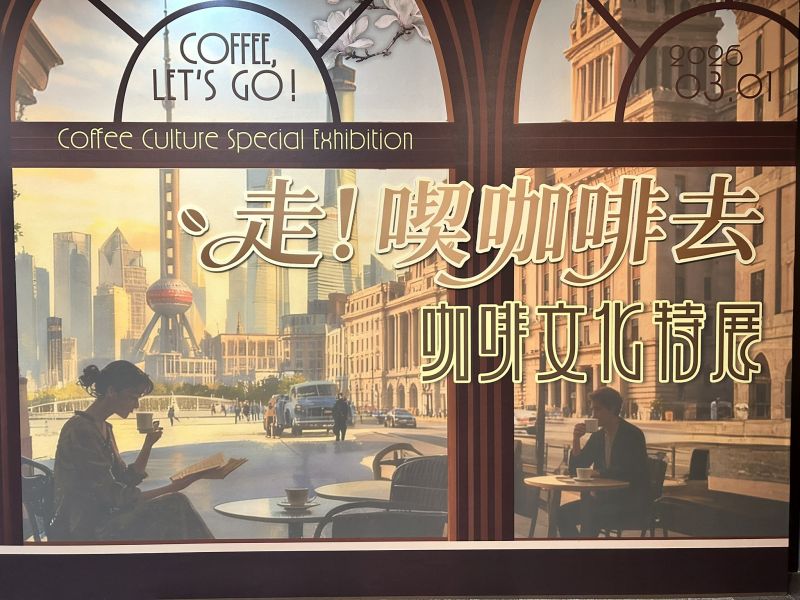
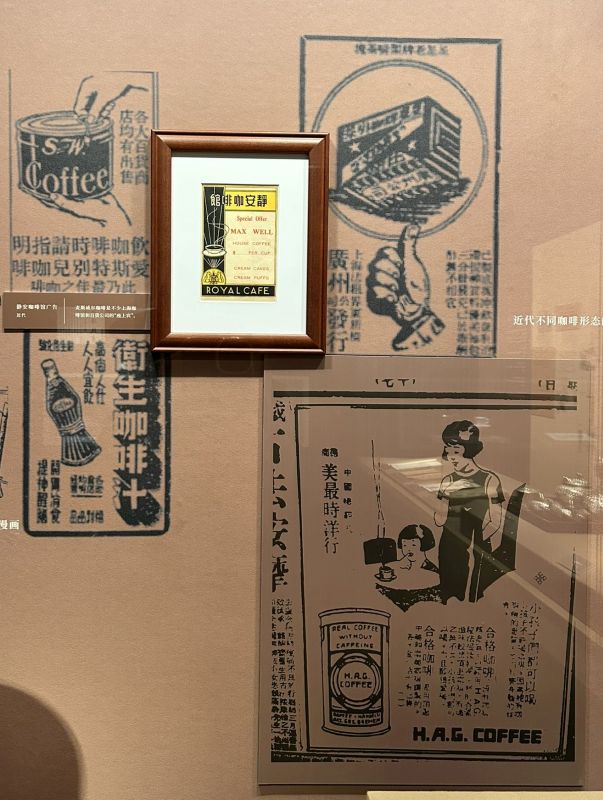
Drinking coffee is an integral part of Shanghai culture. The Shanghai history museum recently hosted an exhibition about coffee and its history in the city. It closed down on 1st March 2026.
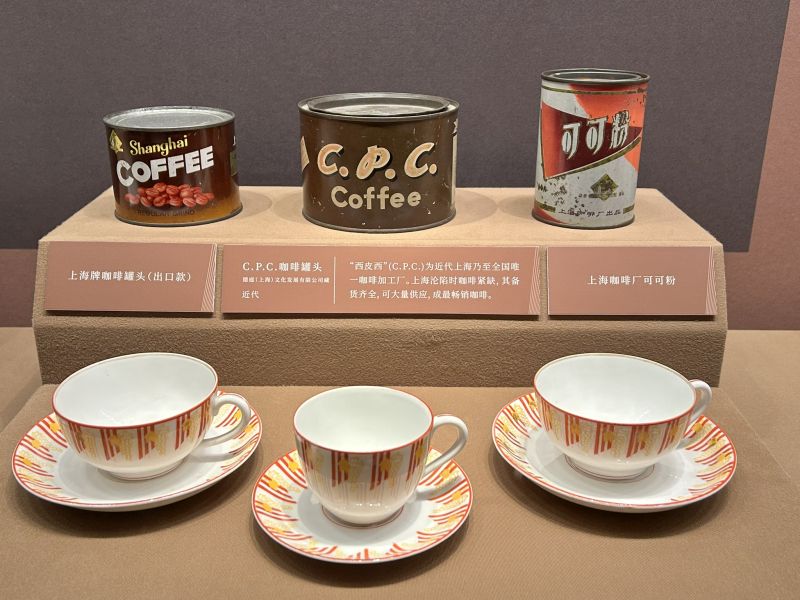
Shanghainese people have been drinking coffee since the late 19th century. First only available in high end hotels and drunk by foreigners, it was adopted by many local people by the 1920s and 1930s. Cafe were plenty, some of them has survived through the ages like Deda Cafe. The first ones were owned by foreigners, soon joined by local competitions. The most famous company supplying coffee was CPC coffee. Our friends at MOFBA have written a detailed history about CPC Coffee company.
CPC coffee, the main coffee brand in old Shanghai
From 1949, coffee became rarer to find until nearly disappearing. Coffee beans were reserved for a happy fews. In the late 1990s, the place to get a cup of coffee were still mostly foreign hotels, where it was really expensive. As western style café and restaurants opened again, coffee became more available and affordable. Nescafé also entered the market and the little read bags became a must take when travelling in China, as it was sometimes hard to find out of cities.
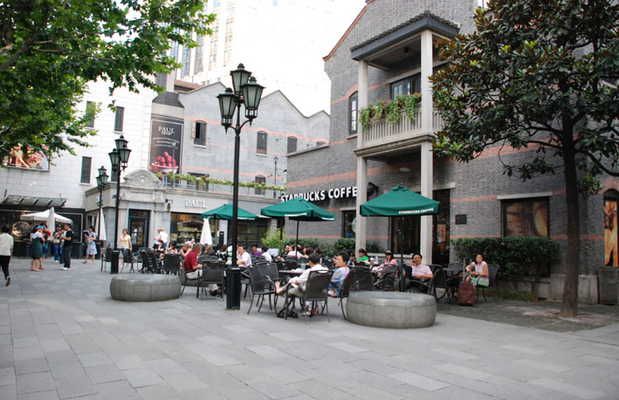
the (now closed) Starbucks XinTianDi
The introduction of Starbucks chain in Shanghai in 2000 was really the renaissance of coffee in the city. When I came back to China in 2004, one of the top meeting place was the Starbucks store in Xin Tian Di (now closed). Although the franchise dominated the 2000’s, by 2015 it was being really challenged by competitors. Chinese brands such as Luckin or Manner popped out, as well as many smaller independent stores.
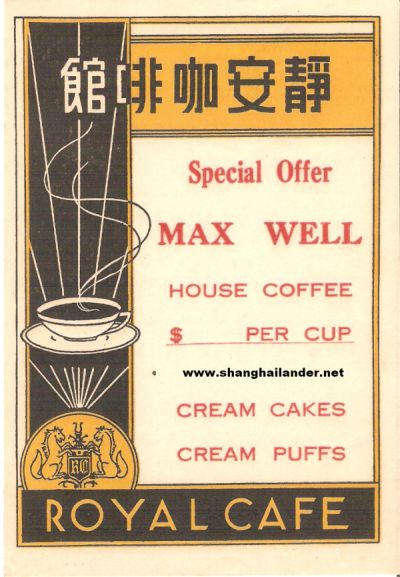
The coffee exhibition also displayed advertising for coffee brands from old Shanghai. This included the same “Max Well” branded menu from Royal Coffee shown in post “Shanghai Coffee Culture“. The 静安咖啡馆, Jing An Coffee shop was located on 1472 Bubbling well road, that is 1472 Nanjing Xi Lu / 南京西路 nowadays. It was the coffee shop of the CPC coffee brand. Office building United plaza is now on this location. This area of Jingan has many coffee stores, including a Manner store close to this original location.
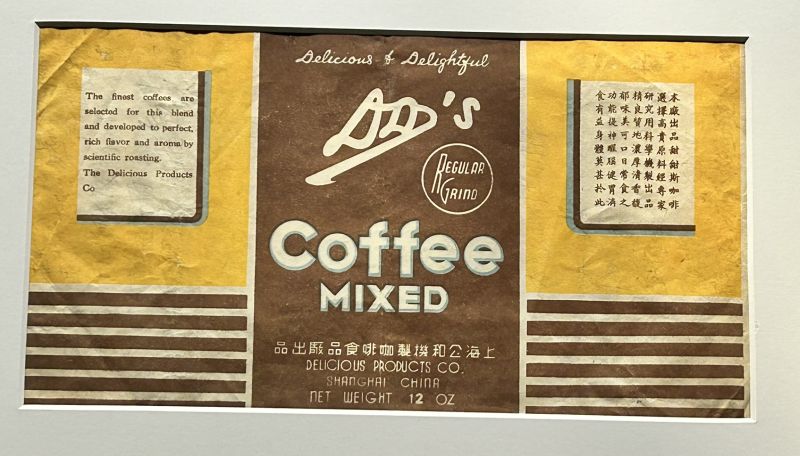
Other brands of coffee were on display, like the above one.
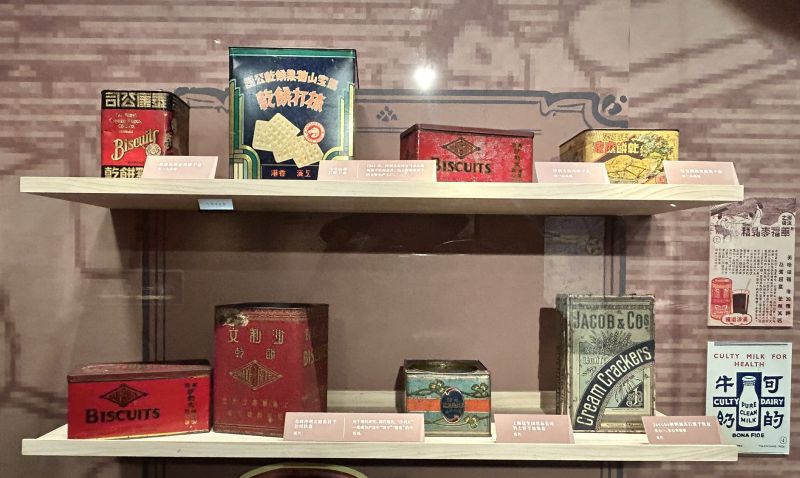
The exhibition also included biscuit tins and ad for Culty Diary (bottom right), that I wrote about in post “Shanghai Milkman”. After the exhibition, it was the right time for a nice cup of coffee, with some biscuits. For more info about Coffee Culture in Shanghai, see post: Shanghai Coffee Culture.
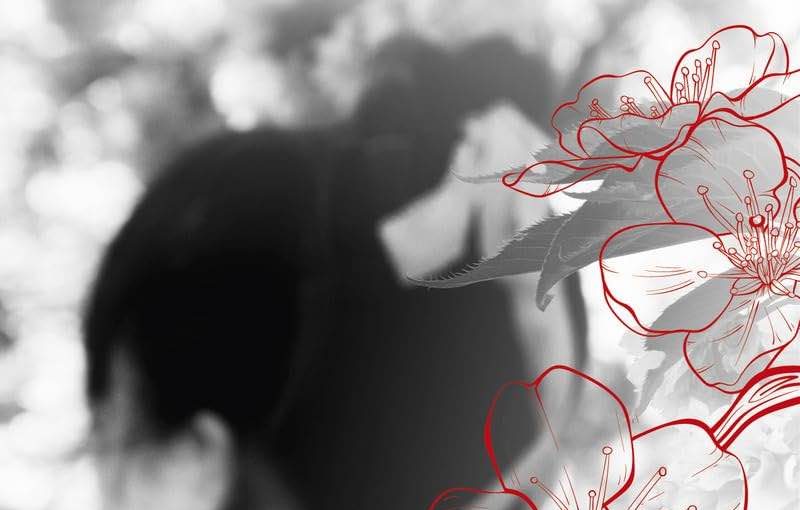
Although Marek Halter’s novel “La juive de Shanghai” (The jewish girl of Shanghai) has been published since 2002, I avoided reading it because of its original cover. The publisher’s choice of putting a Vietnamese lady in Ao dai over a book about jews in Shanghai was really weird, on the border of insulting. This shows a lack of understanding about Asia, which is regrettable for a book about Shanghai. The cover has now been changed.
Original coverNew cover
Despite the title, only a small part of the book takes places in Shanghai. It tells the story of a Jewish lady from Warsaw, who is becoming the star of Berlin haute couture in the 1930s. As nazis extend their anti-semitic laws and actions, she must relocate back to Warsaw. The family later goes to Kaunas in Lithuenia in 1939, where the Japanese Consul gives them the visa to be able to leave. They take the train through USSR all the way to Japan, and finally take refuge in Shanghai.
Although the story of the 18.000 Central European jews who took refuge in Shanghai during WW2 was long time unknown, there are been a number of books and movies about topic. Most came to Shanghai on ships from Genova with Llyod Triestino, some being given a visa by Chinese Consul General in Vienna, Dr Feng Shan Ho / 何鳳山. A smaller number from Poland got a visa from Japanese Consul General in Kaunas Chiune Sugihara and went on the transsiberia train through USSR. After reaching Japan, many of them were transferred to Shanghai by the Japanese government.
Writer Marek Halter
Thanks to Marek Halter’s background, the book is fantastic at making us revive the atmosphere and the life of Jews in Germany and in Poland before WW2. It was a way for me to understand the background of Polish jewish lady Stéphanie Rosenthal before she went to live in France and then China in the early 20th century, with her Chinese husband. It also tells the story of people trying to leave Europe at any cost to save their live. The pace of the book is fast and easy to read, while historically correct. The parts before Shanghai are highly enjoyable.
The last part of the book is focused on describing the life of Jews in the Shanghai designated area, as defined by the Japanese occupation government. Actual historical facts are used, like the role of Victor Sassoon as well as the American Jewish Joint Distribution Company (JDC) and its managers Laura Margolis and Manny Siegel. The atmosphere seems right, thought the story is less active in this part and many themes mentioned remain underused. The includes the fights between Japanese collaborators and nationalists spies, as seen in 2007 movie “Lust Caution” and many Chinese movies and TV series.
There are also number of historical and cultural mistakes, making the story less believable. With a semi tropical climate, it is extremely rare to see “roofs covered with snow” in Shanghai, even in winter. This is meant to be Beijing. Similarly, the character cannot be eating “nems” in Shanghai, they are part of Vietnamese cuisine, not Chinese. This is a very common mistake by French people, who often eat Chinese food at restaurants actually run by Vietnamese.
The action is happening in the “Concession”, but which one? The International settlement or the French concession? The difference would impact the story heavily. Street names are mostly made up, when maps of Old Shanghai are widely available, and many other details are weird or wrong. A “Sassoon cigar company” that is mentioned never existed. One of the character takes refuge in Taipei on a flight that made no sense and did no exist in 1941. With some more historical research, this part would surely have been more believable.
All in all, this is a good book, but the title is somewhat misleading and the part happening in Shanghai does not feel as interesting as the rest. Other novels about the Shanghai jewish refugees have been published, such as French book “Shanghai la juive“. There are also many movies and biographies that tells this story in a more accurate way.
The book was published in French. Publisher’s website indicates an English version but I am not sure if it has been published yet.