On his January 2026 visit to China, British Prime minister Keir Starmer had a special taste of Old Shanghai. He had the opportunity to buy and taste the Shanghai pastry, butterfly cake or hudiesu / 蝴蝶酥.
Butterfly cakes have been around in Shanghai since the early 20th century, probably introduced by French bakers as they are directly related to French palmiers cakes. They survived through all the changes in China and are still a Shanghai delicacy, as shown in 2010 post “Tasting old Shanghai“.
Effort to promote Shanghai culture by local authorities have changed this local delicacy into a Shanghai icon. Tourists from all over China and the World are now tasting it while visiting Shanghai. With Keir Starmer visit, it gets new attention.
French luxury brand Longchamp has recently made a new special edition Shanghai edition of its pliage bag with a giant 蝴蝶酥 on it.
Another revisited symbol of Shanghai is the iconic former Normandy building by Laszlo Hudec, today name Wukangdalou / 武康大楼 where thousands of people get their photo taken nowadays. I used to live in this area 10 years ago and not many people paid attention then. It was recently the focus of a VR exhibition attracting many tourists (see post Normandy building VR exhibition) in the WuKang Lu tourist information center.
Taking pictures in front of the Normandy building
Both are items of western culture that have been appropriated by Shanghai. They both are true symbol of the mixed culture of the city, the Shanghai style or Haipai / 海派.
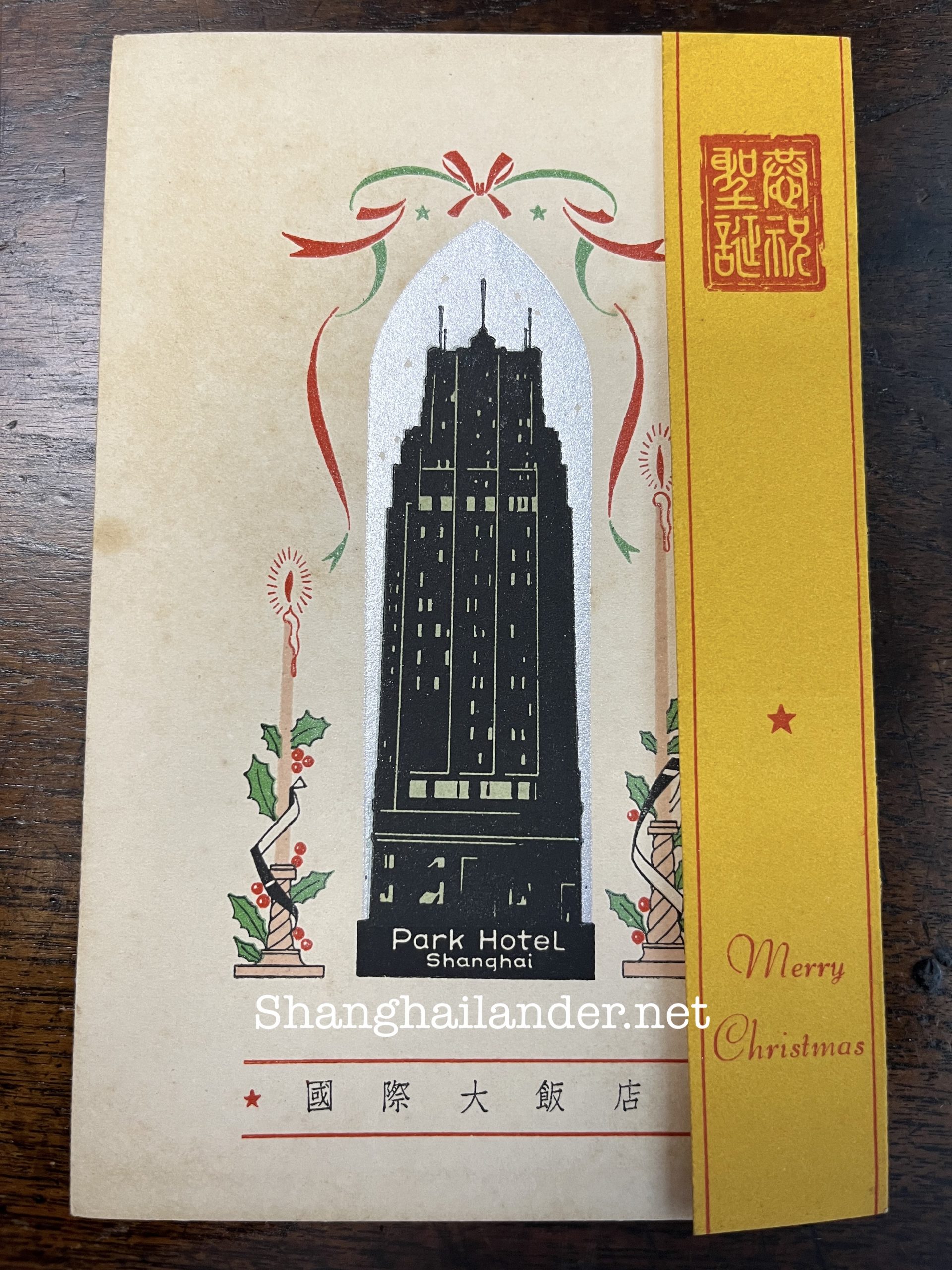
Christmas has had a long tradition in Shanghai and Christmas diner and celebration were many in Old Shanghai. Along with the celebration, came printed menus and cards. Below is a Christmas Eve menu from Park Hotel.
Christmas menu at Park Hotel 1944
The menu below quite similar to today’s Christmas menu. Although under restriction from the war, in Shanghai the party was going for Christmas.
I am not sure who attended Christmas diner at the Park Hotel in 1944. As Shanghai was occupied and most allied nations citizens were interned in camps, it was probably a bunch of Japanese militaries as well as the collaborators that Park Hotel was famous for at that time.
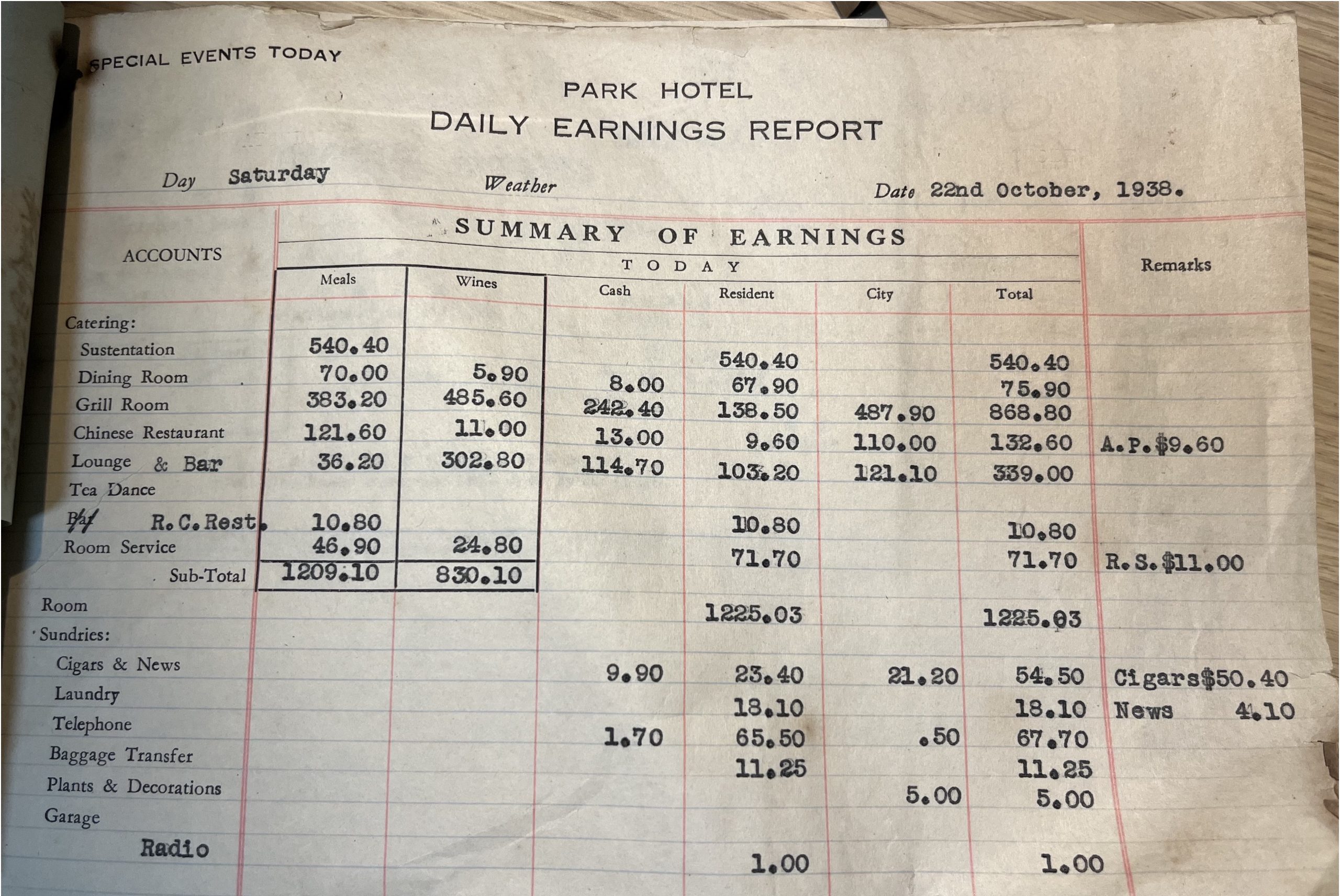
This post is a follow-up from post “Park Hotel accounting“, analyzing accounts Shanghai Park hotel for 22nd October 1938. The original post was looking into the purchase side of the hotel accounts, this post is looking into the revenue side. In October 1938, the international settlement had been surrounded by the Japanese army since Aug 1937, travelling to the rest of China was difficult and only few ships came from abroad to Shanghai. It is then not surprising that the room part of the revenue is low, nearly the same as the F&B, as tourists and businessmen travelling were very few.
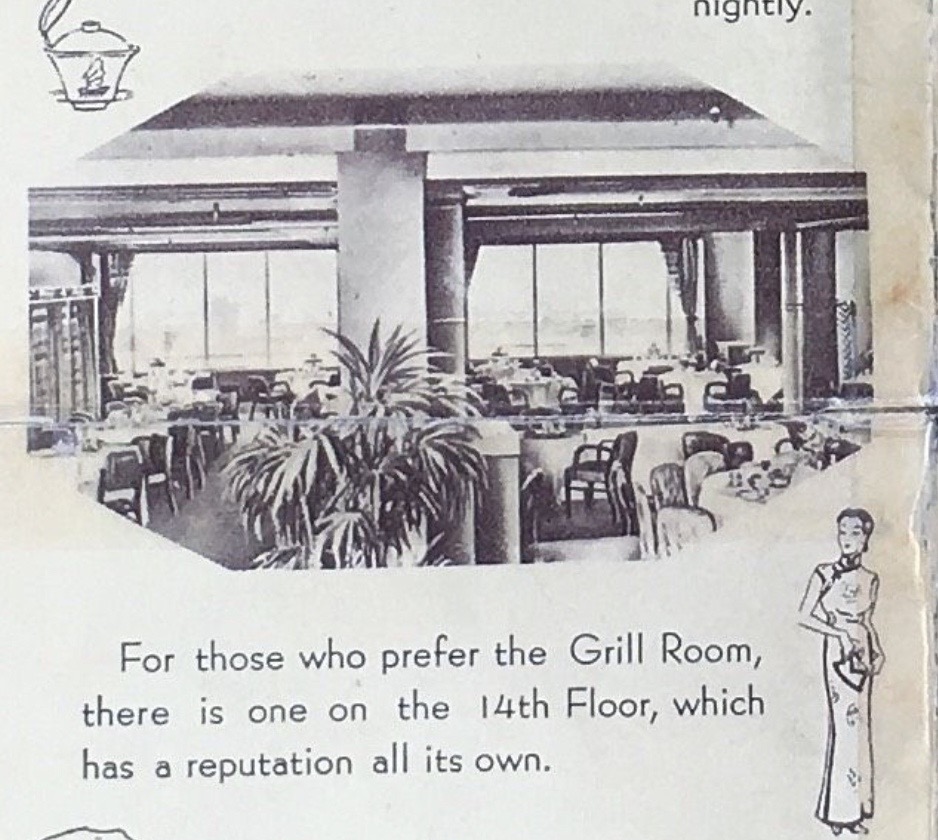
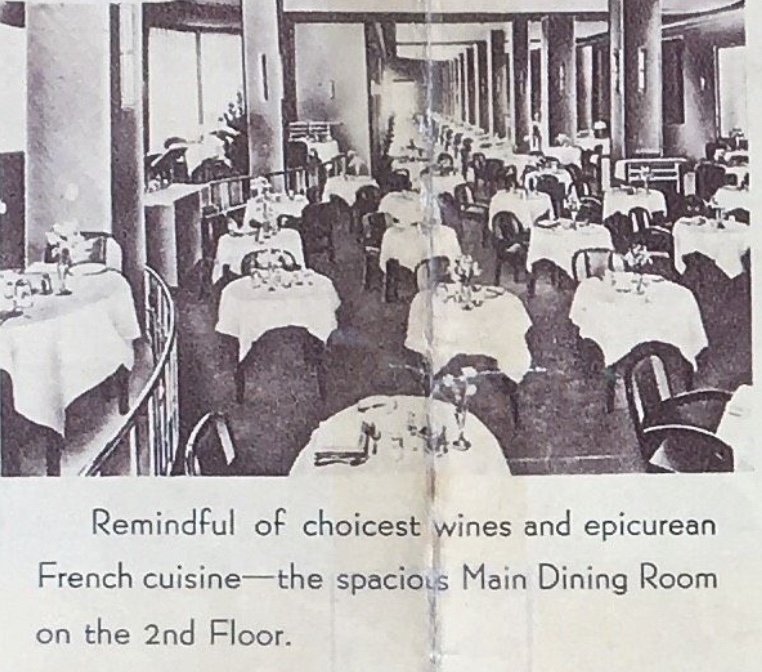
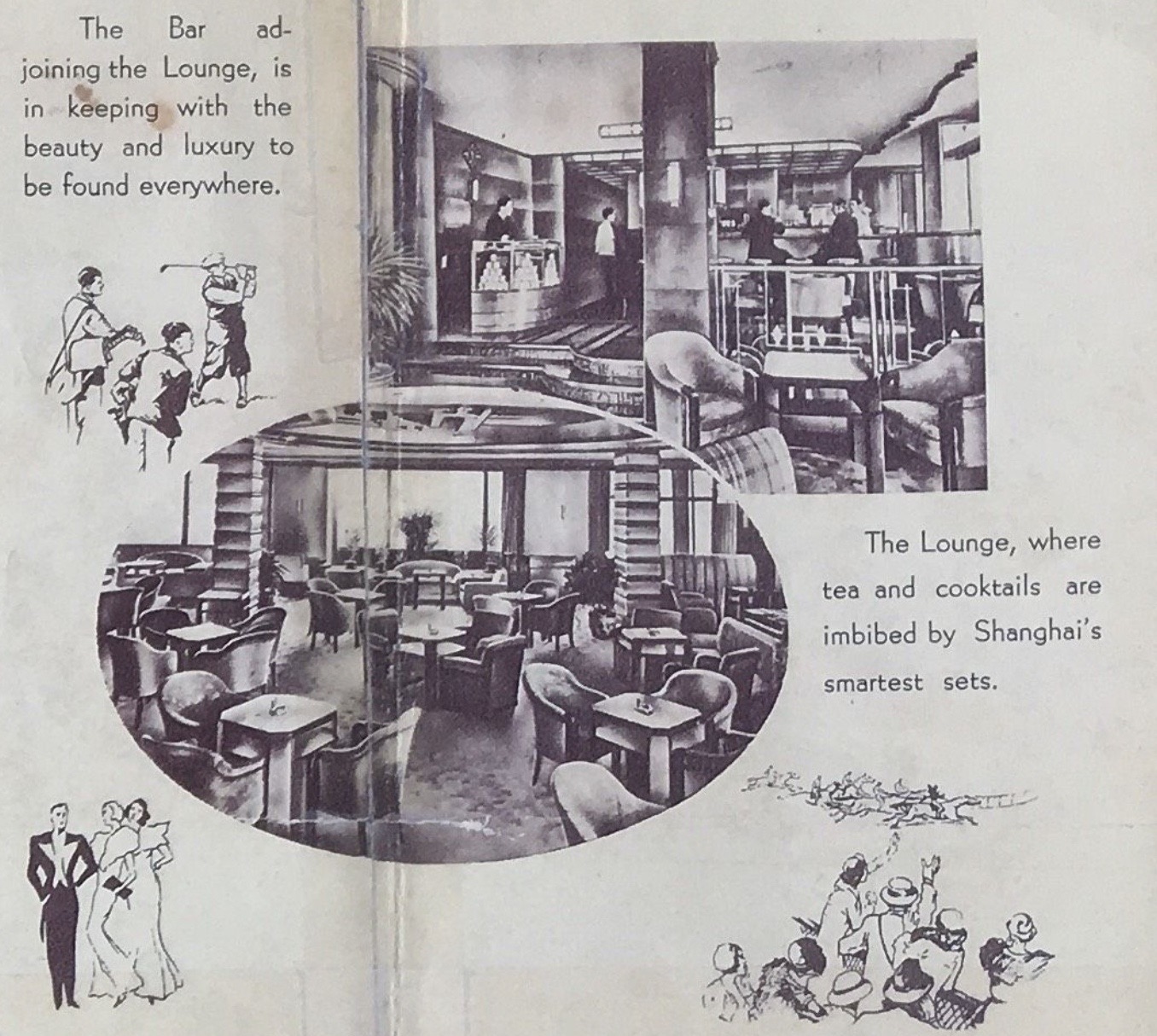
The above picture is the daily earnings report for the date of 22nd Octobre 1938, summarizing all the earnings of the hotel including rooms, restaurants and other guest services. Besides Park Hotel had four restaurants as well as room service, details of which can be found on the Park Hotel leaflet that was show in post “Advertising Park Hotel“.
For F&B, on the list is “sustentation”. This large post (44% of revenue on that day) probably covered breakfast and maybe some more small snacks along the day. It must have been reserved for the residents and their guests, as no revenue is booked from outside.
The grill room was located on 14th floor, overlooking the race course. Numbers show that it was the most popular restaurant of the hotel by revenue, with more than 70% of restaurant revenue on that day. Notably, wine revenu was higher than the food showing that it was popular to drink alcohol while eating grilled meat, as it is today. The restaurant attracted many customers from the outside, as the least part of the revenue comes from residents (about 15%). The largest part (56%) was city, i.e. external regular customers with accounts at the hotel who did not need to pay cash, but where sent the “sheet”, meaning the tab, for collection at the end of the month. Finally, about 27% was cash, meaning external customers that did not have a credit line.
The dining room French cuisine on 2nd floor was much less popular (representing 6% of revenue), with most customers being residents of the hotel. The Chinese restaurant had little more success (about 10% of the revenue).
The hotel also had a lounge and a bar that was massively selling drinks, amounting to 30% of total F&B revenue. The place must have been popular in town, as residents only accounted for a third of the revenue, while city and cash accounting for a third each. The main feature of Park Hotel lounge was a full view of the race course, this made the lounge and bar particularly popular during the racing season. The races were organized in a Spring and Autumn season. The Autumn season would start in October with races on weekends culminating on Champion’s day in November. 22nd October 1938 was a Saturday, it was probably a day of races, explaining the strong attendance of the bar and the grill room which both had view on the race course.
A substantial amount was also spent on cigars, probably mostly in the bar. Telephone was also a source of additional revenue as Park Hotel was one of the places where people could make international phone calls. It was the location for the first international call with the USA attended by Soong Mei-Ling, wife of the Chang Kai Shek in 1935 after AT&T started transpacific telephone service. With the international settlement surrounded, international phone calls were surely of high demand at that time.
For more information on the accounts of Park Hotel, please go to post Park Hotel accounting.
Shanghai bakeries are opening in great number in the city center. As discussed in a previous post (see post First Russian Bakery & Tkachenko), bakeries in old Shanghai were numerous in the French Concession and the International settlement, often coupled with cafes. (see post Shanghai Coffee Culture). The other source for bread and cake supply were hotel bakeries. Just like today, 5-stars hotels made their own bread and cake and sold them to outside customers. Surprisingly, at least one of the hotel bakery has continued operating all along since the hotel opening. This is one of the little secrets of reviving old Shanghai.
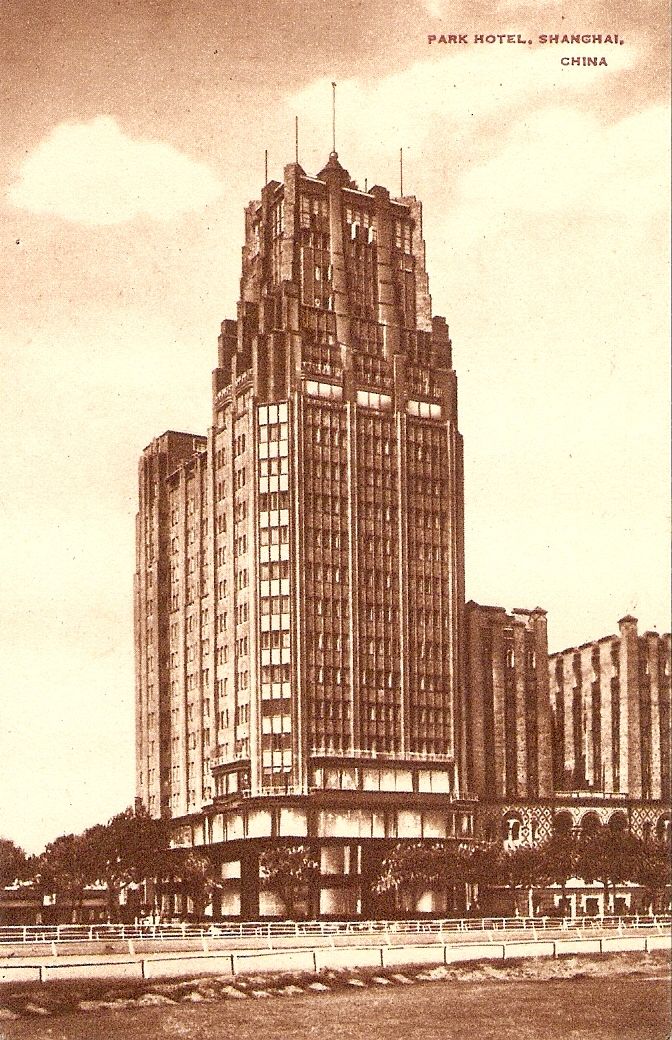
Opened in 1934, Park Hotel was the Chinese answer to the Cathay Hotel on the Bund. The 5-star hotel built on the Shanghai racecourse was the top of luxury then, as show in its advertising material (see post advertising park hotel). It had its own bakery making bread and cakes fulfilling the needs of the hotels guests as well as outside customers. This shops still serves bread and bakeries nowadays.
Straight from the hotel bakery
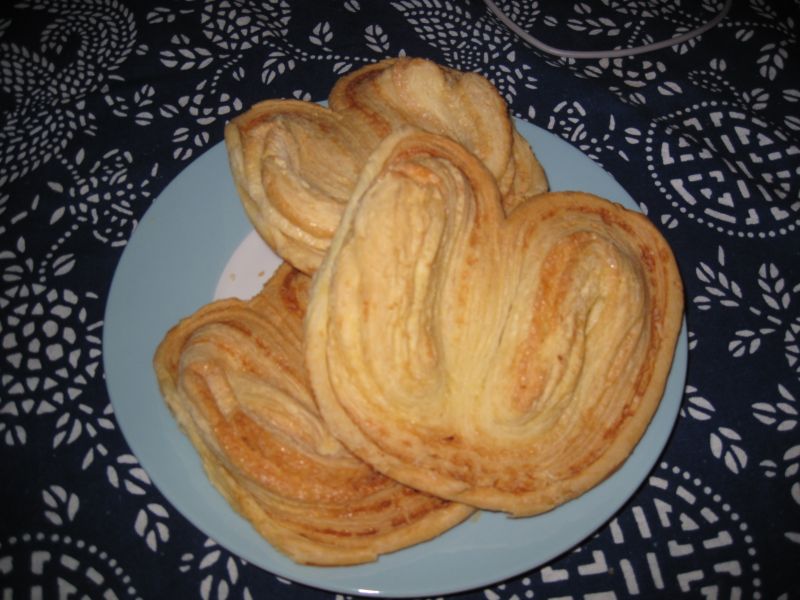
Park Hotel was famous for its pastry, in particular the palmiers (named after the French name of palm trees, as they look sort of the same). This particular cake is called “hudiesu” / 蝴蝶酥 or butterfly cookies in Chinese. Despite the change of management after 1949 liberation, those cookies continued being made along the years. My wife, Jiajia, fondly recalls her father going to the hotel specially in the 1980s to buy her the cookies, the top of luxury available at that time. This products survived the years with a nearly untouched recipe and is still available today.
Park Hotel Palmiers
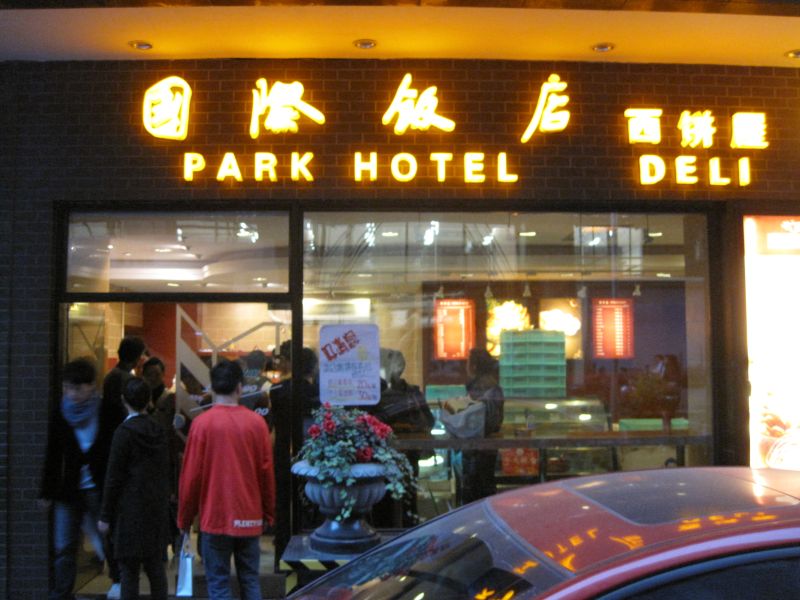
The secret passage is the Park Hotel bakery shop on the left side of the building. Although not really advertised, there is clearly a faithful crowd willing to come and buy the delicacies, memories from a distant past. Sunday afternoon is peak time, with people queuing outside the shop. The best seller is clearly the 蝴蝶酥, with old ladies buying a few bags at a time. Ordering in Shanghainese is nearly compulsory and the shop fills up with “Yi bo wu die su / 一包蝴蝶酥“, a bag of butterfly cookies, being the magic words. Other cakes are also available including almond cookies, croissants, cream puffs. I have to admit that they difficultly compete in term of taste with modern 5 star hotels or the numerous modern bakeries in Shanghai, but the hordes of customers do not seem to mind. Along with having lunch at Deda Cafe, eating the palmiers of Park hotel is experiencing Shanghai history by tasting it.
The famous Park Hotel bakery store
Update from 2026: 蝴蝶酥 have become such symbols of Shanghai culture that British prime minister Keir Starmer took the time to taste some his visit to China.