Former Shanghai French Consulate (Part 1)

“La Concession Française de Changhaï”, the Shanghai French Concession was officially created by the Whampoa treaty in 1844. It became much real at the arrival of the first French Consul Général, Charles de Montigny in 1847. One of the main task of the Consul was to open a Consulate General, and later to build an actual building to host the Consulate.
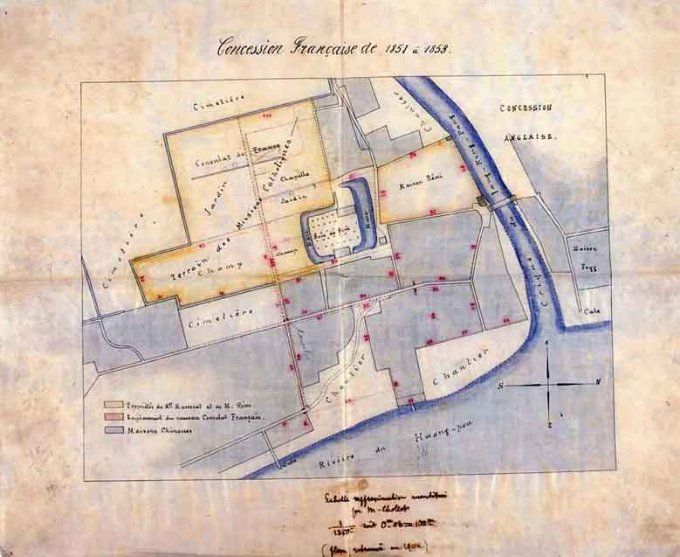
As seen on above map, the original French Consulate building was not on the Bund, but a little behind, within the plot of the Catholic missions. This plot is where the current Saint-Joseph Church is, on Sichuan Nan Lu.

The Consulate moved a few years later to a location on the “Quai de France”, the French Bund. The French Concession has original just a small access to the river, much shorter than the Bund of the International settlement. With the extension of 1861, the river side called “Quai de France” or French Bund was extended. From that point, Quai de France, or French Bund, became much longer and with more traffic. It became important for the French consulate to be on the French Bund, just like the Brititsh Consulate down river (See post “HBM Consulate Shanghai” for more info). The new consulate building of classic style, was planned from 1863, built from 1865 and the consulate moved to this location in May 1867.
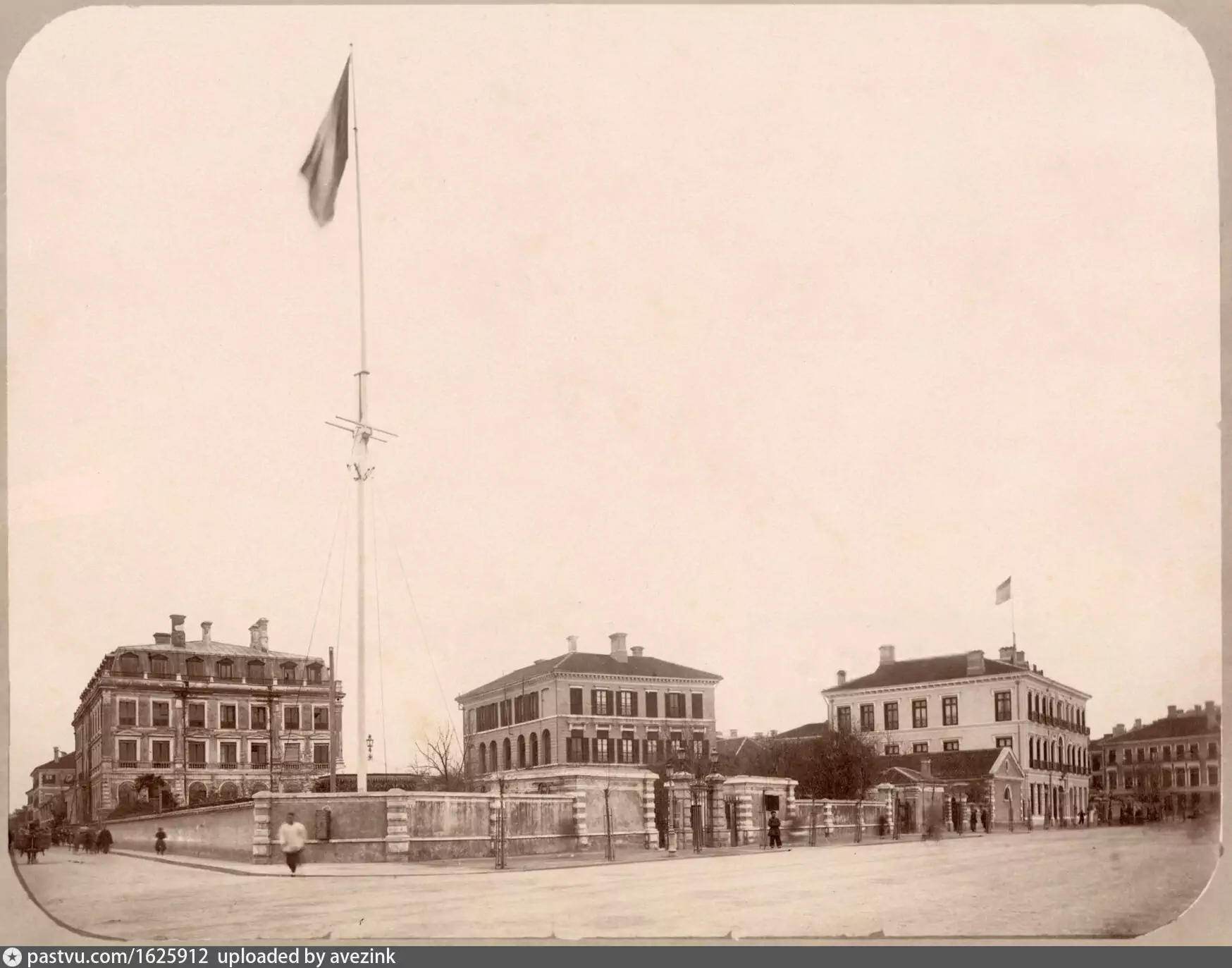
Original French Consulate on the Bund

Although the plot where the Consulate was built was on the riverside, the building itself was located further away from the river. The building on the far right was the original office of the French shipping line, the Messagerie Maritime. The street on the left side of the Consulate became “Rue du Consulat” (today Jingling Dong Lu).

Below picture is also of the French Consulate showing a full view of the Rue du Consulat and the other side of the street. It was probably taken a few years later as the trees have grown significantly.
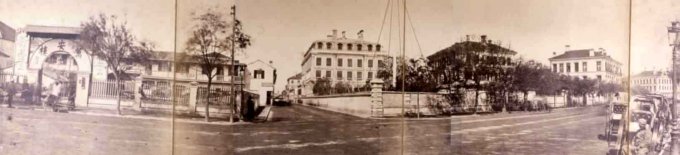
French Consulate in Shanghai in the 1870s

Construction of the 1867 Consulate building was of low quality. As mentionned in “Histoire de la Concession Française de Changhaï) by Maybon & Fredey, walls started to show massive cracks from 1870. Emergency work was required in 1872-1873 as a large part of the carpentry was rotten by humidity. This building did not last very long as a new Consulate was built on the same plot but closer to the river and the French Bund, opening in 1896, when Paul Claudel was the French Consul in Shanghai.
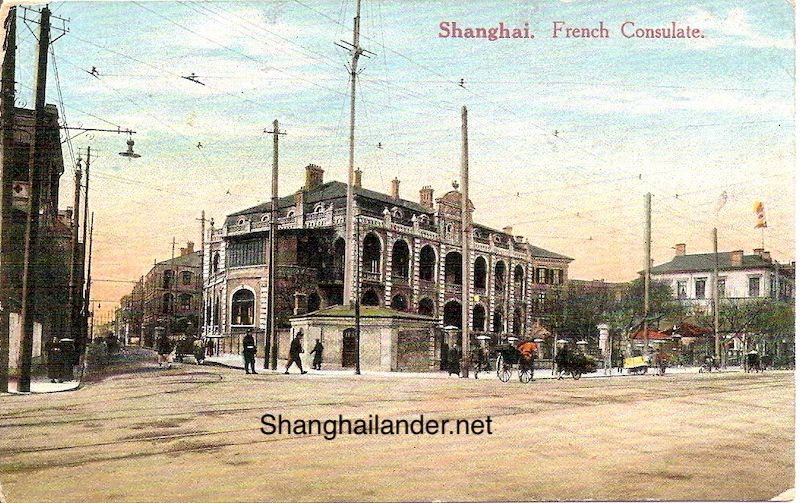
The new French Consulate building

The story of this building continues in post Shanghai former French Consulate (Part 2)
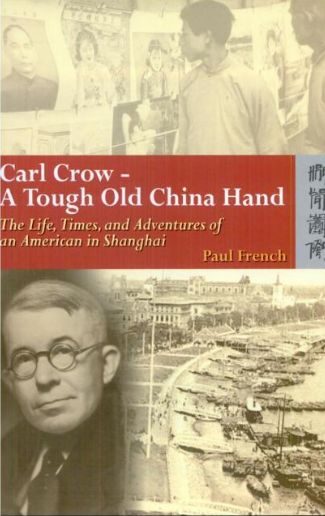
Carl Crow, A tough old China hand

Although the French translation of “400 million customers” seems to have been a strong success Carl Crown did not gain long term fame in France. I never heard about him before coming to Shanghai. The discovery came while listening to Paul French, author of his biography, Paul French, during the 2007 Shanghai literary festival. Having heard about the famous Carl Crow map of Shanghai before I bought the book after French’s speech at Glamour bar.

Book Cover
Book Cover

Carl Crow was a very important figure of the old Shanghai, where he spent two periods of his life. He first started the China Press in Shanghai, a newspaper that was bringing an American voice to a scene dominated by the British North China Daily News. After moving to Japan, he became famous for being the first journalist to publish the “21 demands” from Japan to China in 1915.

Coming back to Shanghai in 1918 he created what became one of the main foreign advertising firm in Shanghai, helping foreign companies to sell their products throughout China. Carl Crow Inc also maintained the first and largest advertising network in Eastern China, importing the concept of advertising and creating the famous Shanghai advertising posters with Chinese girls in QiPao. These posters have since become one of icon of old Shanghai. He also founded the Shanghai Evening Post in 1929, the Shanghai newspaper that mostly supported the Nationalist cause and the development of China. He finally left Shanghai on the last American refugee boat after the Japanese invasion of the settlement in 1937 and finished his life in the US as a writer and adviser on Asian politics. MOFBA recently published a great article about the different locations of the Carl Crow Inc in Shanghai.

Carl Crow is the author of many books including “400 Million Customers“, “The Chinese are like that” and “Foreign Devils in the Flowery kingdom”. He crossed the path of Sun Ya Tsen, Chiang Kai Chek and his wife, Zhu En Lai, various Chinese warlords and many Shanghai known figures. He was part of the Shanghai publishing scene along with fellow Missourians such a Tom Millard and JP Powell.

It took me while to finish the book, not by lack of interest but by lack of time. Paul French definitely spent an enormous amount of time to research it. He travelled extensively to the US, HongKong and other locations to pull together information, and the book really feels like a great study. As an Old Shanghai fanatic, I found in it many information that I missed, many cross references to things I had heard of and many points of high interest. Carl Crow’s life takes us to the tumultous Chinese’s history from the 30’s. At the same time, I sometimes felt that without all my previous knowledge of these events and characters, I would probably have been a bit lost. “A tough Old China Hand” is a highly interesting book, but not one for the freshers in the Old Shanghai.

Paul French has written numerous other books about Shanghai, including among others The Old Shanghai A-Z, City of Devils, Bloody Saturday and Beijing based Midnight in Peking, all of them Being the result of in-depth research.

This article was originally published in 2008, updated and republished in April 2021.

Walking up Nanking Road

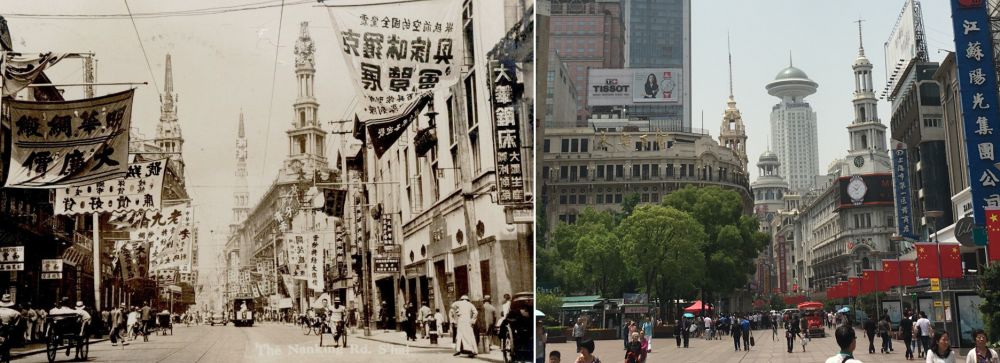
The weather was really nice last week, I spent time walking up the Western stretch of Nanjing Dong Lu, the former Nanking Road. Going from the Bund to the Race course, Nanking Road was the main road of Old Shanghai and its main shopping street. It is still very busy nowadays, although it mostly caters for tourists. Walking down Nanjing the newly pedestrian street all the way to the Bund is a must for a Shanghai visit.

1930s vs 2000s

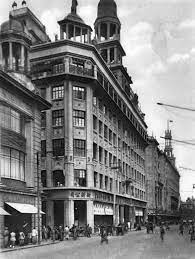
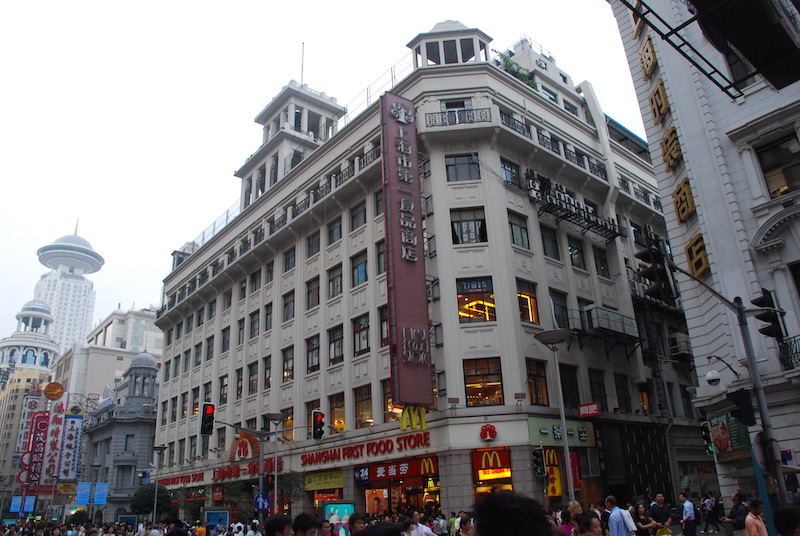
Although many of the old buildings of the Nanking Road have been destroyed, the above section (corner of Nanking road and Hoopei road / Nanjing Dong Lu and Hubei Lu) has not changed so much, as seen on above picture. The four main modern department stores of Old Shanghai were built on this stretch and those buildings are still here.

Some of the buildings on the left side have been teared down, but Wing On department store (1918) is still visible. The façade has been renovate and looks very nice. Unfortunately, the interior been ruinovated several times in the last decades.

On the right side, Sincere department store building (1917) is also still visible. Although it has been renovated, the building is in less good shape than the Wing On. The façade is half covered by an ugly advertising. The ground floor is occupied by cloth shops. The hotel in the back of the building has been expended to occupy a large share of what was the department store.

Finally, the middle spire of has disappeared but the building supporting it has not. The former Sun Sun Department store (1935), designed by Hungarian architect C.H. Gonda is still there, although it is less visible. Sincere spire can be seen in the background of above picture left. Further down is the location the fourth department store of Nanking Road, the Da Sun, now Shanghai N1 department store.

Modern skyscrapers in the background seem just behind the Sun Sun, although they are much further, located on the side of people square. The lowest dome is the New World shopping mall, located at the spot of the New World entertainment centre and hotel.

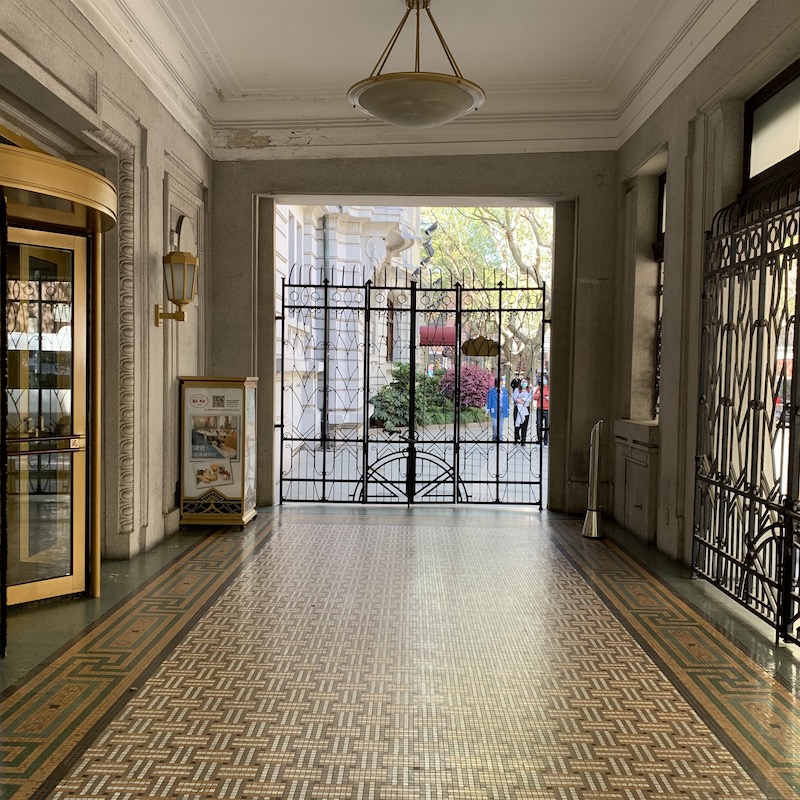
French Club wrought iron fence

Due to the CoVid epidemic, the original entrance of the former “Cercle Sportif Français“, the former French club, on Rue Cardinal Mercier (today Maoming Bei Lu) has been closed for months. This is a great opportunity to admire the wonderful original wrought fence that is normally folded during the day.

Unfolded fence

This is a great work of wrought iron, undoubtedly the original Art Deco fence designed by Léonard & Vesseyre. Sunshine gave a great light to it.