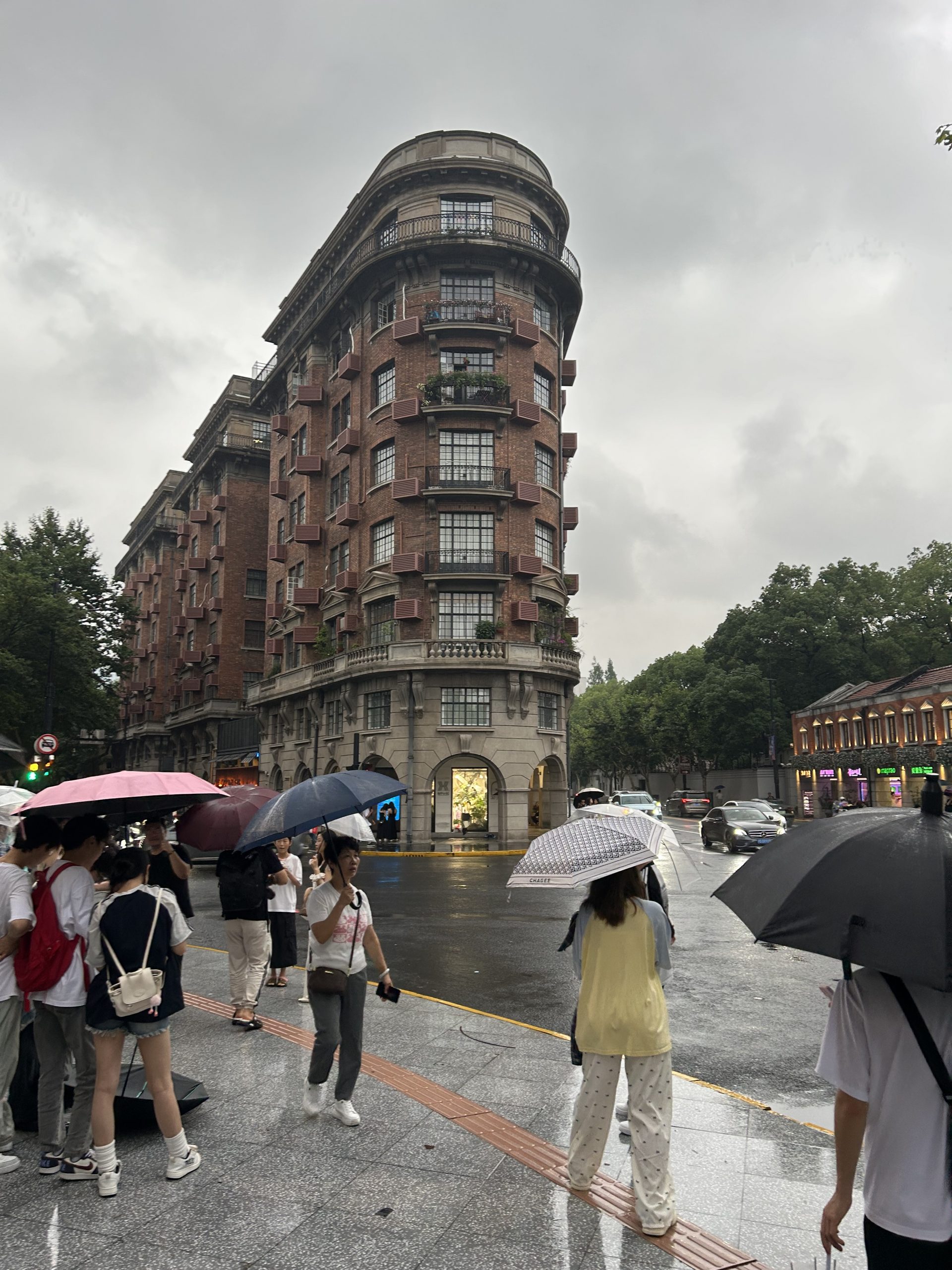
Laszlo Hudec first masterpiece in Shanghai, the Normandy building on Huaihai Xi Lu has become one of the icons of Shanghai. The original ISS building on Avenue Joffre from 1924 was remained Normandy building in the 1930s when the ISS extended its building empire in the French Concession, in collaboration with French architects Leonard & Veysseyre.
Normandy building, the spot for picture!
In the last 10 years, it has really become the icon of Old Shanghai architecture, with hundreds of people taking picture in front of it every day. It was quiet and ignored when I used to live around this area 10 years ago. In the same period, Laszlo Hudec has become the symbol of foreign architects in Old Shanghai and a popular figure in Shanghai. His profile has also risen, although much less so, in his native Hungary.
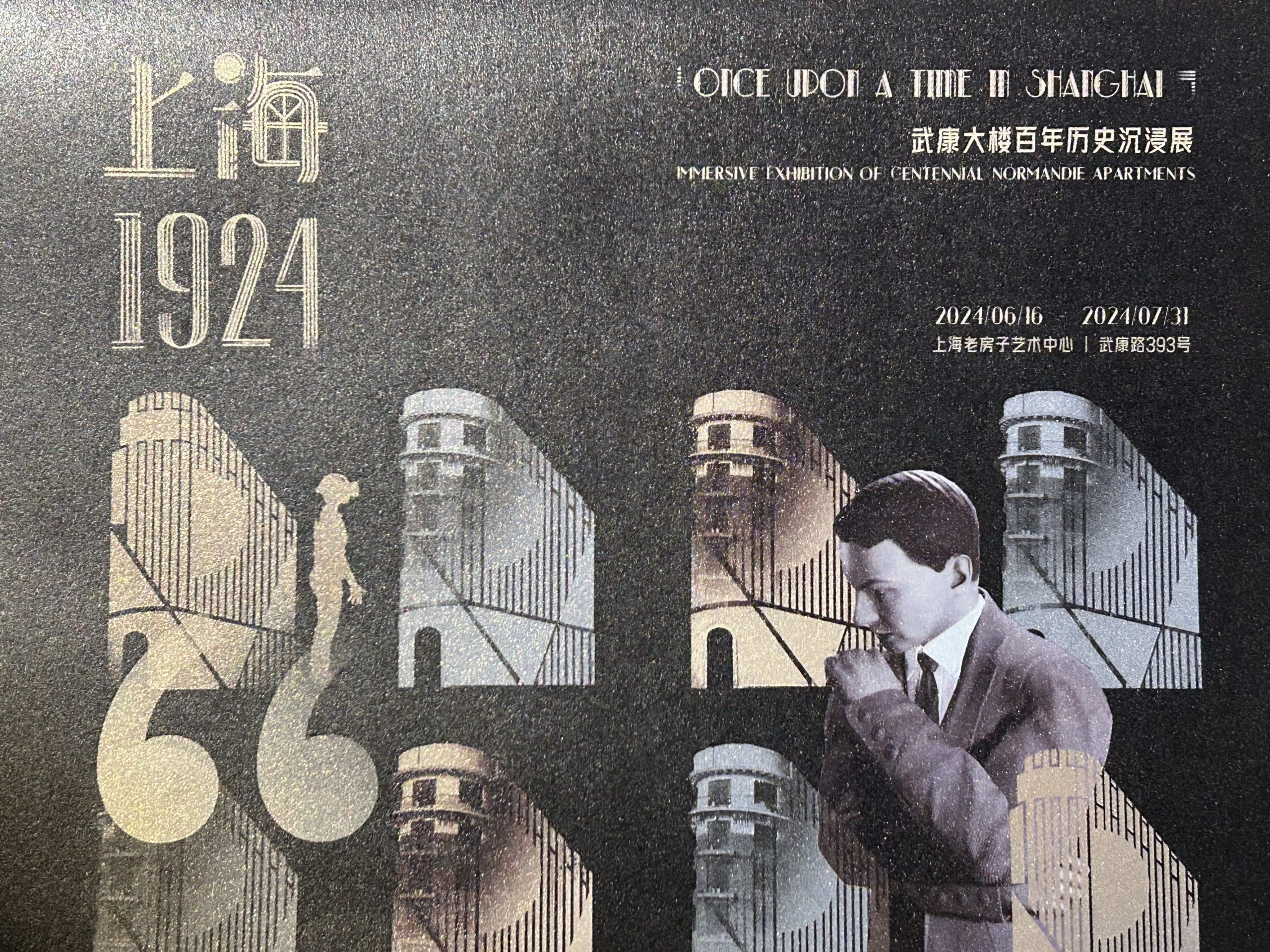
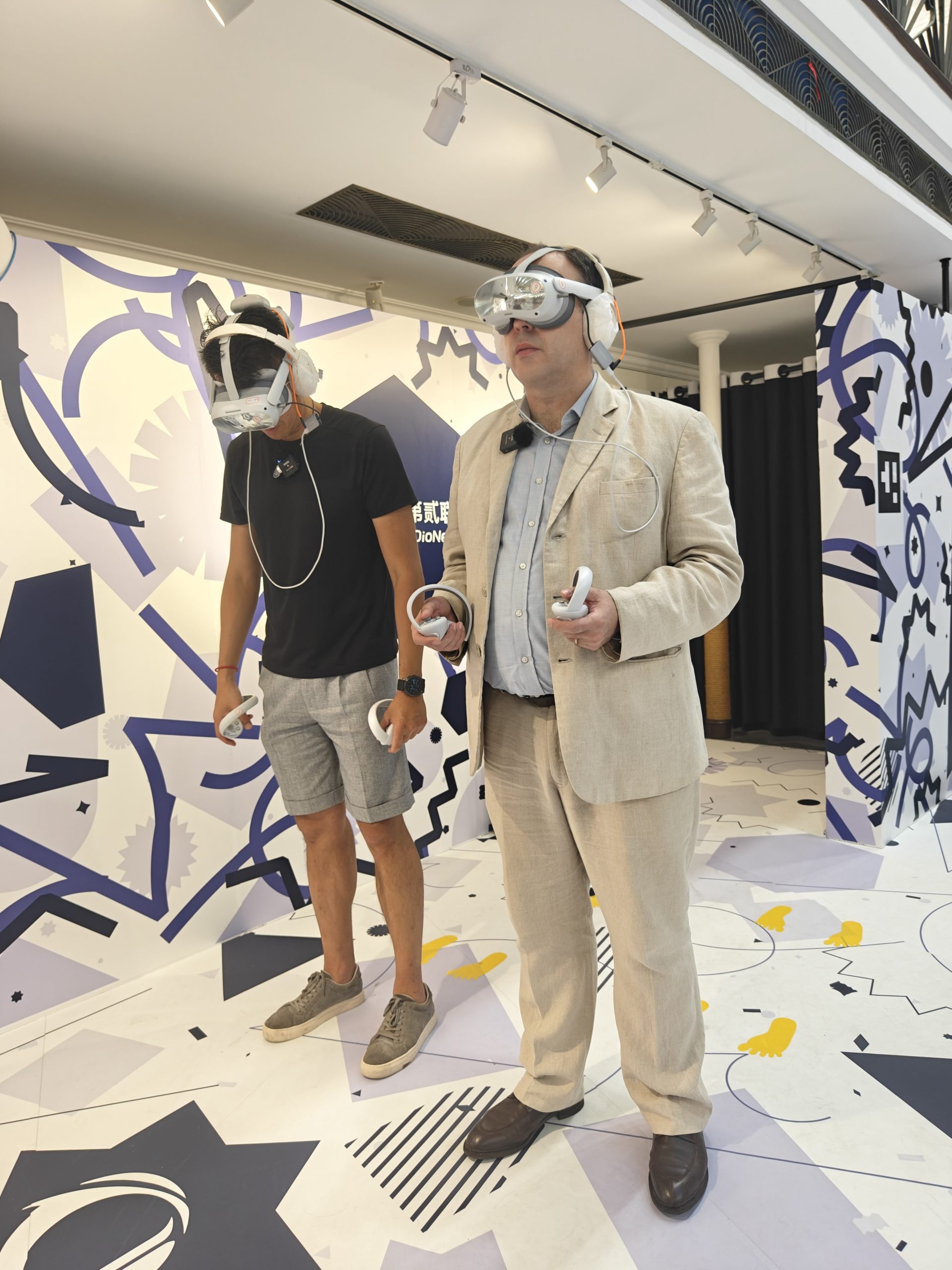
For the 100th anniversary of the 武康大楼 (the actual Chinese name of the building), a great exhibition has been organized at the nearby 上海老房子艺术中心, the Shanghai old building cultural center, on Wukang Lu 393. The main attraction is a VR 3D adventure around the Normandy building and its history. It is very immersive, including a virtual air balloon flight over the part of Shanghai in the 1930s. It really shows that the building and other 1930s skyscraper where really dominating the city at the time. It also makes clear that this part of Shanghai, that is now the heart of the city center, was the edge of the city at that time.
Visiting the Normandy building virtually
The exhibition only lasts until 31st July. Highly recommended!
I recently had the surprise of receiving an award at the 3rd Shanghai culture festival (第三届海派风尚节推行大使), for promoting Shanghai culture through Shanghailander blog.
I was invited as a guest to the 1st Shanghai culture festival (see post “Night out at the French Club“). This has developed to become a real event for Old Shanghai lovers. It is mostly attended by Chinese people an local interest in Old Shanghai has been steadily growing over the years. A great opportunity to use my Chinese!
The starting point of this thread was silent movie “Love & Duty” with Old Shanghai superstar Ruan Lingyu/ 阮玲玉. It continued with the discovery of the movie original plot was from a book actually written by a Horose i.e. Stéphanie Rosen-Hoa. She was an unusual character, being a Polish lady married with famous Chinese engineer and writer Hua Nangui / 华南圭. The couple met in Paris were both were studying, but the book was written while the couple lived in Beijing in the 1920s. Then fate put me in touch with their grand daughter (Catherine Hoa / 华新民) who still lives in Beijing.
Léon Hoa, Irène and the children in Beijing. Catherine Hoa in the middle
Catherine Hoa / 华新民 was born in Beijing in 1954. Her father was Léon Hoa / 华揽洪 (1912 – 2012) who was the son of Stéphanie Rosen-Hoa and Hua Nangui / 华南圭. Léon Hoa was a French-Chinese architect who was educated in France and had a successful architecture career in France in the 1930s and 40s, then in China in the 1950s. Horose’s book “Love and duty” is dedicated to him. Catherine Hoa / 华新民 ‘s mother was Irene a French lady. The couple got married in France in the 1930s. In 1951, they decided to come back to China together to help build the new People’s Republic. They lived in the family house in Beijing that was built in 1914 by Hua Nangui / 华南圭. This is also where Catherine Hot / 华新民 grew up.
The family house in Beijing.
Catherine speaks perfect French as she grew up in a French family in China. “My siblings were born in France, they always felt more French. I was born in China and I feel more Chinese.” she said during our conversation. “Life in Beijing was sometimes difficult as I have blue eyes and I stood out among other Chinese people then. It’s only when I went to France that I could find real anonymity.” The family went through a lot of trouble in the 1950s and 1960s during political trouble that were targeting intellectuals. Catherine Hoa / Hua Xinmin only went first to France in 1961 when she took a trip to France with her mother and sister. The whole family moved back to France in 1976, taking the trans Siberian train through USSR.
Talking with her, I could get a lot more personal information on her grand-parents. “My grand mother and grand father spoke French together since they met in Paris. Horose spoke French and English so she wrote the English and French version of Love & Duty and other books. Her work was translated by my grand father and other people.” The tradition continued as Catherine’s mother spoke no Chinese before coming to China. “I was always called Catherine in the family, never by my Chinese name”.
My grand-mother was friend with many interesting people including André Gide who was her neighbor in France. She also befriended Alexandra David-Néel, the first foreign lady to enter Lhassa, who stayed with her in Beijing (probably in her 1937 trip to China). Moving from France to China in the 1910s was very tough. Fortunately, my grand father had an important job in Beijing, so they never had to live together with his family. At that time, China was very traditional, this would have been a great shock for her.
“My Grand-father is quite well known in China.” She actually published a collection of Hua Nangui writings a few years ago in China. “I have been searching for my Grand Mother story, but we don’t have much information about her time in Poland or how and why she came to Paris. We only know that she had several sisters and one of them moved to Israel after she returned in 1946.” She has very strong willpower and a close very link with my father Leon. She left China in 1939, and only came back to spend her last years with him in 1966. At that time, her beloved husband was already buried in Beijing. They could never meet again after he returned to China in the late 1940s.” Stéphanie Rosen-Hoa passed away in 1970. She is also buried in Beijing.