Short visit in Swatow

Shantou / 汕头 in Guangdong province is famous for its food and seaside. It is also the location of Swatow former concession. This was the opportunity for a short trip.

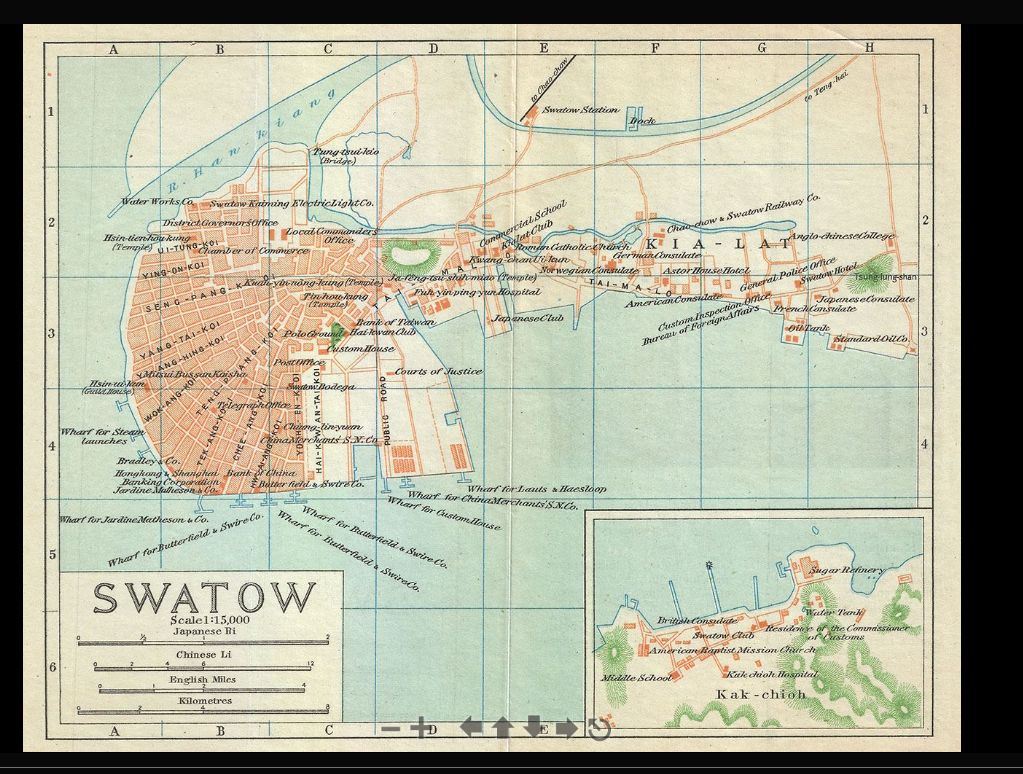
Although located half way between 1842 original concessions of Hong Kong et and Xiamen, Swatow was only opened as a treaty port in 1860 with the treaty of Tianjin. British and American consulate opened on Mayu island of the cost in 1860. The British Consulate later moved to Queshi, on the other side of the river to Swatow city. The American Consulate moved to Kia Lat area, on Tai-Malo street (today 外马路) area. Other consulates opened in the same area including Japanese, German, Norwegian and French, along with a Astor House hotel. At the time, the road was close to the river, but land has been reclaimed here since and the area has changed a lot.

1924 Japanese map of Swatow

Large trading houses were located further West, around the most densely populated area. They included usuals Butterfield & Swire, and Jardine & Matheson as well as China Merchants. Banks such as HSBC and Bank of China were also located close to the keyside.

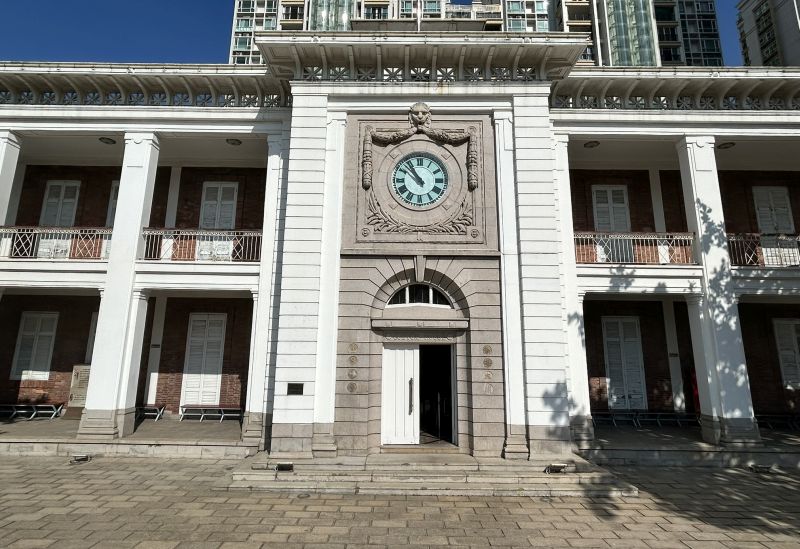
Original Swatow customs

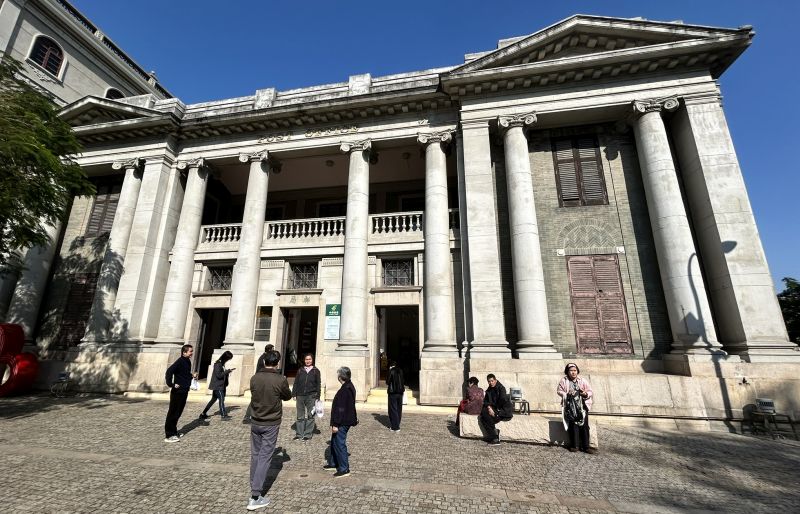
Although most of the sea side buildings have disappeared, the road going from the riverside inland has some interesting spots, starting with the Customs house on the riverside, that is now a museum. Hidden in the same area are the former customs quarter, but they are off limit for visitors. Further up is the Post Office that is still in use as its original function.

Swatow Post Office

Going further up, one encounters the beautiful Art Deco Bank of Guangdong building built in 1935 by Guangzhou architect Yang Xizong 杨锡宗.

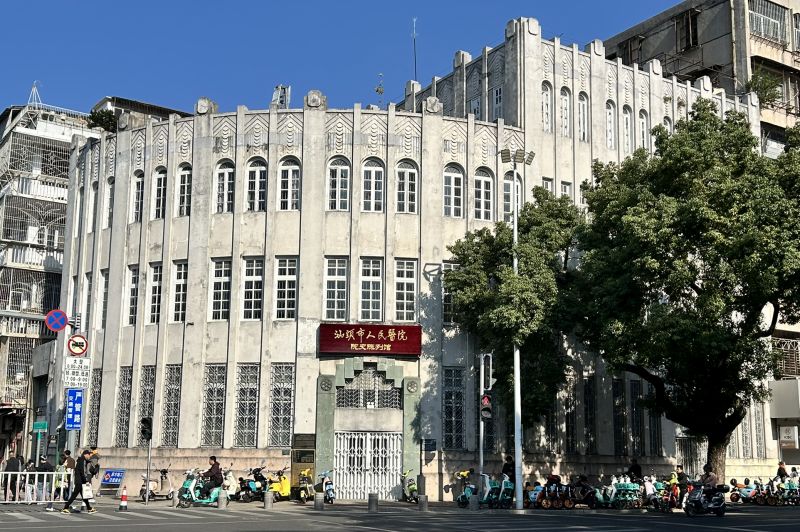
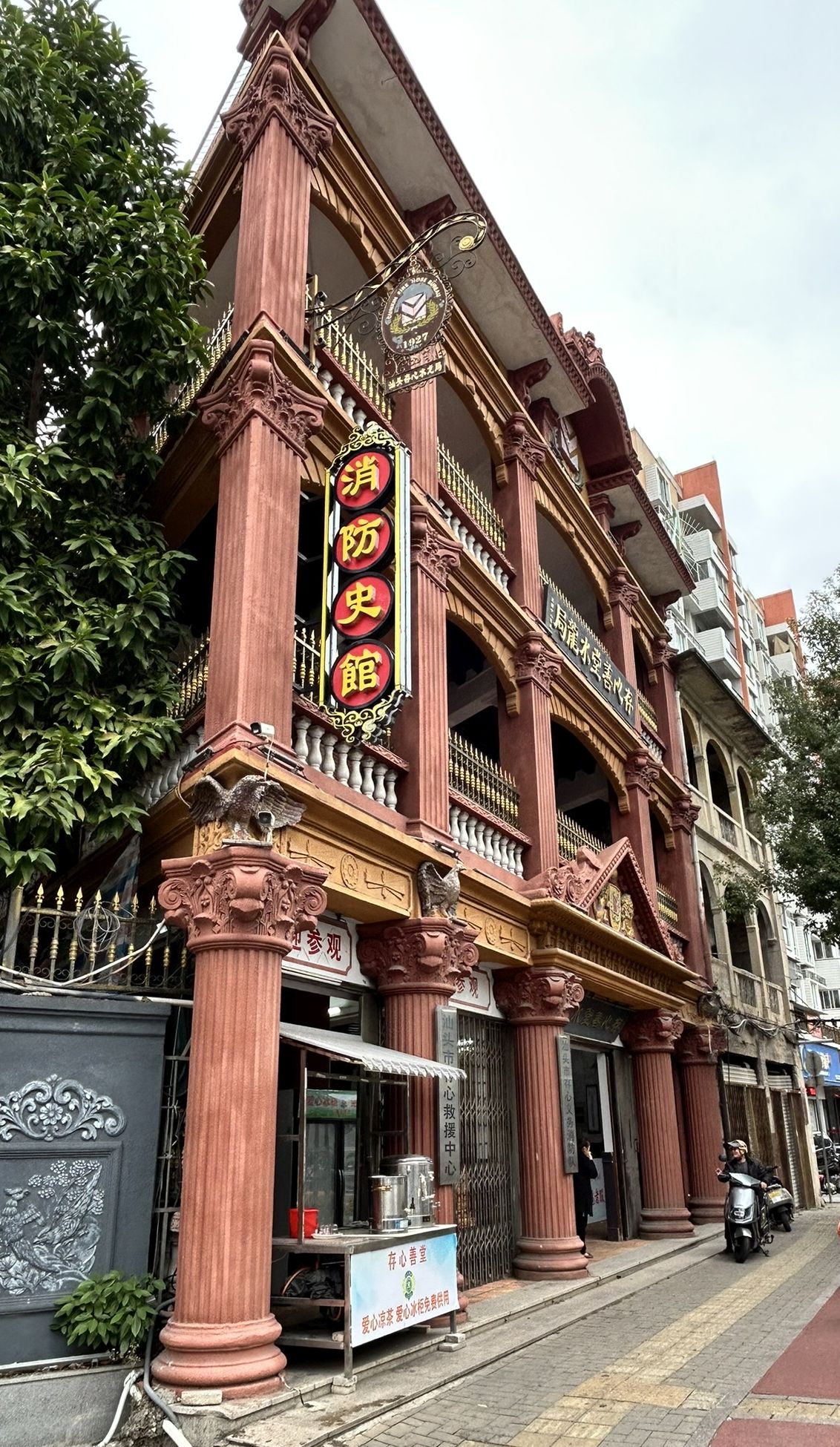
Further up is the beautiful guan yin miao 观音庙 temple and the old fire station with the hospital opposite to it (this is still the site of today’s Shantou hospital).

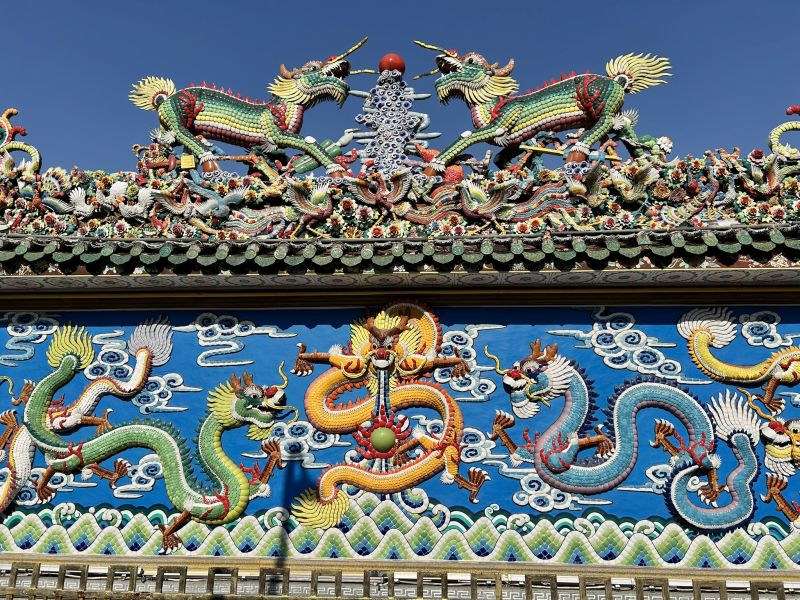
Guan Ying Miao Temple
Former fire station

Further up on the road was the Consulate area. A French consulate official was dispatched in 1904 and the actual consulate opened in 1906. The building indicated on the 1924 map was built in 1923, located 11 Da Hua Road. Unfortunately, this building does not exist anymore.

Swatow did not have much trade with French companies, and France did not consider Swatow to be an important posting. Consular representative changed very frequently and often complained of the lack of activity. Looking into the foreign population of Swatow in 1933, I only found a few French people. Apart from PC Leblanc who was running the post office, and Jules Leurquin who was the French Consul, the only other French people were missionnaries.

This post focused on Tai-Malo street (today 外马路) were foreign consulates were located. Further posts will focus on Swatow old town and its beautiful architecture.

Shanghailander articles are published on an irregular basis. To be notified when a new article is posted, subscribe to the newsletter using this link, or follow the Shanghailander Facebook page.

Merry Christmas from Shanghailander

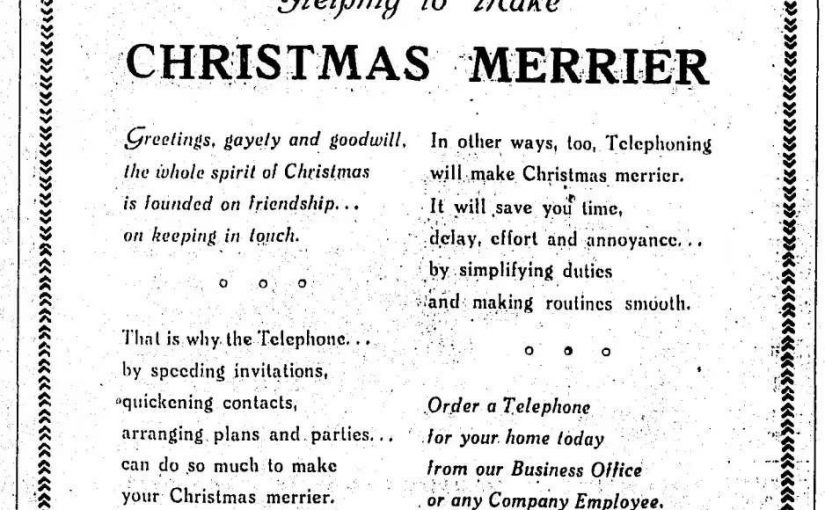
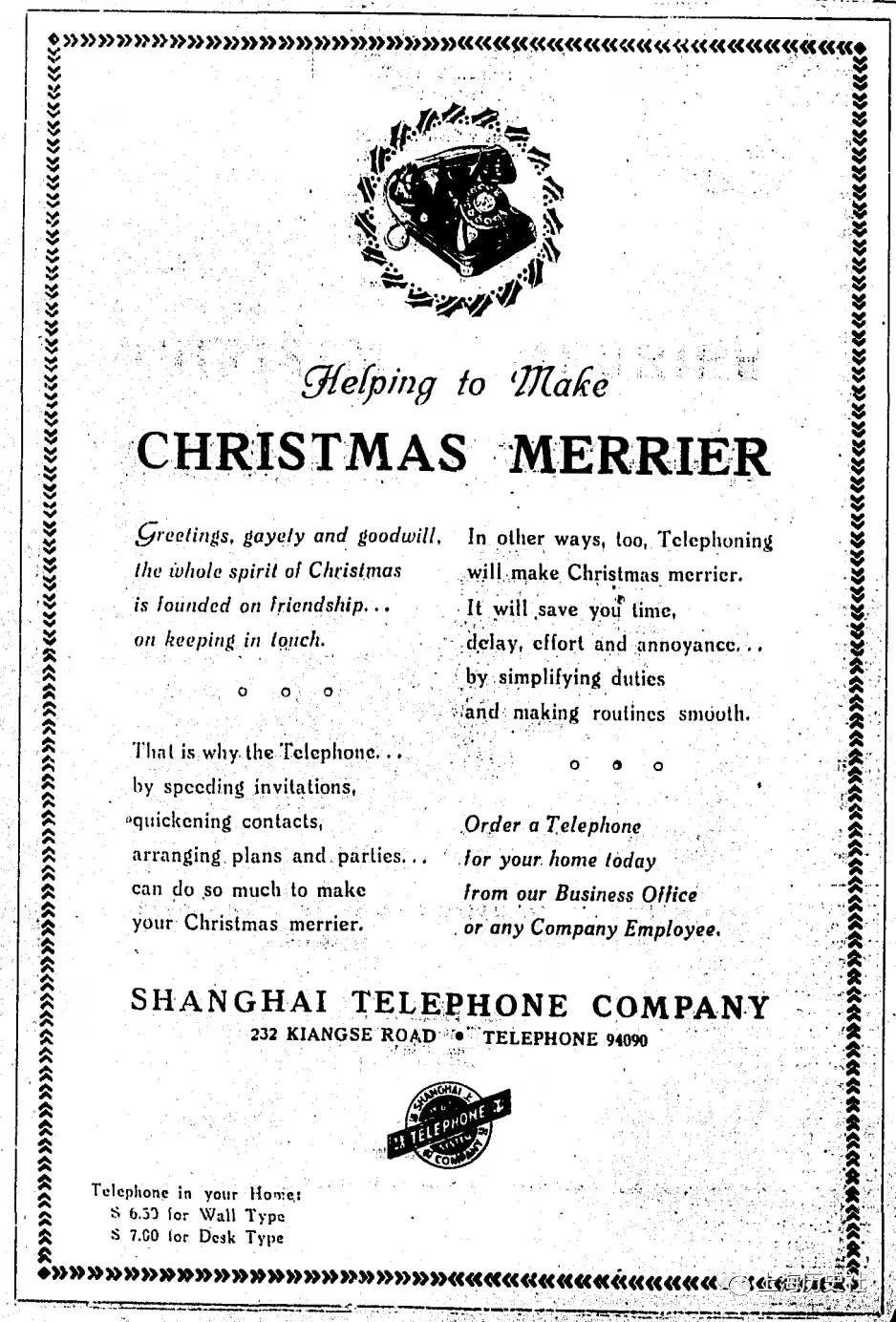
I recently wrote a piece on Shanghai telephone company in Old Shanghai (see post “Shanghai telephone company“). So I would like to wish a Merry Christmas to all readers of the Shanghailander blog with this add from Shanghai telephone company.

Previous Christmas articles on the blog included post “Merry Christmas from Shanghailander in 1936 in Shanghai” showing Christmas Eve entertainment options at the peak of Old Shanghai… 89 years ago. Post “Merry Christmas from Shanghailander” from 2024 displays a Christmas card from the Shanghai fire brigade from 1930. Finally post “Merry Christmas from Shanghailander” displays a 1944 Christmas menu from Park Hotel.

Once again, Merry Christmas to all Shanghailander blog readers.

Shanghailander articles are published on an irregular basis. To be notified when a new article is posted, subscribe to the newsletter using this link, or follow the Shanghailander Facebook page.

Award from “Le petit Journal”

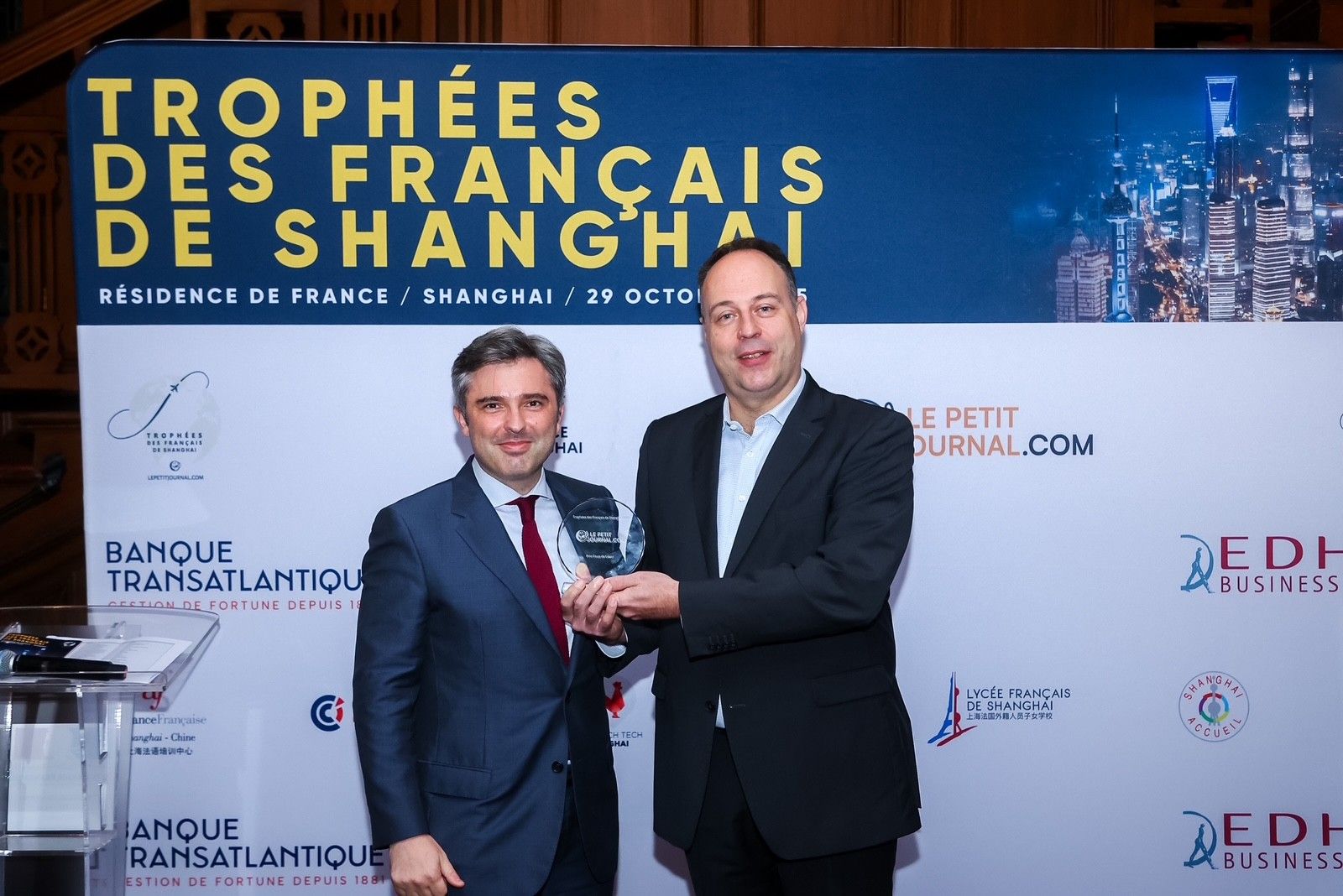
On 29th Octobre 2025, I had the honor to receive the special price award from French online daily “Le Petit Journal”.

Five awards were given on that day: Entrepreneurship, Culture, Social and welfare, most voted price and special price. I was nominated for the special price, rewarding my involvement in the French community for many years as well as the blog Shanghailander.net that has been running for nearly 20 years.

Award ceremony

The award was given to me by the French Consul General in Shanghai, Mr Johann Valadou. The award ceremony tool place at Villa Basset, the French Consul General residence in Shanghai.

Full article from lepetitjournal.com (in French) can be found at: https://lepetitjournal.com/shanghai/trophees-des-francais-de-chine-shanghai-decouvrez-les-5-laureats-2025-425810

Shanghailander and my long term passion for Old Shanghai have been rewarded in the past with an award from the Shanghai 3rd culture festival in 2024 as well as an honorary diploma from the French “Société d’histoire des Français de Chine” in 2017.

Shanghailander articles are published on an irregular basis. To be notified when a new article is posted, subscribe to the newsletter using this link, or follow the Shanghailander Facebook page.

More about Shanghai Bretons

I recently wrote a post about Bretons in Shanghai in the late 1930s (see post “Bretons association in Old Shanghai” for more details). Then the current Association of the Bretons in Shanghai got in touch with me and shared some more info.

Most of the information was given by Henry Berthier, born in Shanghai in 1946, who shared some unique pictures taken by his grand mother who took part in the association. He confirmed the existence of the Jardin Bretons for a couple of years. He also mentionned a “Fête des provinces Françaises” July 1938 or 1939 to which Alsace, Normandie, Basque country and Brittany had representations. This matches previous information about French regional associations in Old Shanghai (see post for more information).

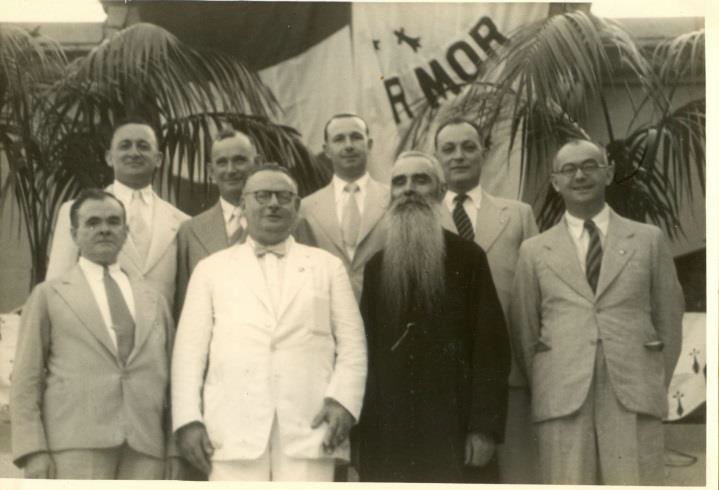
Armor Association 1938, the church person is probably Mr Auguste Haouissée. on his left is Auguste Chapelain

In the 1930s, the French community accounted for approximately 2500 people. About 50 Bretons families lived in Shanghai, around 350 people. Thus about 14%% of the French community was from Brittany. Most Bretons spoke Breton language at that time, along with French.
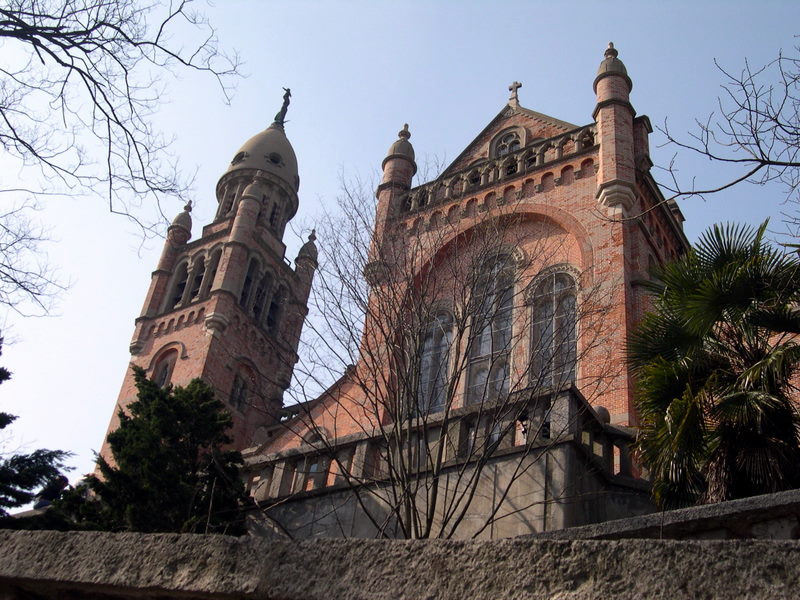
Many were working for the police (about 10 Bretons amongst 70 French officers), the French municipality, the CFTEE, and other private companies. The police and CFTEE often recruited former French sailors which were 90% Bretons. There were also military personnel and priest. Breton Auguste Haouissée (1847-1946) was a Jesuit missionary who became the first catholic bishop of Shanghai in 1928, opening the She Shan Basilica in 1935. Another notable character on the above picture is Auguste Chapelain, the general manager of the Chinese post office.

She Shan Basilica

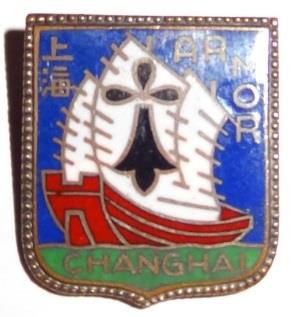
The Breton association Armor also had it own insignia featuring a chines ship with mention “上海”, “Changhai” and “Armor”.

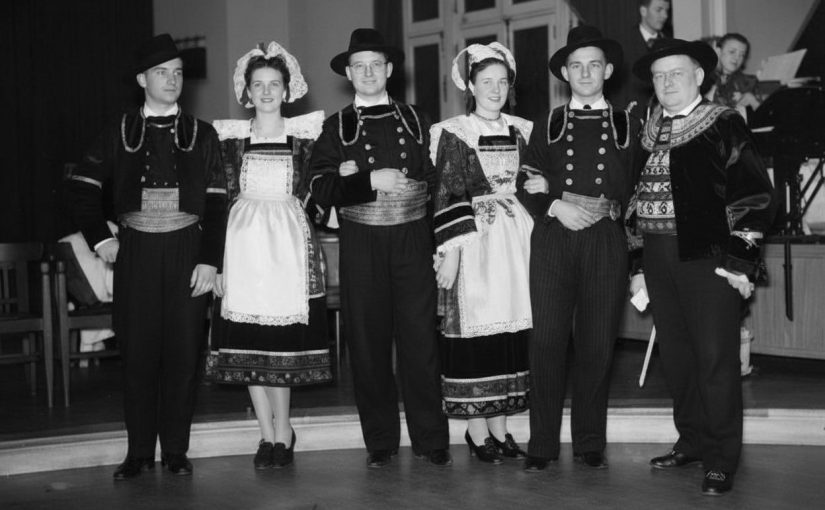
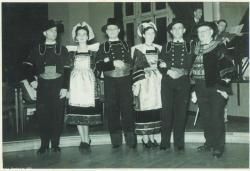
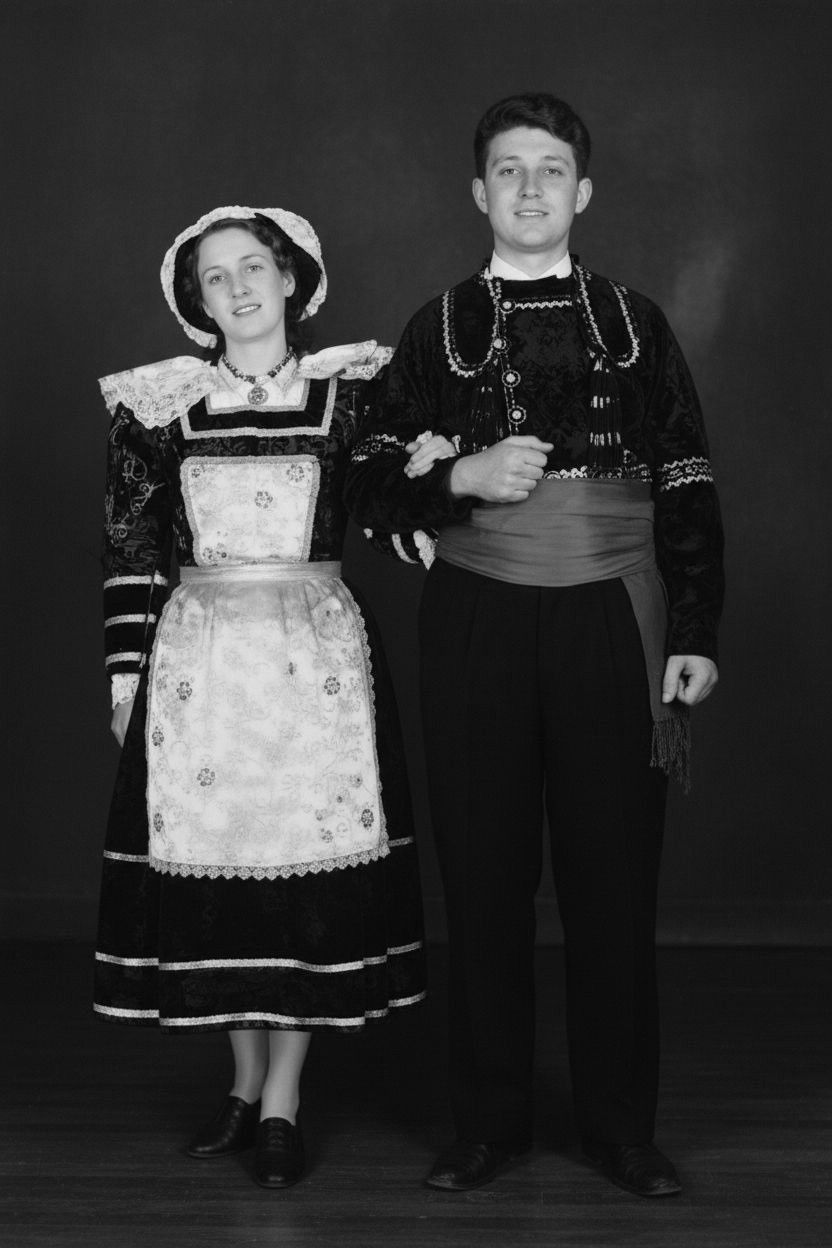
The association had parties where participants wore the traditionnal Bretons dress, in particular at Christmas. This was mentionned in “Le Journal de Shanghai” article quoted in the “Breton association in Old Shanghai” post.

Original photo of the Bretons Party in Old Shanghai
Original photo enhanced with AI

The Breton association continued to exist until the mid 1940s, when most of the civil servants were brought back to France as the French Concession was given back to China. As mentionned in previous post, a Breton association was formed again in 2004 in Shanghai and is still active today.

For further informations about the Breton association in Old Shanghai, go to post “Bretons association in Old Shanghai“.

Shanghailander articles are published on an irregular basis. To be notified when a new article is posted, subscribe to the newsletter using this link, or follow the Shanghailander Facebook page.

Shanghai Telephone Company

Introduced to Shanghai in 1882, phone services were ubiquitous in the 1930s. Just like today, phone was used to communicate to other people, but also to order services such a taxi, or grocery to be delivered.

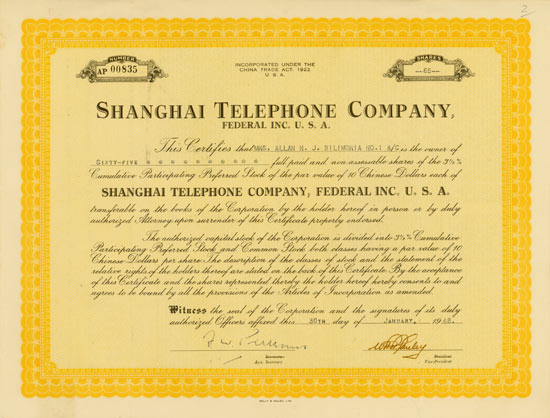
Availability and usage of the telephone greatly increased after the purchase of the Shanghai Telephone Company by American company International Telegraph and Telephone (ITT) in 1930. The company oversaw the phone service in the city. Below is a share for Shanghai telephone. It was listed on the Shanghai stock exchange at the time.
Shanghai Telephone Company stock

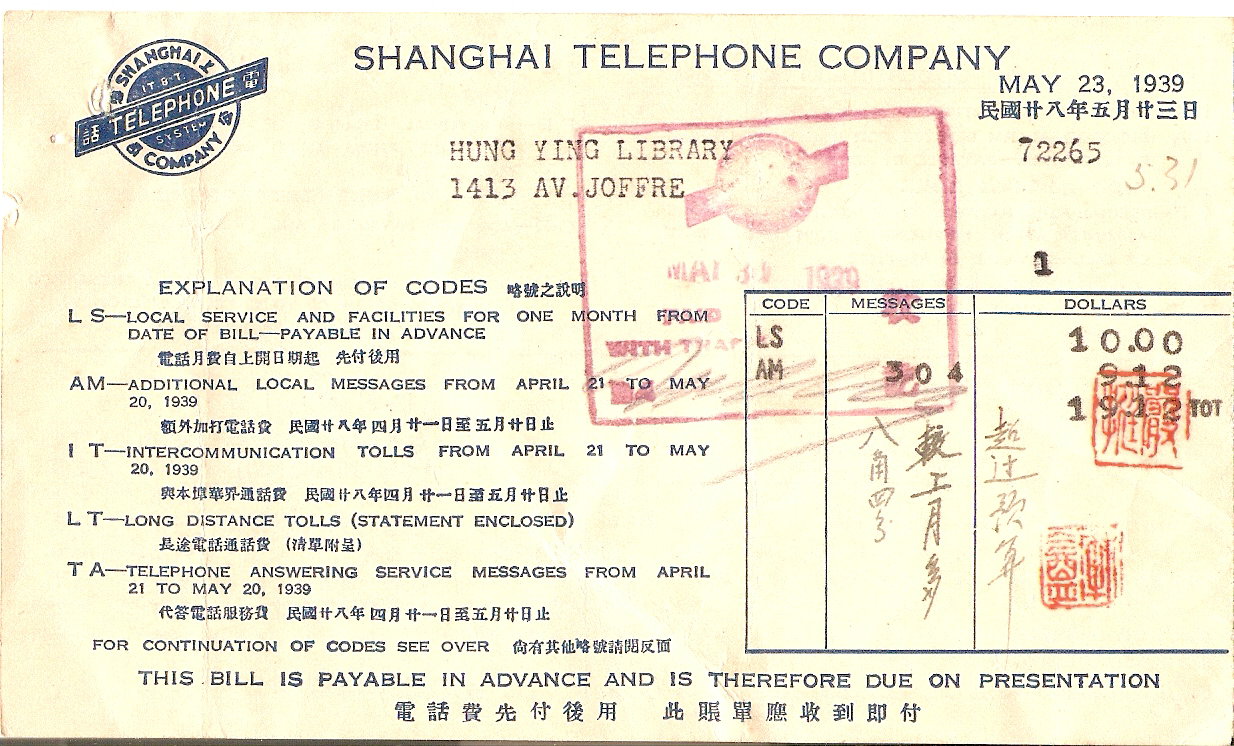
Just like today, the company was issuing monthly bills to customers. Below is a real phone bill from 1937. ITT is mentioned in the logo.

Shanghai telephone bill 1939

The cost for local phone was fixed for businesses (10$ / month for a wall type phone, and 10.50$ / month for a desk type like the one in picture below). For private residence, it was 6.50$ and 7$ respectively). This was only for renting the line, local calls, Intercommunication and Long distance calles were billed separately. The company also offered phone answering service and even “Burglar alarm service”.

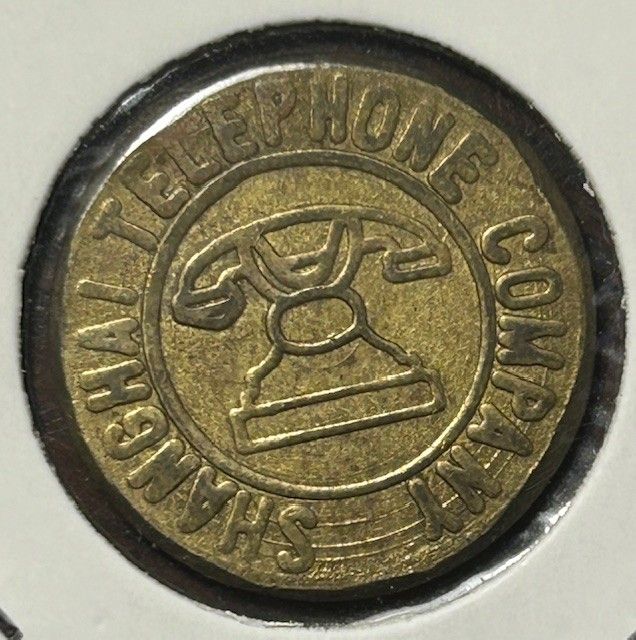
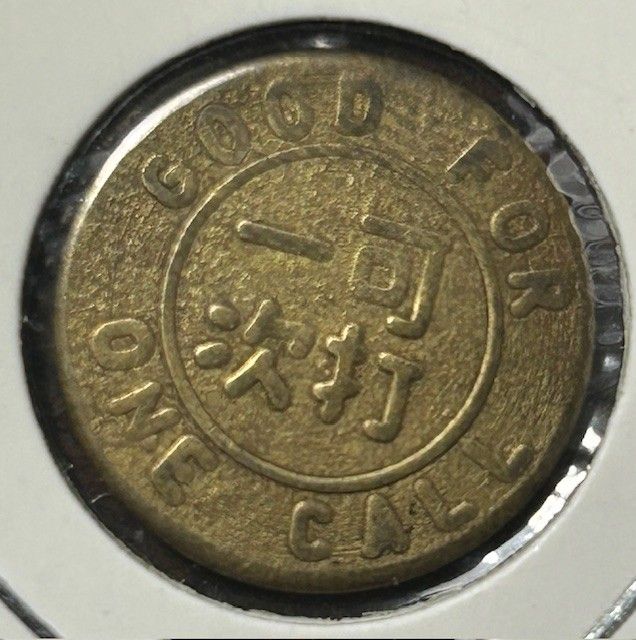
Besides phones in private residences and offices, public phones were available. They were stand alone or often part of shop. People could make local calls from those locations, paying with a phone call token like the one below. As mentioned on the token itself, one token was good for one (local) call: “可打一次: good for one call”

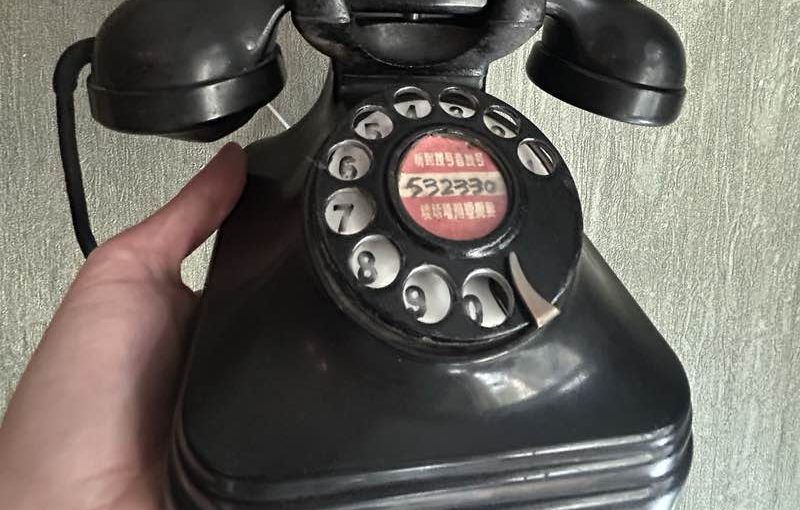
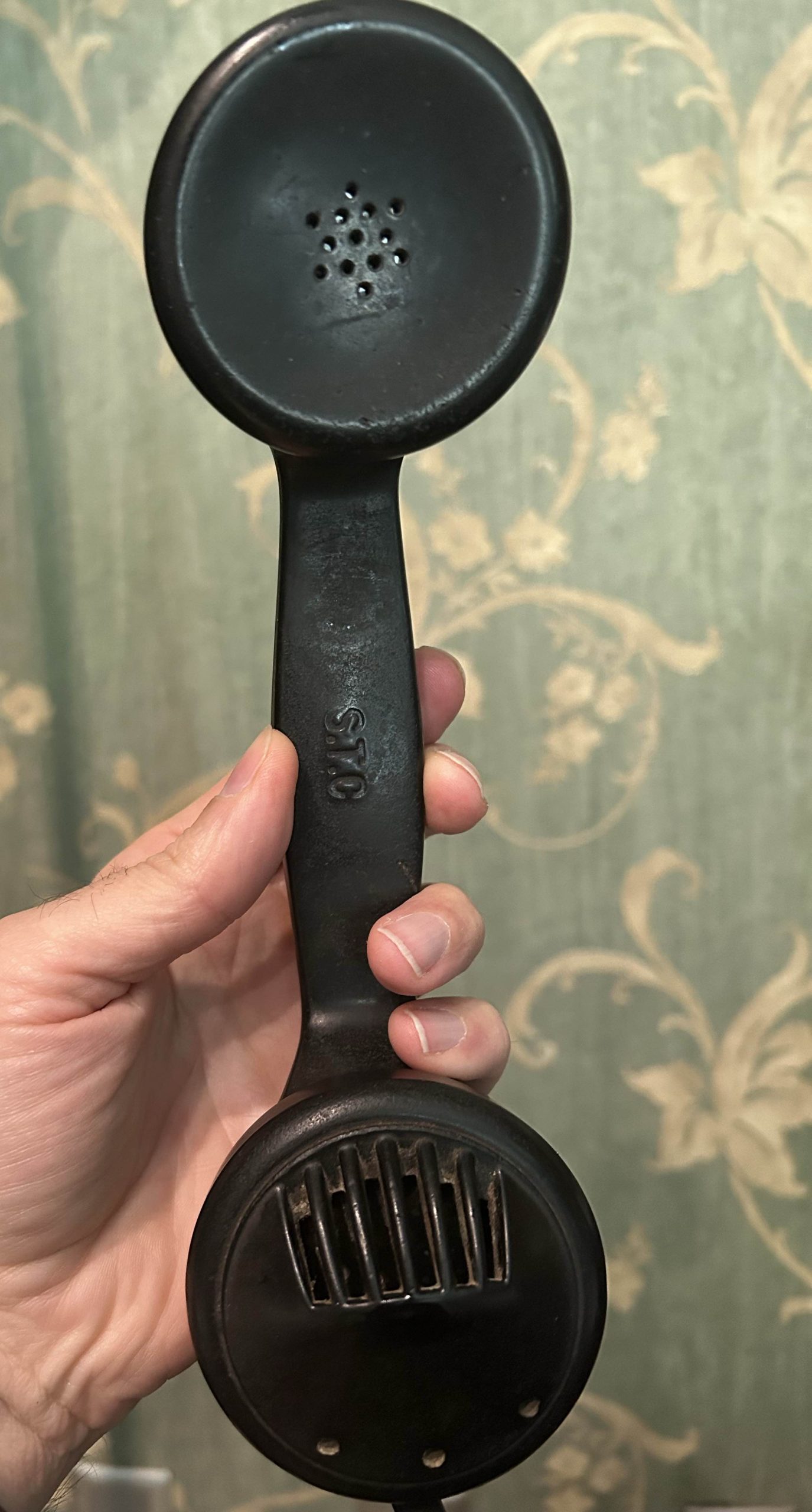
Phones in 1930s Shanghai phones typically included a rotary dial, Bakelite casings as well as separate handset and base unit. I recently acquired one which looks just like the one represented on the phone token above.

The types of black phones have become one of the symbols of Old Shanghai. They often appear as artefact in movies and TV series. The original one are from the mid 1930’s. They were locally manufactured, inspired by US Western Electric models 102 and 202 from the same period. As many technology items of the time in China and other communist countries, they continued to be produced nearly unchanged for many years. Many can be found with labels showing they were built well into the 1970s.

This one is definitely of a really old one, probably from the late 1930s. Its handset and casing is engraved with S.T.C , standing for Shanghai Telephone Company. After 1949, later ones were engraved with 上海, Shanghai in Chinese characters. Further on, there was no more engraving, and the handset design was changed.

This kind of phone became the standard for phones in China, as phone coverage spread in the country after the 1950s. They are now mostly used as decorative items, nice reminder of the Old Shanghai modernity at the time.

Shanghailander articles are published on an irregular basis. To be notified when a new article is posted, subscribe to the newsletter using this link, or follow the Shanghailander Facebook page.

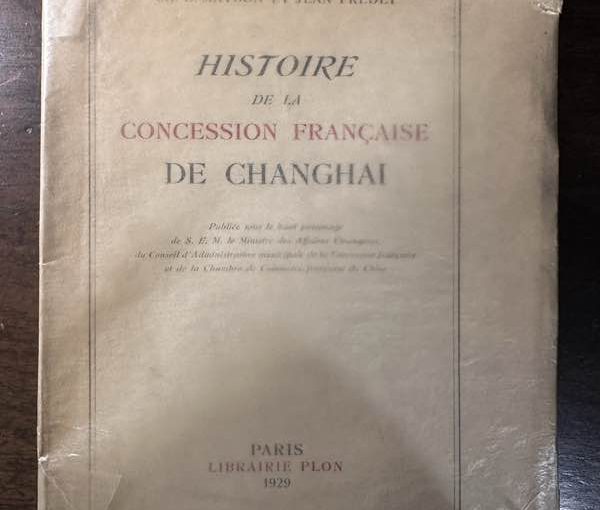
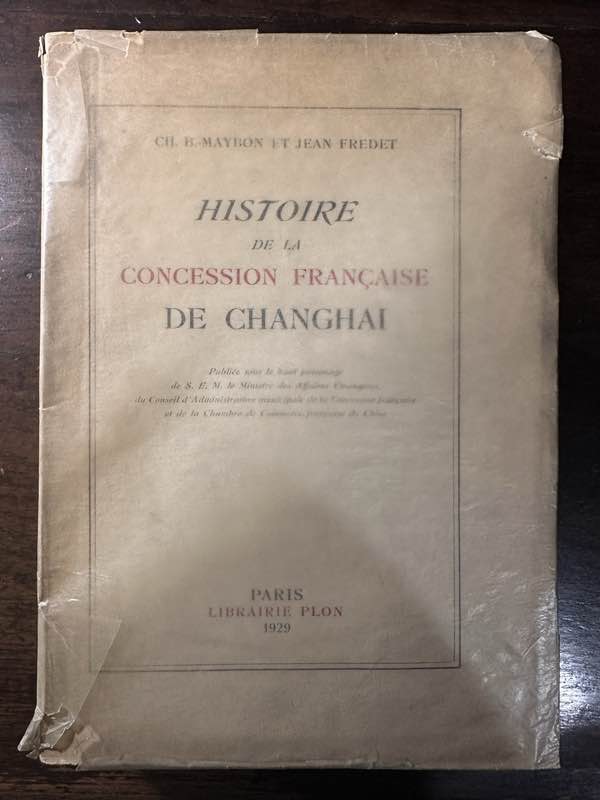
Histoire de la Concession Française de Changhai

One of the reference book about Shanghai history French book “Histoire de la Concession Française de Changhai” by Charles Maybon & Jean Fredet. I recently got an original copy during my last trip to France.

Although written in Shanghai, the book was published in Paris in 1929 by Paris publishing house Plon. It covers the history of the French Concession of Shanghai from its origin in 1848 and even before, until 1875. The book is highly detailed and includes many maps of the early French Concession, at a time it was only located around (French) Bund. Other books were planned but was never published as Charles Maybon passed away before publication of this one.

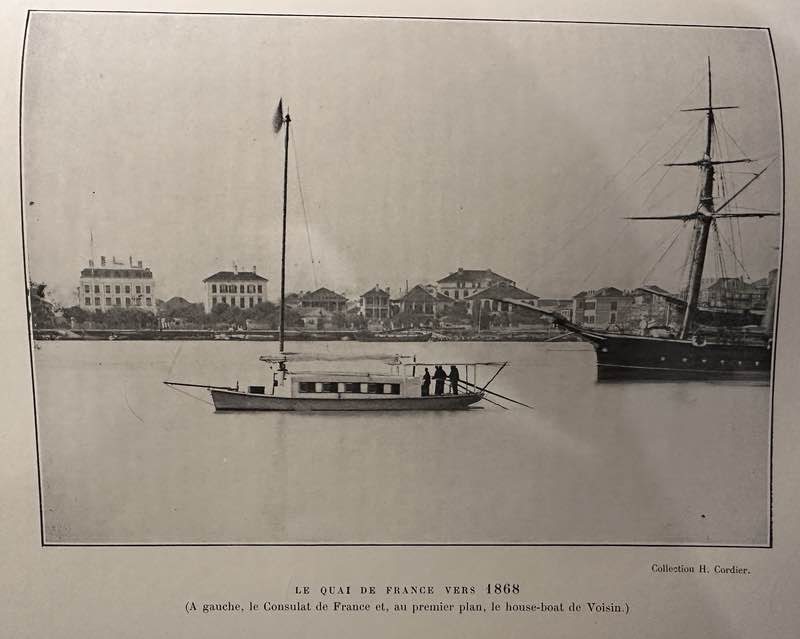
It also includes a number of photographs from the late 19th century, that are very rare. It shows the fast development of the city as none of the Bund building of the time have survived until today.

French Bund 1868

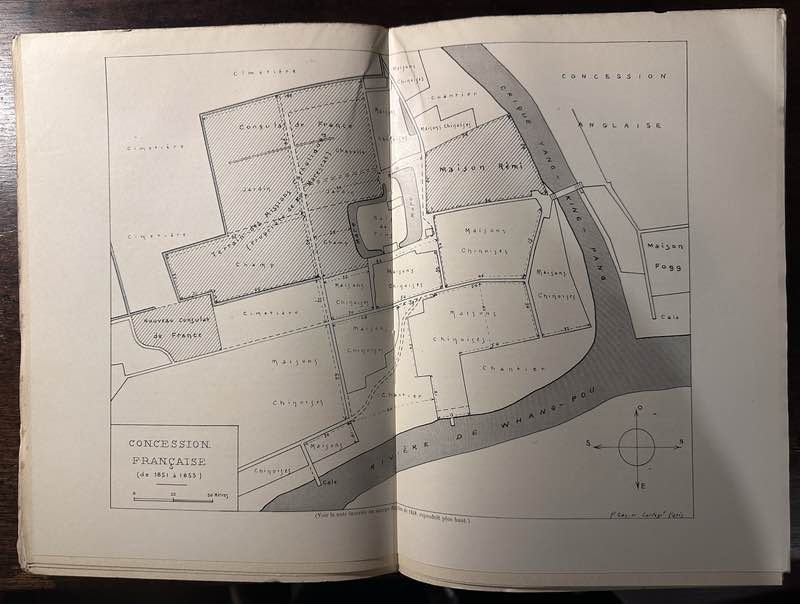
Another interesting point is the map of the early French Concession. The area then was only a small piece of land between the Chinese city and the early International Settlement. The French Consulate was not even on the river (more about this period in post “former Shanghai French Consulate“).

French Concession (1851 – 1853)

Like most books of that period, it was sold uncut. Large sheets of printed paper were folded into a book, then a binder would cut the edges as part of the biding process. Alternatively, the reader could cut the sheets while reading, showing how far he or she went in reading the book.

Uncut book

I was fortunate to get an uncut copy, meaning that it was never read before. As it was in great condition, I assume this copy has been sitting of the owner’s bookshelf for decades. As I want to keep it in original stage, I will not cut it either. Fortunately, a scanned copy of the book is available as a download from the site of the French National Library, which is also fully searchable. It is not as charming as my old copy but much more effective for research purposes. Follow this link to get it: https://gallica.bnf.fr/ark:/12148/bpt6k33623471#

Shanghailander articles are published on an irregular basis. To be notified when a new article is posted, subscribe to the newsletter using this link, or follow the Shanghailander Facebook page.

Wedding at Fitch Memorial Church

There are many churches in Shanghai, as both concessions were hosting many christians religious people. Catholics was mostly supported by the French, with the Jesuits area of Xu Jia Hui being next to the former French concession. The international settlement was supporting the Church of England, with a cathedral behind the Bund. Many protestant missionaries were using Shanghai as a base to convert people all over China, and they also built Churches in Shanghai. I recently attended a Christian wedding at Fitch Memorial Church in Hong Kou district.

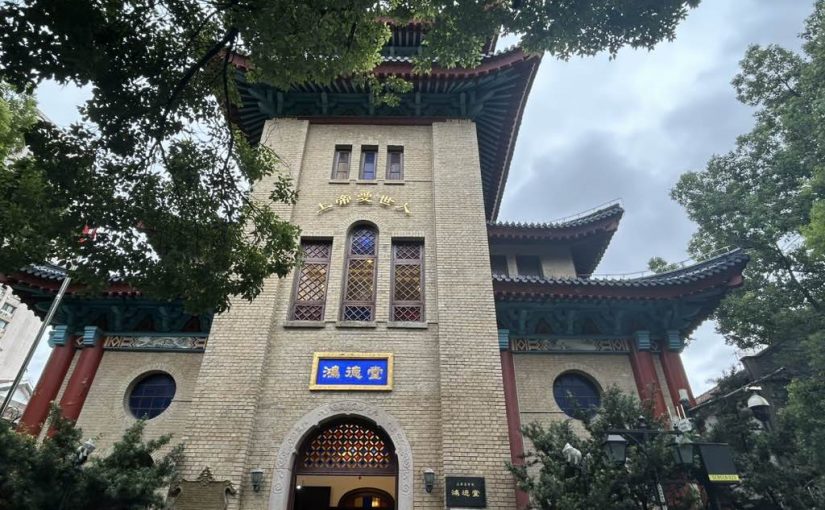
Fitch Memorial Church is the only church in Shanghai to be designed in the Neo Confucian style, also called Republican style. This combines the exterior of the traditional Chinese building, although built in concrete not wood, with the inside of a modern building.

Fitch Memorial Chirch was completed in 1928. This is also the time when the whole Hongkou district was developing. The architect was Yang Xiulu / 楊錫鏐 which firm also built the Paramount Ball Room and the Nanjing Hotel on Guizhou lu. It also designed the YMCA building in Xizhang Road, that is of the same style than the Fitch Memorial Church.

The outside is rich with details.

Although there are many churches in Shanghai, it is still rare to have wedding in an actual church. The couple are both member of this church, creating a really special atmosphere. It felt a bit like in a movie.

The church has two full worship floors on the top of each other, which is rather rare. I guess this was planned to handle more ceremonies at the same time. The wedding was on the upper floor, but I could also get a view on the lower one.

The church has been through a lot over history, including as a shelter for refugees during the 1932 Japanese attack and being used as an hospital during cultural revolution. It was refurbished in the 1990s with a lot of original details having been preserved including stained glasses below.


Fitch Memorial Church was name after Reverend George Field Fitch (1845-1923). Arriving in China in 1870, he become an important leader of the Presbyterian Mission Press. His work is credited with revolutionizing China’s printing industry and establishing Shanghai as a key publishing hub in Asia.

The Fitch Memorial Church is located at 59 Duolun Lu in Hongkou district.

Shanghailander articles are published on an irregular basis. To be notified when a new article is posted, subscribe to the newsletter using this link, or follow the Shanghailander Facebook page.

Longchamp house in the former French Concession

Luxury brands have been using old Shanghai houses to make stores or customer experience centers for a few years now. Although renovation does not always follow historical lines, it’s a great opportunity to preserve and open those old buildings to the public.

The earliest I can remember the opening of Three on the Bund, the pioneer of Bund old building renovation in 2003. It was followed by Bund 18 in late 2004. One massive project was the renovation of the twin villas on 796 Huai Hai Road by Richemont, that opened in 2008. The renovation was of the highest level, done by the same Italian company that did Bund 18. Another famous example is the Maison Hermes, taking over the building of the former Joffre police station on Huai Hai Road. The last one to come to mind was the Shanghai Tang store @ Cathay Cinema that has now disappeared.

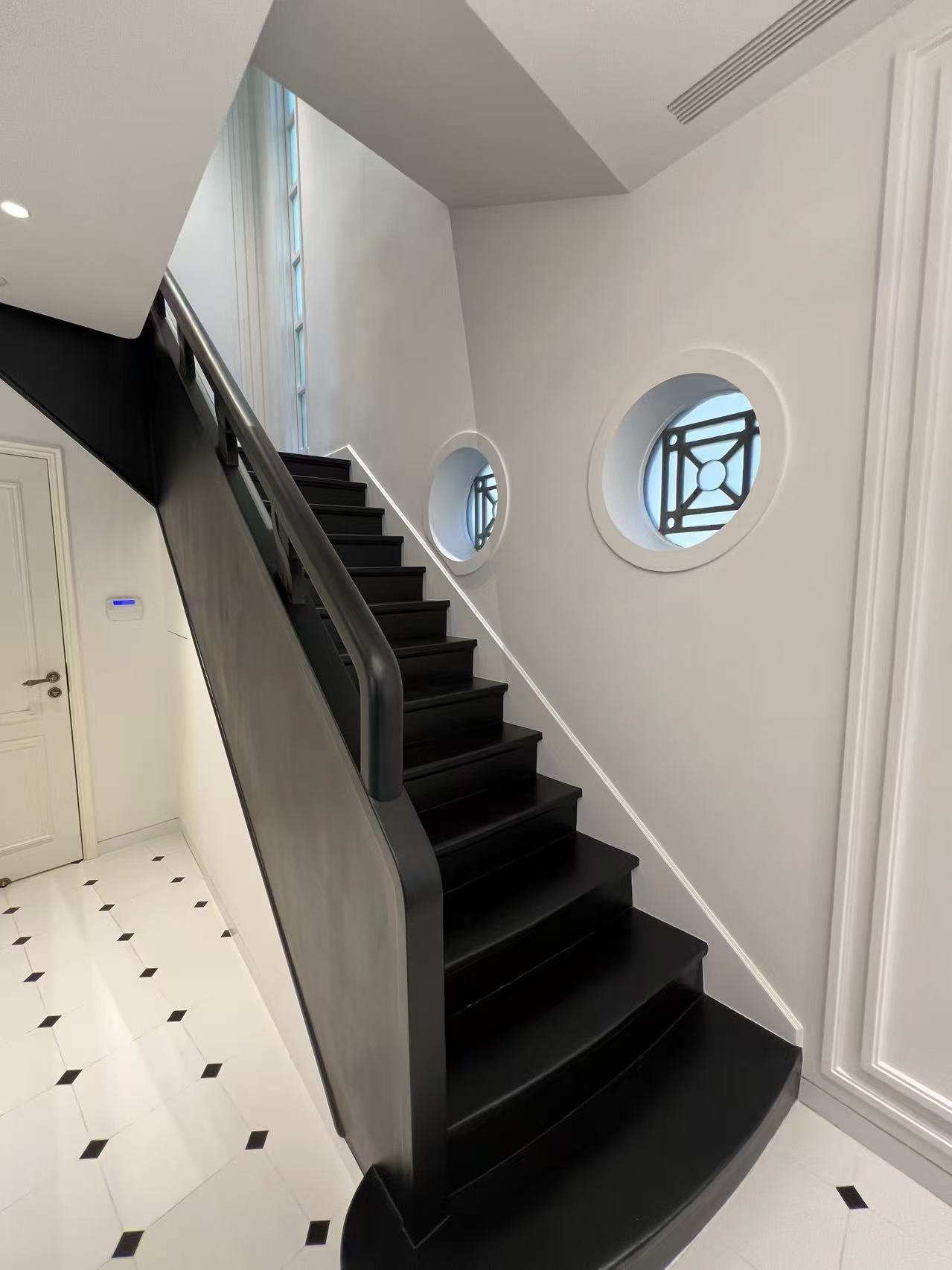
Walking in the street of the former French Concession, I came by random to the new Longchamp house 12 Wu Kang Lu. The outside of the art deco house has been well preserved. The house was built in 1948, one of the last Art Deco / modernist style. Details of the outside have been well preserved including the rot iron frame and balcony, as well as the bricks color.

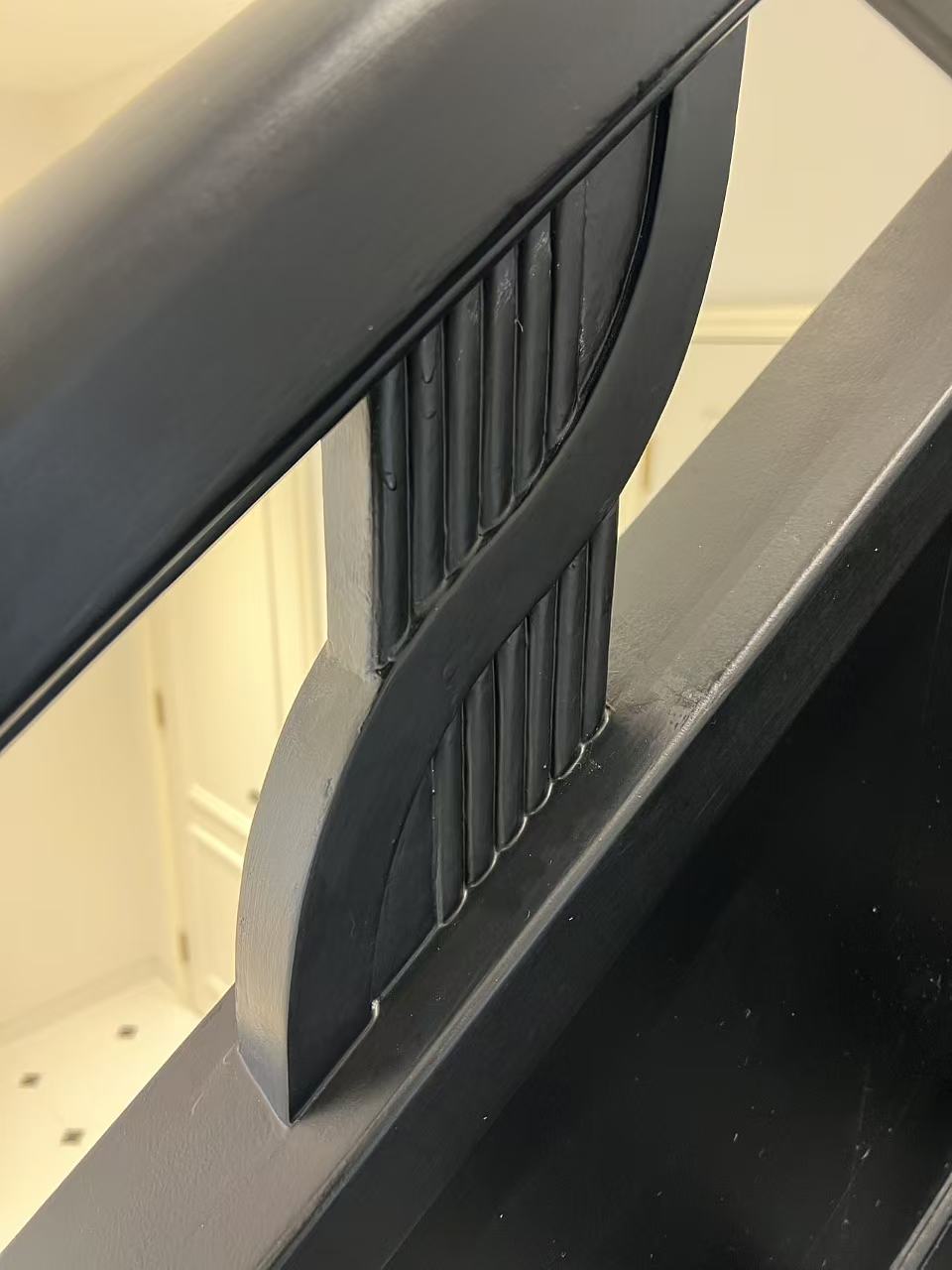
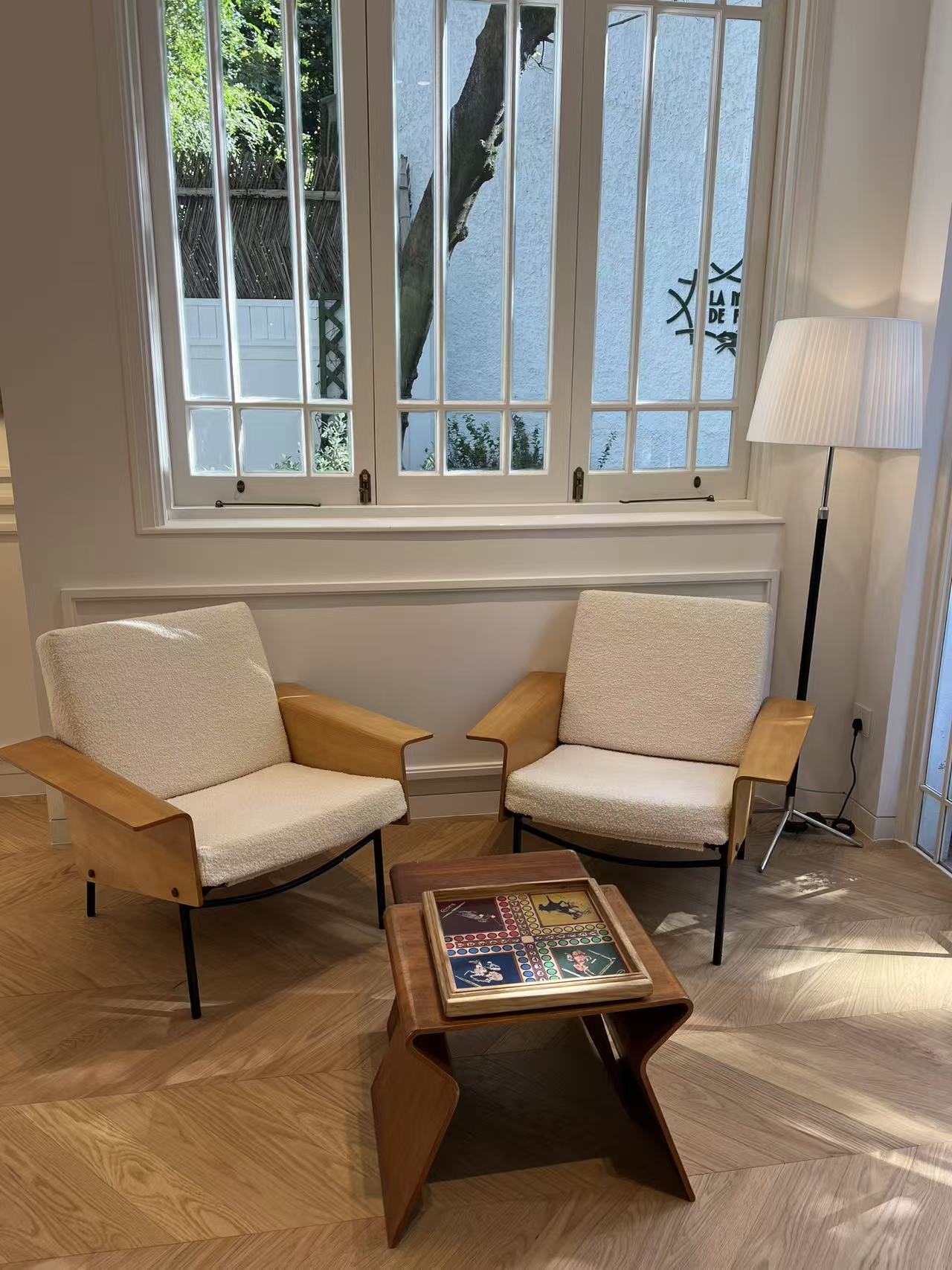
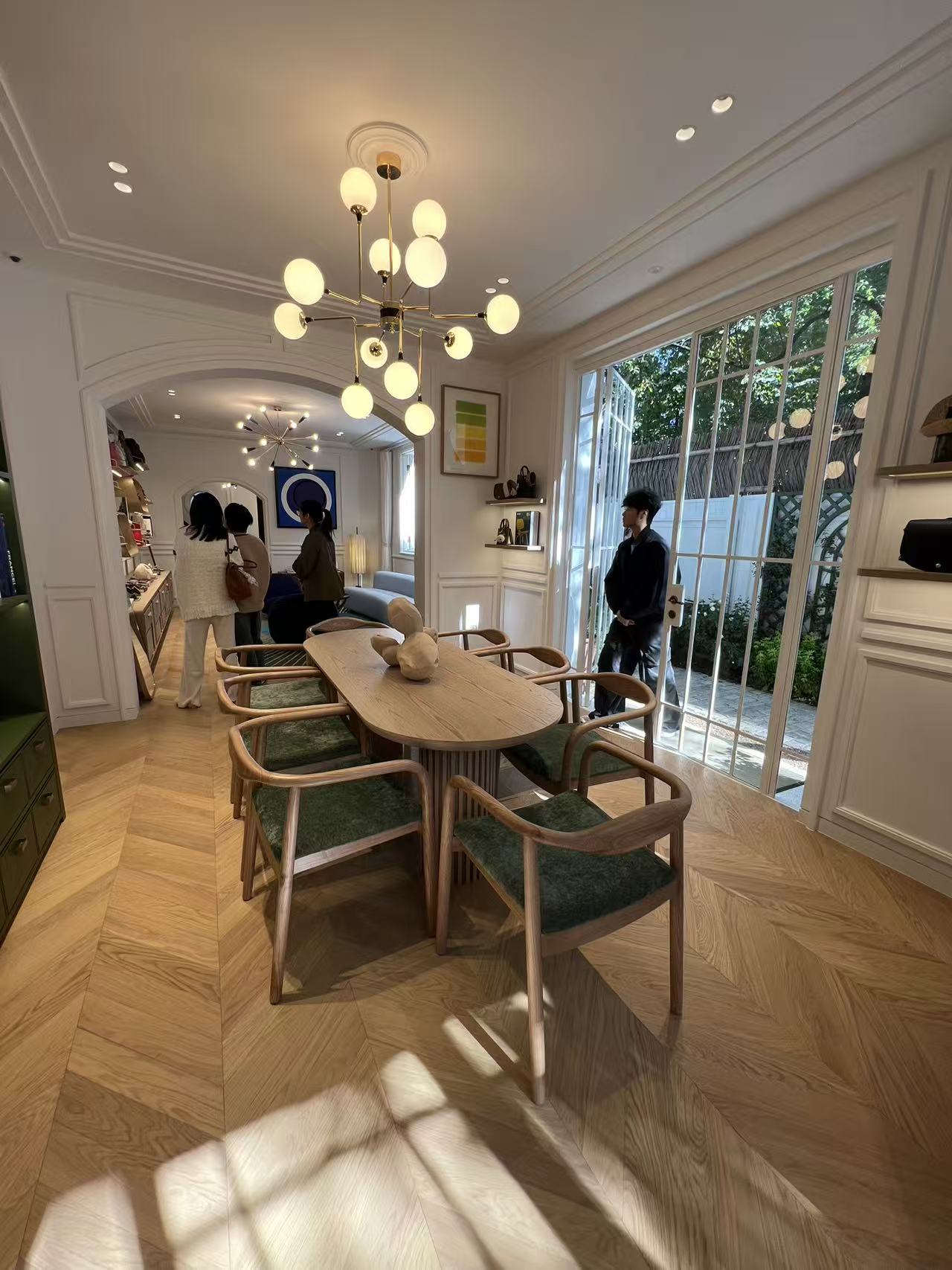
The inside has been totally renovated, still keeping the beautiful staircase.

Original parts like the windows have been recreated with a fitting model, creating a new old and new atmosphere that fits the French brand well.

Shanghailander articles are published on an irregular basis. To be notified when a new article is posted, subscribe to the newsletter using this link, or follow the Shanghailander Facebook page.

Paris Art Deco Congress

Today is the start of the Art Deco Congress in Paris, celebrating the 100 anniversary of the Exposition International des Arts Décoratifs where Art Deco was introduced to the Word.

Shanghailander articles are published on an irregular basis. To be notified when a new article is posted, subscribe to the newsletter using this link, or follow the Shanghailander Facebook page.

Bretons association in Old Shanghai

Although they were at most 1500 French people in Shanghai in the 1920s and 1930s, they were keen on getting together in regional groups. This was made clear in previous post. “French regional associations in Old Shanghai“.

Amongst the French regions, Brittany has long had an history of emigration with a strong diaspora and support network. Breton cultural movement developped in the late 19th century, resulting in the creation of the Brittany flag in 1923 by Breton nationalist architect Morvan Marechal. Named the Gwenn-ha-du, it was presented at the 1925 Exposition des Arts Decoratifs. This major exhibition showcased Art Deco to the World, heavily influencing Shanghai architecture. This year is the 100th anniversary of the exhibition, with multiple events in Paris around this theme.

Brittany flag

Bretons were active in Shanghai in the 1930s, as shown in articles in Le journal de Shanghai. Here is the story of the short-lived but active “Association amicale des Bretons de Shanghai”. Information mostly came from articles in “Le journal de Shanghai”. It is amusing to see that the activites of the 1930s Breton association is pretty similar to the one today.

15 Apr 1935 – Foundation of the association. President was Commandant Le Floch who was a professor at Ecole Remie, Rue Remie (today Yong Kang Lu / 永康路) and Vice-President was Mr H Chatel, who was the owner of the French Pharmacie Grenard & Co, 57 Nanking Road.

21st Apr 1935 – General assembly of the association, named “Le Biniou” at the Cercle Jeanne d’Arc, 199 Route du P`ere Robert (today RuiJin 2 Lu / 瑞金二路). All bretons in Shanghai were are invited.

Ouest Eclair 13th Aug 1935 (Thanks to Prof Jean-Luc Pinol)

29th Jun 1935 – Banquet of the “Association amicale des Bretons de Shanghai” re-named “Ar Mor” in “le foyer du Marin et du Soldat”, 49 Rue Victor Emmanuel III (today Shaoxing Lu / 绍兴路). 200 people attended, lead by the Commandant Le Floch, president of the association. Main guest included the French Consul and other important people of the French and Breton community.
An article with picture (see above) was published in Brittany newspaper Ouest Eclair on 13th Aug 1925. Another article with similar content but no photo was published in “La dépêche de Brest” 20th July 1935.

5th November 19351st Conference (“causerie) by Mr Schveitzer, a teacher at the French school, about the life of Breton navigator Yves de Kerguelen-Tremarec.

Article from Le journal de Shanghai 7th Nov 1935

7th November 19352nd Banquet of the association. with about 200 people, also at the “foyer du Marin et du Soldat”. Commandant Le Floch had great success in singing “la Chanson du cidre” (1929), which later became one of the most important Breton song.

19th Jan 1936 Children party by the association. Paulette Hameury was the daughter of the association secretary.

Picture from “Le journal de Shanghai”
20th jan 1936

20th February 1936General assembly of the association, also at “Le foyer du Marin et du Soldat”.

16th Jun 1936 – Official opening of the “Jardin des Bretons de Shanghai”, Bretons Garden in Shanghai. This garden was located on Point Island (today Fuxing Dao / 复兴岛 in Yangpu district). Many French officials attended the ceremony. This was a great project for the Breton community that was to be developed in the following year. Unfortunately, the Japanese forces invaded Shanghai starting with Hongkou and Yangpu district in August 1937. No news of the Jardin des Bretons was found after this article.

October 1936 – Departure of Commandant le Floch leaving back to France. This is the last news I could find about the association.

A Shanghai Breton association was revived in 2004 by Pierre-Yves Connan and Gwen Chesnais. It has been active ever since. French online newspaper, Le Petit Journal, posted an article of the Bretons community in Shanghai in February 2025 (follow this link to read it).

Following this original article, I was offered more information about the Bretons community in Old Shanghai. Read post “More about Bretons in old Shanghai” for details.

Shanghailander articles are published on an irregular basis. To be notified when a new article is posted, subscribe to the newsletter using this link, or follow the Shanghailander Facebook page.