Cité Bourgogne, Shanghai

As a long term Shanghai resident originally from Burgundy I have been asked and puzzled about Shanghai Cité Bourgogne. Here is the story of this icon of Old Shanghai.

Like many people, I first got to know about Cité Bourgogne when I walked the streets of Shanghai, specifically the corner of Shaanxi lu (Avenue du Roi Albert) and Jian Guo Lu (Route Frelupt). Although not far Avenue Joffre (today Huai Hai lu Zhong lu), the main road of the former French Concession, this area was considered out of the city center in the early 1930s.
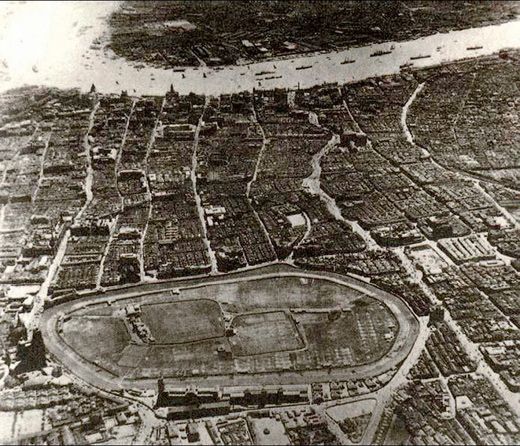
Aerial view of central Shanghai in the 1930s

Shanghai is famous of its rows of back alleys lined by brick houses. These alleys are called “Lane” in English, “Li Long” 里弄 in Chinese and “Passage” in French. They form a maze of tranquility and coziness away from the noise and activity of Shanghai streets. Houses lining the alleys are mostly Shi Ku Men 石库门, named after the stone door frame closing the courtyard and facing the alley. Housing style evolved with time and wealth, from tiny houses to small mansions. As seen on above picture, most of old Shanghai used to be covered with lanes, the most common accommodation for Shanghainese in the 1930s, as shown on above picture. Cité Bourgogne is mostly noticeable because of its name.
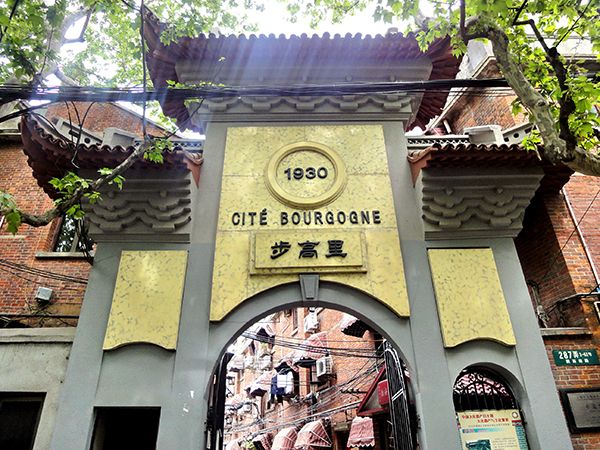
Cité Bourgogne entrance on Shaanxi Nan Lu

If most Lilong had entrances marking the name of the `lilong in Chinese, this one is really special. Designed in Chinese revival style, it indicates the year of completion of Cité Bourgogne, 1930. Below it is the name “CITÉ BOURGOGNE” and the Chinese name 步高里  / Bù Gāo Lǐ. This is different from the original layout shown below, where only the Chinese name was written. The (fake) yellow stone and new indication was probably more recently, during a renovation. The good thing is that it attracts attention.
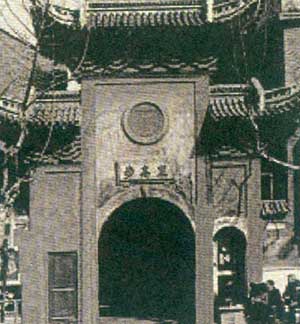
Cité Bourgogne originale façade

The lilong or lane in English has 78 houses, each of which were originally occupied by one family. As the house were quite large, it was clearly an upmarket residence. The houses were later subdivided and about 450 families now live in Cité Bourgogne. The location at the corner of Avenue du Roy Albert (today Shaanxi Nan lu / 陕西南路)and Route Frelupt (Jianguo Xi Lu / 建国西路) was on the edge of the urban area of the former French Concession, away from the city center. On the other side of Route Frelupt (Jianguo Xi Lu / 建国西路) was located the French shooting range, where Luwan stadium now stands. At that time, it was the South edge of the built area of the French Concession. A block further down was the Zhoajiabang creek, 肇嘉浜, the administrative border of the French Concession.
Cité Bourgogne Entrance on Jiang Guo Xi Lu

Cité Bourgogne was the property of real estate developper “Foncière et Immobilière de Chine” or FONCIM. This company was the real estate arm of ISS, an insurance company and one of the major French company in Shanghai then. It is mostly famous for its Art Deco building designed by LVK, including the Dauphiné, the Gascogne and many more. However, FONCIM also had a number of lilong including Cité Bourgogne, and 建业里 / Jian Ye Li that is now the Capella Hotel further on Jian Guo Xi Lu.

Although FONCIM used LVK for many of its buildings, it is not clear that they used them for Cité Bourgogne. It was clearly not the case for its other lilongs. Cité Bourgogne modern Shikumen style could fit LVK style, but the project is not mentioned in the 1934 14th July double page ad in Le Journal de Shanghai, showcasing the work of the firm over the period. I have seen secondary sources mentioning LVK as the designer, but no proof so far.

This lilong differs from many other with its archway towering the alleys, making is really memorable.
Archways of Cité Bourgogne

FONCIM had the habit of naming its buildings after French regions. Its buildings were named Le Béarn, le Dauphin´´e, Le Normandie, Le Picardie, Le Gascogne. Thus us is not surprising to have an another property called Cité Bourgogne.
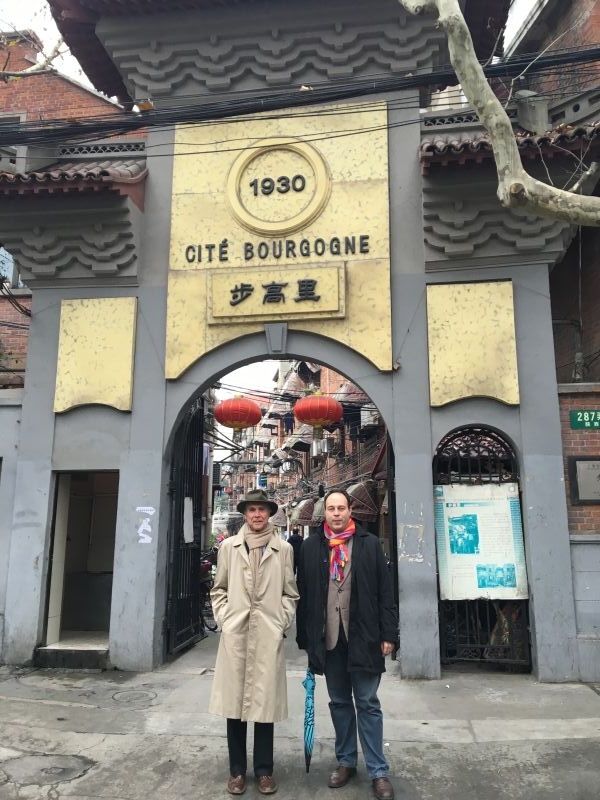
Cité Bourgogne with Aubert de Villaine.

I could not find a real link with the actual region of Bourgogne in France. nor with its wine that were sold in Shanghai at the time. However, since the name is so visible, people from Burgundy regularly ask about a possible link with the region. I even had the privilege to take the most famous Burgundy winemaker, Mr Aubert de Villaine, owner of the Word famous Romanée-Conti, for a tour to Cité Bourgogne. As a true Burgundian, I also made some research about Burgundy wines in Old Shanghai a few years ago, but not link came out between Cité Bourgogne and Bourgogne wine either.

Shanghailander articles are published on an irregular basis. To be notified when a new article is posted, subscribe to the newsletter using this link, or follow the Shanghailander Facebook page.

French companies in 1920s and 30s in Shanghai

In the 1920s and 30s, the French economic presence in Shanghai was marked by a small group of large, influential companies. They made a major contribution to the development of the French Concession and supported France’s influence in China.

Messageries Maritimes: a vital link with France
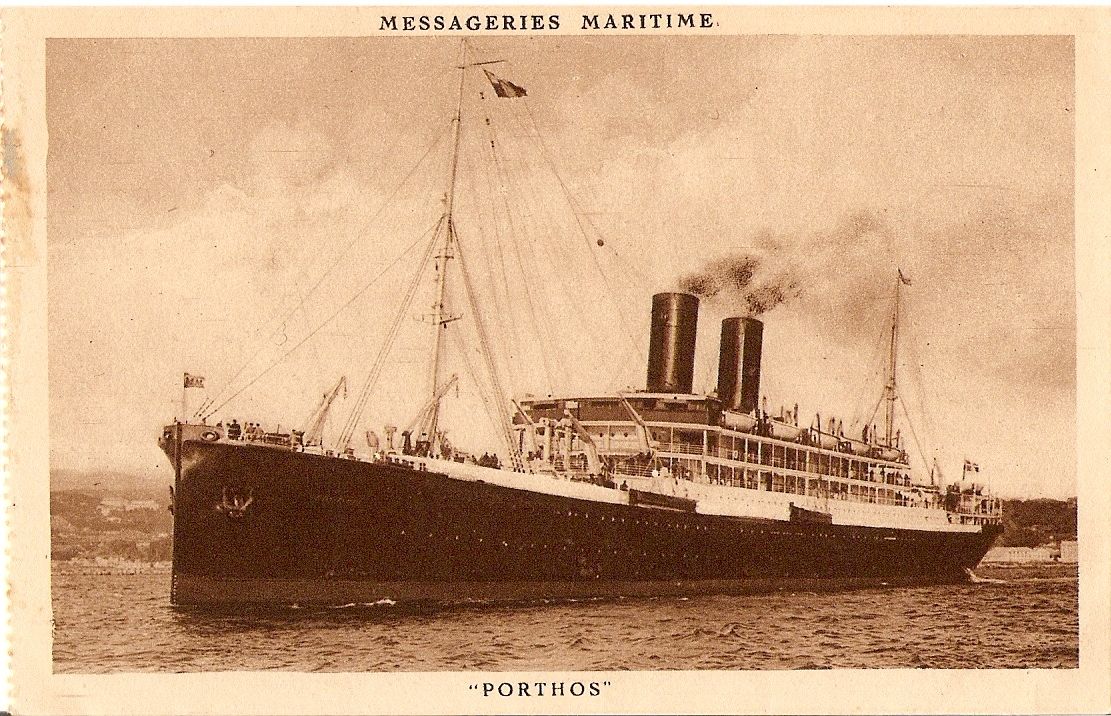
Founded in 1862, Messageries Maritimes played a key role in transporting goods and passengers between France, Indochina and China. Based on the Bund, it enjoyed a virtual monopoly on the transport of tea and silk to Europe. Great figures such as Étienne Sigaut and Jean Cochet have marked the history of this company, which has also experienced tragedies, such as the sinking of the Georges Philippar in 1932, in which the famous reporter Albert Londres perished. Messageries maritimes helped form the CMA-CGM group, France’s leading shipping company. (For more information on the MM, see post : “2 months in rationnaire”).

Compagnie Française de Tramways et d’Éclairage Électrique: Essential Infrastructure
Created in 1906 with the support of the Banque de l’Indochine, this company managed the tramway network and electricity supply for the French Concession. It experienced tensions with local authorities, particularly in the 1920s and 1930s, and had to deal with several strikes. Despite these challenges, the CFTEE became one of the largest French industrial companies in the Far East. Listed on the Paris stock exchange and regarded as a “Père de famille” stock, it had to cease trading abruptly in the 1950s.

I once found electricity bills from 1940s issued by the CFTEE. See post “Unpaid bills” for more details.

Banque de l’Indochine: a financial pillar in Shanghai
Founded in 1875, Banque de l’Indochine quickly established itself as a major player in Shanghai’s commerce and finance. In 1898, it opened a branch in the Jardine Matheson building, offering financial services crucial to the opium, cotton and silk trades. In the 1930s, 93.5% of its profits in Shanghai came from foreign exchange and trading operations. Banque de l’Indochine merged with Banque de Suez to create Banque Indosuez.

The International Savings Society: A French success story in Shanghai
Founded in 1912 by René Fano and Jean Beudin, this savings and lottery society expanded rapidly. By 1930, it had 130,000 subscribers and diversified into insurance through Assurance Franco-Asiatique. Personalities such as Étienne Sigaut and Michel Speelman were instrumental in the company’s growth. Faced with major difficulties, ISS disappeared in the 1950s.

The Gascogne apartments built by FONCIM

FONCIM: Shanghai’s architectural heritage
A subsidiary of ISS, FONCIM left an indelible architectural mark on Shanghai. Drawing on the talents of renowned architects such as Léonard, Vesseyre and Laszlo Hudec, it contributed to the rapid urbanization of the French Concession, particularly after the 1917 expansion. Financed by ISS profits, FONCIM was one of the main landowners. FONCIM houses and apartments were often leased to other French companies to house their staff. One example is the CFTEE leasing houses from FONCIM.

The Bouvier Empire: a dominant figure in Shanghai
Félix Bouvier, an accountant turned influential entrepreneur, left his mark on Shanghai with his investments in Grand Garage Français and Union Mobilière. He was most famous for creating the Champs de Course Français (also called “Le Canidrome”), a betting center for greyhound racing. Nicknamed “the uncrowned king of the French of Shanghai”, he had close ties with Du Yue Cheng, an influential and sulphureous figure in the Chinese business world.

Import-export companies: a flourishing trade
Several French companies played a central role in the import-export of a variety of products: Olivier Chine was a major exporter of tea and silk. Racine & Cie, and Egal & Cie dominated the wine and food trade. In 1934, France exported 31,000 liters of champagne, 25,000 liters of bottled wine and 762,000 liters of bulk wine to Shanghai, illustrating the importance of this trade. For more information this topic, see article “French wines in Old Shanghai”.

The former Normandy building, now Wukang da lou / 武康大楼

What remains today?
The Messageries Maritimes building still stands on the Bund. Streetcars disappeared from Shanghai in the 70s, but some trolley-bus lines still follow the same route. French companies, especially FONCIM, left their mark on Shanghai’s architecture. Most of the Art Deco buildings in the former French Concession are attributed to them, including Le Gascogne, Le Dauphiné and le Normandie (now called WuKang Da Lou / 武康大楼).

Shanghailander articles are published on an irregular basis. To be notified when a new article is posted, subscribe to the newsletter using this link, or follow the Shanghailander Facebook page

Love and Duty (part 2)

This post is the second one focused on the 1931 Ruan Lingyu movie, Love and Duty (恋爱与义务) “Love and Duty (part 1)” was focused on showing modernity and westernisation in 1930s Shanghai through some scenes of the movie. This part is focused on searching for actual film locations in today’s Shanghai.

The first part of the movie is taking place in a upper class neighborhood called “Kiangwan”. Jiangwan (today spelling of Kiangwan) was then a far suburb of Shanghai, chosen by the nationalist government of Chiang Kai-shek to create a new city center away from the foreign concessions (See post “Ordinary metropolis” for more details). This was supposed to be the incarnation of modern upper class neighborhood in Shanghai. The movie “Love and Duty” was released in 1931. At that time, the plan for Jiangwan was already made, but the first building, the Jiangwan civic center, was still under construction, finished in 1`932. To illustrate this modernity and high level, the director used the streets of the French Concession as film location.

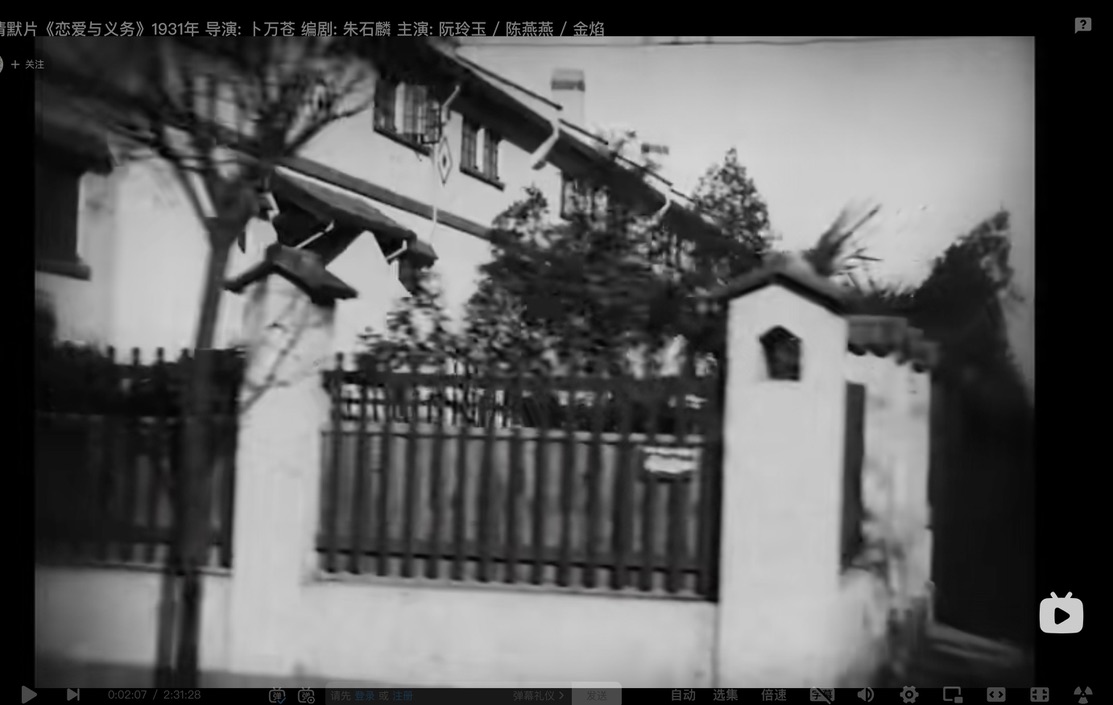
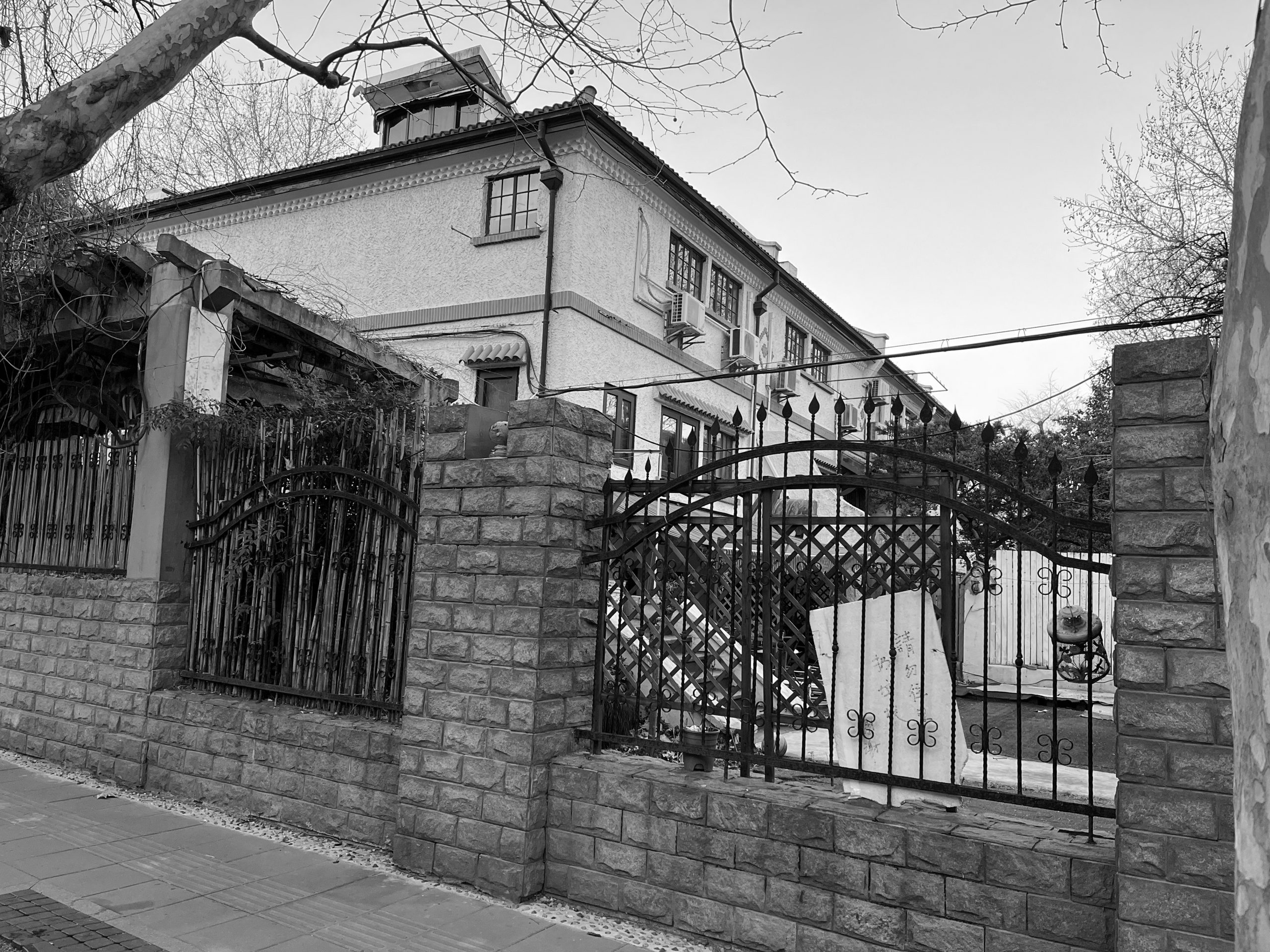
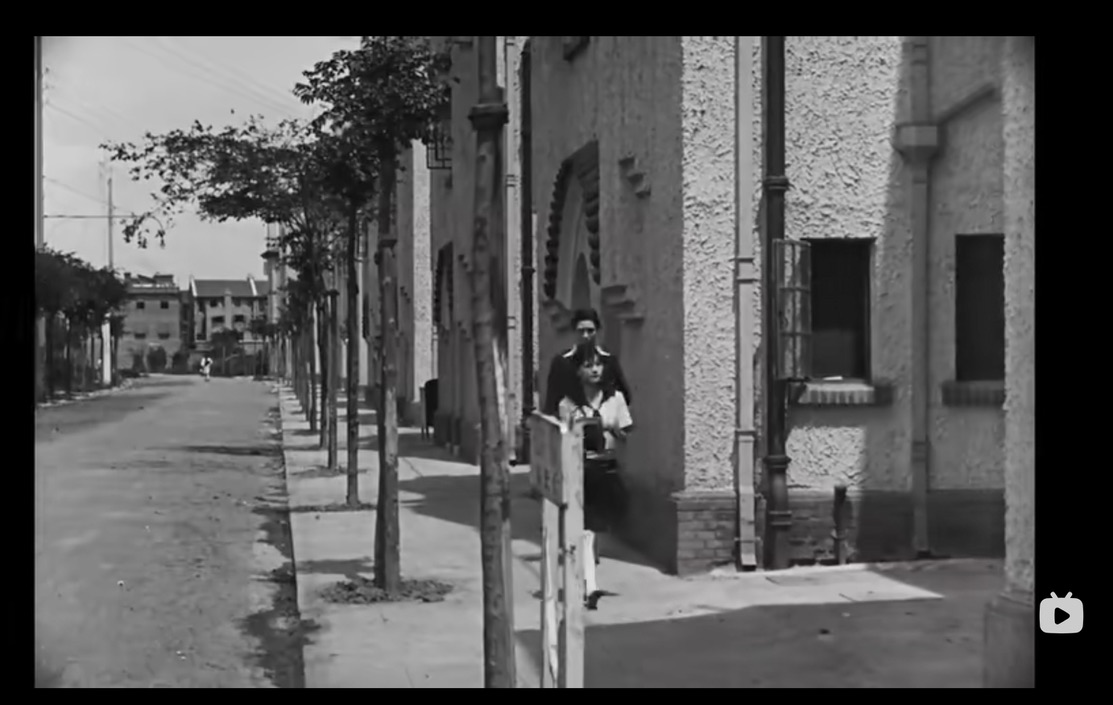
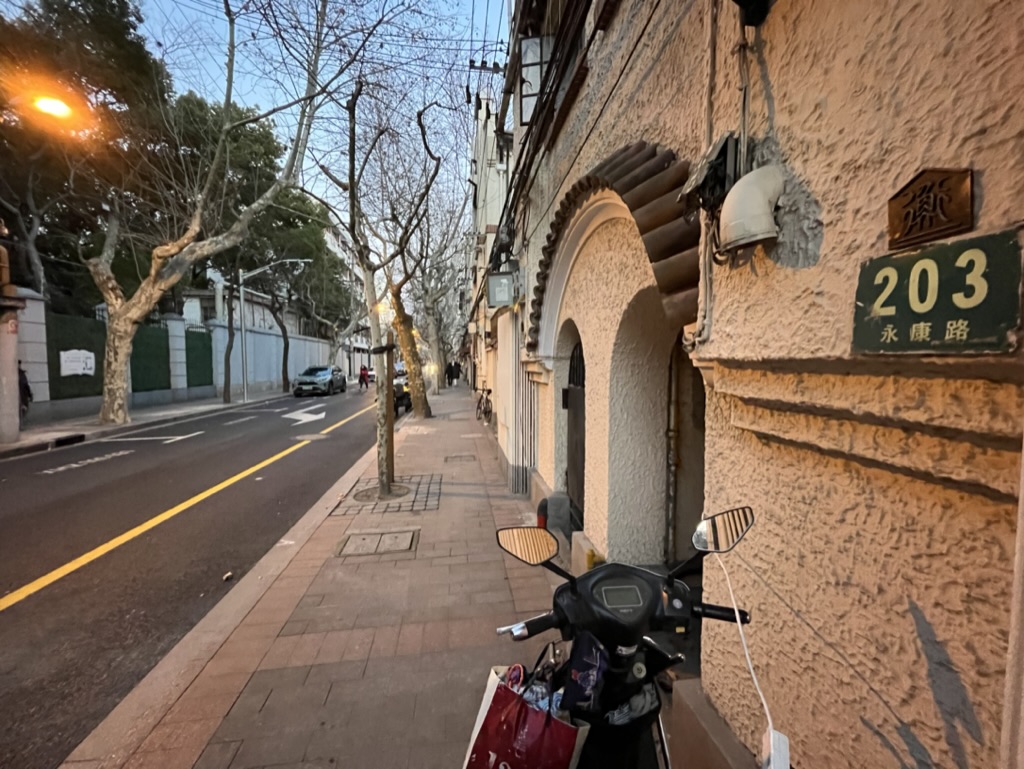
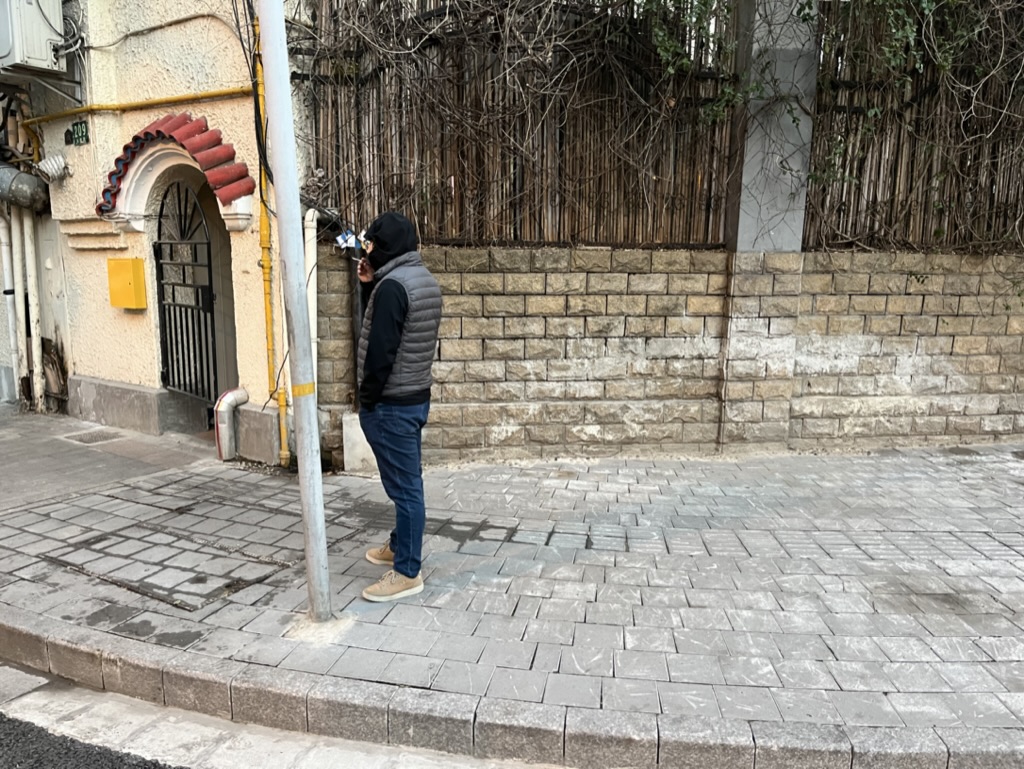
The first minutes of the movie shows view of the surroundings. Despite the changes, the above picture is the same as the right and below picture. The house is located on Route Delastre (today TaiYuan lu) and Route Remy (Today Yongkang lu). Design and marking on the front wall is very unique.

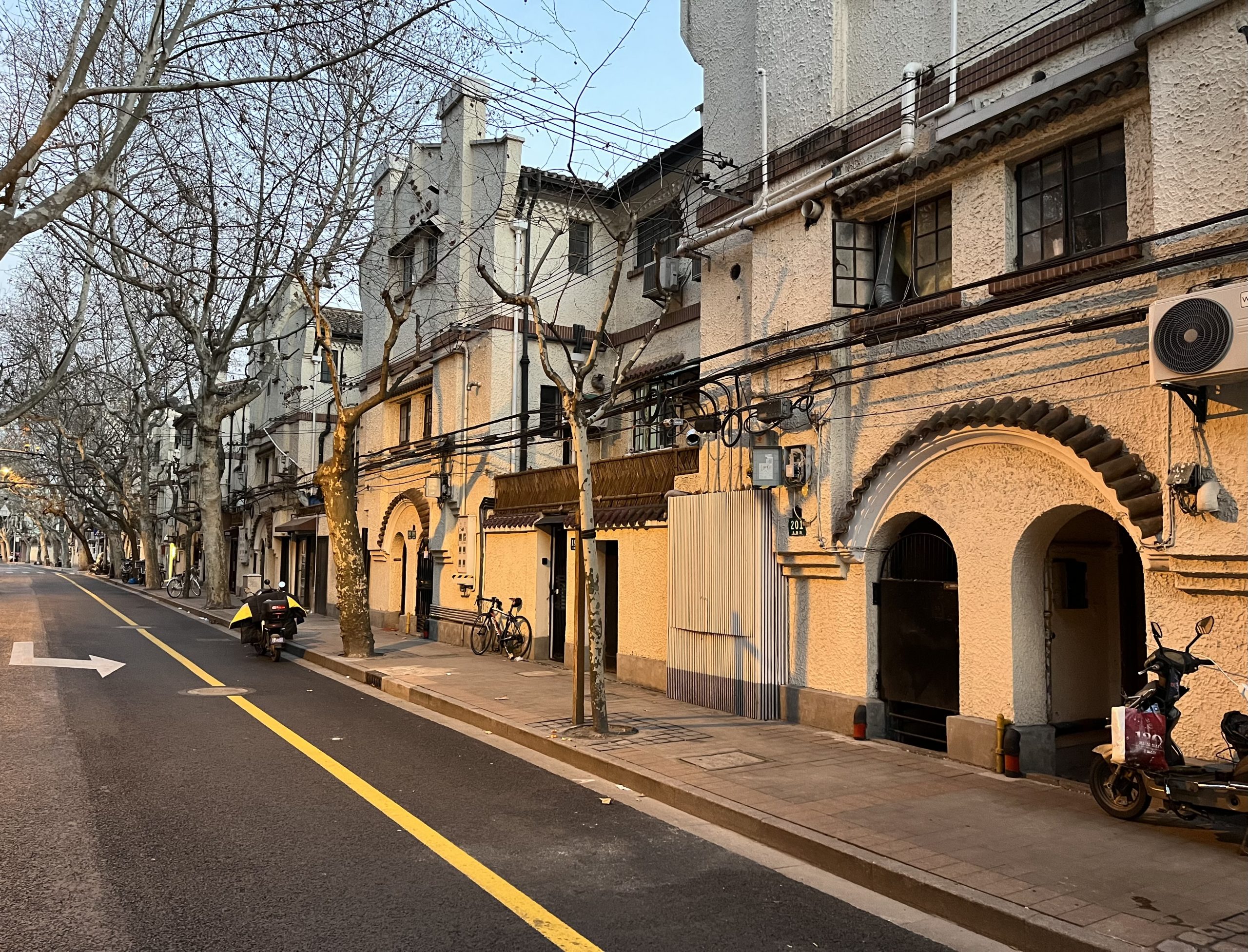
Even more unique are the arcs of this residence in the Yongkang road, shown a few minutes later. Although the structure of the buildings has been altered an little, it is easy to recognise, on former Route Rémy (today Yong Kang Lu). This location is a few meters from the above one on Taiyuan Lu.

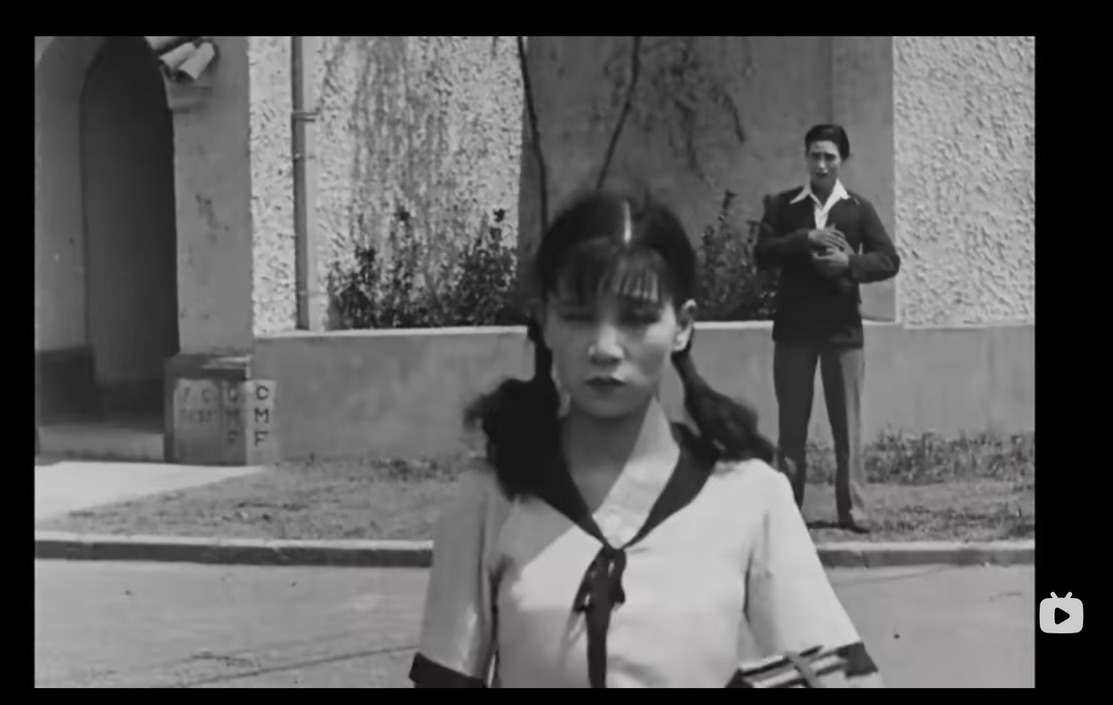
Above corner street corner is of Yongkang lu and Taiyuan lu. It has changed since 1931 and a small building on the right has been turned down but the location is still easy to recognise. The CMF stones have been covered or removed but the iconic door on the left side is still here. In 1931, this part of the city was recently built and urbanised. Like many buildings in this area, this settlement was owned by the “Société Fonci`ere et immobili`ère” also called Foncim, one of the major real estate company in the French Concession.

Later on in the movie, the main character goes to look for jobs in the business district. This is clearly filmed in the area behind the Bund, but exact locations are difficult to identify apart from one. In Old Shanghai, the French Concession was a residential area, and the International Settlement’s district behind the Bund was the location for finance and trading houses.

In front of Park Hotel

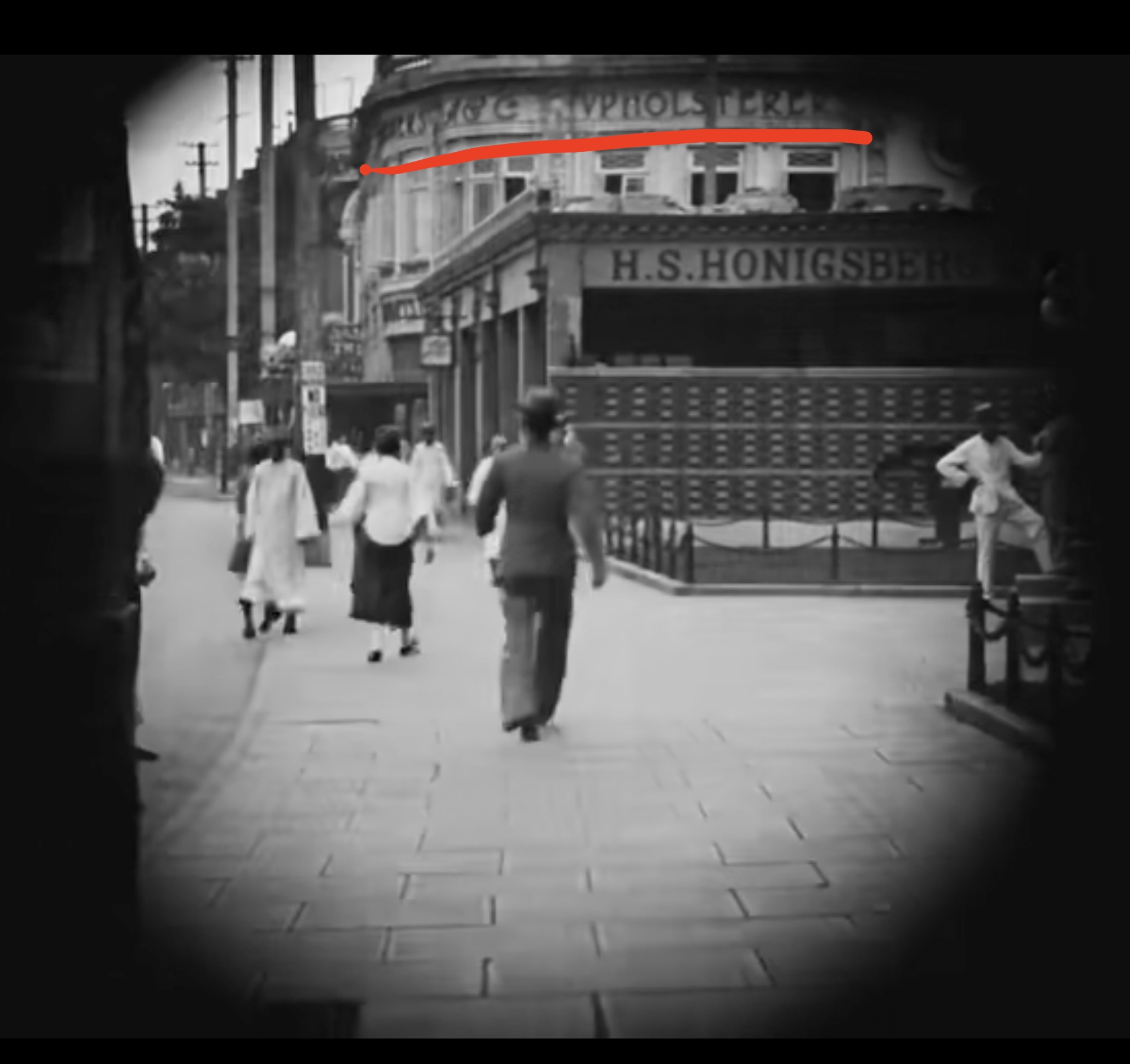
During his job search, the character walks up the street shown above. One can recognise the famous furniture store “Arts and Crafts Upholsters” that was located on the corner of Bubbling Well Road and Park Road (today Nanjing Xi Lu and HuangHe Lu). This particular building does not exist anymore and was replaced by a higher corner building. The space of the HS Honisberger building, is now occupied by Park Hotel (built in 1934). The scene was filmed in front of the Foreign YMCA (today Sport Museum), on the side of the horse race course (today people square). Just like the early scenes were filmed in the most modern residential district, this was filmed in the most modern business district of the city.

Follow this link for the next post from this thread, “Love and duty, the book“, focusing on the book used as a base for the movie. The movie “Love and Duty” can be viewed on the Chinese video platform bilibili.com (use this link to access it). A video about the search for “Love and Duty” locations has been published in post “Looking for Love and Duty“. For more analysis of the movie “Love and Duty” and the modernity of Shanghai life seen in the movie, please go to post “Love and Duty (Part 1)“.