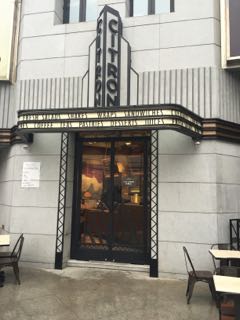
Art Deco and life in Shanghai being two of my favorite topics, I could not miss the Art Deco design of new CITRON Café on Fumin Lu. I had noticed it while it was still under construction, so I could not stop visiting as soon as I could. The façade of CITRON is very much inspired from Art Deco theaters in the USA, this was a real teaser for me.
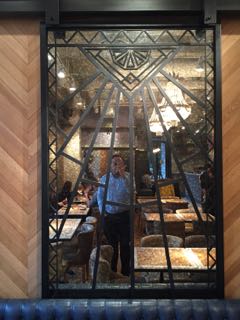
Art Deco mirror
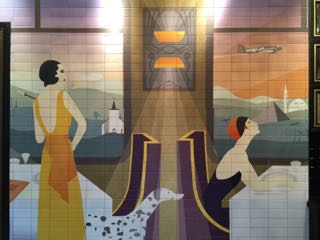
Designers have played with the Art Deco codes, giving the place a special feeling. They have added many details, including a large mirror with wrought iron decor (see picture), brick wall (surely not the real wall but still nice) and a large wall painting that is very much 1920’s inspired. They even use Art Deco inspired cutlery, so there was some serious attention to details. The whole inside is themed after the 1930’s Orient Express train, so I am not exactly sure why the place is called Citron… but in Shanghai not everything can always be explained.
Just like in the Orient Express
This is a nice design effort, though a little bit of a patchwork. Being in an Art Deco city, I was also expecting some reference to Shanghai own Art Deco, particularly in a location in the former French Concession… but there is not such thing in Citron.
Although still in soft opening, the food was simple but very well done. Particular note for the coffee that was really good. With a great central location, next to other famous establishments, I am sure they will attract many people. Add it a nice Art Deco theme and you can expect to find me there on a regular basis. This is the perfect place to prepare for the World Art Deco Congress in Shanghai in November.
Citron can be found at 291 Fumin Lu, at the cross with Changle Lu
Having spent many weekends in the old markets a few years ago, I often looked at pieces that most people thought should go straight for the junkyard. Many of these objects are worn out and have not been cared much for, so people where often amazed of what I would actually buy. I had bought think in a derelict state sometime but I have never actually collected anything from the junk.
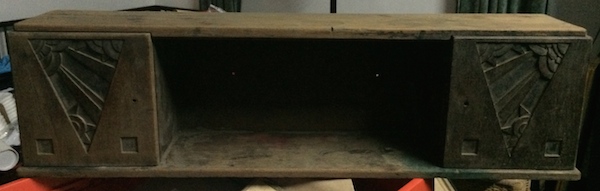
This changed last week to the total surprise of the old ladies living in my lane. Our old neighbour decided to clean her home and pilled a number of items that were surely directed to rubbish bin. I noticed a particular piece and got it as a gift after some discussion. What actually attracted my attention was the front carving shown in the picture left. This piece of wood is actually the door of a small shelve, that used to sit on the top of a bigger piece of furniture. The style of the carving is clearly art deco, typical 1930’s Shanghai. Since the area I live in was a wealthy place at that time, it probably comes from the neighbourhood, maybe even the original furniture of the house. What is sure is that it was stored outside for a long time, and that our neighbour had had it since she lived here, meaning for decades. She was really surprised when I collected it, I probably thought I wanted to burn it or something like that.
Before and after, right and left
After a deep cleaning, some sanding and work on the wood, the original style appeared clearly again. Having barely recovered from the surprise of seeing me collecting this piece from the junk, my neighbour are now seeing a laowai doing some handy work, as I decided to do the job myself. I am sure I have become the topic of conversation for a full week. It took me a while to find the various tools and products needed and it’s still a work in progress. At the end, it should make a nice little Art Deco shelve to store CD and other small items. The kind of things that will fetch a high price in the fancy antique stores of the city.
Having long been in love with Art Deco, I have also been asked and wondered why Art Deco is not so recognized in France, my own country and the birthplace of the style. Numerous Art Deco supporting societies first started in the USA and have now extended all over the World, but barely exist in France. Out of the dozens of association members, only 2 are in France:
– The Association Society of Saint-Quentin. Both Saint-Quentin and closeby Reims were devastated during WWI. They were both rebuilt in the 1920’s and 1930’s, when Art Deco architecture was in fashion and both formed the French Art Deco city association. As far as I know, they are the only member. Few pictures from my trip to Reims in 2012 are available at the following location – The Perpignan Art Deco Association, that was founded in… April 2014.
I thoroughly search in both the French and English internet, but they seem to be the only ones so far.
ICADS (International Coalition of Art Deco Societies – www.icads.info) organises an Art Deco World Congress every 2 years. The next one will be in Shanghai in 2015 (see post World Art Deco congress ) for more details.
This lack of enthusiasm for Art Deco in France, and probably in Europe (the only other member of ICADS in Europe is in London) may seem difficult to understand for lovers of the period. My long time in France this summer allowed me to explore this issue. Art Deco is definitely undervalued in France, here are some of the reasons why:
Batiment Art Deco à Amboise
– There are many other old buildings in France and Europe
Art Deco spread around the world along with industrialisation. For many countries, in particular the USA or Australia, it was the time of cities creation and expansion. Long neglected (like Miami’s Art Deco hotels that only where looked after in the 90’s), Art Deco buildings are often now the oldest buildings in town, making them valuable.
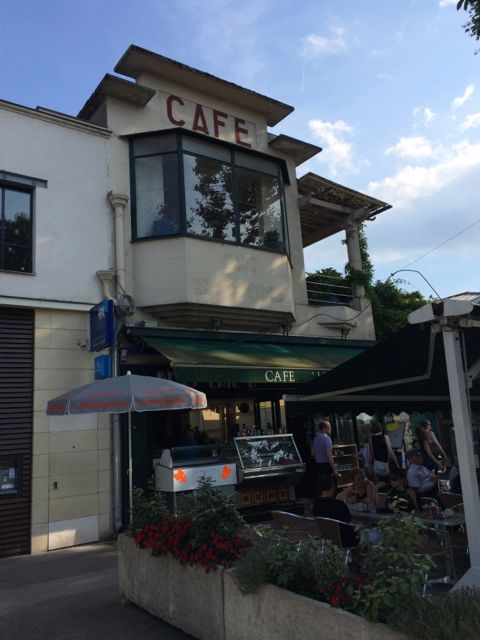
In Europe, they are most often not the oldest buildings by far. The best example is this neglected Art Deco Cafe in Amboise, a renaissance town where surely little time is spent of modern buildings as opposed to 16th century relics next to it.
– Major building were built out of city centers.
Being a late architecture style, Art Deco was often the style of developments in the suburbs of the cities that where expending at the time. In Paris it is mostly found in outside districts or in close suburbs. Another example is Villeurbanne’s gratte-ciel district that was in the middle of nowhere when it was built.
Gratte-Ciel, public housing in Villeurbanne
– Architecture of the utilities. Many hospitals, barracks and other administration buildings Coming at a time of major construction of public buildings, art deco was often used public use and public housing buildings in France, as opposed to earlier styles used for palaces and stylish buildings. This is different from other parts of the World.
– It’s “so common”. The 1920’s and 30’s were a period of intense construction in France, so many example can be found from this period. Not all are really art deco though and not all have great architectural value.
With time passing and interest abroad, Art Deco seems to attract more and more interest in France. The first Paris-based exhibition about this truly first global style will certainly help to create attention to it. Hopefully more fellow French will get interested in it and create Art Deco societies and maybe Art Deco festival equaling the famous one in Napier, new Zealand.
August 2015: There is now a Paris Art Deco Society, that started right at the time of original writing of this article.
Their website is: http://www.paris-artdeco.org/
Representative of the Paris Art Deco Society will join the Shanghai Art Deco Congress. Maybe one day there will be a Art Deco congress in Paris… where it all started
August 2017: World Congress on Art Deco in Paris for 2025 is now firmly in the plan. A large Facebook group has been created that is collecting photos of art deco building and exchanging information (Please follow to find it). A massive exhibition on Bauhaus took place in France connected both styles and the opening of the restored Villa Cavrois in Lille area have boosted the image of Art Deco in France. Art Deco in France and in Europe is clearly on the move.
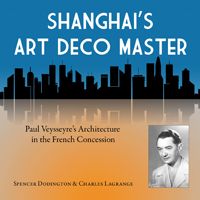
Like a number of those before on Shanghailander.net this book review is a biased one. Just like “Peace at the Cathay“or “Promenades dans l’ancienne concession Française“, the book was written by friends of mine, in that case Spencer Dodington & Charles Lagrange. Furthermore, I was actually involved in the project itself, though only for a tiny bit. In any case, this books really fills a hole in Old Shanghai studies.
Having lived in Shanghai for about 10 years, and discovering its history and architecture, I long dreamed that somebody put as much efforts into studying work of French architecture firm “Leonard, Vesseyre & Kruze”, as that was the case for British firm Palmer & Turner and Hungarian architect Laszlo Hudec. It took a team of a Belgian and an American authors to actually deliver in-depth study of the French firm. LVK was a major influence of the architectural style of Old Shanghai and this books truly highlight this heritage, focusing on the life of principal architect Paul Vesseyre.
Thanks to enormous archive research, in-depth knowledge of Shanghai and access to the archives of the Vesseyre family, the authors give a precise account of the early life of the architect, as well as his voyage to Shanghai. Just like contemporay Laszlo Hudec, Paull Vesseyre architecture studies were interrupted by WW1. He then returned to France, taking part of rebuilding one of main French Art Deco cities, Reims before sent by French construction firm Brossard & Mopin to Tianjin, and then Shanghai. He met Alexandre Leonard there, and both created firm Leonard & Vesseyre architects in 1922. Their debut work was the new building of the Cercle Sportif Français on Rue Mercier, today’s Okura Garden Hotel on Maoming Lu. This major work became an anchor of the French Concession and insured the success of the company and both men personal wealth.
Leonard & Vesseyre created most of the modern buildings in the French concession. They worked for the Catholic Church, the municipality and most prolifically for the French developer FONCIM. Major pieces include Béarn and Gascogne apartments on Avenue Joffre (today Huai Hai Lu), the Dauphine and the Boissezon apartments. LV&K was also the designer of the series of neo-normandy style houses aroung Jian Guo Lu and Gao An Lu (see portrait of an old neighbour and further posts on this topic), as well as many buildings in that neighborhood. All of them and many more are analysed in the book, making it an essential piece of the knowledge and understanding of Old Shanghai. The book is currently only available in English, published by Earnshaw book. A French version in under preparation.
Last blog post was written about an exhibition of Paris 1930’s art in Shanghai, this blog post is about another exhibition about Art Deco that took place recently in Paris. It is actually long overdue, as the exhibition closed its doors in early March. My long stay in France, gave me the opportunity to see it in Palais de Chaillot (itself an Art Deco master piece) in Paris.
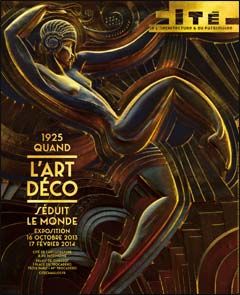
Exhibition Poster
This was the last major exhibition in Paris about Art Deco since 1975, and the 50 years celebration of the “Exposition Internationale des Art Décoratifs” of 1925, from which the Art Deco expression comes. It was designed to commemorate the birth of Art Deco, as well as to show how French Art Deco expended to the World. The new style from the 1920’s, with it’s geometrical and very lean design was a revolution, breaking for the overcrowd of ornaments of the Art Nouveau style. Long before being called Art Deco, it had become the symbol of modernity, celebrating liberation from the madness of WWI. This period is called in French “Les années folles (the crazy years)”, showing the energy and creativity of the period. Being still at that time the World Center for fashion and design, Paris was the center for the creation of this new style before it took off and spread all over the world. Strangely enough, Art Deco style was not considered much valuable for a long time in France, as the country has many much older pieces available. With the years passing, it seems to be in fashion again.
1925 Exhibition Poster
The exhibition was an essential display to understand how this new style invaded all forms of art from architecture and interior design to textile, fragrance, automobile, ships design. In the boiling cultural mix of 1920’s Paris, many people got inspired from it. Ideas and fashion spread fast in the artistic community, with such famous figures as painter Tamara de Lempicka, dancer Josephine Baker, fashion designer Coco Chanel as well as Lalique (whose glass decorations were used for the Cathay Hotel, Peace Hotel today). The new style also greatly influenced the design of large cruse ships, symbol of modernity and travel way before today’s airliners (see post 2 months in rationnaire for details).
I brought back the exhibition catalog (available in French only… how French can that be), but it would be way to large to share here. Searching the internet, I found a nice video about the exhibit that will give the feeling for it. https://www.youtube.com/watch?v=DsV5cg2Y19M
The exhibition did not stop at showing Art Deco in France. Although it really does not leave much space for Art Deco in America or in the British Empire (like Art Deco wonders like Napier, New Zealand or Mumbai) the exhibition showed the development of Art Deco in the French colonies. Besides great Art Deco in North Africa and Indochina, I was nicely surprised to find a pavillion dedicated to Shanghai. It mostly focused the work of French architect firm Leonard, Vesseyre and Kruz (more about them soon) forgetting others like Hudec but it was really nice to find a small piece of our city in the exhibition.
Art Deco events took place in 2015, but many more took place in 2025 for the 100th anniversary of the exhibition. See post “1925-2025. One hundred year of Art Deco” for more info.
Visiting Boulogne’s 1930’s museum 2 years ago was fascinating. Coming from Shanghai Art Deco, the origins of the art movement became so clear by comparing both cities art from the same period. The most amazing discovery was surely to find out that Sun Yat Sen’s mausoleum satute in Nanjing was created by French sculptor Paul Landowski, who also crafted world famous statue of Christ in Rio. (Click here to read the full story, with post “From Boulogne to Nanjing”)
Little did I imagine that the same exhibition would actually come to Shanghai only a year and half later. Thanks to long term Shanghailander Philippe Cinquini, part of the collection was brought to Shanghai including studies for the statue of the father of modern China. The exhibition is displayed in the Shanghai Art Museum (former China pavillon at Shanghai Expo 2010) and has been extended til end of May . For details, follow the link to Shanghai Art Museum exhibition page . (reservation in advance compulsory).
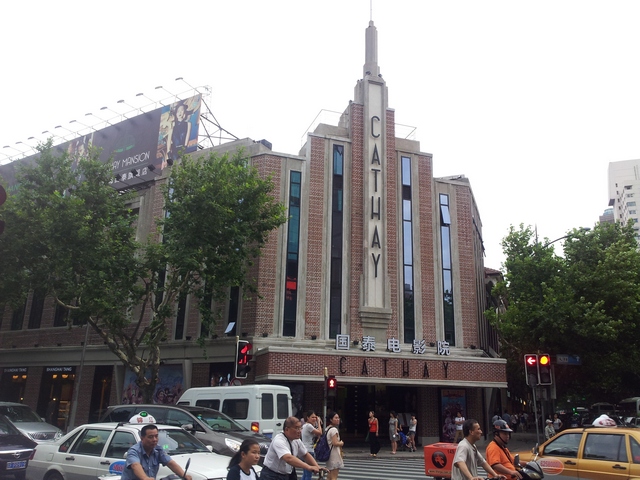
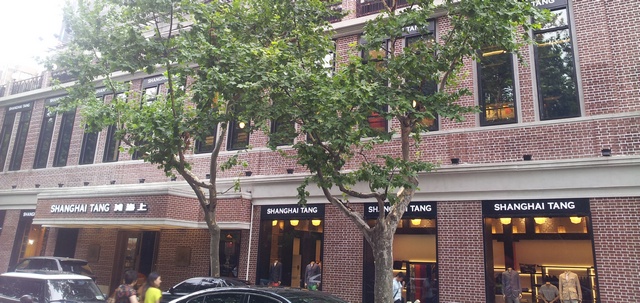
1932 Cathay Theater (see an old picture on post “Ligths on Huaihai Lu”), a movie theater on Avenue Joffre (today Huai Hai Zhong Lu) was one of the anchors of the French Concession. It was designed by Hungarian architect CH Gonda, a less famous countryman of Laszlo Hudec, who also designed the Bank of Communication building (Bund 14) and the Capitol theater (now part of the Rock Bund project). The Art Deco theater had one large room originally seating 1080 people, with 30 rows. Friend who were in Shanghai before me fondly speak about the original Art Deco interior, including “couple seats” that could, interestingly enough, seat two people next to each other without separation. I have never seen it, as the cinema was ruinovated in 2003,with the large room split into small ones and original inside lost forever. Despite the survival of the building’s outside, many Old Shanghai enthusiasts very pretty scared of seeing this piece of architecture and history surrounded again by scaffolding in the beginning of the year. Turns out that the result, the new Shanghai Tang flagship store is much better than expected.
Store main entrance
Richemont’s Shanghai Tang is one of my favorite clothing brand. Originally started by HK designer David Tang in 1994, it was purchased by the international group in 1998. The brand is strongly influenced by Chinese fashion from the 1920’s and 1930’s which is surely why I like it. It is noted for its use of bright colors and references to Old Shanghai in it’s shop design. Shanghai Tang store music was for a long time “Shanghai Lounge Diva“, one of my favorite CD’s. Considering that Shanghai Tang already had a shop a few meters up the same street and that the Richemont group also occupies the 1920’s twin villas on 796 Huai Hai lu, only a few blocks away, the move is not surprising. Previous attempts of the group at Old Shanghai buildings renovation was definitely a good sign.
Art Deco Staircase
Since most of the cinema interior was destroyed in previous renovation, the inside it totally modern. Architects have had to cut the store space into several parts to fit the specific of the building, giving more charm to the whole shopping experience. It is somewhat comparable to former HK Shanghai Tang store on Peddler Street. The nice surprise is the stair cases coming up from the cinema entrance. It is difficult to judge whether they are the original cinema staircases that were previously hidden or a modern re-creation (the original theater had no balcony, but they could have been stairs leading to above offices or projection room that were previously hidden). In any case, the Art Deco design really fits the original style and and fashion of the time of the building construction. Somebody really made an effort for this part and it shows, creating an atmosphere and a real connection between the store and the building. The main entrance hall of the theater has also been renovated in somewhat art deco style separately from the store. I guess designers where not the same, as the new inside mock-up Art Deco is much less stylish as the upstairs store.
The combination of Cathay Cinema and Shanghai store shows that combining old Shanghai building and modern retail requirements are possible in a tasteful way. Hopefully it will inspire some more projects in the area.
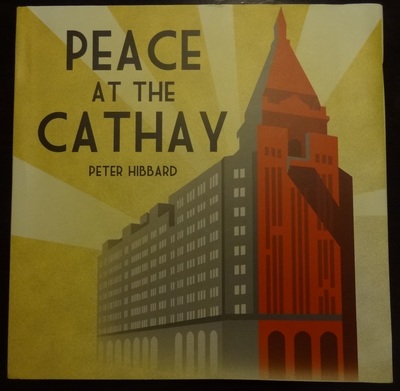
Peter Hibbard has long been one of the leading scholars on Old Shanghai. He wrote the best (if not only) guide to the Bund: “The Bund Shanghai: China faces the West”, as well the privately published book celebrating the opening of Shanghai Peninsula, covering the history of the Hong Kong & Shanghai Hotel corporation. Peter Hibbard is also known to have revived the Shanghai Branch of the Royal Asiatic Society , an association that was at the center of cultural and intellectual life of Old Shanghai and has come back to life in recent years. With his years in Shanghai and is long term interest for city’s history, Peter always mentioned several book projects, with the most exciting surely an history of the Cathay Hotel (today the Fairmont Peace Hotel). Having started researching in the mid 80’s, the book has finally become reality.
Author Peter Hibbard
With in-depth knowledge, historical photos, documents never seen before and years of passion in the making, Peace at the Cathay is the definitive guide to what is now known as The Peace Hotel. The book covers the history of the spot of its predecessor, the Central Hotel, as well as the competitor on the other side of the street, the Palace Hotel (now Swatch Peace Hotel). This is where is learned that the Palace Hotel was renovated in 1925 by Spanish architect, Abelardo Lafuente.
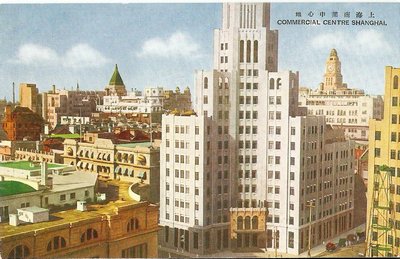
Obviously, the main part is focused on what became known as the Sasoon House (still known under this name in Shanghainese), and its most well known host, the Cathay Hotel that opened in 1929. With its revolutionary design, highest end service and luxury shops offering the very best available at the time, the Cathay quickly became the center of the high class social life in Shanghai and a magnet for international tourists. Owner Victor Sassoon, with his office in the building and private apartments on the top of it, probably became the most famous Shanghailander ever and many celebrities stayed at the Cathay, as Shanghai was becoming part of the international scene.
Metropole Hotel
Sasoon hotels also opened the Metropole Hotel n 1932 (and its sister building the Hamilton House). They completed the existing Cathay apartments in the French Concession, and were joined by another Art Deco icon of Shanghai, the Grosvenor house in 1935. All of them are also covered in the book, as well as the later use of the building after 1949.
Despite the in-depth research and the quantity of information it brings, the book makes a good read as well as a pretty coffee table book. Unfortunately, only a few hundreds of copies were made in the first print, so people interested in it should buy it fast (as far as I know, it can be bought at shop in the hotel itself as well as by contacting the author). Hopefully, as second print will be made on a larger scale, making the original copies even more valuable.
Peace at the Cathay is definitely the book about the Cathay Hotel, from the best source. We are lucky it is finally available.
Although I knew very little about Art Deco before coming to Shanghai, I have developed a strong taste for it while living in the city. The style varies from one country to another, but Art Deco is very recognizable (together with its follower streamline design). Old Shanghai was a modern city in touch with the leading world fashion of the time, so Shanghai Art Deco buildings echo others built in the same period.
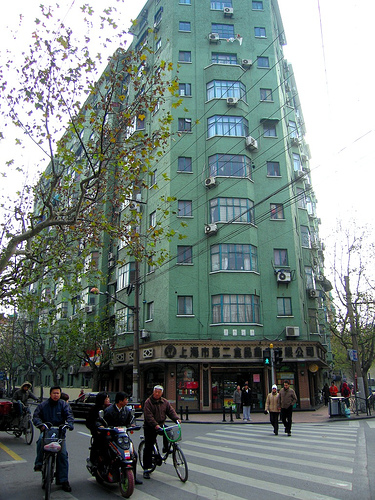
Washington apartments, Shanghai
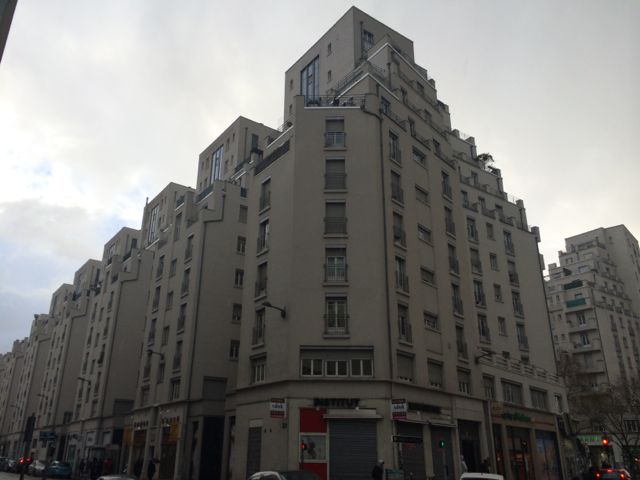
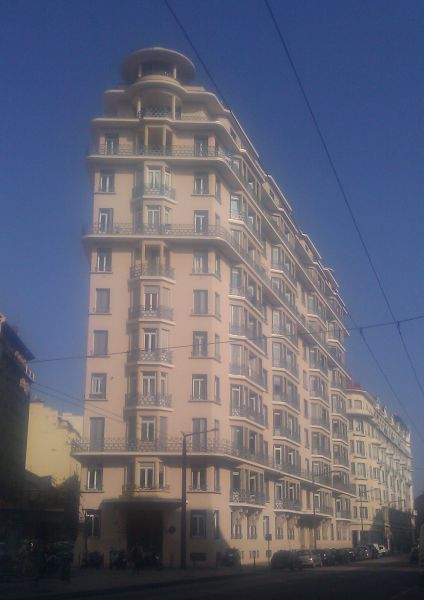
During my last trip to Europe, I had spent some time in Lyon, ending by chance in one of the districts with Art Deco buildings, including the one on the picture left. The triangular shape reminds me a lot of the Sassoon House (home of the Cathay Hotel, today Fermont Peace Hotel), but even more of the Washington Apartments (see picture below).
With little decoration, both buildings are edging towards streamline design. They must be from about the same period of late 1920’s early 1930’s. Washington apartment was completed in 1928, I guess the Lyon one around the same time. After more research, I found out that this Lyon building was built in 1930 and was called Palais de Flore. One of the Art Deco highlights of the city (update 2022).
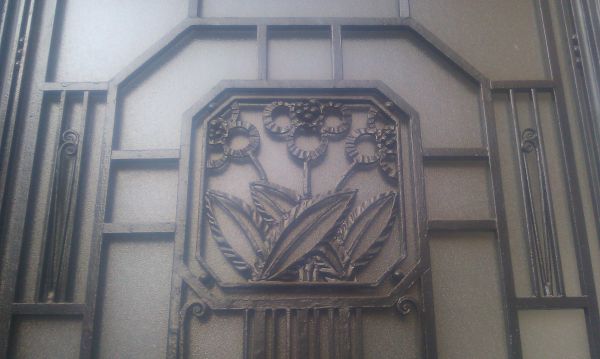
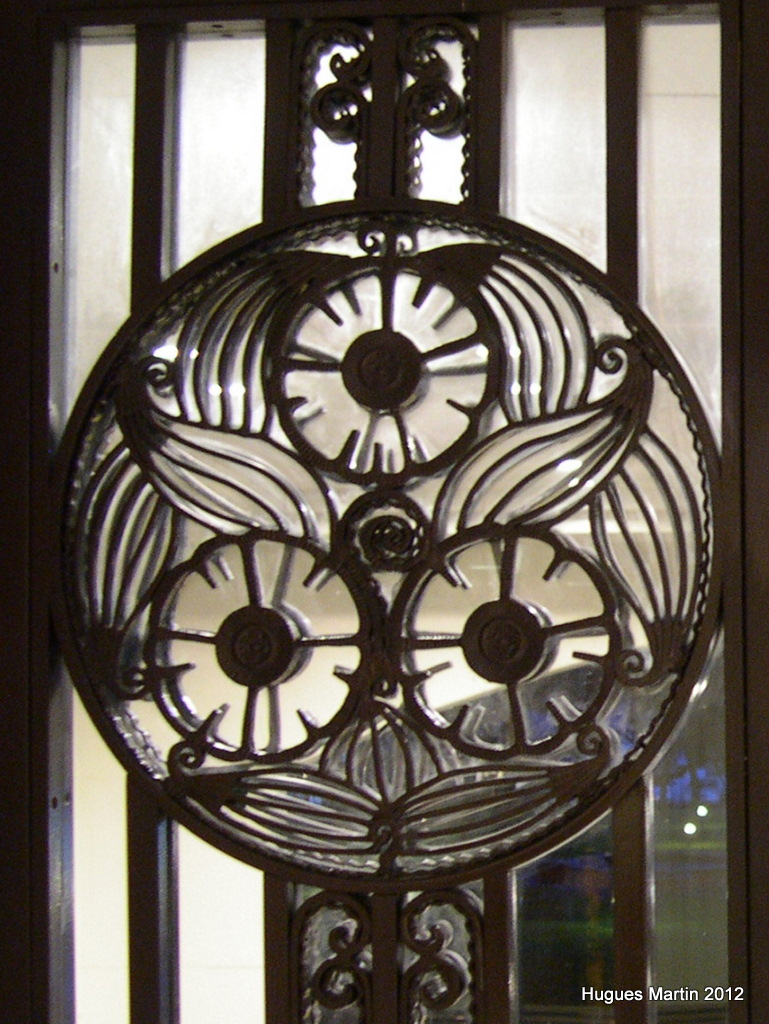
I then noticed another building with nice wrought iron decoration, very similar to the one found on the Cathay Apartment (today Old Jing Jiang hotel). Stylized flowers is a classical art deco motives for this kind of ornament, and there is definitely a parallel between both although their location are so far apart.
Wrought iron art deco in LyonArt Deco Wrought Iron in Shanghai
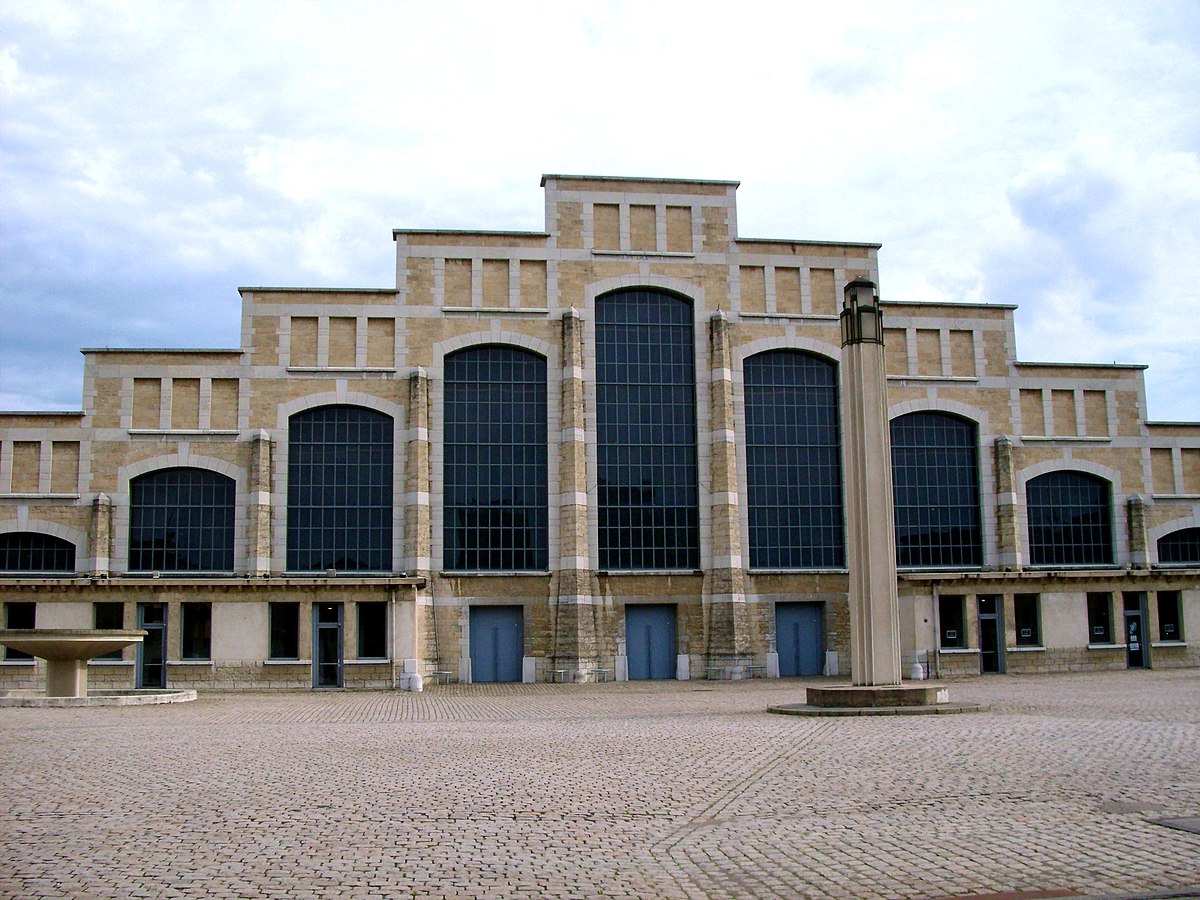
Lyon was fast developing in the early 20th century and was a pioneer or “avant-garde” city. One of the major Art Deco feature is known as the “Halle Tony Garnier”, the former slaughterhouse of Lyon that is now a major concert hall. This story also echoes Shanghai story of the former slaughterhouse being redeveloped into a creative center including a major event venue, i.e. 1933 in Hong Kou district. Tony Garnier also made other projects in the city, particularly the “Etats-Unis” (i.e. USA in French) district.
Halle Tony Garnier in Lyon (Photo Wikipedia)
Another major feature of Art Deco style is Lyon close suburb of Villeurbanne. Built in the same period by architecte Morice Leroux, the city is famous for its double tower “gratte-ciel” i.e. skyscraper in French from 1934. It was one of the first of its kind in France, and also reminds me of the of Art Deco / Stream line design towers from Leonard & Vesseyre firm in Shanghai like The Dauphine on Jian Guo lu (see post “The return of the Dauphine“).
Gratte-Ciel, public housing in Villeurbanne
In a city with more than 2000 years of history, Art Deco buildings are not standing out as much as they would do in Shanghai or the USA and I needed research and luck to find them. I found an Art Deco building by random in medieval area of Saint-Jean (see picture on post Shanghai Flashback), but there are just so many more. Hopefully some effort will be made to attract the interest of Art Deco fans. Just like Shanghai in 2015, Lyon could be a great venue for the World Congress on Art Deco. (2022 update), Paris will host the World Congress on Art Deco in 2025, so Lyon will have to wait a bit. I took another trip to Lyon in 2022 with more pictures of Lyon 3rd district Art Deco.
The World congress on Art Deco is the main international gathering celebrating Art Deco in all its forms. It was initiated in Miami, where the Art Deco district on Miami Beach is the largest collection of Art Deco buildings in the world. The first congress was initiatd by the Miami Design Preservation League in 1991. Each congress is organised by a local Art Deco enthusiasts association. Held every two years, the congress took place in the following cities:
The last Congress took place in Rio de Janeiro, Brazil in 2011. During this event a Shanghai delegation lead by Patrick Cranley and Tess Johnston founders of Historic Shanghai, earn the distinction or organising the 2015 World Art Deco Congress in Shanghai. After the coming Congress in Habana in 2013, the Shanghai World Congress on Art Deco will be a major event, helping preserving and valuing Shanghai historical buildings.
The organisation of the Congress will surely take a lot of time, energy and manpower. The event will require guided tours of major Art Deco buildings for large crowd of people, as well as working sessions along with speakers and venues. It will attract a large crowd of tourists in need of accommodation, help, translation and many other services. At the same time, it will put the focus on Shanghai history along with the Art Deco heritage. This is great opportunity for Old Shanghai preservation, and somehow I already know I will play a part in it.