Top 5 posts 2020!

1920s have a reputation to have been memorable years. The roaring twenties were called “Les années folles” in French, meaning the crazy years. The start of the 2020s did not disappoint in craziness, although definitely not is such a fun way. To close this year where I finally started to write regularly again, here is a the 5 most read articles in the Shanghailander blog in 2020.

1 – The rise and fall of the Majestic Hotel
The story of the star of Shanghai nigthlife in the 1920s, that disappeared in the 30s seems is a regular on the top search posts of the blog. The reason why I wrote this post in 2017 was my own interest and the lack of information available on the topic. Apparently I was not the only one searching

2 – China General Omnibus Company
It seems that I am also not the only one to be interested in Old Shanghai transportation, in particular the bus network of the International Settlement. This post from 2017 also includes a pretty unique map of the bus network itself from 1937.

3 – Old Shanghai tramways
Another post on public transportation in Old Shanghai. This topic seems to attract attention. This post from 2017 includes a map of the International Settlement tram network and a tram ticket from the 1920s.

4 – Sainte-Thérèse Church
First post of 2020 in the top 5. It is focused on the mysterious catholic church in the middle of the few remaining lilongs of JingAn district.

5 – Aquarius Water then and now
Published in the middle of a hot summer, this post tells the story of the Shanghai brand of mineral water Aquarius, and its famous Orange Squash. Through modern advertising, the brand became one the Shanghai favorite, that is being relaunched in a modern version in 2020.

Best wished from the Shanghailander blog for 2021! If you want me to share or publish information about Old Shanghai, people places, documents and other related topic, please contact me at hmartin@shanghailander.net .
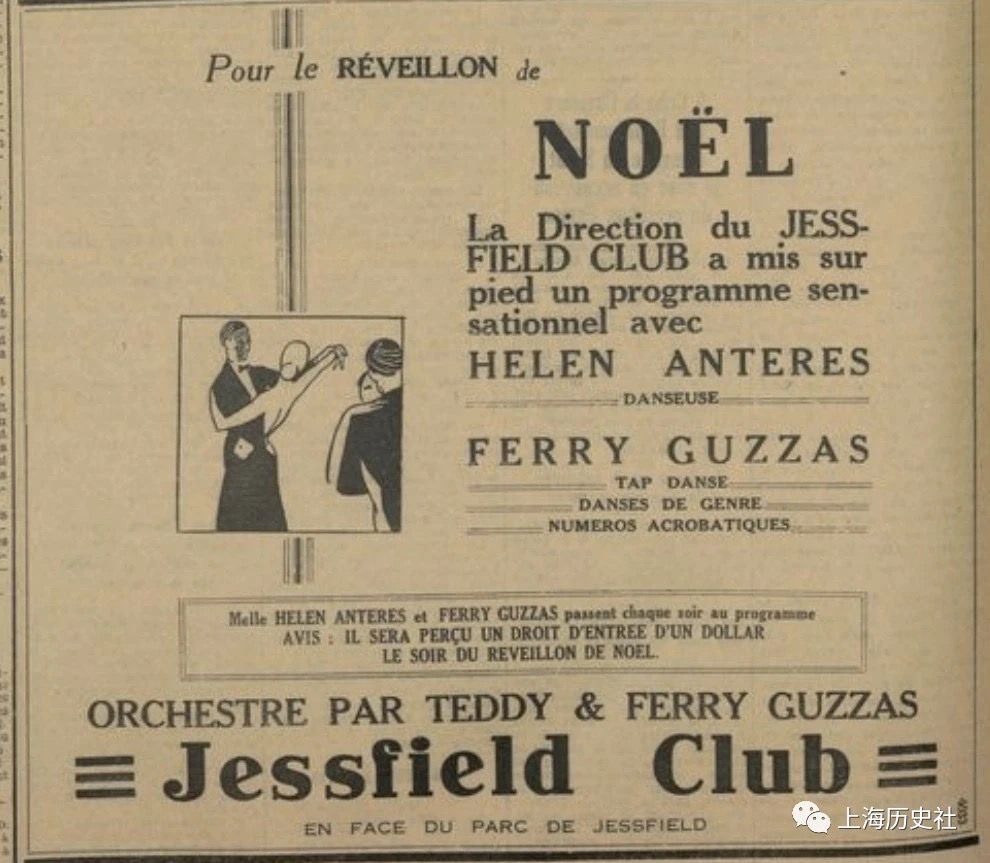
Merry Christmas in 1936 Shanghai

Christmas in the Old Shanghai was a big thing. Christmas mass celebrated in all the churches, but Christmas was also a big party night for many. If you were looking for ideas were to spend Christmas on 1936, here are a few ideas.

Christmas at the Jessfield Club

I am not sure why this ad was in French, although Jessfield was located on Yu Yuan lu, that was outside the International Settlement. Jessfield Park (current Zhong Shan Park) must have been a far away place from the center at that time. An ideal location for a big noisy party. There is really little for be found about Jessfield Club, apart from a short article on China Rhyming.

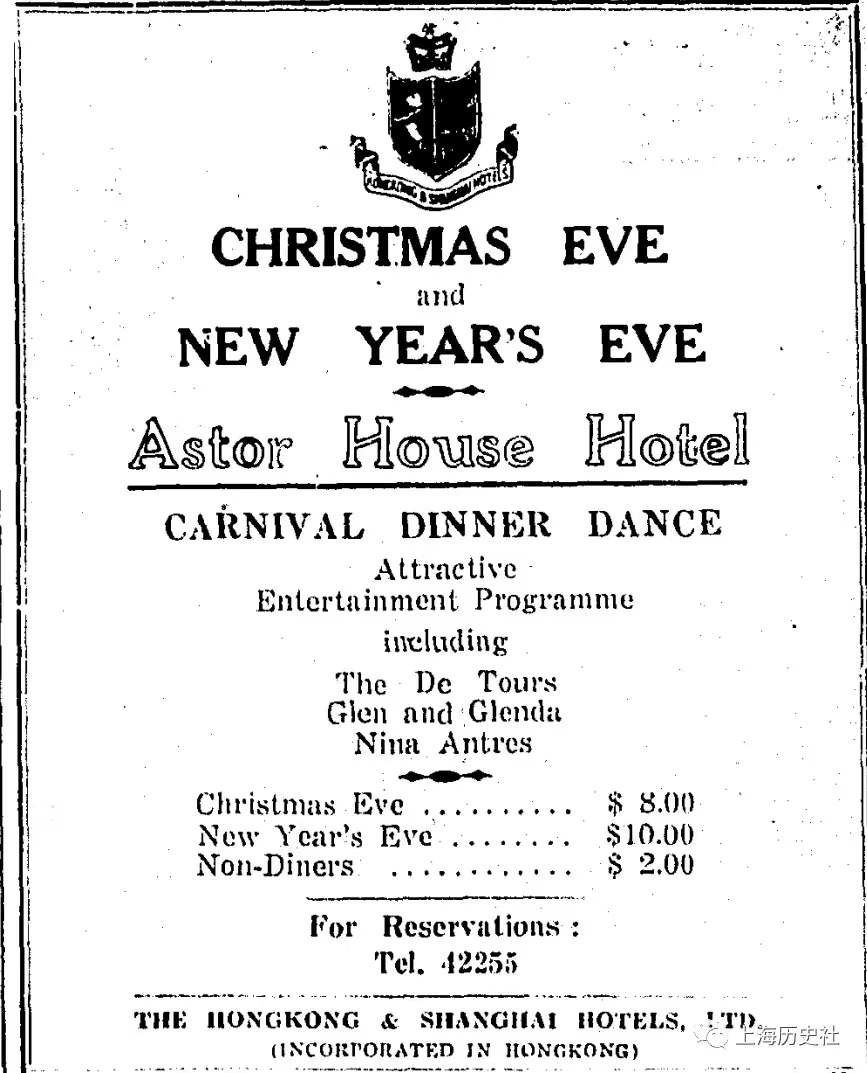
Chrismas and New Year parties at the Astor House Hotel

The Astor House Carnival Dinner Dance was surely of much higher level. Located at the Astor House hotel, on today North Bund it was surely one of the great party of the city for that night.

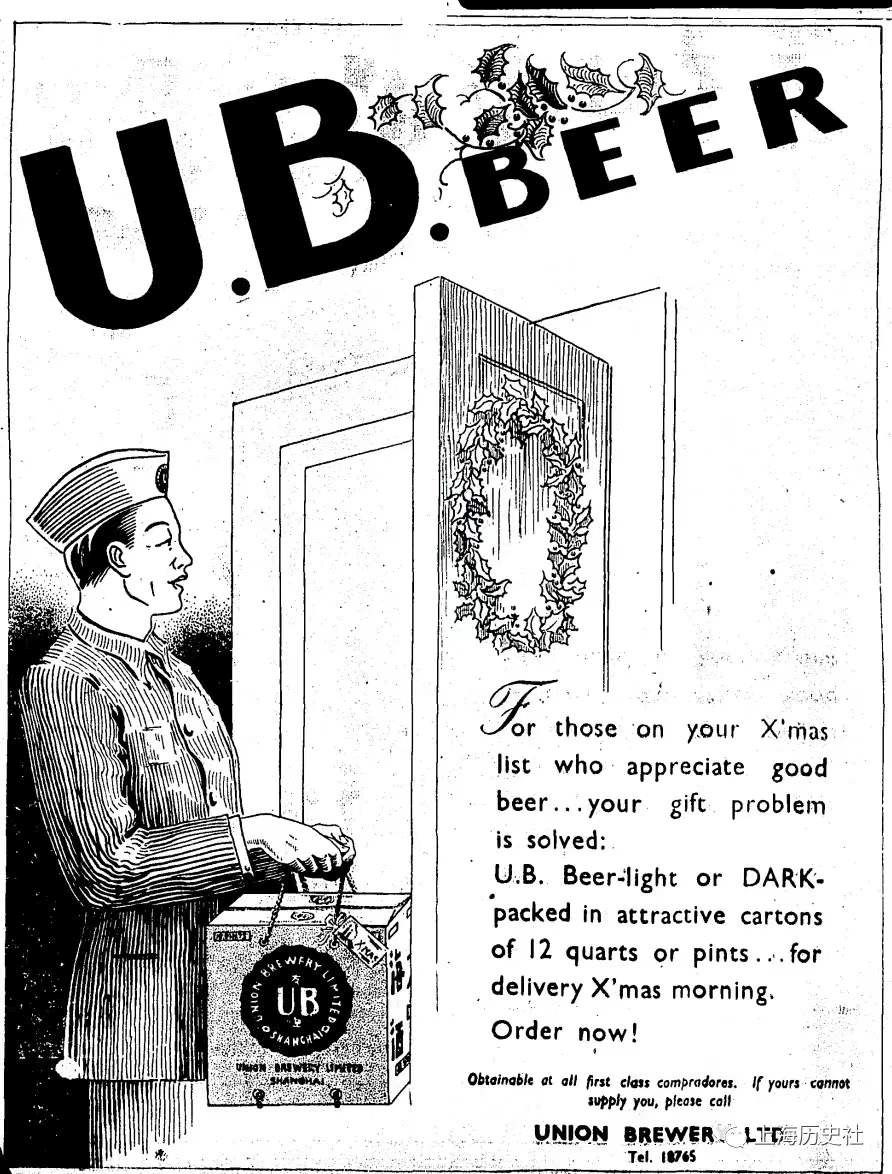
Union Brewery beer Christmas gift

Finally, if one decided to stay home for Christmas, the best gift could a 12 pints of beer, delivered by Union Brewery.

Shanghailander articles are published on an irregular basis. To be notified when a new article is posted, subscribe to the newsletter using this link, or follow the Shanghailander Facebook page.

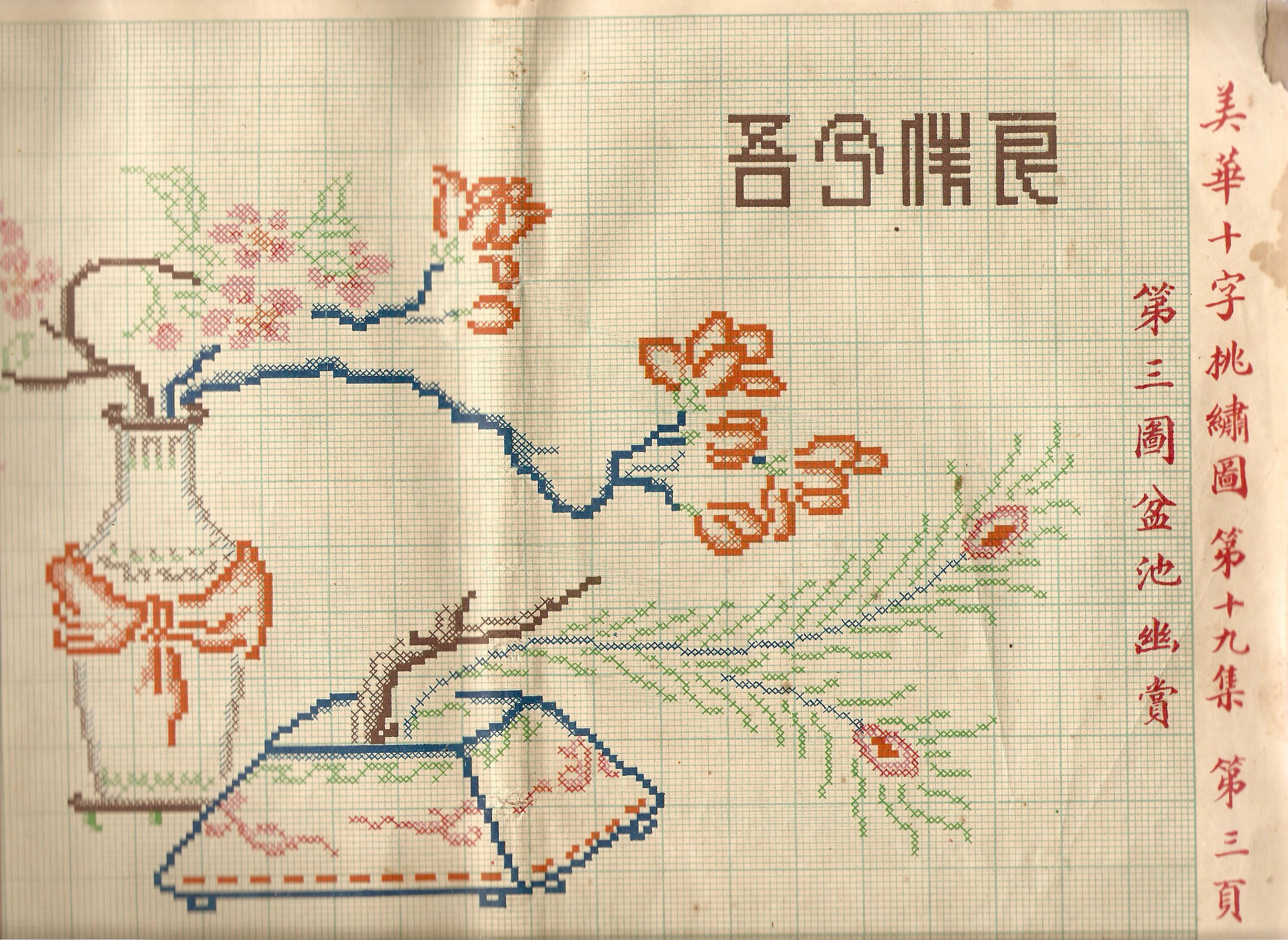
Embroidery pattern book

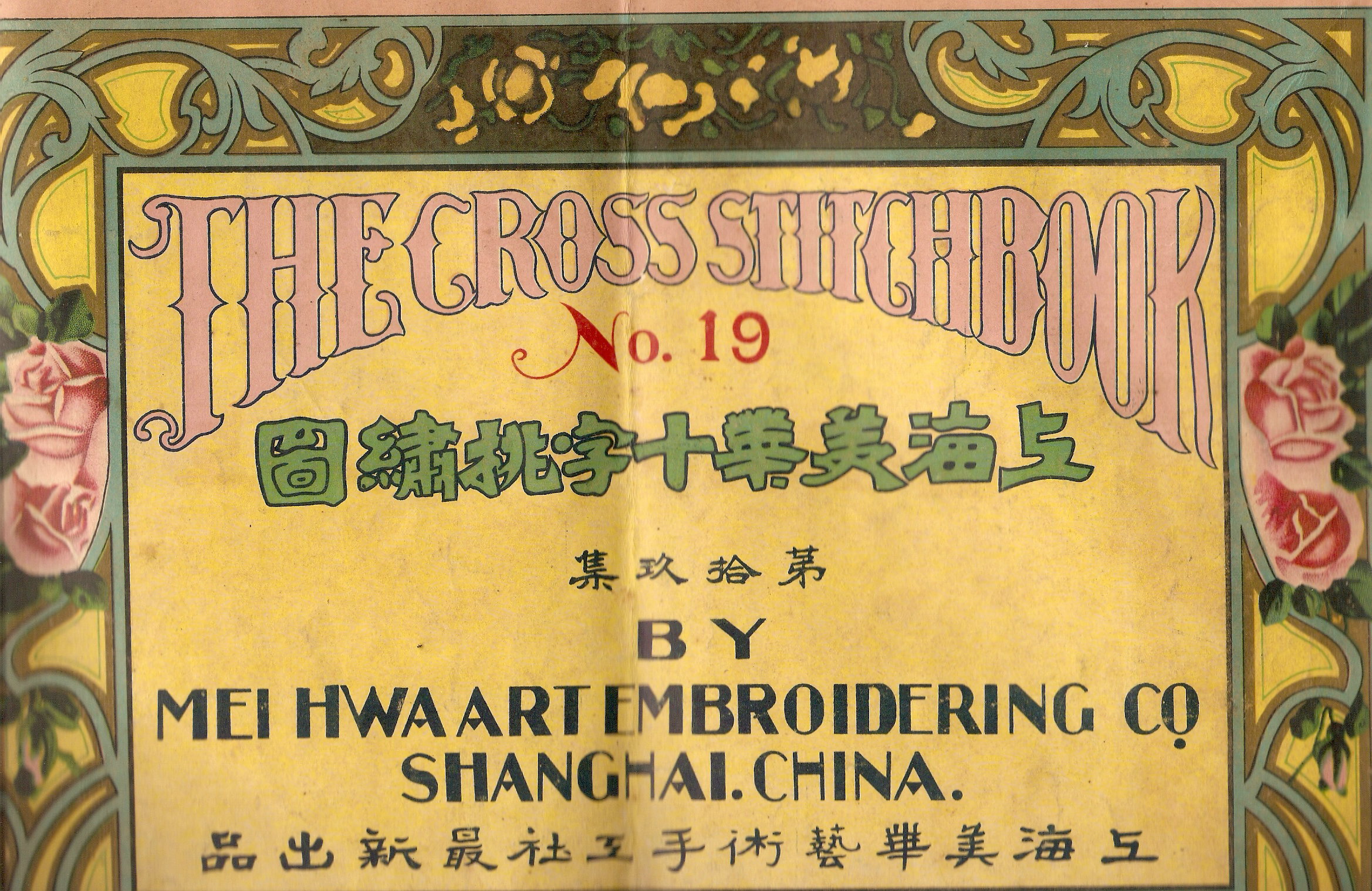
Traditional Embroidery has been used as decoration for fabrics in China for centuries. European style embroidery was imported in China by foreigners and must have gained popularity in Old Shanghai. The below book is an embroidery pattern book combining western cross-stitch technique with Chinese style design, found in an antique market a few year ago. This must have been a popular publication as this particular one is N 19.

Old Shanghai embroidery pattern book

This book was clearly not an import, but a Shanghai creation. Spinning was one of the major industry in Shanghai, creating embroidery books helped sell their products. (All names are written from right to left, as it as written at the time).

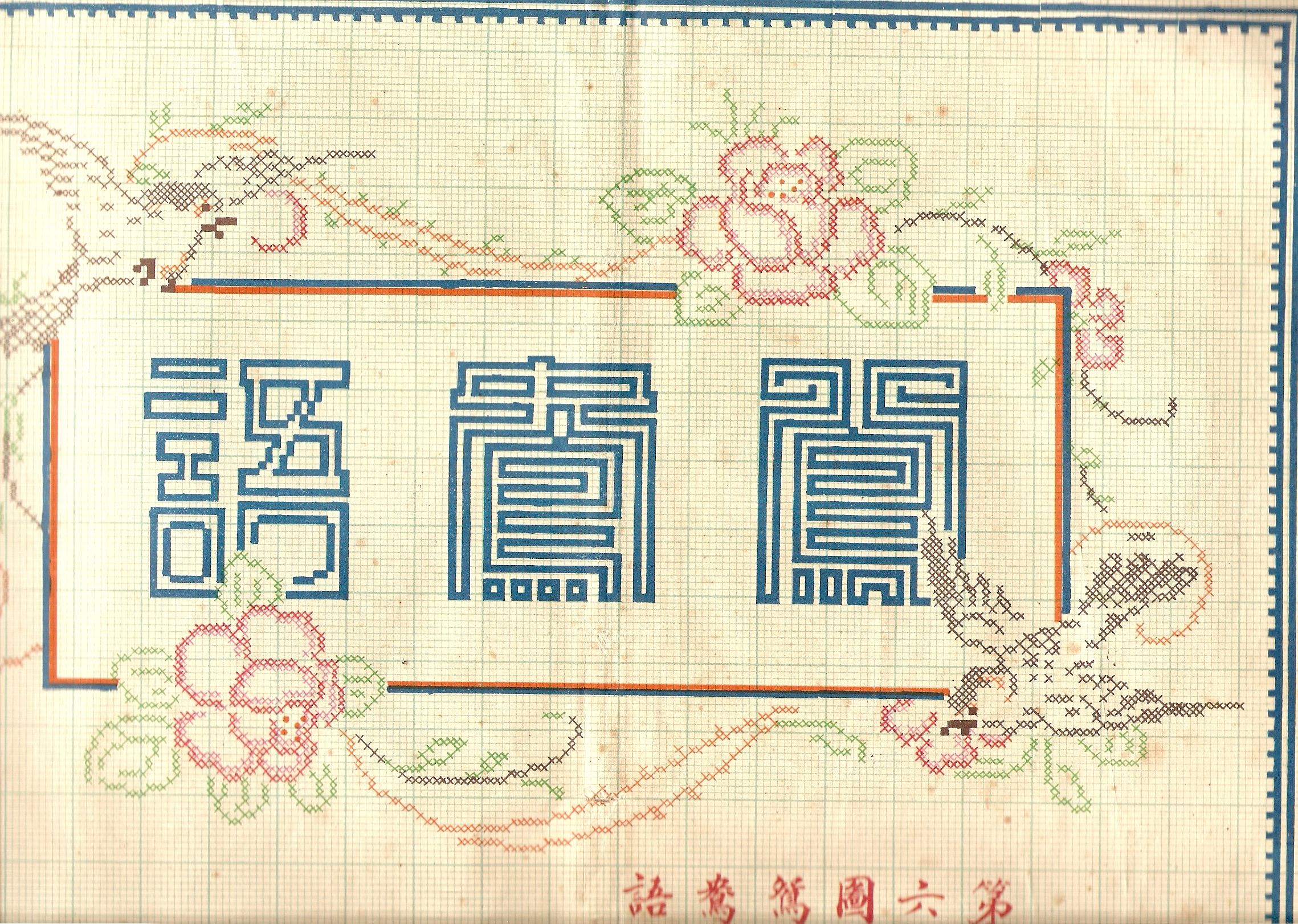
鸳鸯语

The Mandarin Duck speach character combination is a traditional Chinese way to wish harmony in the couple.

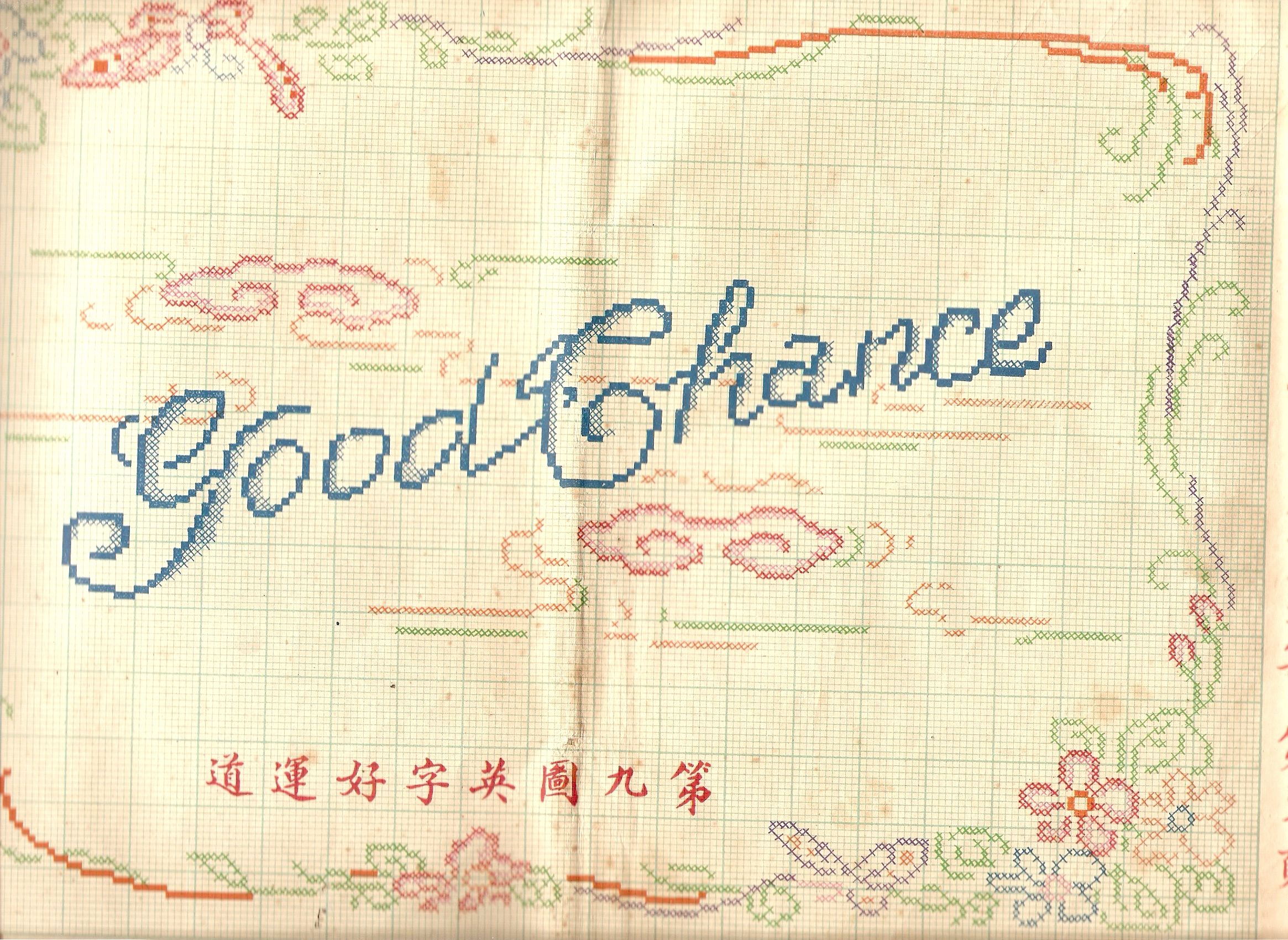
Good Chance embroidery pattern

Although some English text was used in the booklet, it was not designed for foreigners. It even includes an explanation in Chinese of the meaning of “Good Chance”, which is actually not proper English as the expression actually means “high probability” as opposed to “good luck” as implied in the pattern.

Bonzai cross-stitch pattern

Finaly the last illustration is of Bonzai, another traditionnal motifs in Chinese culture.

I did find embroidery thread in an antique market, but they were imported ones from France. Locally made sewing thread was locally manufactured, as shown in post “Made in Shanghai“.

Old Shanghai was a fascinating place were traditionnal Chinese culture (in particular South West China) tradition was mixing with Western Culture. The specific style of the period was known as Haipai ( 海派) style, the Shanghai style. Another exemple of Haipai style object can be found in post “The Haipai Ruler“, or in cigarette advertising like the one for “Russian-China Tobacco Ltd“.

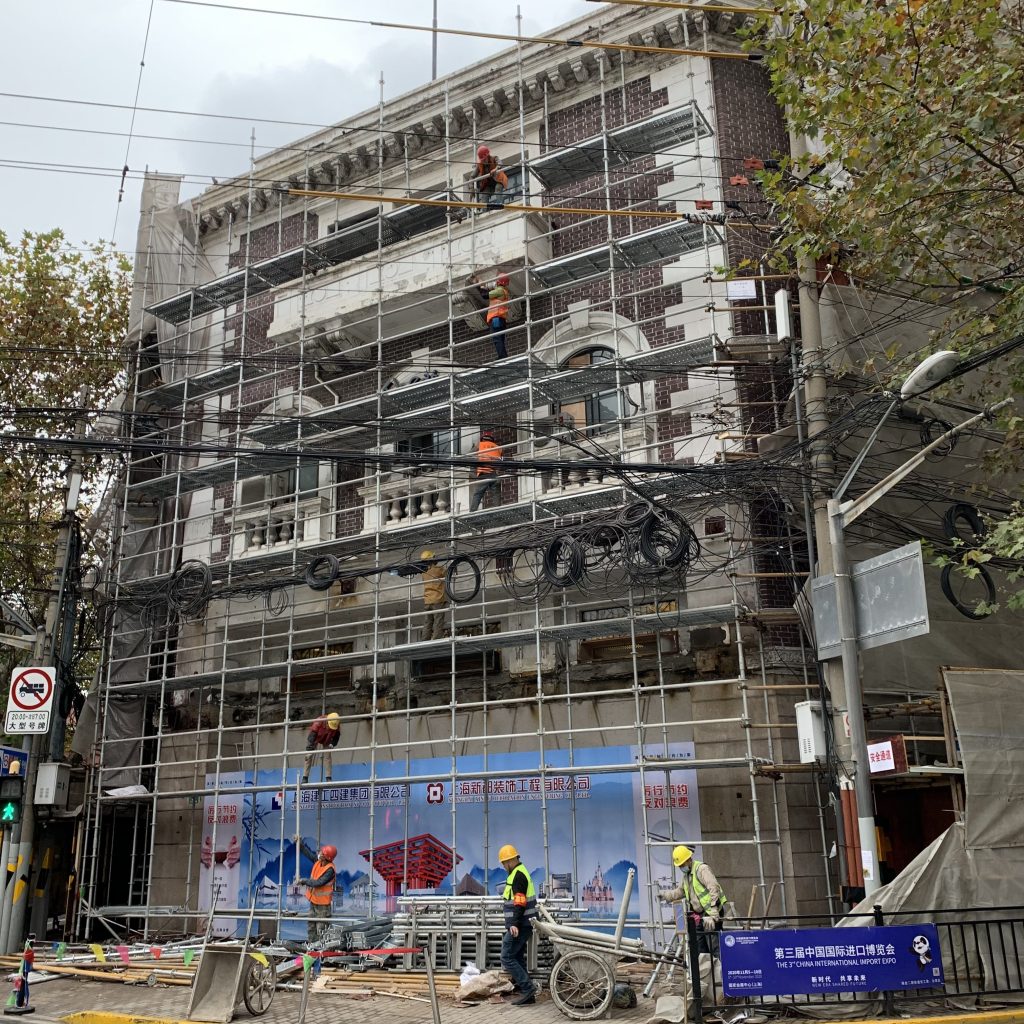
Renovation on Lyceum Theater

Seeing scaffoldings on a Old Shanghai building is always scary, as this can be the sign of future destruction, or a really bad renovation (See post Plaza 353 ruinovation for more info).

I recently passed by Lyceum theater at the corner of Rue Bourgeat and Route Cardinal Mercier (today Changde Lu and Maoming Nan Lu), to discover the building wrapped in plastic. Since shows are not taking place due to CoVid pandemic, it is probably a good timing for renovation. Not sure how it will turn, but will keep a look for it.