Paul French’s blog (www.chinarhyming.com) recently posted a list of the historical buildings destroyed in 2010. Shanghai historical heritage destruction has not been stopped by Expo… far from it. This is quite sad really.
On a more fun note, the Shanghai Literary Festival is running at full speed at the moment. The event is one of the highlight of culture in Shanghai. I saw a great speech by Robert Nield about his book “The China Coast, Trade and the first treaty ports” during a lunch event today (a review of the book will be published as soon as I have finished reading it). There will be 2 more sessions of particular interest for lovers of Old Shanghai. The first one will be coming Saturday, moderated by Tess Johnston, starting at 11:00 in the glamour bar: “Shanghailanders and Shanghainese: Where they lived, worked and played“.The other one on next Saturday, hosted by Lynn Pan focusing on Zhang Ailing. Both are not to be missed. Tickets are available from www.mypiao.com .
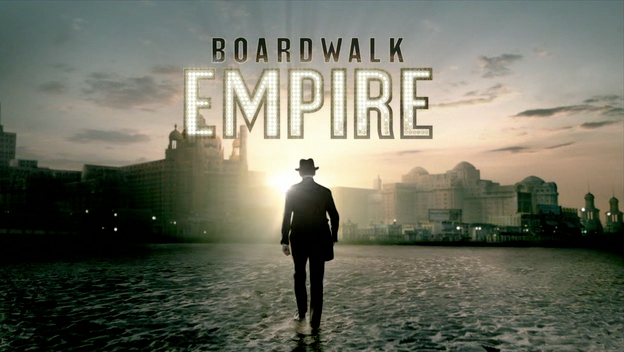
The roaring twenties was a period of economic growth and recovery from the horrors of WWI. WWI fueled Shanghai growth by cutting supplies from Europe and the return of links with Europe brought new opportunities to the city. In the USA, it was also the time of alcohol prohibition from 1920 to 1933. Manufacturing and transportation of alcohol was forbidden, creating enormous wealth for gangs controlling this highly profitable traffic. This is the background of the TV series Boardwalk Empire. The show is based on the real story of Atlantic City godfather’s and county treasurer Enoch “Nucky” Johnson. The series’ main character is Enoch “Nucky” Thompson, played by Steve Buscemi. Supported by a mob of gangsters and other shaddy characters, he fight to maintain his grip over the city. Like most series nowadays, the show has many sub-plots including love and hate stories and many unexpected events. It is highly popular and a great series to watch.
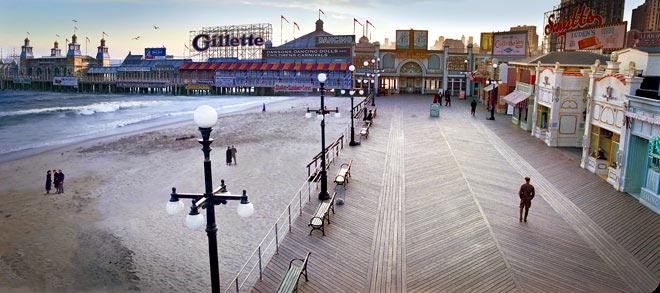
Boardwalk Empire set
The show’s main attraction for me was obviously the look and feel of the show, taking place at the same period than the one interesting me in Shanghai. An enormous amount of work as been done to recreate the roaring twenties look and style, as well as a 1920’s Atlantic city. With famous director Martin Scorsese and broascast on a major Channel in the US (HBO), the budget for the series was one of the largest at about 18 million USD for the pilot… and it really shows. Exterior scenes were shot on a rebuilt boardwalk complete by a lot of CGI as shown in the short movie Boardwalk Empire VFX Breakdowns of Season 1. In depth research was used for rebuilding the 20’s atmosphere through decors, costumes and accessories… and it really shows. Roaming through a bygone era’s Atlantic city, I barely can stop thinking how great a Shanghai series with the same money and attention to details spent in would be. As I wrote before, there has been several TV series themed after Old Shanghai, like the excellent Shanghai Shanghai, but Boardwalk empire is still steps further.
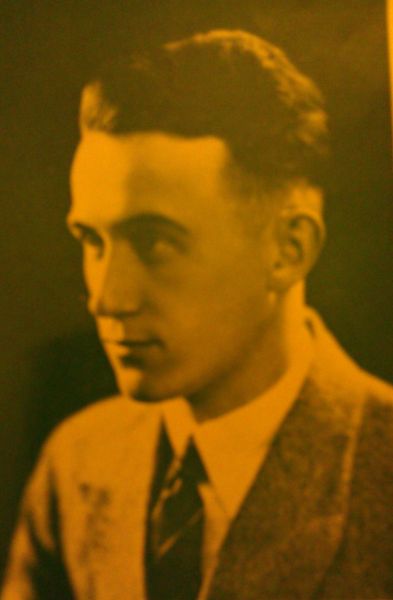
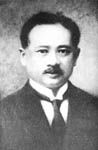
Du Yue Sheng
Beyond the time period, the story of Boardwalk empire also has parallels in Shanghai. As alcohol trafficking generated immense profits for gangs in America, opium trafficking generated immense profits for gangs in Shanghai. The master of Shanghai was Du Yue Sheng, who was reigning over the city’s underworld as well as becoming a well respected anchor of the community. Just like Nucky Thompson, he managed to rise in the political system becoming one of the Chinese members of the Municipal council of the French Concession. Number of books have been written about him and he still is very well known in Shanghai. Similarly, he was known as a benefactor of the city to many, covering the dark side of his activity with largesses and a iron fist holding his “Bundwalk Empire”. However, the fascination for the USA for their roaring twenties gangster is not so popular in Shanghai and we have yet to see a movie or a tv series where the hero would be a Shanghai gangster.
Expo 2010 was a great year for media exposure about Shanghai. Hundreds of journalists came to the city looking for their Shanghai topic, and a few came to me for interviews (see Media cover page). I got the opportunity to be on French TV a few times, and to be filmed for a Chinese TV. It seems like the old Shanghai theme still attracts interest as I was interviewed by Chinese Newspaper Global Times about my passion for Shanghai history and my (growing) collection of documents from that era.
The journalist got it pretty right apart from the fact that the largest share of the blog’s readers are actually in Shanghai. In any case, it is always weird to find oneself in the paper, but hopefully this will increase interest about Old Shanghai and help preserve the city.
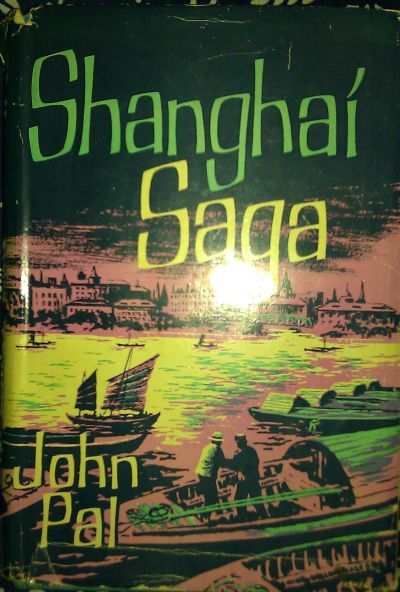
John Pal arrived in Shanghai from the UK to be employed by the Imperial Customs in 1920. At that time customs administration was delegated to foreigners, initially under the control of Sir Robert Hart. All of the customs officers were foreigners mostly British but also French, Italians, Scandinavians and Japanese. John Pal’s experience of the customs services organisation and his daily life make the book a really interesting read. China had only a 5% duty for import AND export thus, “Any Tom, Dick or Harry could afford to drink the finest wines and puff the choicest of imported cigards” and “liquor was so cheap that rum runners came from the United States” to buy liquor in Shanghai to export it back to the USA. At the same time, Shanghai saw a massive smuggling activity, mostly for opium and other drugs. John Pal certainly gives a first had account on trying to stop smuggling “continually up against some of the world’s trickiest smugglers”. “Ships from certain countries, or port of call, were always suspected of bringing narcotics” including Vladivostock and Haiphong in French IndoChina (today Vietnam). In his duty, John Pal also worked on the export side, inspecting ships departing and making sure that only the declared goods were loaded in.
Author John Pal
John Pal left the customs administration in 1927, as China was taking back control of its administration… but his story does not stop here. He then became a reporter for the Shanghai Times, being invited to many parties and official celebrations. Each country was throwing parties for national days of celebration and other opportunities. “If a man cared to, he could live on the free handouts from Shanghai’s annual celebration – and live high. The numerous nationals of our city magnified their celebrative days into grandiose fireworks and champagne binges.” This does not seem so different from today permanent corporate and national parties occupying a lot of people’s social agenda. He also took a job as kernel manager for the French Canidrome, getting involved in the grey world of gambling in Shanghai. John Pal left Shanghai in 1939 as the War in Europe seemed inevitable and he could see how Japan would turn on Shanghai. I don’t think he lived long enough to see the new Shanghai as it is today. I am sure he would be amazed of the difference between Old Shanghai and the city nowadays but also of some the striking similarities. Somehow Shanghai spirit just never changed.
Shanghailanders leaving the city in the late 1930’s and 1940’s often left a home that they could never return to. Exiled from their Shanghai motherland, they recreated a life in other places, back in their original home country or moving on to new places like the USA and Australia. Life in Shanghai had such a strong mark on them that they could never forger the incredible city they left. Many wrote memoirs, creating books that were a true picture of Shanghai life, or sometimes mere fiction mixed with a few true facts. Besides Shanghai Saga, I also reviewed Sin City from North China Daily News reporter Ralph Shaw in an earlier post. It turned out that both Brits were probably competitors.
Shanghai Saga is an excellent source for information about Old Shanghai, although it was very rare and difficult to find. The book has been reprinted by Earnshaw books. More details in post “Shanghai Saga republished“.
Located at the corner of Huai Hai Xi lu and Fuxing Xi Lu, the Xu Hui Art Museum is located in an old mansion renovated around 2005. Hosting various art exhibition, it is quite different from the previous tenant of the building… a Sichuan Restaurant. There is little in English about the history of this building and its original occupant, but I happened to find more by complete random. Here is the story of the house located on 1413 Avenue Joffre, and its uncommon owner Ye Hong Ying.
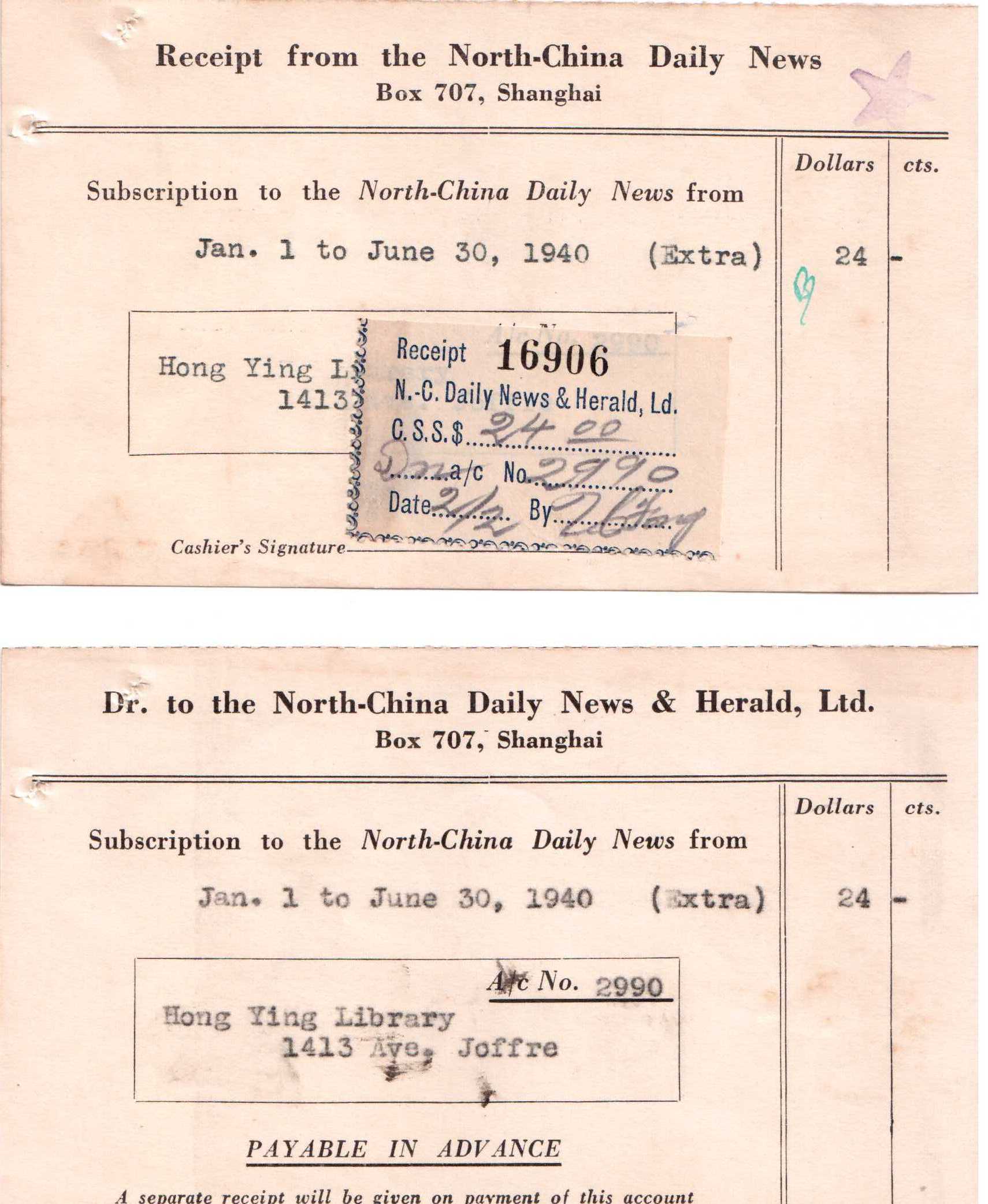
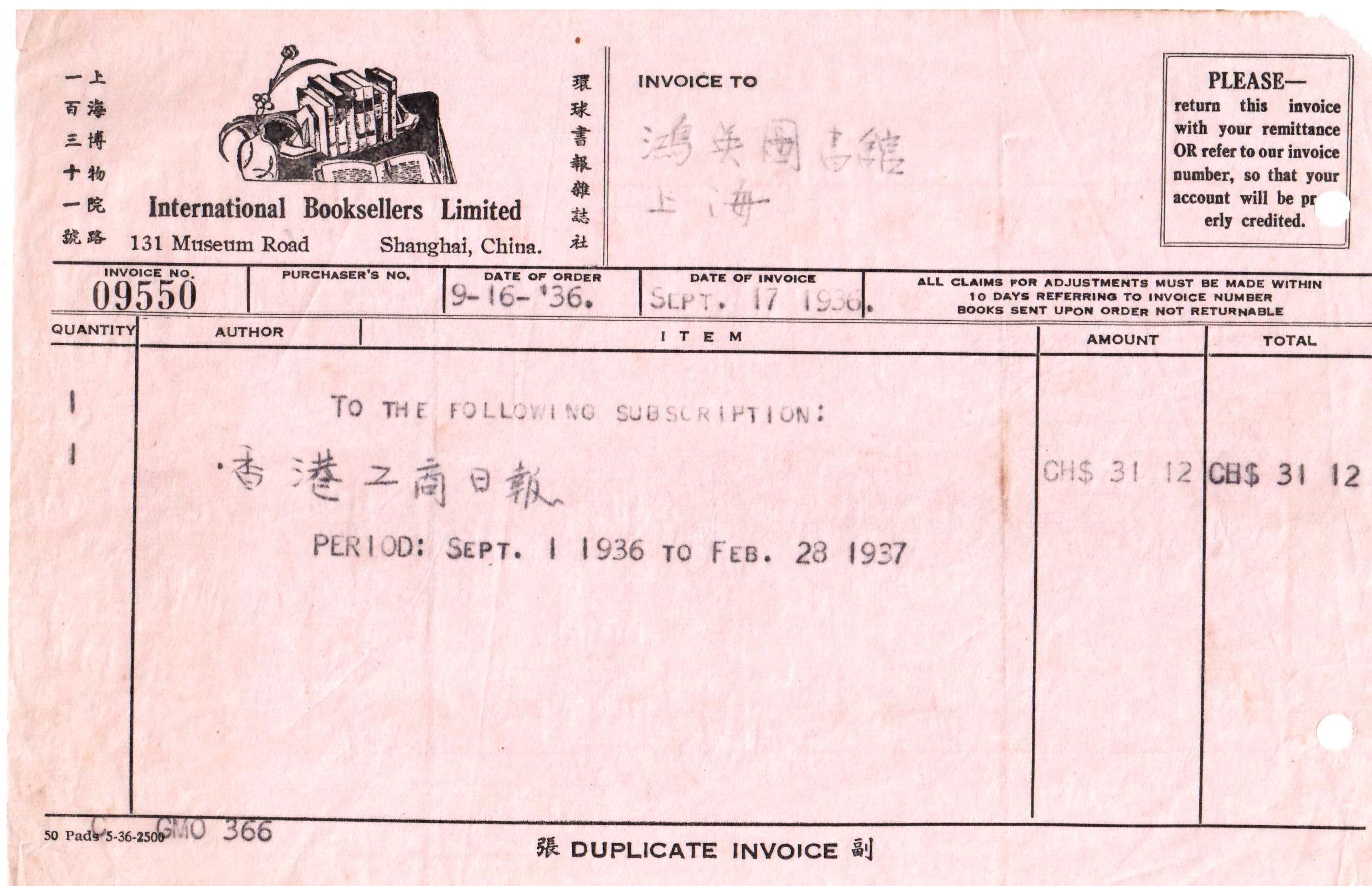
It all started in an antic market, when I encountered a stack of bills all for the same location, 1413 Avenue Joffre. They were normal utility bills from the 1930’s including electricity bills from the “Compagnie Francaise de tramways et d’eclairage electrique de Shanghai” and “Shanghai Telephone Company”. With them also came along a significant number of subscriptions invoice to major English Newspapers published in Shanghai, starting with the most important one, the North-China Daily News. They also included other titles such as the Shanghai Herald, the Shanghai Times and The China Weekly Review. Finally, I also found bills from famous publishing companies such as Kelly & Walsh, The Commercial Press, The China Press, as well as “International Booksellers Limited”, a bookstore on Museum Road. Since all the bills were addressed to “Hong Ying Library”, it was clear that the location was a library in the 1930’s but I had very little information about the establishment or who Hong Ying was.
Ye Hong Ying
No results were found on the English internet, however the Chinese one gave the answer and details about this gentleman and his library. Born in 1860 in Xiamen, Ye Hong Ying moved to Shanghai with his family in 1867. He went to Japan to learn the trade of seafood in 1877, coming back to Shanghai in 1881. From that point on he became a major trader in sea foods, abalones and other sea delicacies, as well as exporter or various commodities. By the mid-30’s his empire included cotton mills as well as banks and insurance companies. He spoke Chinese, Japanese and probably English as well.
In 1933, he set aside the amount of 50 million Chinese Dollars to create a English language library. The establishment became known as the “British Library” or Hong Ying Library. It officially opened in 1942, containing more that 150.000 books, 3600 magazines and subscriptions to many dailies (including the ones mentioned above) . Unfortunately, it did not last for long as the content was transfered to the Shanghai library in the 1950’s. Along with the Xu Jia Hui library and the library of the Royal Asiatic Society, the British Library was a major source for English books in old Shanghai. Most importantly, it was open by Chinese people who were eager to expose their country to the world, bringing the knowledge right where it could be most useful. As such, it was surely a place often visited by modern English speaking Chinese and probably foreigners as well.
Street names mark the lives of people and are very difficult to change in the common mind. There are numerous example of streets that reverted back to their old names after political changes, notably in Eastern Europe. As in all cities, street names in Shanghai carry the city’s history with them.
Most large streets in the old concessions were created with reference to the British and French powers of the day. Each street had a foreign name and a Chinese name that sometimes had a similar sound, sometimes not. Today’s Nanjing Xi Lu was called Bubbling Well Road, thanks to the springing fountain that was somewhere near Jing An temple. Chinese called it (very pragmatic as always) Jing An Si Lu as the road was leading to Jing An Temple. The big change came in 1949, with the communist ideology takeover. Avenue Joffre (or Sha Fei lu in Chinese) became known as Huai Hai Lu, one of the most important communist victory of the civil war. Avenue Edouard VII / Avenue Joffre became known as Yanan Lu, the refuge of Mao Ze Dong during the 1930’s. Route des soeurs became Rui Jin Lu, the location of the first communist republic in China in the 1920’s.
It took me a while to spot the ones that did not change… and there are surely some that I am missing. The first one that I found was Route Cohen in the former French Concession. Cohen being obviously a Jewish name, the street was surely named after an important French Jewish citizen of Changhai, but until now I did not find who he was. Some suggested that it could be Morris Abraham “Two-gun” Cohen who was a famous aide-de-camp to Sun Yat Sen, but I find it very unlikely. The translation of Cohen in Chinese is GaoLan… just like Gao Lan Lu today which is the former route Cohen. Interestingly enough, Route Cohen kept its name, the Chinese name continues to be used today.
One of the forgotten pieces
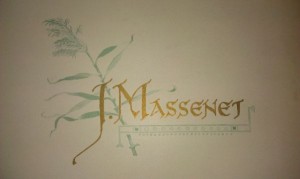
The most interesting so far is the story of Rue Massenet. While Route Cohen is a 1930’s street in the back of the French Concession, Sinan lu is an early street probably built around 1912. It is contemporary of the crossing Rue Vallon (today Nanchang Lu), named after the first person to fly an airplane over Shanghai sky and died in a plane crash in 1911. Vallon’s name did not survive, but Massenet’s did. Sinan in Shanghainese is pronounced “seney”, sounding very similar to (Mas)senet in French, so the Rue Massenet / Seney lu became Sinan lu in today’s Shanghai. Through the ages and name changes, Rue Massenet’s Chinese name survived and is still used today. The Massenet name has resurfaced recently, being used for the fancy “Hotel Massenet” part of renovation project “Sinan Mansions”. The survival of Massenet’s name is probably due to the personality of Jules Massenet, a very famous French music composer in late XIX and early XXth century. He reached world fame thanks to his opera, in particular Manon and Werther and died in 1912 around the time Sinan Lu was built. There are Rue Massenet in Paris and other French cities as well. His style went out of fashion soon after his death with all the changes in life and fashion that followed WWI. His name is only known today by music specialist and although his work is still played abroad, he is virtually unkown in today’s France… but his name has survived in Shanghai. Another reason for the street name never to be changed is probably that both Sun Yat Sen and Zhu En Lai lived on the street at the time of the street name change. Sometimes the wave of change just stops right before the rulers doorsteps.
First of all, I want to wish all readers a happy new year with this first post of 2011.
This entry is not so much about Shanghai, but about sight, locations and feelings that reminded me of Old Shanghai during my recent trip to Europe. Navigating old Shanghai is often about trying to find in Shanghai, buildings and artifacts that are similar to the ones from Europe and other parts of the world. Coming from Shanghai, a trip to Europe becomes the opportunity to look at European cities, looking for Shanghai flashbacks. Such trips are also often opportunities to go back to places I have lived in, as well as to re-connect with friends and family. This one was no exception.
Budapest Art Deco
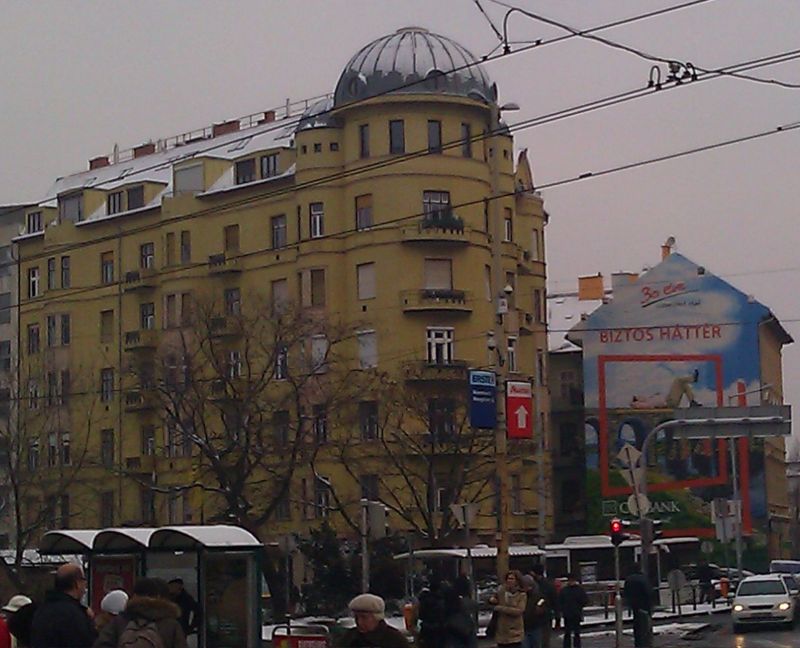
First step of the trip was in Budapest where I have lived many years. Most buildings there are either no-classical, or art Nouveau as most of the city was built in the late XIXth century and early XXth century. Post WWI was not a great time for Hungary, so the city has very few art deco building, though I managed to spot one near Moskva Ter, one of the more recent part of the city. Art Deco there is very recognizable, with the lack of ornaments compared to the neighboring earlier buildings, as well as the use of geometrical lines. It could argue that this building is also Bauhaus style, which sometimes looks very similar to art deco. Funny enough, Art Deco in Shanghai was mostly developed by a Hungarian architect in the same period, Laszlo Hudec. I discovered more Art Deco buildings in a later trip to the city, see post “Budapest Art Deco” for more details.
Savoy Apartments, ShanghaiHotel college facade, Lyon
Hotel Art Deco door, Lyon
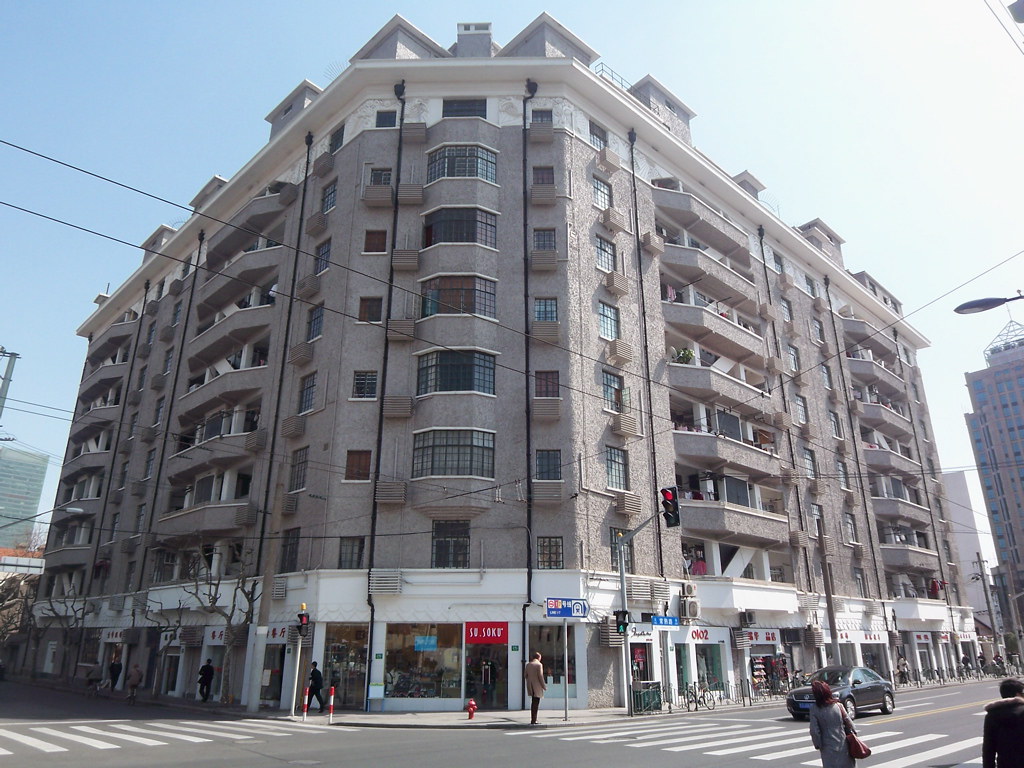
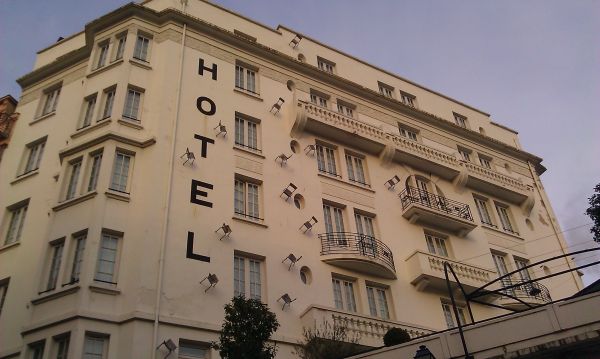
The trip continued to Lyon, that was built much earlier than art deco time but a number of art deco building can be found. One of the best example is surely the “hotel college” in Saint-Jean. Located in the medieval district, the 30’s building is just out of place in the decor, probably as much Broadway Mansions or Savoy Apartments was when they were built. The first element to be seen is the incredible art Deco door, a wonderful work of iron, similar to some found in Shanghai. The building itself is art deco, somewhat similar to the Savoy apartment on Chang Shu lu. It is also very similar to some of the long gone buildings on avenue Dubail (today the North South elevated highway), that were destroyed in the 90’s. Just like seeing European architecture is Shanghai reminds me of Europe, seeing similar architecture in Europe…. reminds me of Shanghai, bringing one of those Shanghai flashbacks.
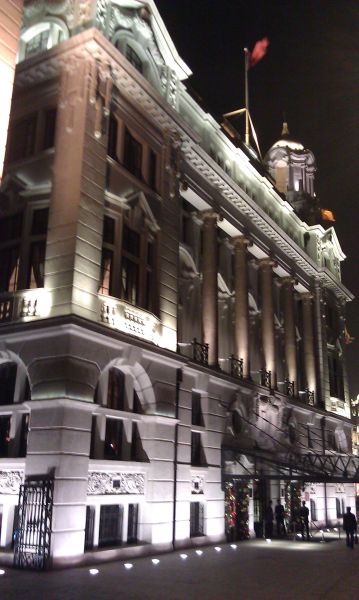
The old Shanghai Club building had been closed for quite a number of years. Its transformation and re-opening in the Waldorf Astoria hotel happened with much less hype than the renewed Peace Hotel down the Bund. However, restoration of this piece of history has been very careful and the result is matching the highest expectation.
Reviving the Shanghai Club
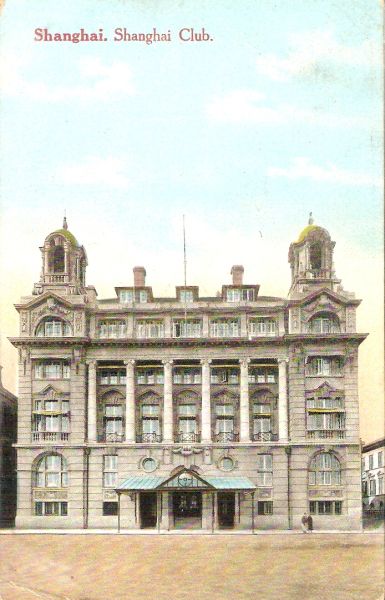
Built in 1911, this is the second building of the Shanghai Club. The male only British Club was the center of power and wealth in Old Shanghai. A few meters down from the main banks, trading houses and administrations, the club was the second home for the rich and powerful people of the International Settlement. The building contained all that was needed by its members, including bowling alleys, billiard rooms, a barber, restaurants and The Long Bar, supposedly the longest bar in the world. The top floors where occupied by 40 en-suite rooms for the residency of the members. The club membership was the cream of Shanghai businessman, drinking on the long bar with a carefully selected order.
Shanghai club postcard
The richest and most powerful would stand near the front windows, when the griffins (or newbies) would be relegated towards the back end of the room. Climbing Shanghai’s social ladder also meant going up the Long Bar. The Club also had massive dining room on the 2nd floor with giant portraits of the British Royalty. Besides the Italian marble staircases, a small lift was installed for the convenience of the members.
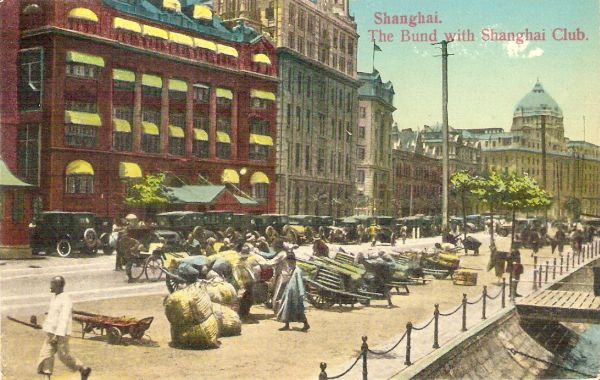
Bund with Shanghai Club
Unfortunately, the building suffered quite a lot in the 50’s to 80’s period. It became the seaman’s club serving a very different clientele from the dignified British gentlemen that occupied it before. The upper floor was turned into a hotel, also of much lower standard. The Long Bar was destroyed at some point and little remained of it when the ground floor was turned into the first KFC in China. Although this brought masses to the place, it is clear that no care was taken of the remains of splendor of this old lady of the Bund.
Fortunately, the hotel renovation has been done with great care, recreating the Long Bar in its original location. I am sure that this piece of Old Shanghai will soon become one of the hangouts of the rich and famous of new Shanghai. The massive ball room on the 2nd floor has been renovated into the hotel main ball room. Although the British royalties portraits are long gone, the place still has a lot of majesty (except for the horrible new carpet) and gave a real official turn to the ceremony I recently attended. The higher floors of the building have been turned into luxury suites that will surely attracted a very wealthy crowd.
The former Shanghai Club is now the historic wing of the Waldorf Astoria hotel on the Bund.
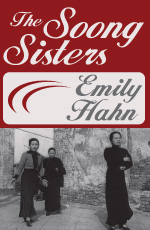
The Soong family was clearly the most influential family of Shanghai in the Republican period. Their legend is still felt in many places in Shanghai, bringing with them as many stories real or imaginary. I have read books about them before, but Emily Hahn’s “The Soong Sisters” is the most personal account anyone can find about these three ladies that shaped China.
The book was written in 1941, when the Japanese army had already invaded a large share of China and Chiang Kai Shek government had been forced to move from Nanjing to Hangkow (today’s Wuhan) and later to the distant Sichuan city of Chongqing. The whole government was moved westward, along with foreign representatives and friends as well as any factories that could be transported. Written while the city was being bombed by Japanese planes, the book clearly had a political message trying to make the Chinese governement more personnable and appealing to the full support of Western Countries, in particular the USA. Besides the political aspect, “The Soong Sisters” is also the best documented book about the life of the family. Emily Hahn turbulent lifestyle allowed her to get very close to the Soong family through her love relationship with Chinese poet and publisher Shao Xunmei, which is well documented in “Tara Grescoe’s Shanghai Grand“. Knowing the Soong Sisters personally allowed her to give a great pictures of their personality and oppositions.
Charlie Soong
Charlie Soong incredible journey to the USA and his education there made him a very singular character in early 20th century China. Although not a Shanghainese, the open city was the only place he could live in China when he came back, taking a house in Nanshi (now part of Huang Pu district). He was a precious aid to Dr Sun Yat Sen, using his bible printing company as a cover for printing political material for the future leader of the Chinese revolution. Giving his daughters an education was already quite a shock for the time, but the top of it was sending them for schooling in the US.
The three sisters attended McTyeire School for Girls in Shanghai (in today Changning district), and graduated from Wesleyan College in Macon, Georgia, United States. They came back transformed, converted to ideas unknown in China, in particular the will to choose their own destiny. Soong Qinling was the first woman to ride a bicycle in Shanghai, before fleeing the family home to get married with Dr Sun Yat Sen. Soong Ailin married Dr HH Kung, who became the finance minister of China for the Kuomintang government, replacing TV Soong (one of the brothers of the Soong sisters) in 1933. Soong Mailing, probably the most well known, got married with Chiang Kai Shek in 1927 in the Majestic Hotel (on today’s Nanjing Xi Lu). She became mostly known as Mme Chiang Kai Shek, a political figure of Republican China.
Emily Hahn’s “The Soong Sister” is a fascinating book giving close contact with these three ladies with an incredible destiny. Definitely a must read for anybody interested in old Shanghai. For details about Emily Hahn’s life, see post “Tara Grescoe’s Shanghai Grand“.
Shanghai bakeries are opening in great number in the city center. As discussed in a previous post (see post First Russian Bakery & Tkachenko), bakeries in old Shanghai were numerous in the French Concession and the International settlement, often coupled with cafes. (see post Shanghai Coffee Culture). The other source for bread and cake supply were hotel bakeries. Just like today, 5-stars hotels made their own bread and cake and sold them to outside customers. Surprisingly, at least one of the hotel bakery has continued operating all along since the hotel opening. This is one of the little secrets of reviving old Shanghai.
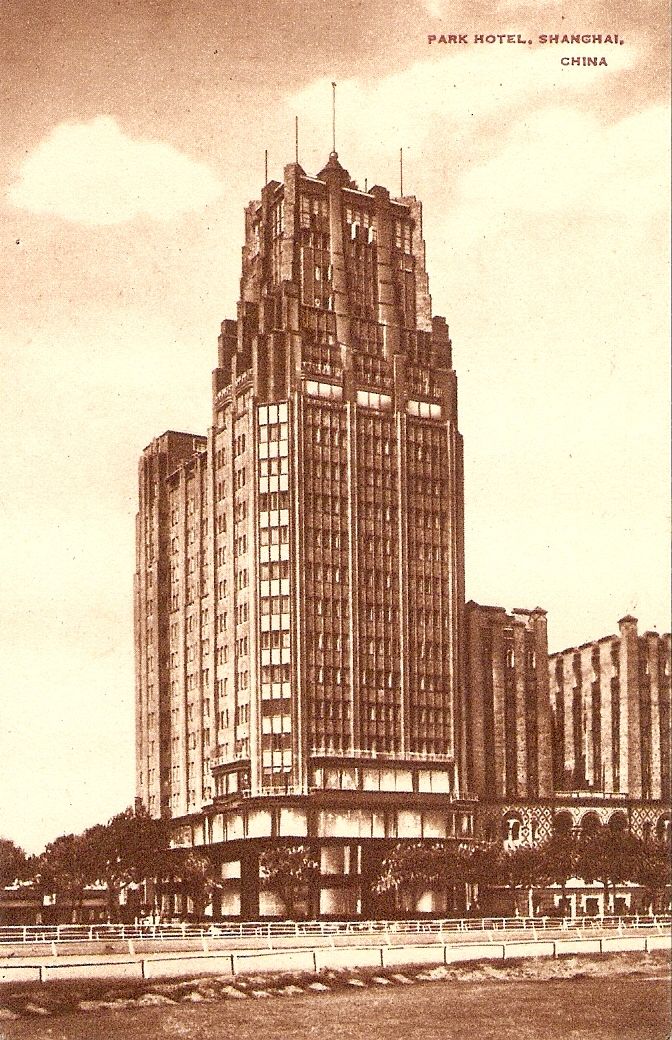
Opened in 1934, Park Hotel was the Chinese answer to the Cathay Hotel on the Bund. The 5-star hotel built on the Shanghai racecourse was the top of luxury then, as show in its advertising material (see post advertising park hotel). It had its own bakery making bread and cakes fulfilling the needs of the hotels guests as well as outside customers. This shops still serves bread and bakeries nowadays.
Straight from the hotel bakery
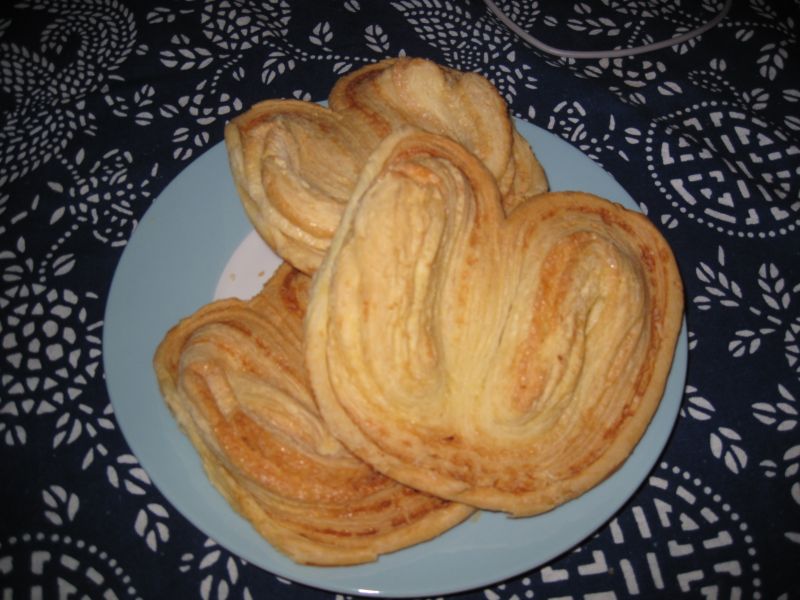
Park Hotel was famous for its pastry, in particular the palmiers (named after the French name of palm trees, as they look sort of the same). This particular cake is called “hudiesu” / 蝴蝶酥 or butterfly cookies in Chinese. Despite the change of management after 1949 liberation, those cookies continued being made along the years. My wife, Jiajia, fondly recalls her father going to the hotel specially in the 1980s to buy her the cookies, the top of luxury available at that time. This products survived the years with a nearly untouched recipe and is still available today.
Park Hotel Palmiers
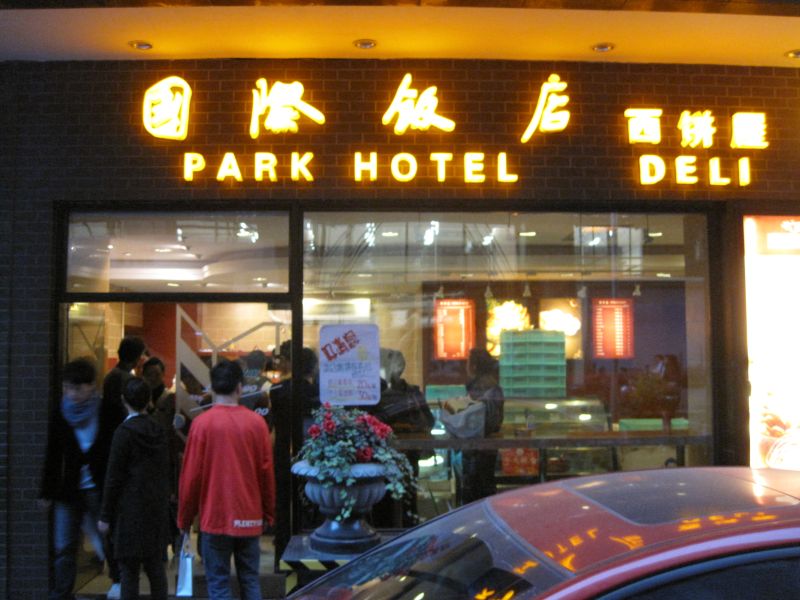
The secret passage is the Park Hotel bakery shop on the left side of the building. Although not really advertised, there is clearly a faithful crowd willing to come and buy the delicacies, memories from a distant past. Sunday afternoon is peak time, with people queuing outside the shop. The best seller is clearly the 蝴蝶酥, with old ladies buying a few bags at a time. Ordering in Shanghainese is nearly compulsory and the shop fills up with “Yi bo wu die su / 一包蝴蝶酥“, a bag of butterfly cookies, being the magic words. Other cakes are also available including almond cookies, croissants, cream puffs. I have to admit that they difficultly compete in term of taste with modern 5 star hotels or the numerous modern bakeries in Shanghai, but the hordes of customers do not seem to mind. Along with having lunch at Deda Cafe, eating the palmiers of Park hotel is experiencing Shanghai history by tasting it.
The famous Park Hotel bakery store
Update from 2026: 蝴蝶酥 have become such symbols of Shanghai culture that British prime minister Keir Starmer took the time to taste some his visit to China.