Love and Duty (part 1)

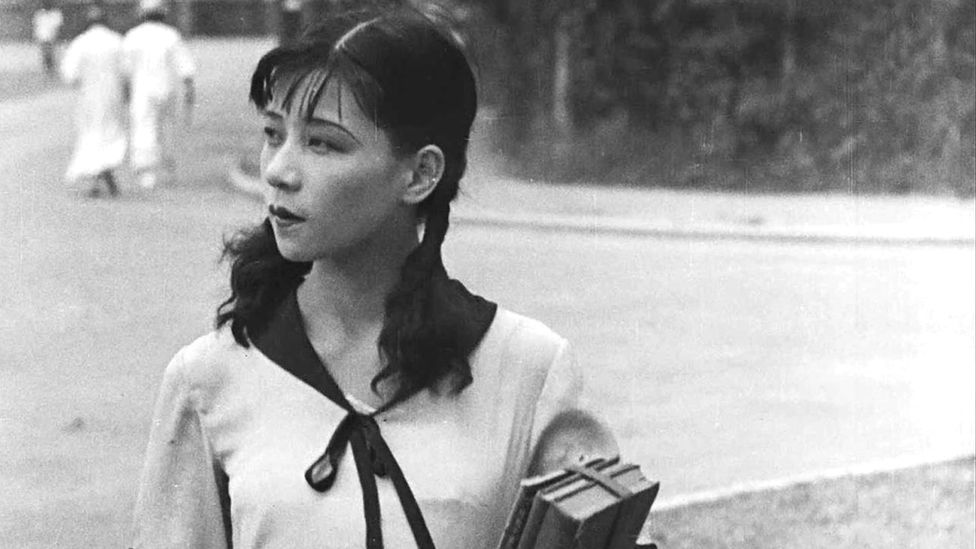
Ruan Lingyu (阮玲玉) was one of the stars of Old Shanghai movies. Acting in silent movies her career brutaly stopped when she committed suicide in 1935.

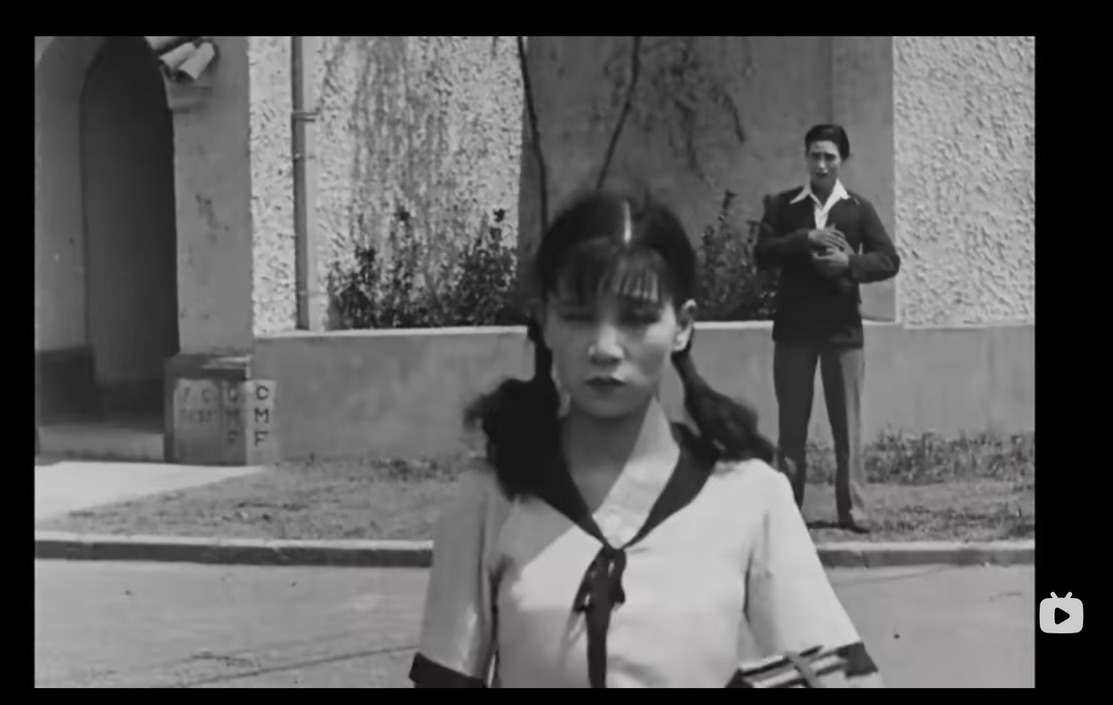
Ryan Lingyu in « Love and duty »

One of her main movies, “Love and Duty”(恋爱与义务)1931, was supposed to be lost until a full copy was found in Uruguay in the early 1990s. After restoration, the film was shown at Shanghai Film festival in 2014.

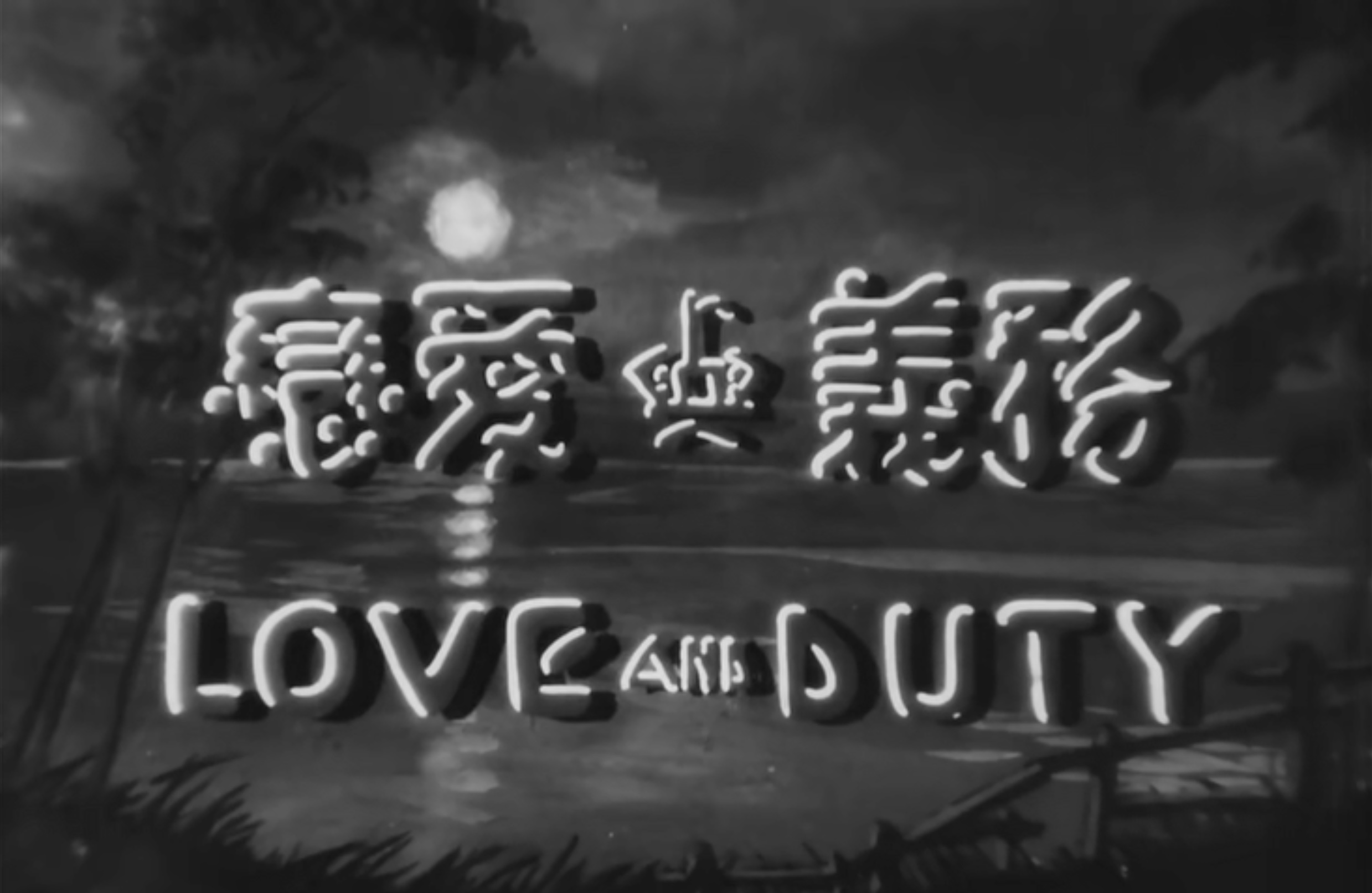
Love and Duty, movie title

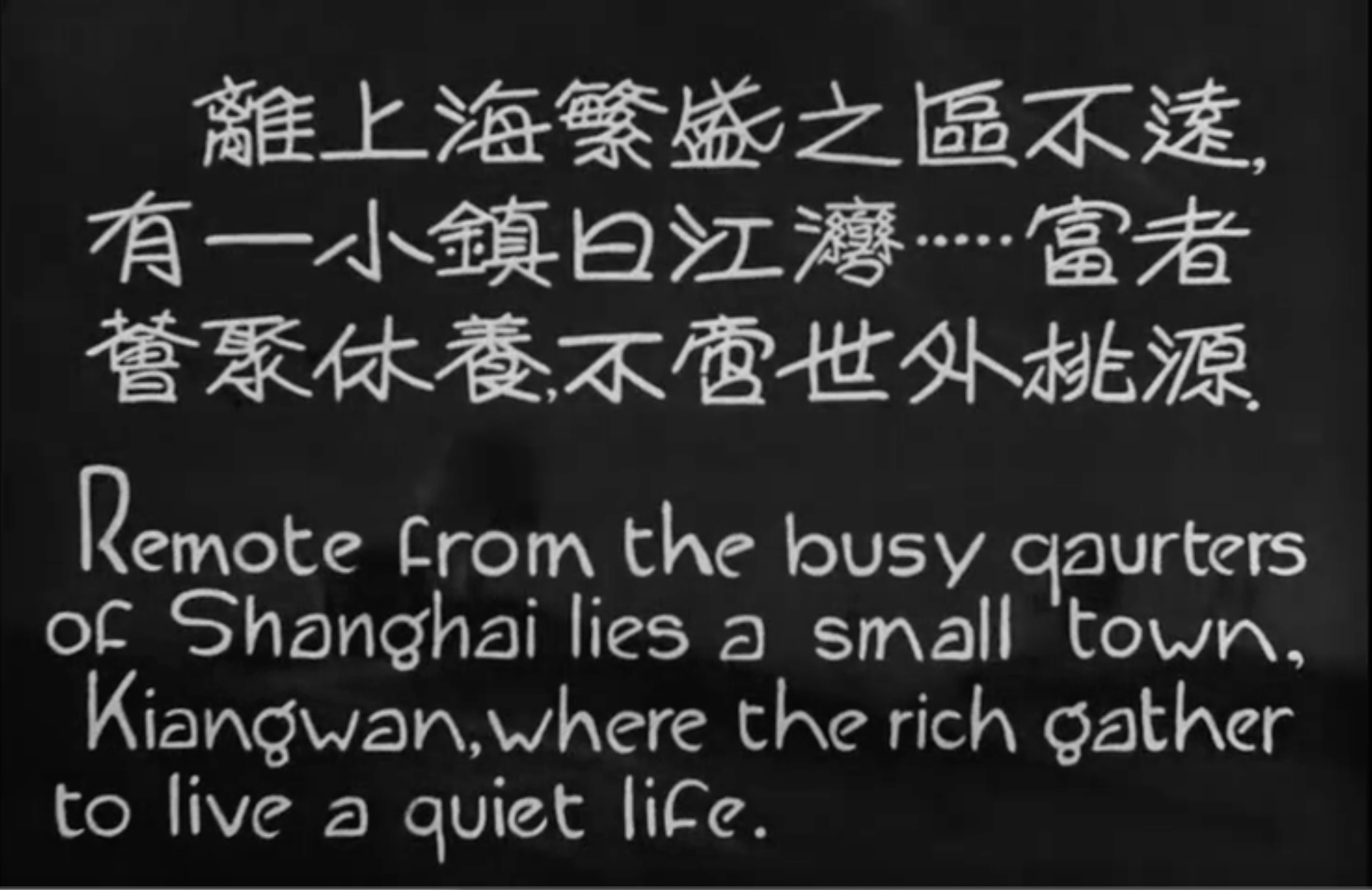
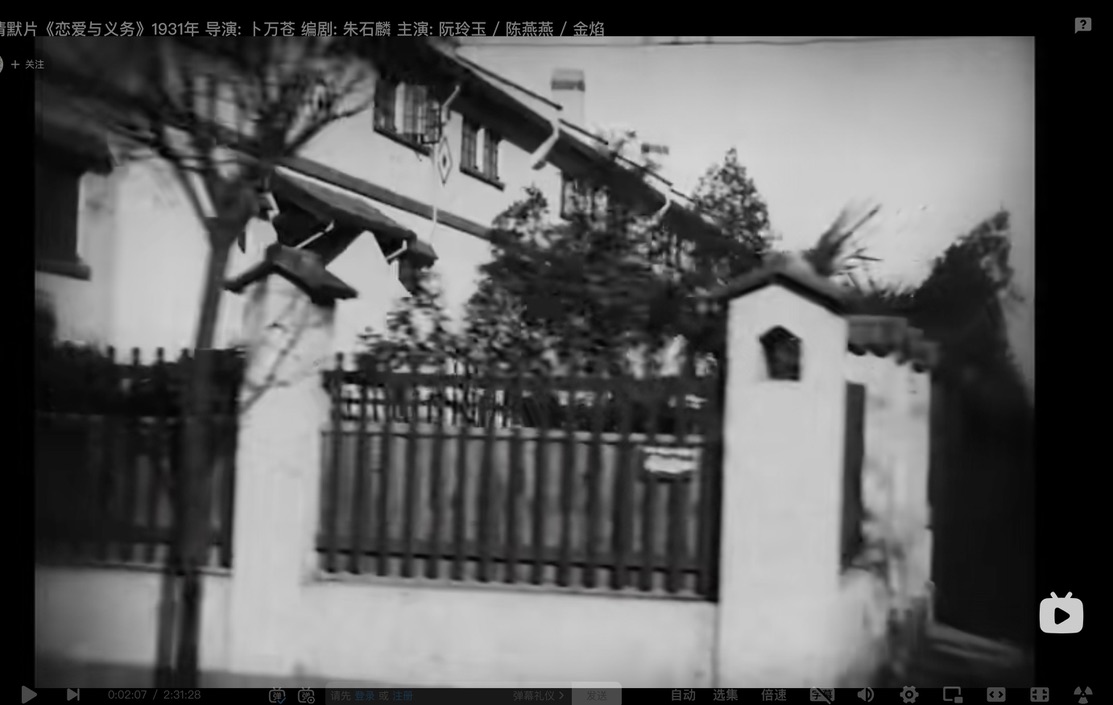
Love and Duty is a melodramatic movie about the terrible choice of a lady between her high school sweetheart and her husband and family. It is a silent movie, with all intertitles both in English and in Chinese as it was often the case then in Shanghai. The first part of the movie is taking place in the high level neighborhood. It gives a great look into the life of upper class Chinese people in Old Shanghai. I have read many books about it (including ‘Remembering Shanghai“), or seen modern movies (see post “Shanghai the movie“) as well as tv series taking place in Old Shanghai. However, seeing a real movie from the area depicting the real life of people is amazing.

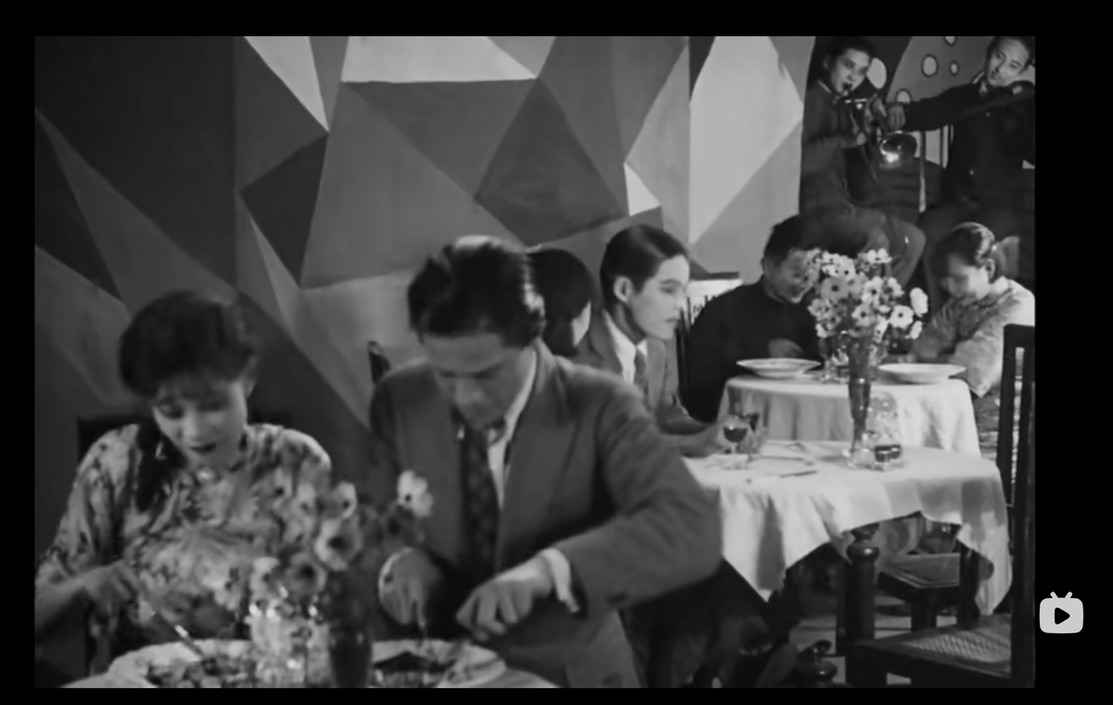
Eating in a 1930s western restaurant in Shanghai

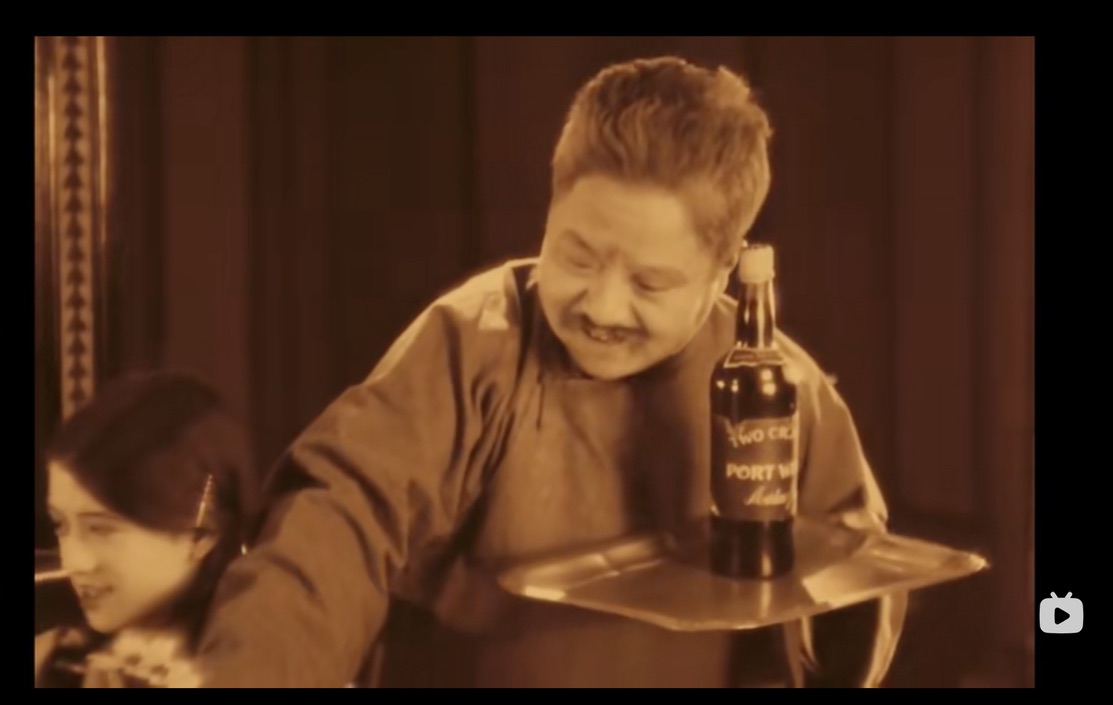
The restaurant scene in the movie is stunning. This is taking place in the early 1930’s. A couple in love goes for a date in a western restaurant, eating with fork and knife, drinking (imported) red wine (a few images before), while listening to Jazz music with Art Deco back ground. When I came to Shanghai about 20 years, this kind of scene was not so common in the city and very rare out of Shanghai. A place like legendary M on the Bund, opened only in 2002. It was really difficult to imagine that 1930s Shanghai was already so modern and westernised.

Just like today, imported drinks were readily available and consumed.

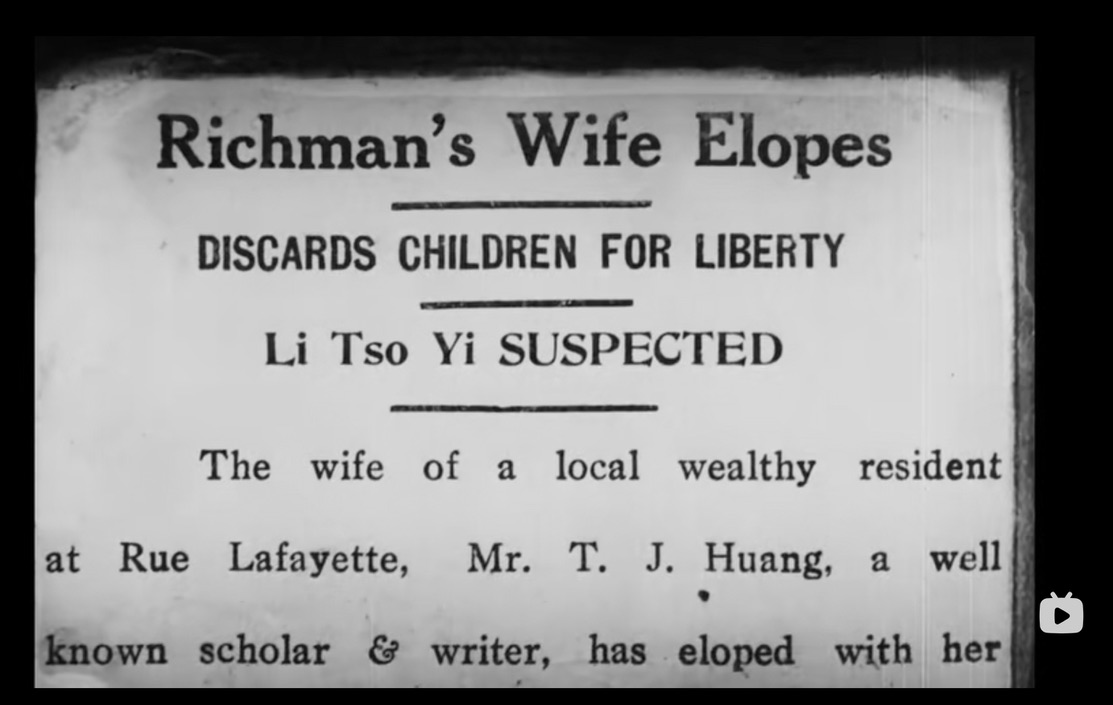
The former French Concession was clearly then one of the desired place to live. Above image is newspaper article read in the movie (first in Chinese, then in English), clearly mentionning Rue Lafayette (today Fuxing Lu) as a place of living for “a local wealthy resident”.

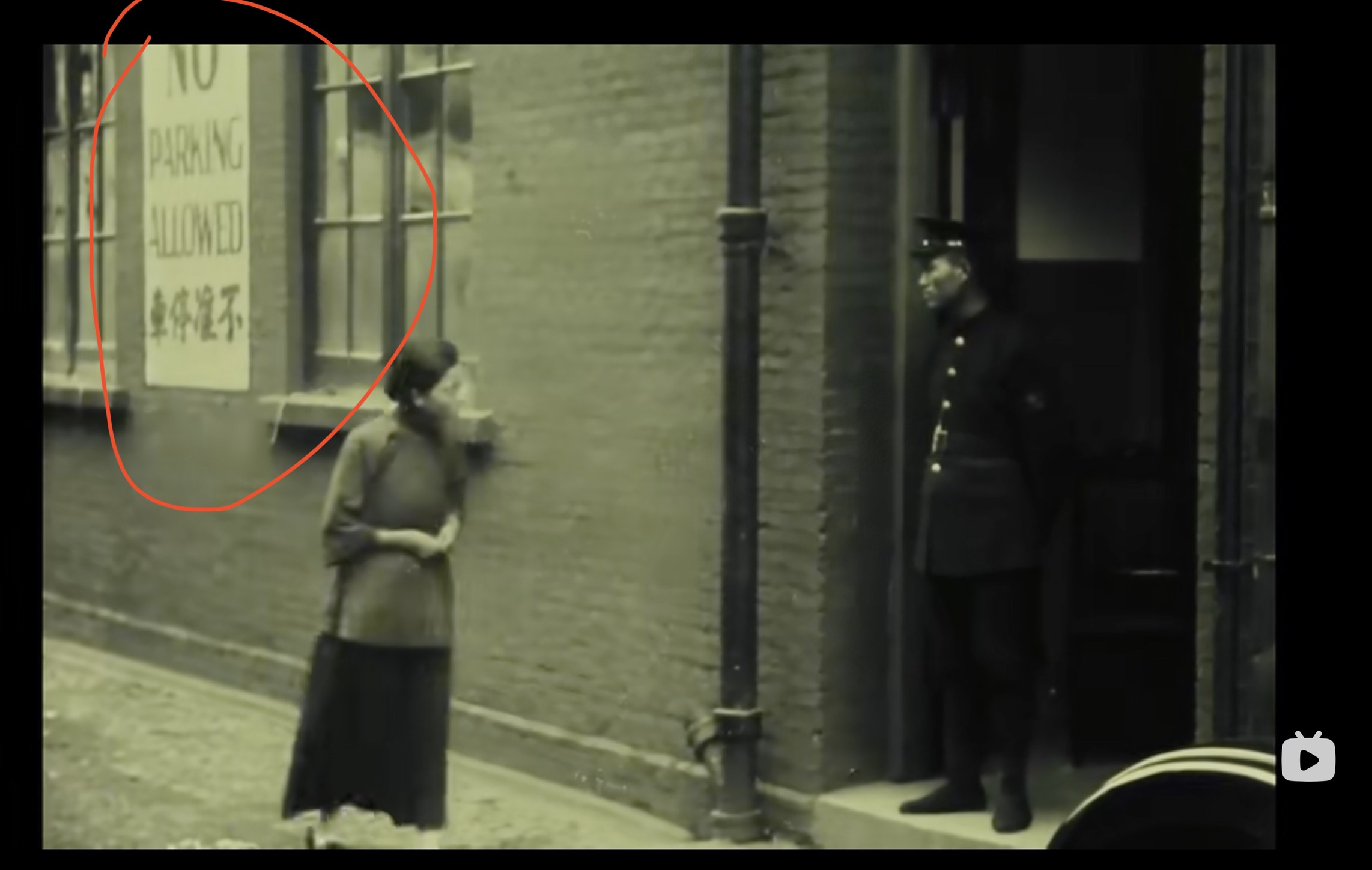
On the top of intertitles in Chinese and English, signage shown in the background is always bilingual, as it was surely usual in Shanghai then. A large part of the movie takes place in Shanghai city. Although it is not mentionned, it is either in the International Settlement or in the French Concession. I am working on a specific post will be dedicated to film locations.

Bilingual No parking allowed sign in English and Chinese

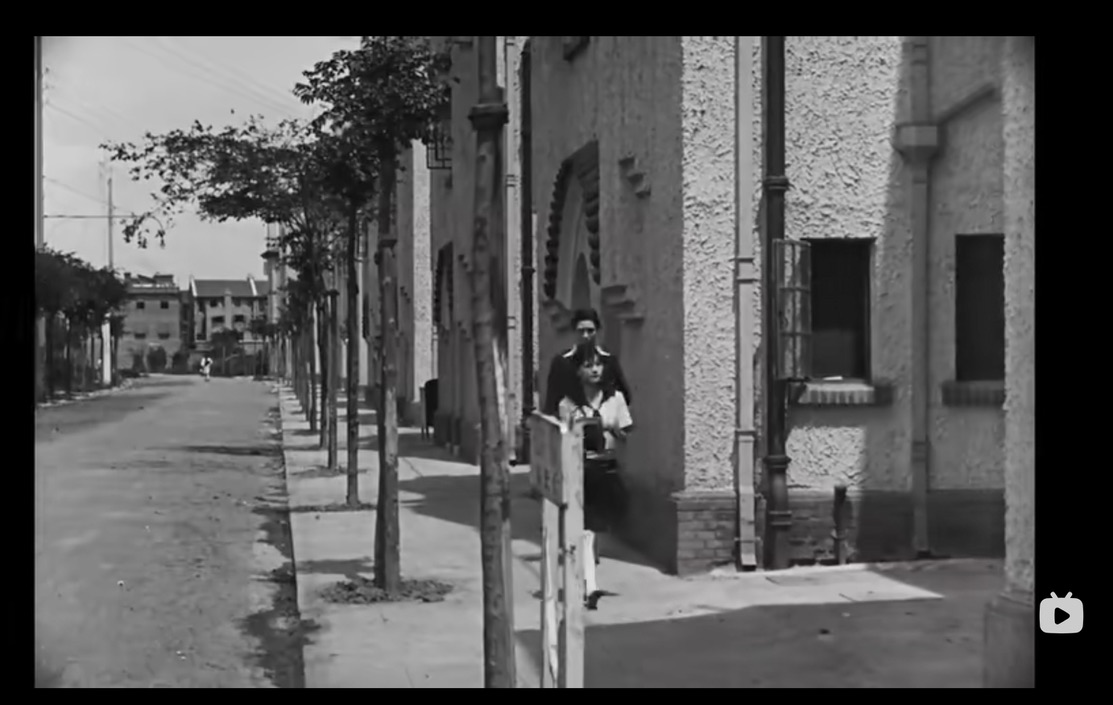
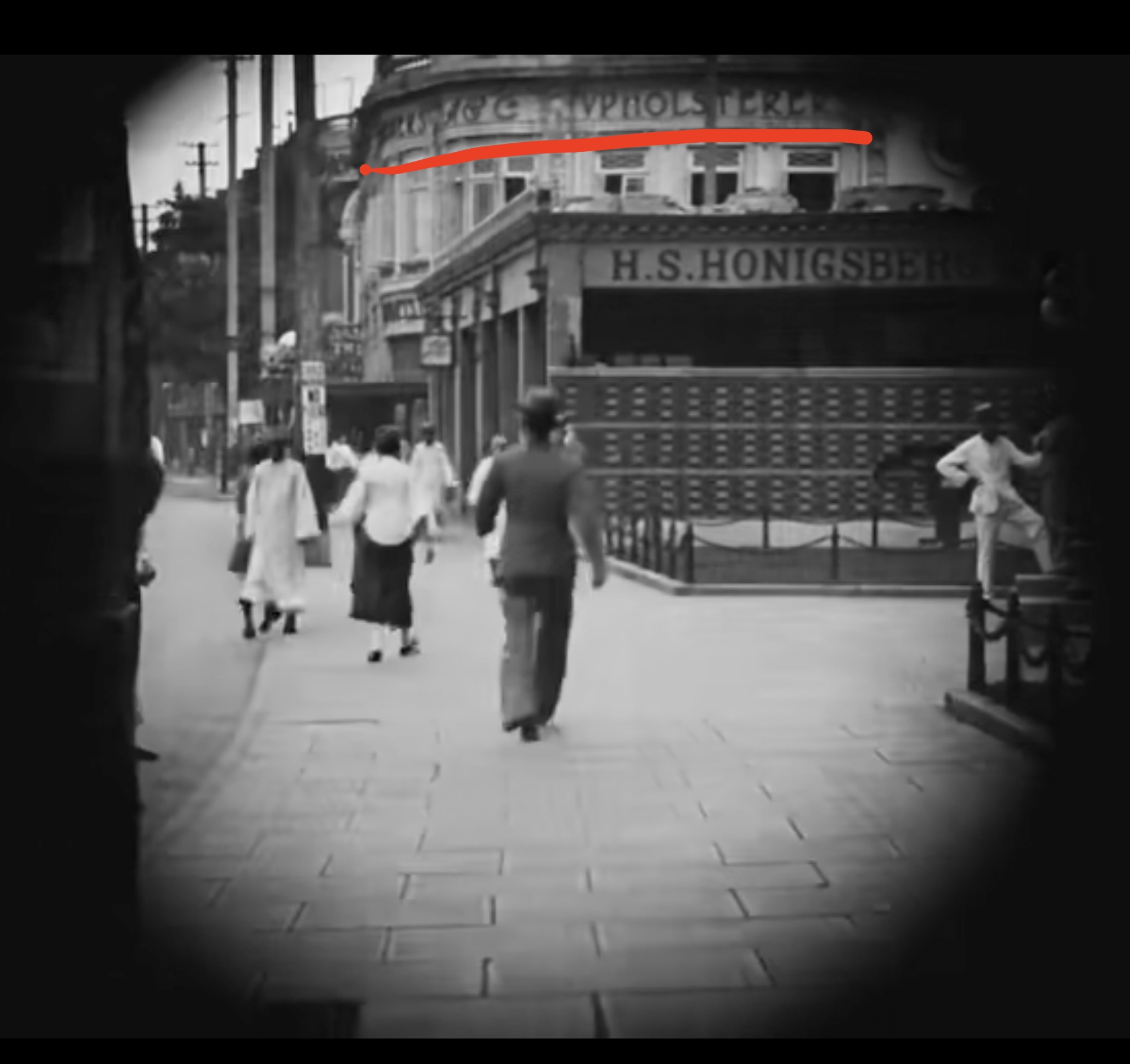
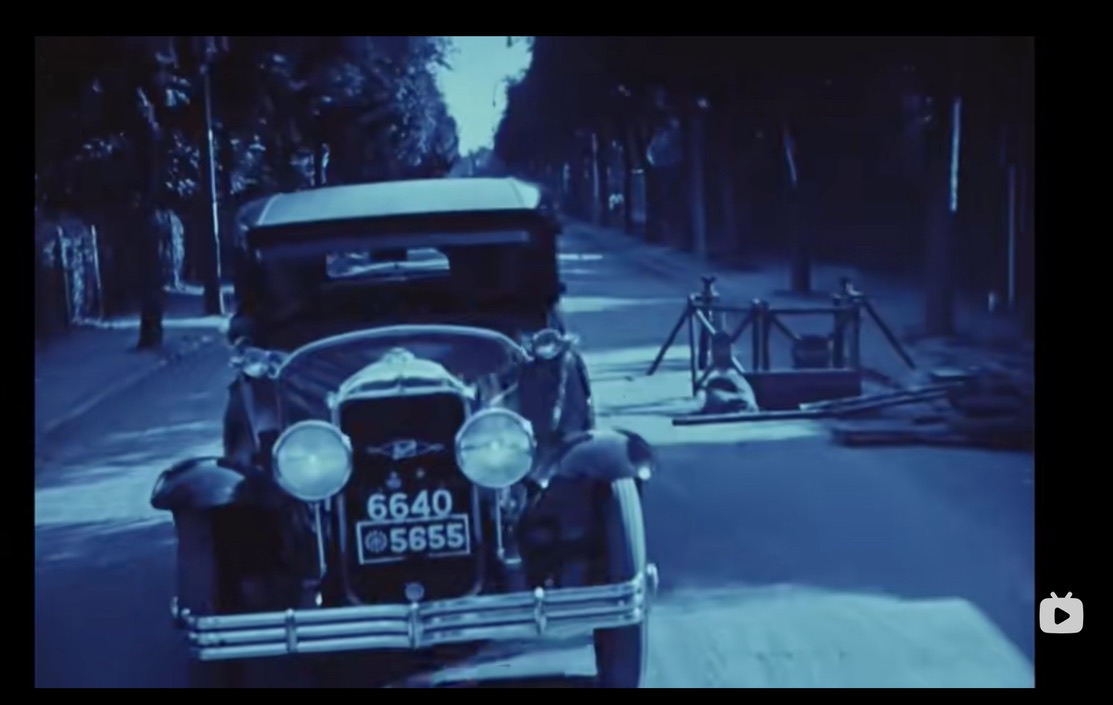
Cars were a luxury items but private cars and taxis were readily available for the upper part of the society. Old movies from the 1920 or 1930’s Shanghai ( see Old Shanghai short movie) often shows the busy streets of the international settlements. Some of the scenes are filmed along plane tree planted road that were surely located in the former French Concession. I have never seen this kind of pictures before. There are a few scenes of 1920s modernity with cars, including one with road work (!) as seen below.

Driving along the plane trees

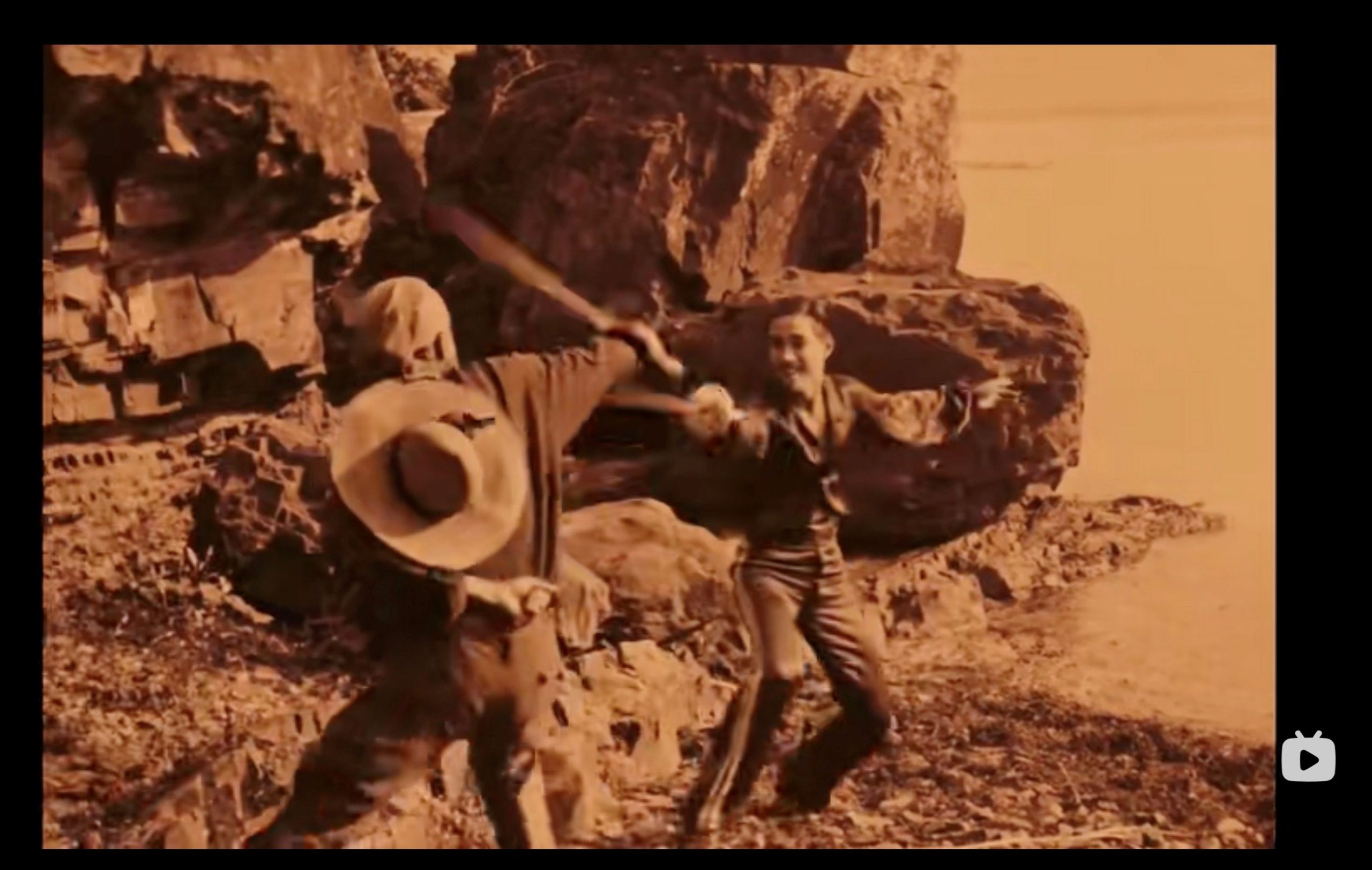
The last piece that I thought really showed that Shanghai was a very modern city is the hero scene. The main male characters reads a novel, called the hero. Then he dreams that he is saving his beloved after a pirate style sword fight.

This scene is very strongly inspired by some Hollywood movie scene from the period. Sword fight movies, also called swashnucklers, were really fashionnable at that time. The Hollywood start of the genre was Douglas Fairbanks, with movies including “The mark of Zorro” (1920) and “The three musketers” (1921). “The black pirate”(1926) clearly influenced the movie as seen in this sword fight scene. Hollywood movies were very popular in Shanghai. Douglas Fairbanks arctually visited Shanghai and stayed at the Majestic Hotel. The success of Hollywood moviedhelped to make the Spanish colonial revial architectural style popular in Shanghai (See post “Spanish revival architecture” for more details) as well as Art Deco. Hollywood movies also strongly inspired the local production, turning Shanghai into a little Hollywood in Asia.

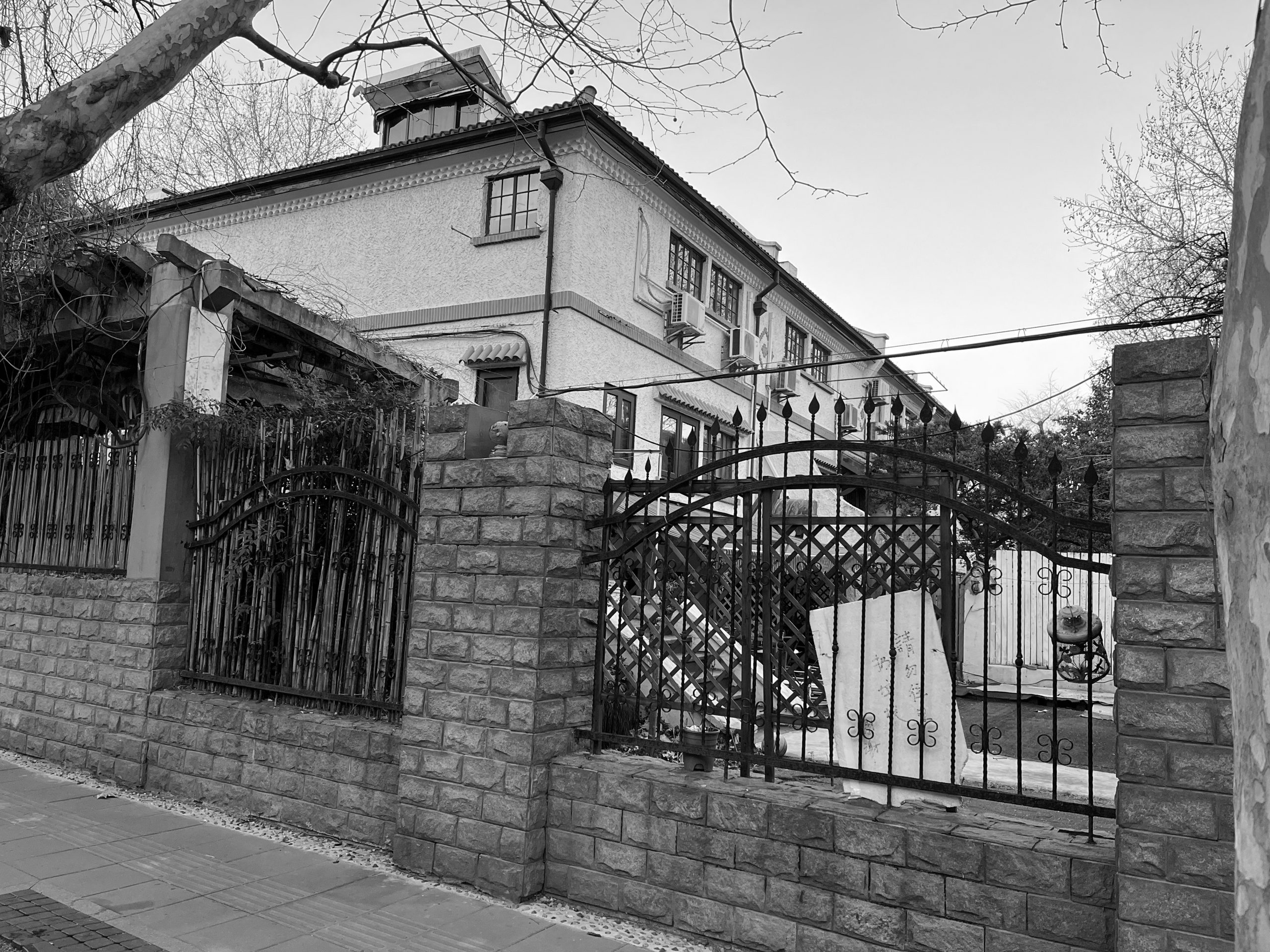
For a look into actual film location of the movie “Love and Duty”, please go to post “Love and Duty (part 2)“. Before being a successful movie, “Love and Duty” was first a book written by mysterious author Horose. For more details, please follow the link “Love and duty, the book“.
Former Shanghai French Consulate (Part 2)

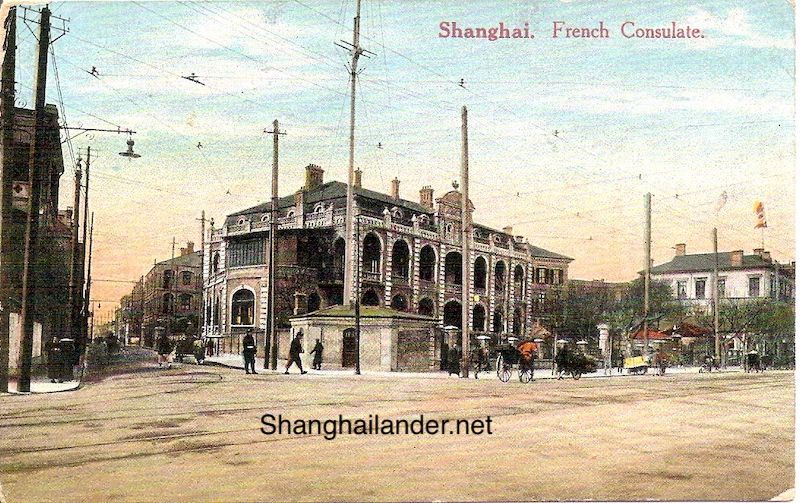
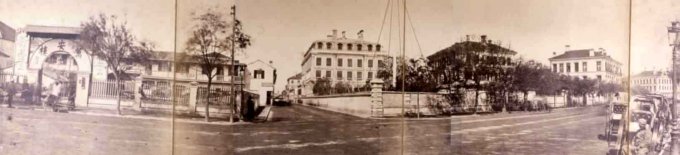
Located on the Bund, the French Consulate building was on the cross of the Quai de France (French Bund) and the Rue du Consulat (Consulate street, today Jinling lu). As explained in post “Former Shanghai French Consulate (Part 1)“, the Consulate moved to this plot in May 1867. Due to the low quality of the construction, a new building was erected in 1896, when Paul Claudel was Consul General.
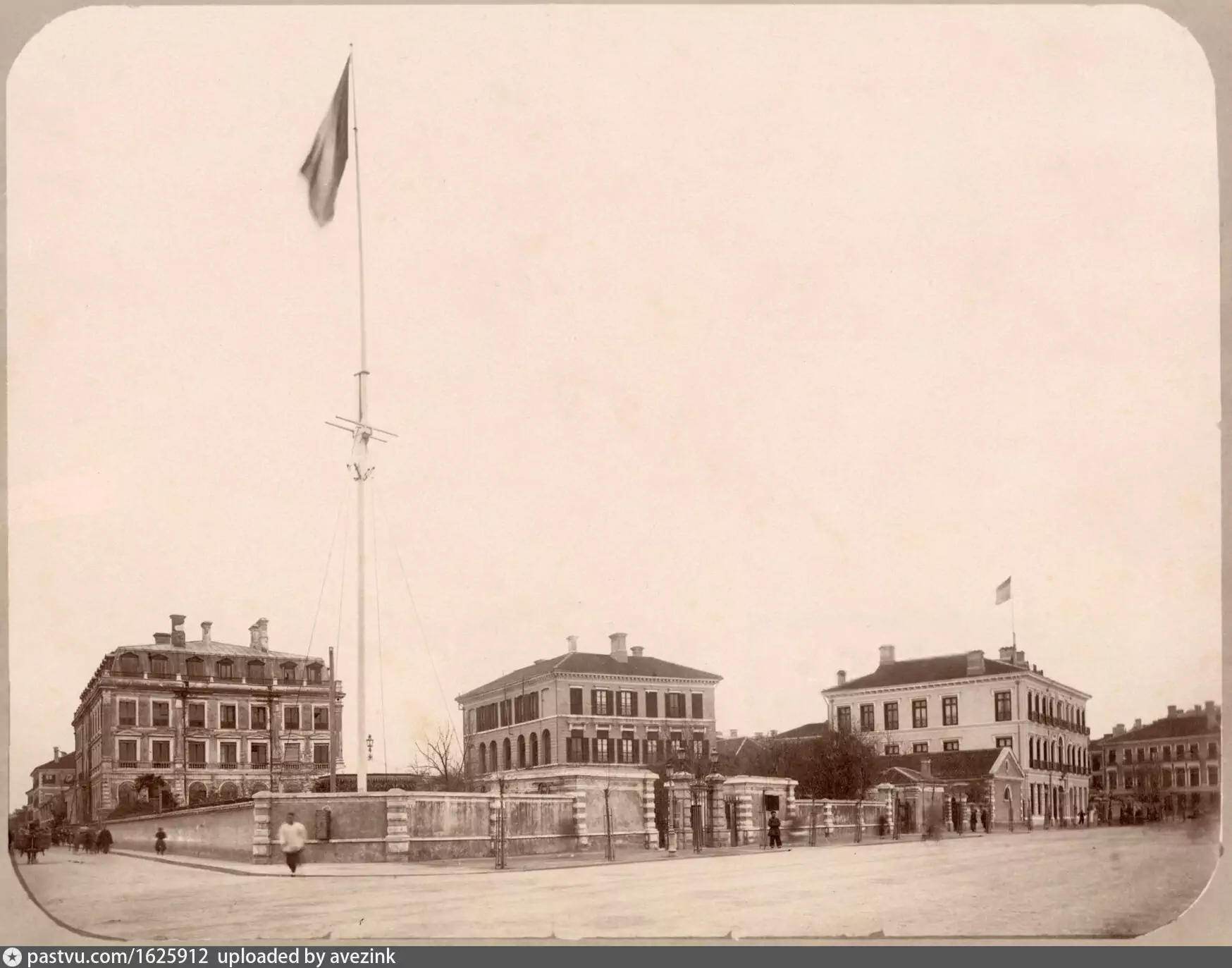
The new building was of neo-classical style, matching buildings on the Bund of the International Settlement, a few hundred meters away. It was asymmetrical with a round extension on the side on Rue du Consulat (on the left side, today Jinglin Dong Lu).

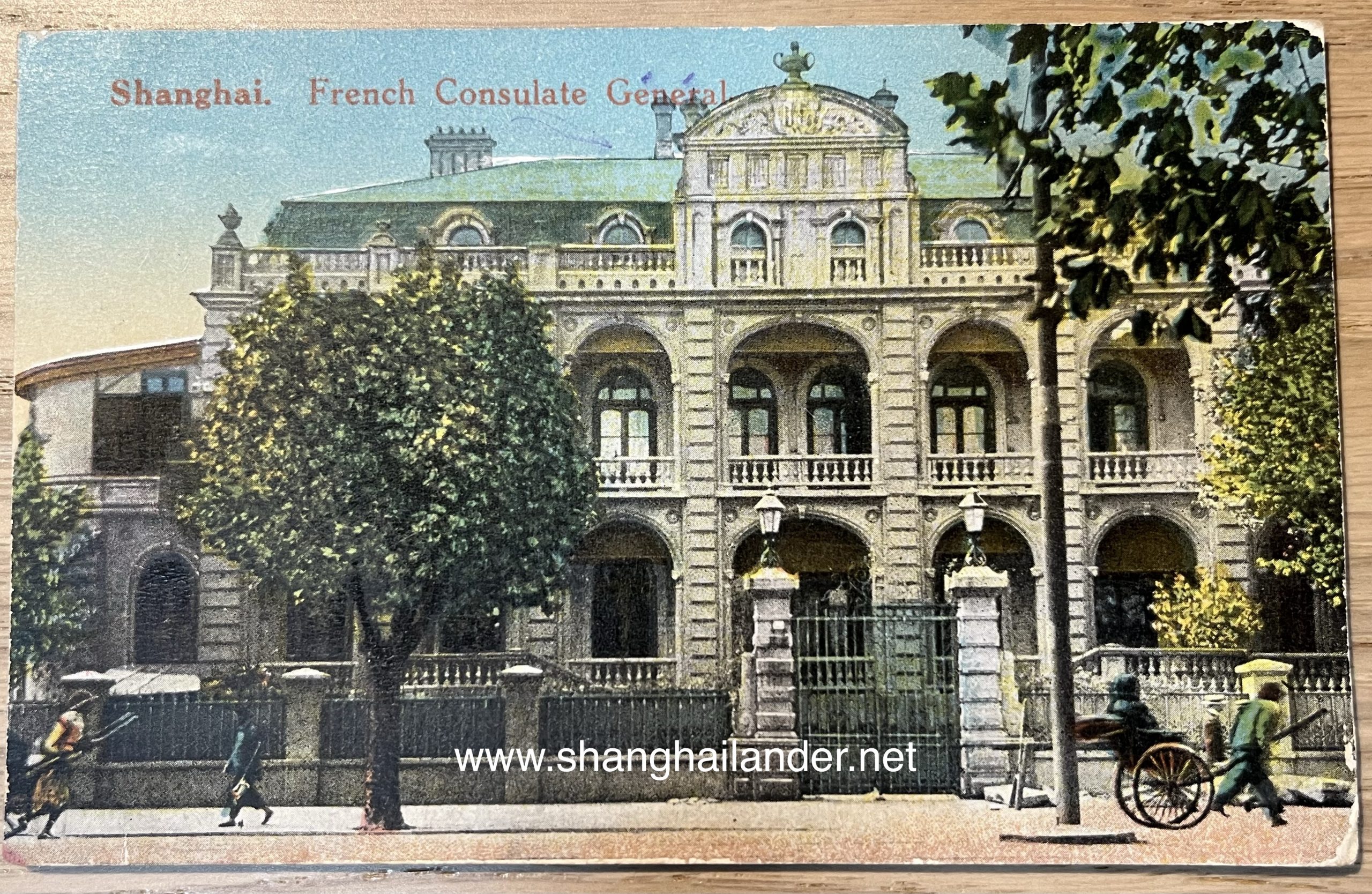
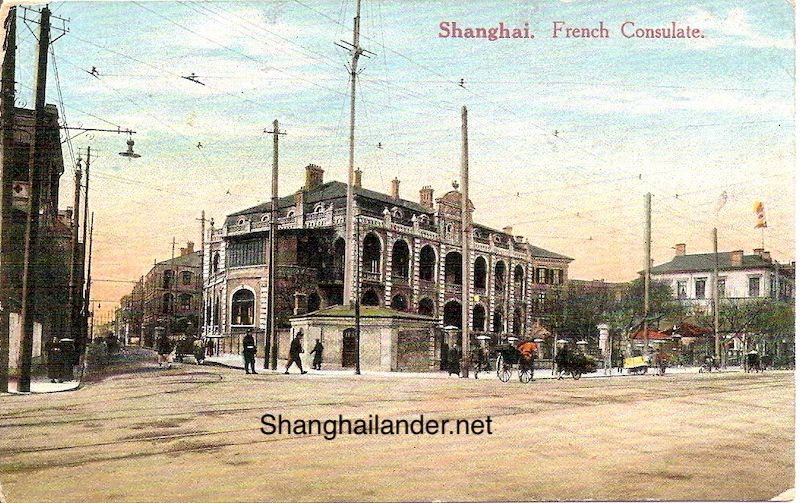
Below is another view of the building, probably taken later with trees significantly larger. It is also much closer and gives many more details of the building. it gives a clear pictures of the façade’s balcony and windows. The style was definitely noe renaisssance, typical from the French 3rd Republic period. It is quite similar to the former Saigon municipal building, built by France between 1901 and 1909. Although the picture is not dated, the text on the back side of the postcard dates it from 1927.

Like other postcards then it was made from a black and white photograph (color photography was not widely available then) and colorized by hand. Although the colors were added later, it looks very real and was probably close to original of a grey stone building similar to the first picture. I don’t think the roof was green, probably dark grey colored. Yellow is used for the trees and some part of the front, maybe the “RF” (République Française) sign was covered with gold like on the picture though I doubt it. The characters on the street side clearly indicate the scale of the building that must have been clearly visible from the river, just like buildings down stream in the former international settlement.

The building was the office of the French Consul as well as his family home. If the area was not so busy when this consulate building opened, it was very different in the 1930s as Jacqueline Meyrier, daughter of Consul General Gustave Meyrier ,who was born in Shanghai in 1927 and lived in Shanghai from 1932 to 1936 and from 1945 to 1950. As stated in her interview by Didier Pujol, “She remembers the noise coming from the Quai de France which was always filled with coolies carrying loads off the boats.” The Rue du Consulat was the main road in the East of the French Concession, and was next to Route Colbert were the godown (warehouse) of Butterfield and Swire was located, so the area must have indeed been noisy.

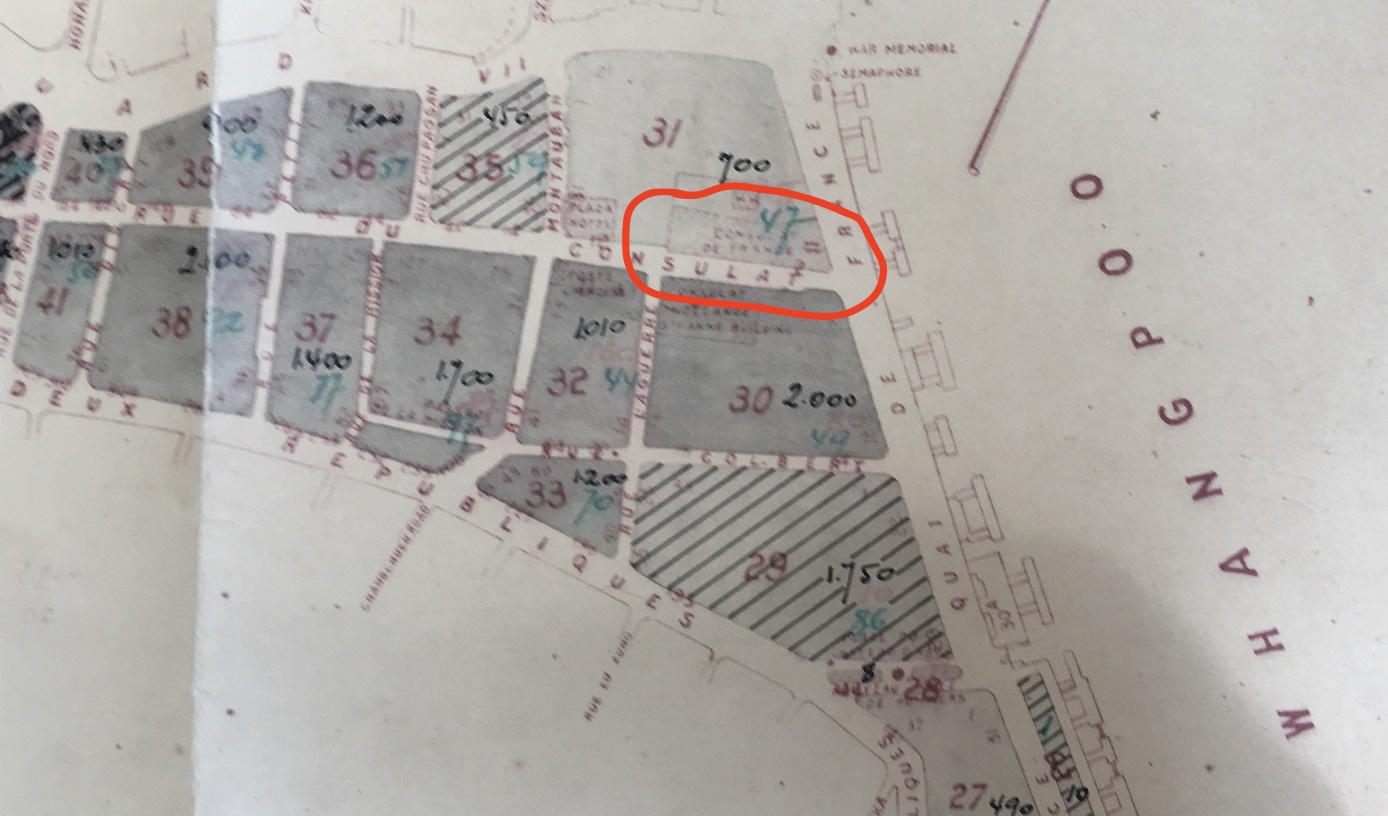
The location of the French Consulate remained unchanged until the end of the former French Concession in 1946 as shown on below map from 1937.

French consulate location

This version of the French Consulate lasted the longest, and the building continued to be used long after the Consulate closed in 1950 as the Jin Ling Road Middle school. A French friend told me the story of the destruction of the building in the early 80s, when he tried to salvage a few pieces. Unfortunately, those remaining pieces have been lost over the years. Below picture is from 1983, shortly before the building was demolished.

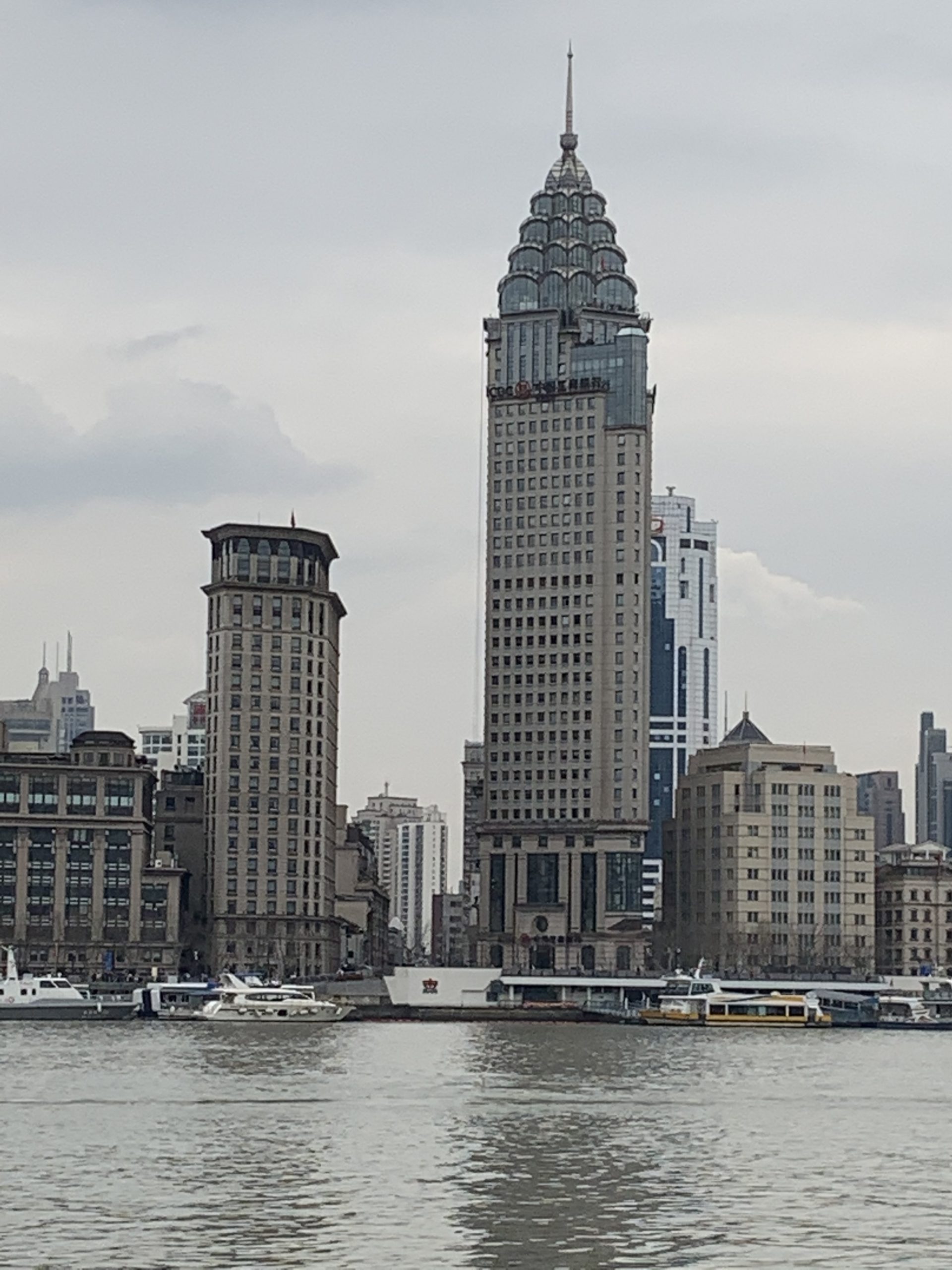
The former French Consulate building was replaced by an unimaginative office building. Fortunately, this building was renovated and a neo-art deco style top was added in 2006. It is now occupied by ICBC bank. The ground level of the building reminds of the style of the former Consulate building, including wrought iron fences around the plot. Maybe it is an hommage to the former building that was once on that same spot.

Location of the former French Consulate (Right)

The neighbouring building, the former office of the Messageries Maritimes still stands (right to the main tower), being now the seat of the Shanghai archives. For more information, about the earlier French Consulate (1861-1896) that was located on the same spot please go to “Shanghai Former French Consulate (Part 1)”.

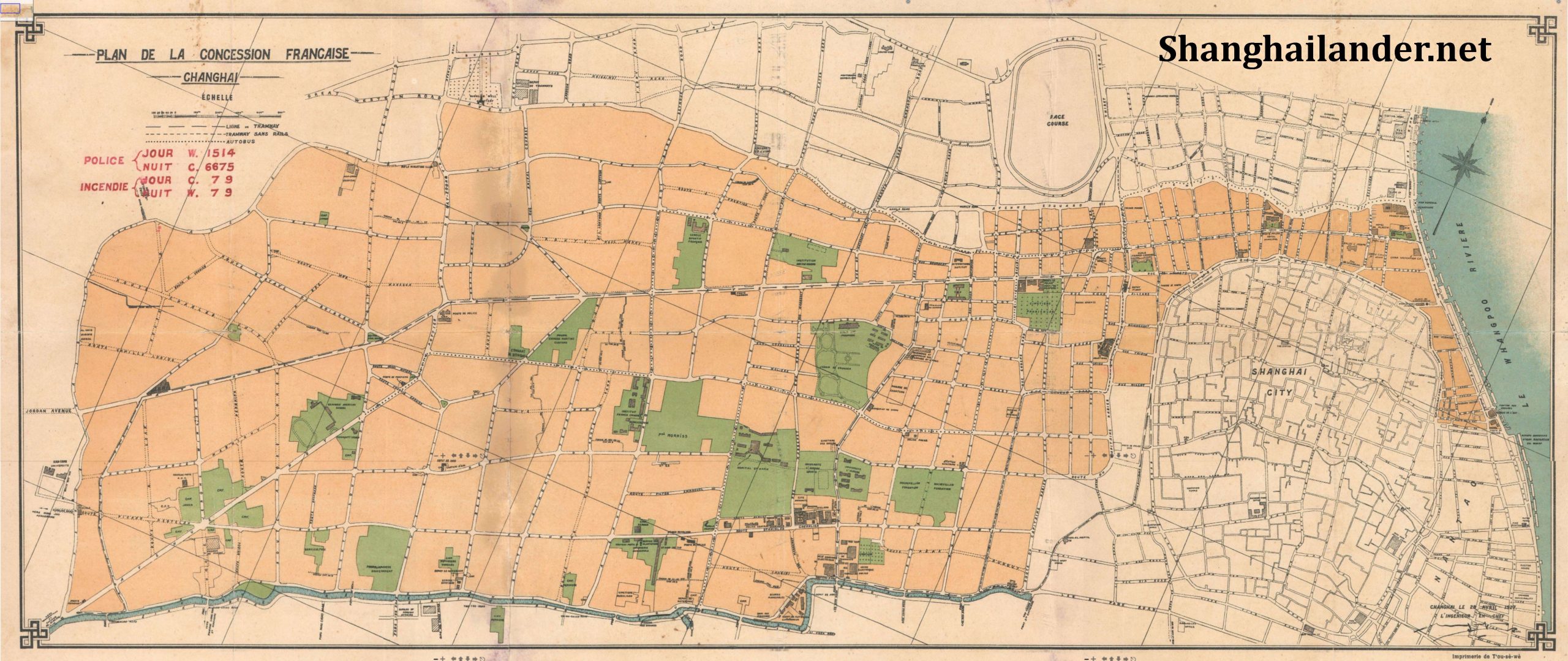
French concession detailed map

Maps are an essential took for understanding history. I recently found an amazing map of the Shanghai former French concession. Finding all information on it is a real challenge, but also very rewarding.

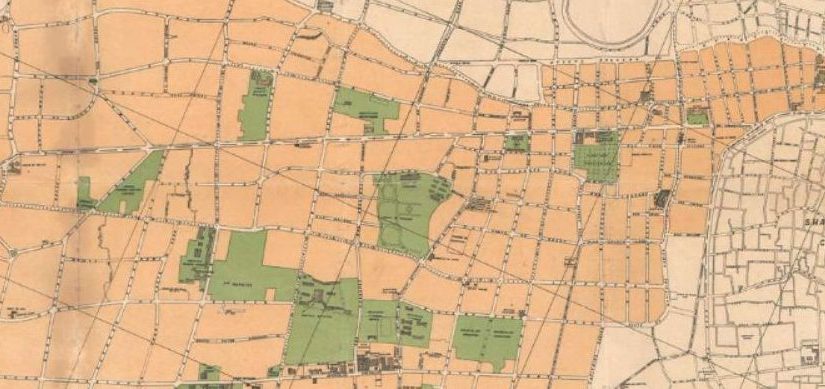
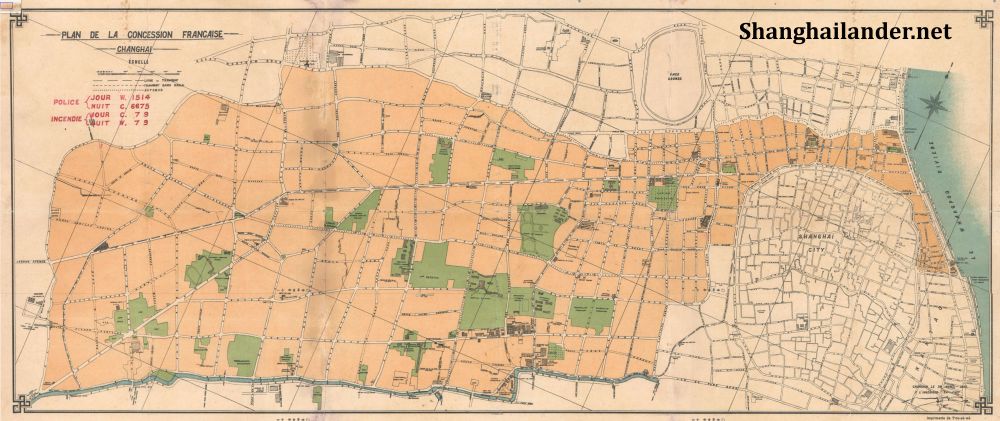
The below map was downloaded from a public website. It is clearly the scan of an historical map of the Shanghai French Concession. The title is “Plan de la Concession Française”, “Changhai”. The website mentioned the date of 1920, but it’s clearly from a later date.

The shape of the map clearly shows the full size of the former French concession, after 1911. One specific point for finding the date of the map is the presence of the Cercle Sportif Français (Corner Route Bourgeat and Rue Cardinal Mercier / today Changle Lu and Maoming Nan Lu) , officially opened at the end of 1926. At the same time, the Canidrome is not mentioned on the map, in the block Route Lafayette / Route Cardinal Mercier / Avenue du Roi Albert (Fuxing Lu / Maoming Nan Lu / Shaanxi Nan lu). The part of the Rue Cardinal Mercier next to the canidrome was not even built, with the Morris Estate covering both side of the current Maoming Lu. As the Canidrome opened in 1928 and needed some time for building, the map can be dated from 1927.

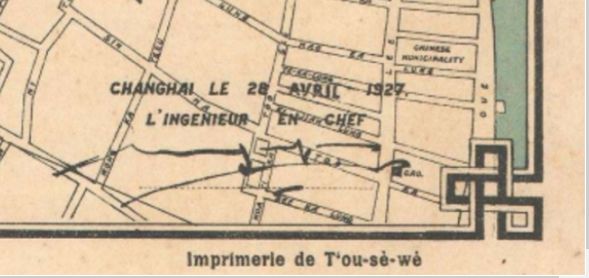
Looking at the details more in-depth, very interesting information is found in the lower right corner. First of all, the date of the design is written. The map design was finalised on 28 April 1927, by “l’ingénieur en chef” (the chief engineer) of the Shanghai French Municipality whose signature is printed on the map. Furthermore, the print work is mentionned as “T’ou-sé-Wé”. This was the orphanage of the ZiKaWei (XuJiaHui) Jesuits complex which was also an art and craft school run by the Jesuits priests. The framing of the map is also very nice, with a square motive on each corner. The map was printed on brown paper with 4 color (Black, Orange, Blue, Green).

On the top left corner is added some information probably stamped later in red. “Police Jour C 1514 / Nuit W 6675” as well as “Incendie Jour C 79 Nuit W 79”. I guess those were the police and fireman phone number for day and night service.

The size of the map is mentioned to be 12 x 28 inches (30.48 x 71.12 cm), with a 1 : 8750 scale. I am somewhat skeptical of a map size in inches, this must be an approximation as this French map was surely an integer number in cm. Futhermore, I have seen a very similar French Concession map, with original map about 140 cm x 60 cm).

This map is very highly detailed and of very high quality. Since it is signed by the chief engineer, it was made for the French Consulate, or most probably the French Municipality. This makes it an official map of the French Authorities. Those cadaster maps are extremely rare nowadays, this was a lucky catch. If you need the original full size file, download link is below.

Shanghailander articles are published on an irregular basis. To be notified when a new article is posted, subscribe to the newsletter using this link, or follow the Shanghailander Facebook page.

Shanghai French Municipality Letter

Separated from the Shanghai International Settlement, the Shanghai French Concession had an administration on its own. Beside the French Consulate located on the Bund, the French Concession also had a French municipal administration as well as municipality building. The French Municipal Council (Conseil Municipal) was in charge of the city’s management, as opposed to the Consulate representing the French state. Although the French Municipal council was presided by the French Consul General, it regularly tried to distance itself from the Consulate’s influence.

While foreigners, and even more French people, were only a minority in the French Concession, the French Municipal Council had mostly French members as well as 3 foreign members. Chinese members were added in 1914, as a condition for the final extension of the French Concession. Members of the French Municipal Council were elected and including known people of the French community like René Fano, and Lucien Basset. Hugh Martin who I wrote about in previous posts was a also a member. The most famous Chinese member was surely gangster Du Yusheng.

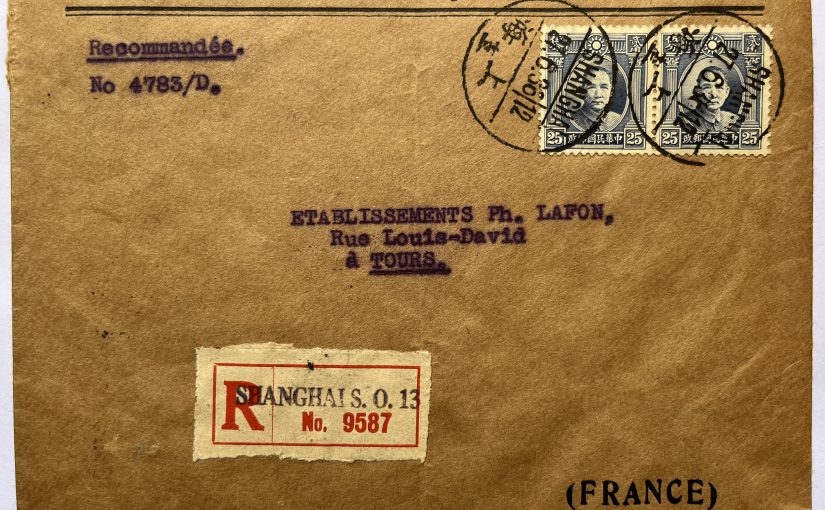
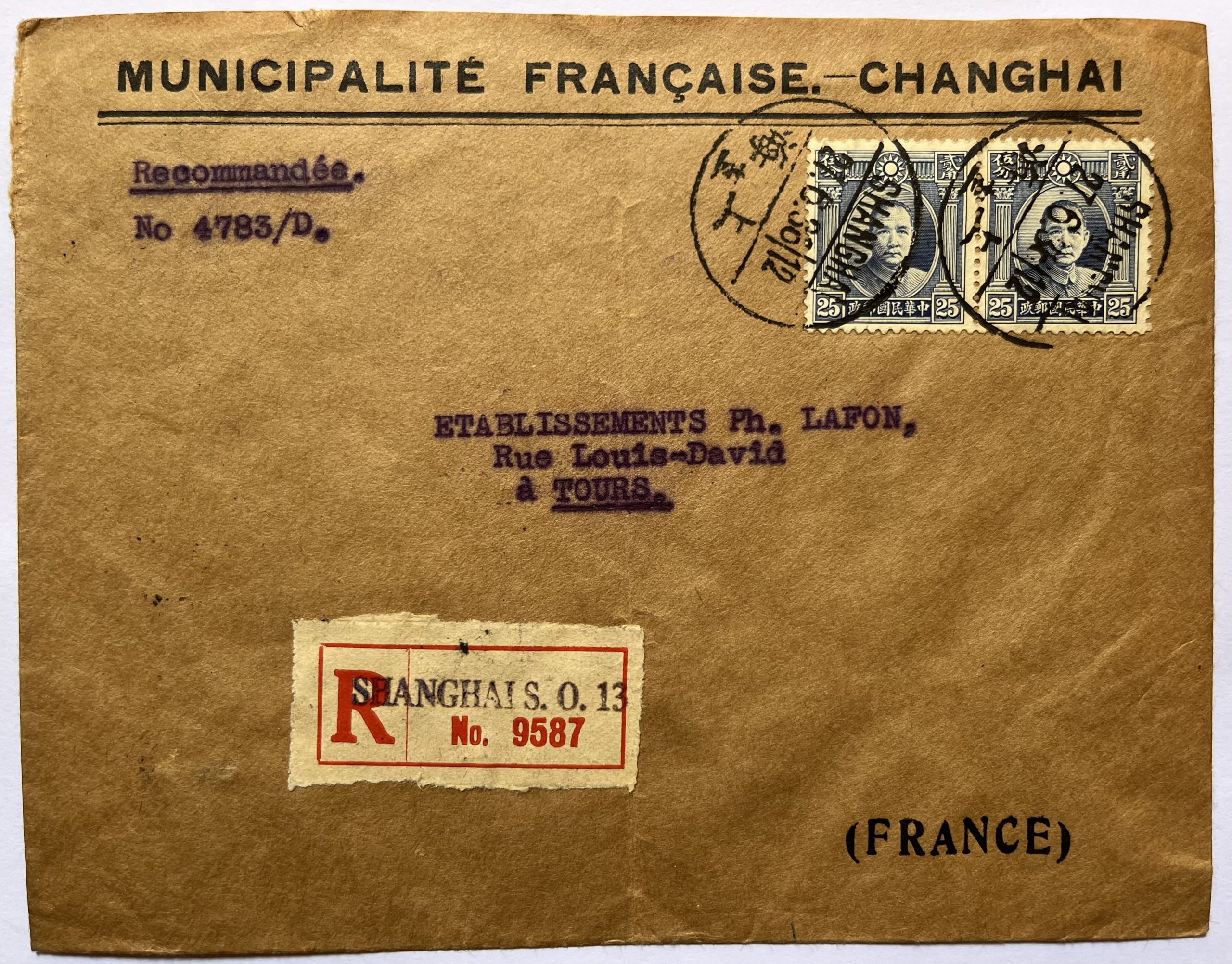
Documents from the Municipalité Française de Changhai are pretty rare, so I was very happy to get this original envelop from the Municipalité Française from 1936. It was posted on 27 June 1936 at the Shanghai Post office, probably the General Post office on Sichuan Lu, as the character Zhong (center) is used below Shanghai. It was stamped with the 12 (probably 12 o’clock) batch. As discussed in previous post “General post office“, this was carried by the Chinese post, with Chinese stamps on the letter.

This was a registered letter, “Recommandée” is written on the envelope, as French was (and still is) the language of the international postal association. This also meant that a coupon was attached on the letter that was detached when the letter was actually delivered. As no mention is about the route to France, I assume the mail went by boat.

I was curious about the destination, ” Etablissements Ph. Lafon in Tours. The company was specialized in floor mills equipment. Below is an add from 1919 but I found pictures of machines from this company from 1950s. I have not found any company importing this brand in Shanghai, but maybe the Shanghai municipality was buying or looking at buying equipment from this company.

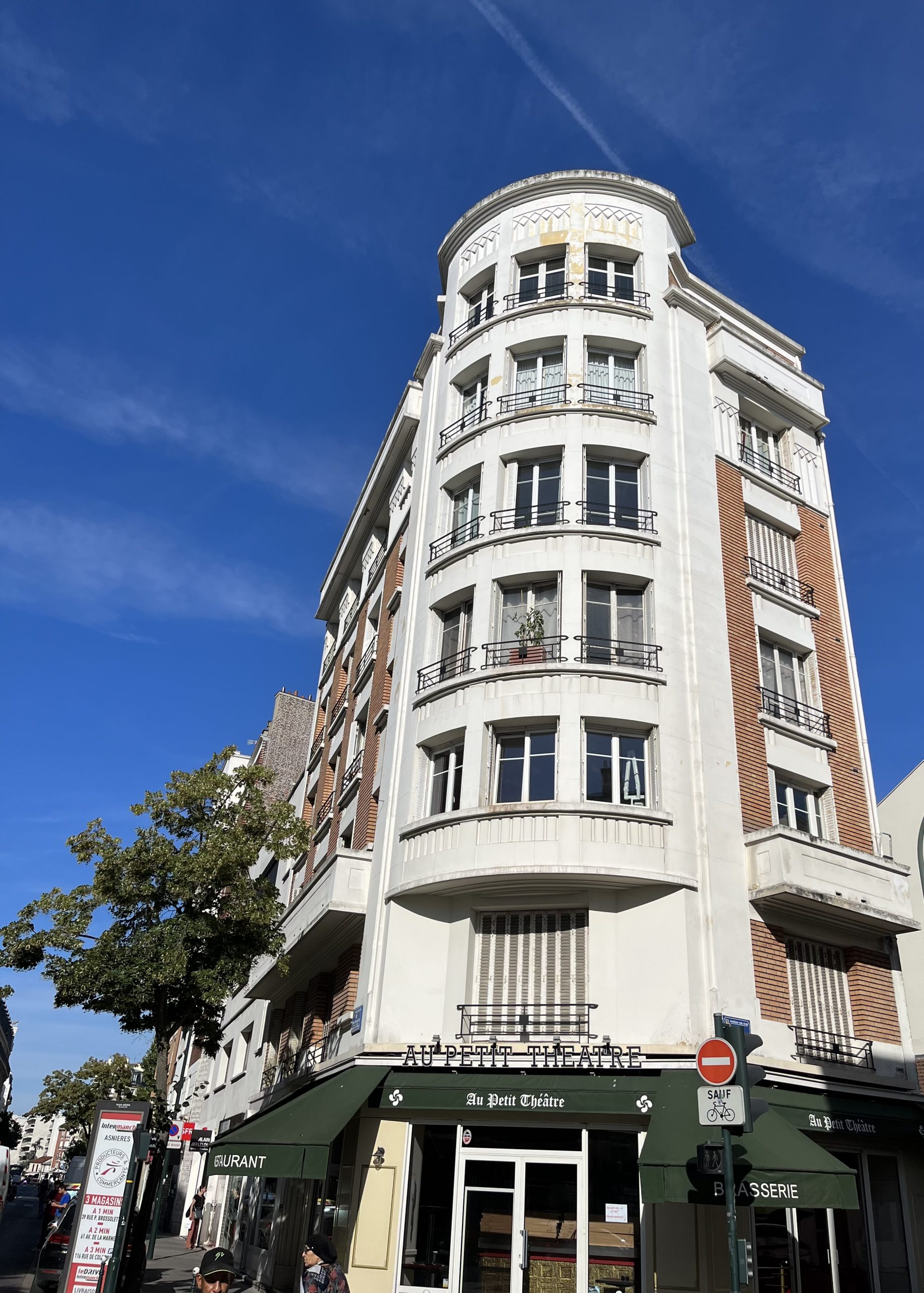
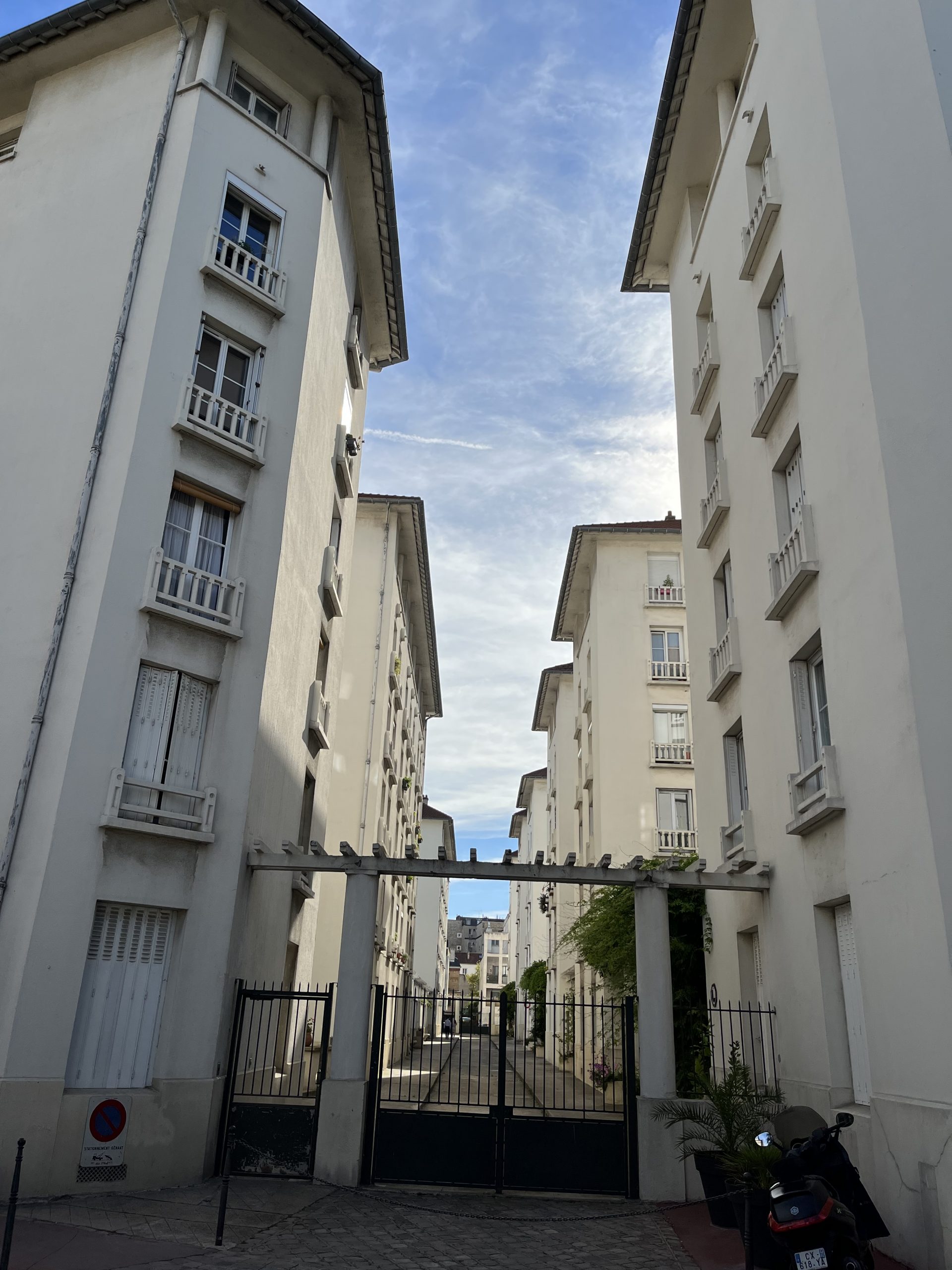
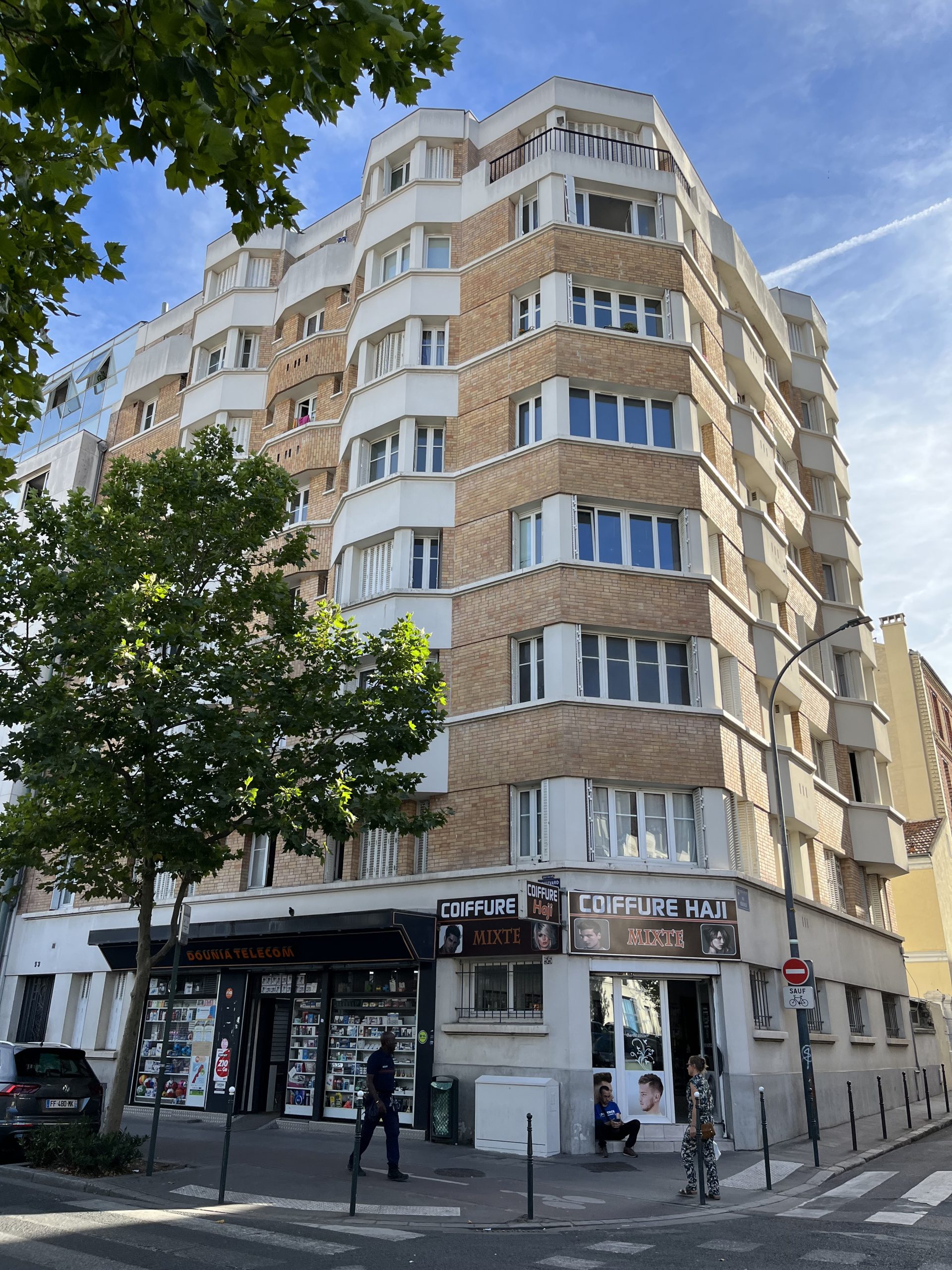
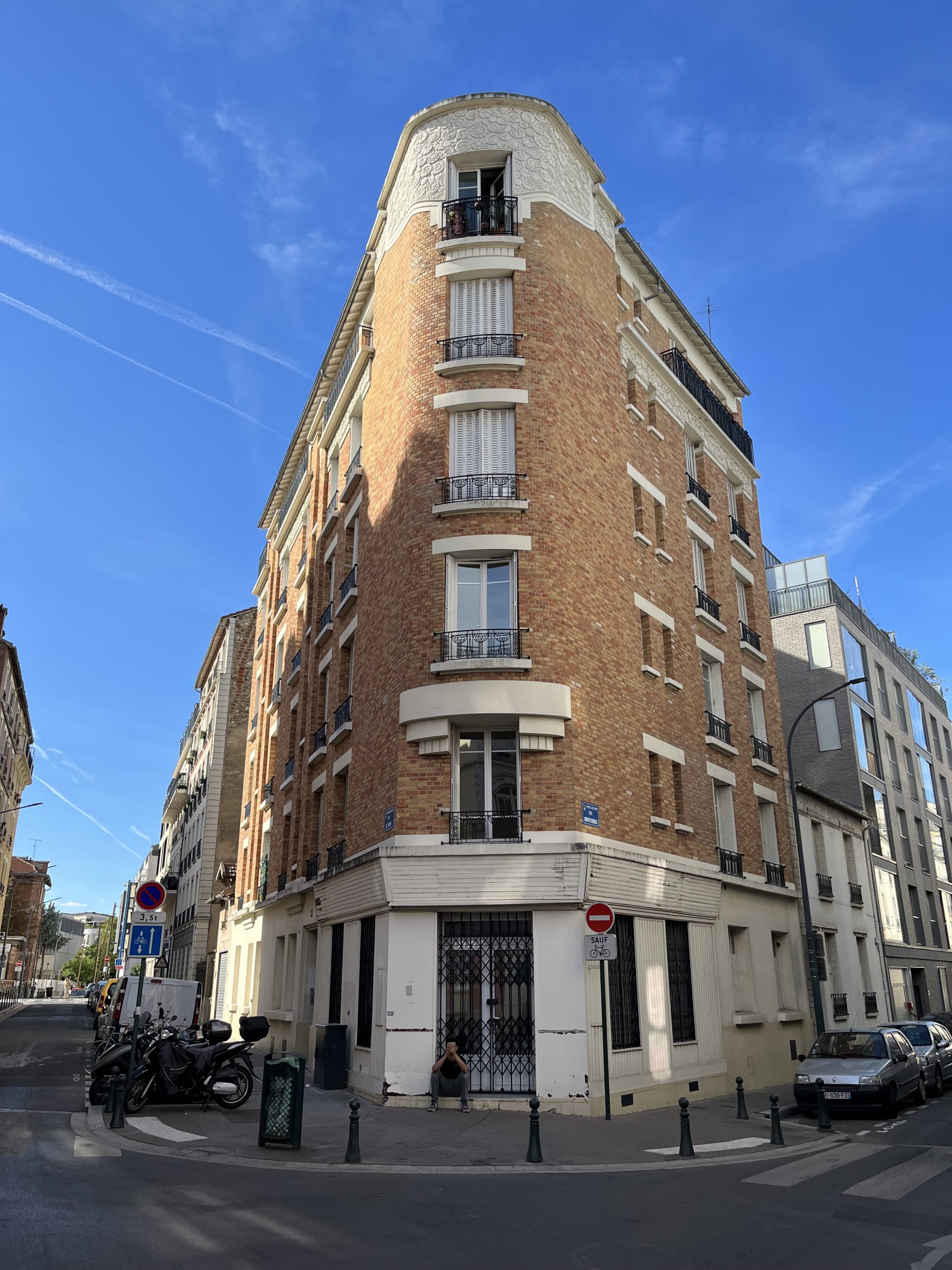
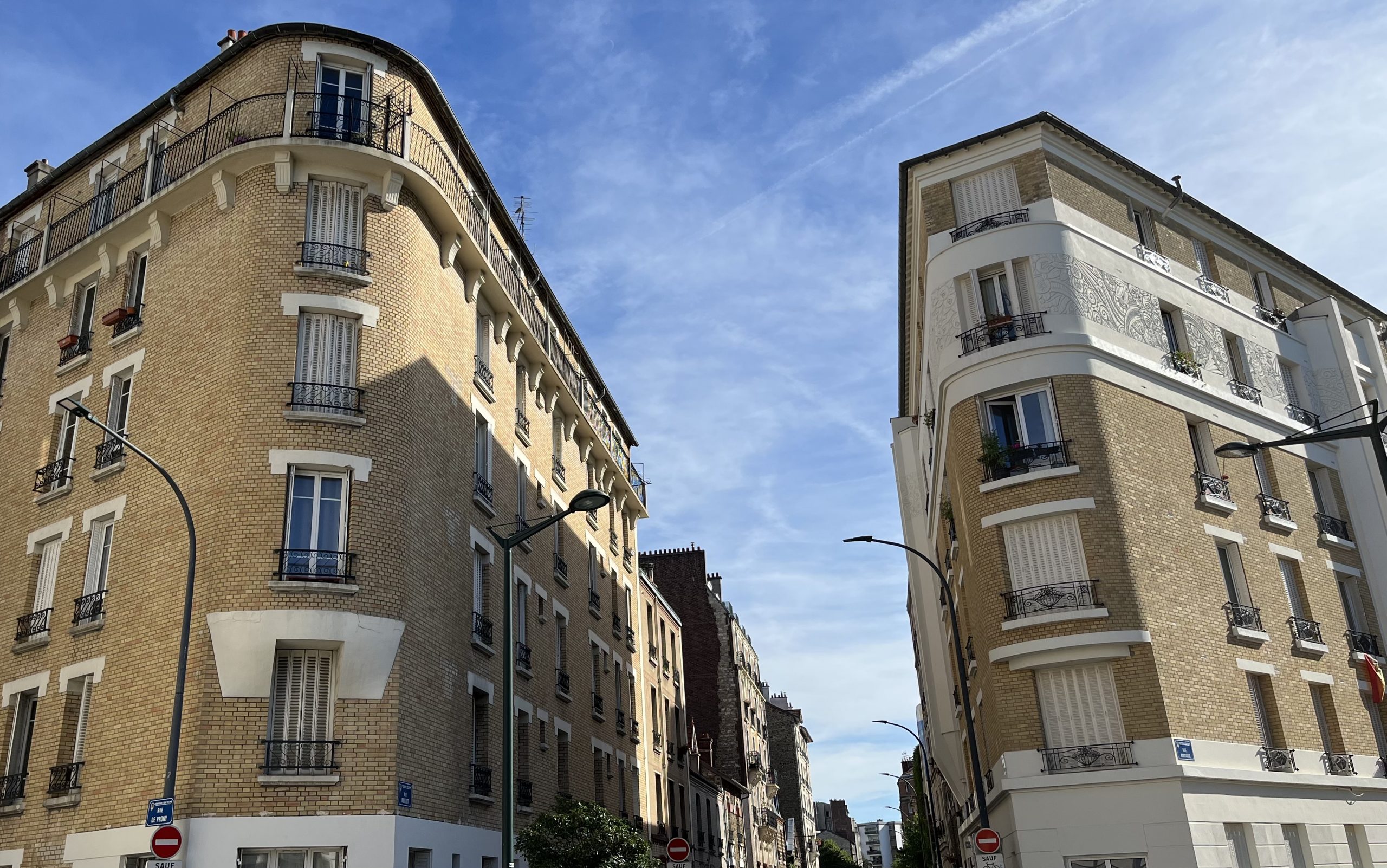
Asni`eres Art Deco

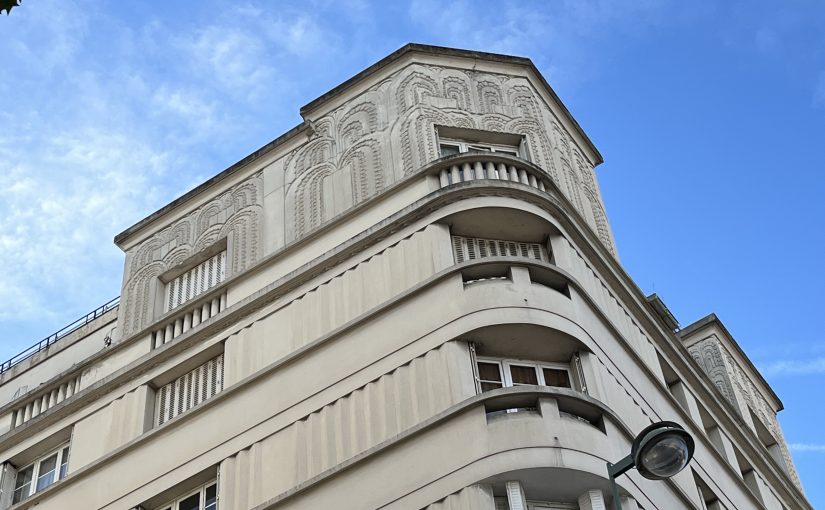
The 1920s and 30s was a period of intense building in Paris outer districts and in Paris close suburbs. Away from the grand building of Central Paris, buildings in suburbs tend to be a little smaller, with more space around. They are more similar to the ones of Shanghai former French Concession.

As a stopover before flying back to Shanghai, I spent a day in Asni`eres/Seine, a very close suburb to Paris. Asni`ere is familiar for French people, as French standup Fernand Raynaud (1926-19730) mentioned it in one of his most famous pieces, asking for phone number 22 in Asni“eres in the 1950 (see video below).

https://www.youtube.com/watch?v=HM5fIE62cqo

Like many cities in the Western part of Paris, it was built up before and after WWI, so Art Nouveau and Art Deco are plentiful. Another similar exemple is much more though after Boulogne-Billancourt (see post From Boulogne to Nanjing for more details). Walking around the city, I found a number of nice Art Deco examples.

With such a sunny and hot weather, it felt even more like in Shanghai, surrounded by Art Deco buildings.

爱情神话 / B for busy

爱情神话, in English “B for busy” is a recent Shanghai movie that has taken the city like a storm. This is a story of Shanghai people, taking place in the heart of Shanghai… in Shanghai dialect.

爱情神话 movie poster

爱情神话 can be translated as “love myth”. The movie is a romantic comedy centered on Old Bai, a Shanghai man in his mid 40s. Divorced since years, he still looking for love and find himself the center of attention of three women. His Tango lover ex-wife is still around, and his own mother never accepted their divorce. One of his female student is also showing clear interest, though he is mostly some kind of distraction for her. Along comes a new friend that is attracting a lot of his attention. This trio of women makes a mess of his own little comfortable life, along with old friend Lao Wu, with his legendary past adventures with women.

The movie reminded me a lot of French movies, that are often centered around a couple of people in a short period of time. It studies the interaction between and how they change each character’s life. It also gives a sense of intimacy that really helps the viewer to relate with the movies characters. It’s a romantic comedy, and like in many French movies, the viewer will experience both laugh and sadness within short periods of times, making the movie very close to real life. Like many intimate French movies, it is depicting the life of the middle class, with cultural or artistic background.

Having lived in Shanghai for more than 18 years, I could also find a lot of reminders of my own life in Shanghai. All characters speak Shanghai dialect and characters are a real reflection of Shanghai life, including food and habits. All exteriors have been filmed in the streets of the Former French Concession, where a lot of Shanghai people in their midlife have spent their childhood in, just like characters of the movie. Walking down one of those streets, I am half expecting to meet the movies characters along the way. The whole movie actually feels like a love letter to life in this city.

The combination of strong Shanghai feeling and close intimacy with the characters is surely what has made the success of the movie in Shanghai. At the same time, it is also attracting foreigners who live in the city, as it gives all of us a sense of proximity and belonging. .. thanks to the English subtitles in the theater version. Hopefully, this will also make successful abroad as well, showing a very human face of Shanghai to the World.

Update 2024: The new series “繁花 / Shanghai blossoms” in Shanghainese is the new pride for Shanghai people.

Jardin Français

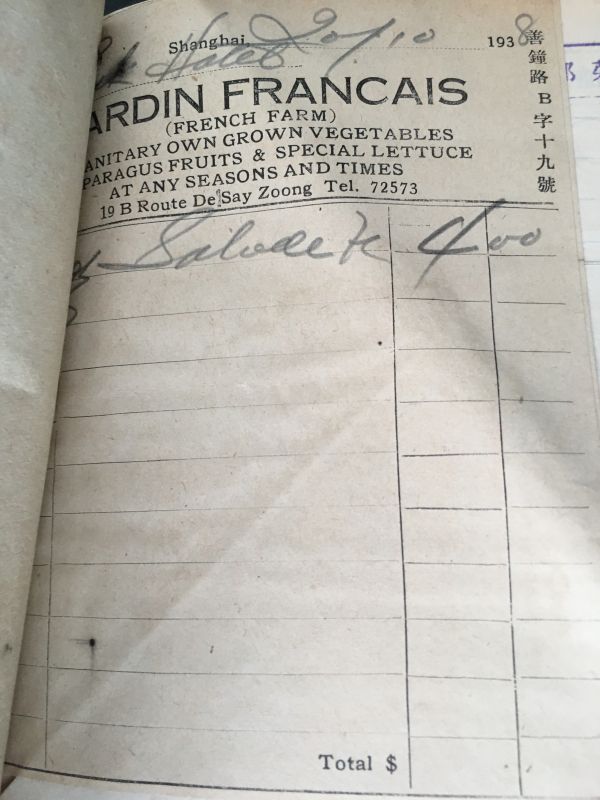
A recent post on this blog was focused analyzing a day of Park Hotel accounting. One the pages in the booklet particularly attracted my attention, a receipt from “Jardin Français”.

As the subtitle states it, Jardin Français or French Farm, was a market garden in the West part of the French concession. It offered “sanitary own grown vegetables, asparagus, fruits and special lettuces at any seasons and times”. This actual voucher was for chicory salad, and another one was for eggs. This was probably a premium place to get quality western vegetables, serving the hotels and the high level residents, something like today’s organic farming.

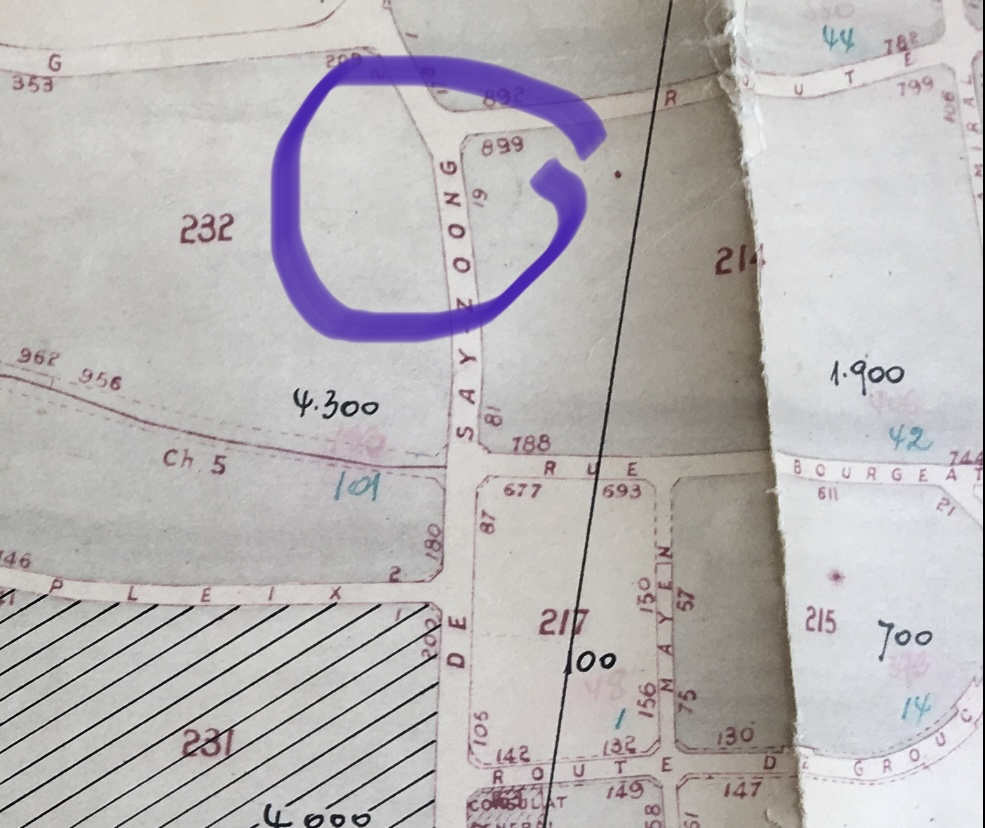
19B Route de Say Zoong is now located on Changshu lu. Above map shows that 19 was just South from the Route Ratard / Route de Say Zoong corner, today Julu Lu / Changshu Lu. It is located on below map from 1939. This was definitely a shop, but not the garden itself, which was probably a few miles away, in the countryside.

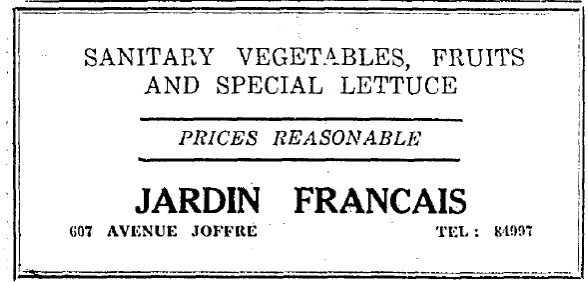
After writing the original post on this topic, friends from MOFBA came with a advertising for Jardin Français at a different address, published in “The China Press” from 9th March 1934.

From “The China Press” from 9th March 1934

The earlier incarnation of Jardin Français was closer to the center, and probably moved West along with the development of the city, and maybe (just like today) rents increase. I like the “prices reasonable”, which sound to me like a literal translation of “Prix raisonnables” in French but sounds kind of funny in English.

This is the exact same corner, today Julu lu / Changshu lu. On my back it the other side of Julu, Changshu lu 17, i.e. 17 Route de Say Zoong. Numbers on that street have not been changed. The large building is numbered 55 but covers a large area, so it surely encompasses 19, and 19B. This was the location of the Jardin Français shop in 1938. The actual building was probably a 2 story long building with many shops, that is common in Shanghai even today.

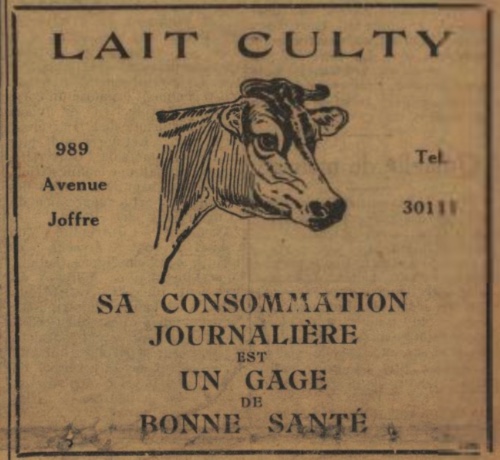
Culty diary advertising

In post Shanghai Milkman, I wrote about milk delivery in Old Shanghai, and Culty Dairy, a farm located in the former French Concession. Culty dairy was advertising its products in the “Journal de Shanghai”, the French newspaper in Old Shanghai. Below ad is from 8th December 1928.
“Culty milk. Drink it daily brings good health”. Simple but effective!

Culty dairy ad, 1928

Former Shanghai French Consulate (Part 1)

“La Concession Française de Changhaï”, the Shanghai French Concession was officially created by the Whampoa treaty in 1844. It became much real at the arrival of the first French Consul Général, Charles de Montigny in 1847. One of the main task of the Consul was to open a Consulate General, and later to build an actual building to host the Consulate.

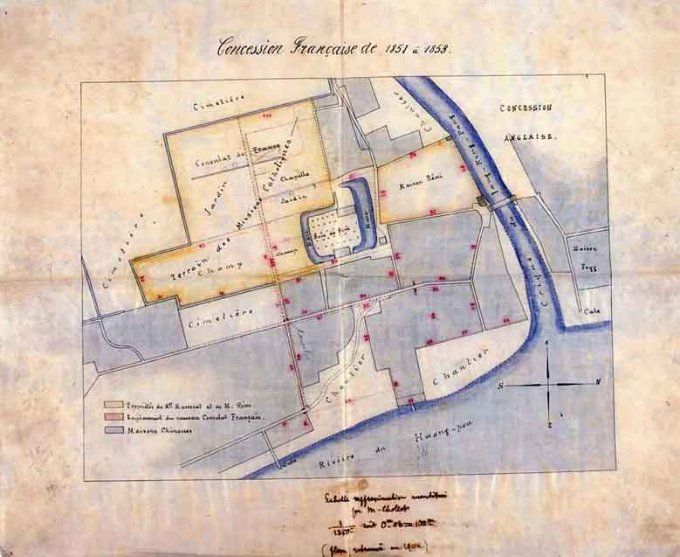
As seen on above map, the original French Consulate building was not on the Bund, but a little behind, within the plot of the Catholic missions. This plot is where the current Saint-Joseph Church is, on Sichuan Nan Lu.

The Consulate moved a few years later to a location on the “Quai de France”, the French Bund. The French Concession has original just a small access to the river, much shorter than the Bund of the International settlement. With the extension of 1861, the river side called “Quai de France” or French Bund was extended. From that point, Quai de France, or French Bund, became much longer and with more traffic. It became important for the French consulate to be on the French Bund, just like the Brititsh Consulate down river (See post “HBM Consulate Shanghai” for more info). The new consulate building of classic style, was planned from 1863, built from 1865 and the consulate moved to this location in May 1867.

Original French Consulate on the Bund

Although the plot where the Consulate was built was on the riverside, the building itself was located further away from the river. The building on the far right was the original office of the French shipping line, the Messagerie Maritime. The street on the left side of the Consulate became “Rue du Consulat” (today Jingling Dong Lu).

Below picture is also of the French Consulate showing a full view of the Rue du Consulat and the other side of the street. It was probably taken a few years later as the trees have grown significantly.

French Consulate in Shanghai in the 1870s

Construction of the 1867 Consulate building was of low quality. As mentionned in “Histoire de la Concession Française de Changhaï) by Maybon & Fredey, walls started to show massive cracks from 1870. Emergency work was required in 1872-1873 as a large part of the carpentry was rotten by humidity. This building did not last very long as a new Consulate was built on the same plot but closer to the river and the French Bund, opening in 1896, when Paul Claudel was the French Consul in Shanghai.

The new French Consulate building

The story of this building continues in post Shanghai former French Consulate (Part 2)

Staying on Rue Colbert

Spending a staycation around the Yu Garden area became a great way to enjoy an overlooked part of Old Shanghai, before it disappears. Bordering the Renmin Lu (former Boulevard des deux Républiques), the building hosting the hotel occupied a complete block, with a great view in all directions.

Hotel location on a very old map

Above map shows the location of the block, at the cross Renmin Lu, Xinyong’an Lu and Yong An lu. Although the hotel is mostly known for its proximity to Yu Garden, it’s view on the former French concession that really interested me.

Boulevard des deux républiques (carte 1932)

Renmin lu was originally a canal, like many streets in Shanghai including today’s Yanan Lu (see post “Crossing the Yang Jing Bang” for more details). As the South border of the French Concession, it was called “Quai des fossés”, meaning “pit quay” in English), and was facing the North part of the Shanghai city wall. The city wall was teared down in 1912, the canal was filled and turned into a street called “Boulevard des deux Républiques”, meaning two republics Boulevard, i.e. the French Republic and the newly formed Chinese Republic. The Chinese name was and still ease “Renmin Lu”, republic street. Along with Zhong Hua lu, litteraly China street, making a circle following the former city wall, they form “Zhong Hua Ren Min”, meaning “The people of China”.

Xinyong’an Lu, was one of the early roads of the early French Concession, called “Rue Colbert”. One block down from the main road Rue du Consulat (today Jinling Road), it was the original seat of the Shanghai General hospital. Xinyong Lu was called “Rue Laguerre”, after French Commodore Adolphe Laguerre, who helped liberate Shanghai city from the Small Swords Society in 1855.

The whole area was covered with lanes, or Lilong housing many people and shops. In 1937, the block where the hotel is now located had 1200 inhabitants, with 33 Europeans and 70 shops. Shaped as a triangle, it could offer a very long line of shops. The building was on the border between the Chinese city and the back street of the French Bund. Located close to the Northern gate of the Chinese city, it must have been a great location for shops.

The opposite block was much larger, housed 2000 people including 49 Europeans and only 30 shops. Those Europeans were mostly living in the Saint-Anne building, a long 6 storey building on the side of Rue du Consulat, that was the highest building on this part of the French Concession.

The opposite corner from the sky

It was great to give a last look to this area that is now scheduled for redevelopment, as the opposite corner has already been emptied of its inhabitants and will surely massively change in the coming years. The other side of Route Colbert must have been built with similar kind of housing. A few year ago, this stretch of the street was a great spot for being ribbons, knots, fabrics and was needed for sewing.

wheelbarrows on Rue Colbert (Picture virtualshanghai)

Above picture shows the half way between de rue Laguerre corner and the river. The first building is the back of the Butterfield & Swire godown (warehouse). Being close to the French Bund, or Quai de France, and with a major trading company this part of the street must have been busy with warehouses and coolies. This is very different nowadays as the river front is not used for unloading cargo anymore. Route Colbert nowadays is a much quieter street.