The cross of North-South and the Yanan elevated motorway is the center of Shanghai. Its construction in the 1990s was a major construction work. Although it was a major step in the city modernity, it came along with the destruction of many beautiful building on the main road of the former French Concession, l’Avenue Dubail.
This video made in collaboration with Augustin Vouilloux shows the beauty of the architecture and a few pictures of the lost beauty of old buildings.
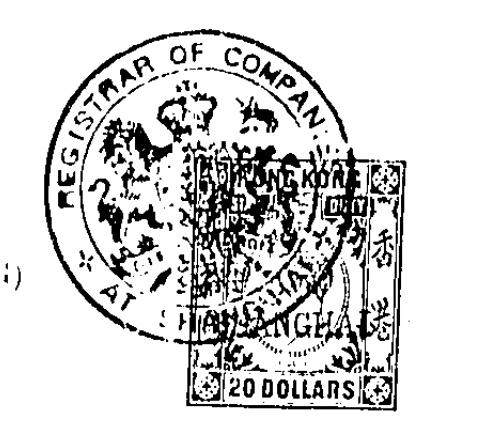
After having published latest post on Hugh Martin, “Letter from Hugh Martin“, a lawyer friend in Hong Kong offered to find the corporate registration file of “Noel, Murray & Co Ltd” in Hong Kong, 瑞和有限公司 in Chinese. This prove to be a very valuable source of information about the company and Hugh Martin, including a copy of his actual signature.
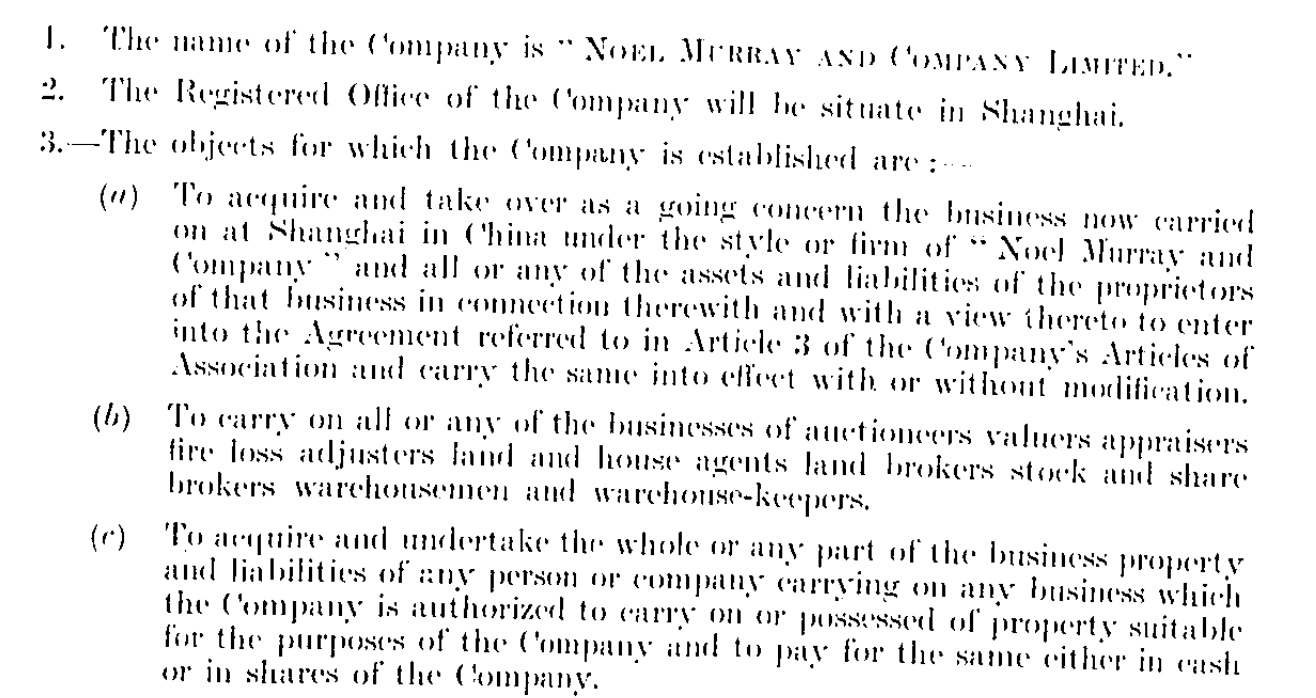
Article of association of Noel, Murray & Co Ltd
In the incorporation documents from 1938, it is very clearly stated that the new company in Hong Kong will take over the activity and business of Noel, Murray and Company carried on in Shanghai. This was only a change in the legal set up, as “The Registered Office of the Company will be situated in Shanghai”. The change took place in 1938, about 1 year after the invasion of Shanghai by the Japanese forces. At that time, the International Settlement where Noel, Murray & Co operated was surrounded by the Japanses forces with part of the International Settlement actually occupied by the Japanese forces. The French Concession, where Hugh Martin lived was under the same circumstances. The situation in Shanghai was extremely tensed and would become even worse in the years later. Moving the business to the British colony of Hong Kong was surely a protective move.
Although, the new company was registered in Hong Kong, Hugh Martin and his partners did not have to go in person. The incorporation process was conducted by their law firm, Platt, White-Cooper & Co, 83 Peking Road, Shanghai. The actual sollicitor was Header Harris, a British lawyet at this firm. Documents where submitted at the British Consulate for certification on 21st April 1938.
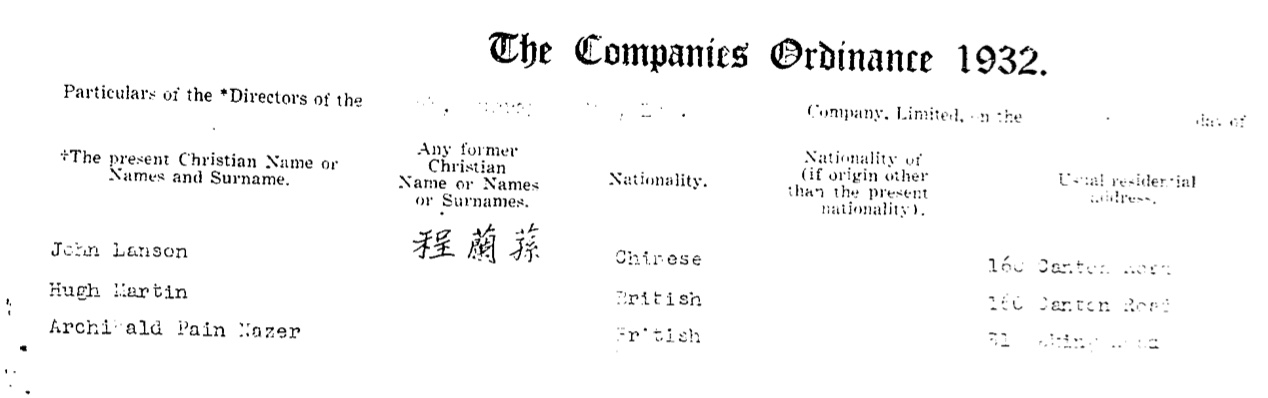
The directors were among the shareholders. Hugh Martin, AP Nazer and John Lanson a Chinese person who was probably the comprador of the company at that time. Hugh Martin and AP Nazer list their adress as 160 Canton Road, the registered office of Noel Murray & Co Ltd.
There were 5 shareholders, Hugh Martin and John Lanson held 24% each, with AP Nazer holding 2%. 2 other Chinese people held 40% and 10%, no information is available about them.
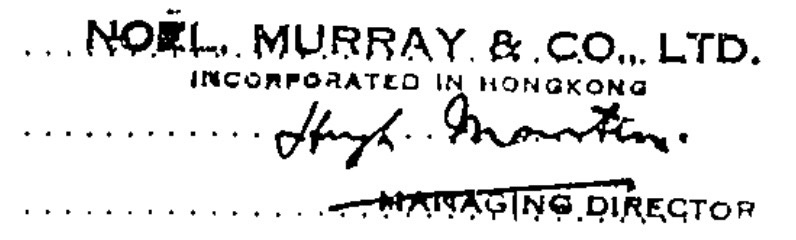
Hugues Martin signature
Since Hugh Martin was the managing director of the company, he signed the incorporation documents so I could get a real picture of his signature. The incoporation files also contained a copy of the company letter head paper, which is exactly like the one in post “Letter from Hugh Martin“, so these papers must be from 1938.
The company was closed down in 1952 by Hong Kong authorities as they did not receive answer on several legal requests. It probably had not more activity by then, as Hugh Martin had gone back to the UK in 1947. In 1949, the Chinese Communist party took control of China and foreign companies started to disappear quickly. Noel, Murray and Co had surely no more business in Shanghai by then and they did not not seem to have started an actual business in Hong Kong to replace it.
This is the 5th post about Hugh Martin and Noel, Murray & Co in Shanghai. To read the thread from the beginning, go to post “Hugh Martin grave in Shanghai“.
Hugh Martin was a noticeable character of Old Shanghai. I heard about him by random and have been fascinated by him partly due to our similar names. This is the 4th post about him. If you have not read the thread before, first go to starting post “Hugh Martin’s grave in Shanghai“.
Over the years, I have accumulated many artefacts from or about Old Shanghai. I was recently reviewing some documents I did not look at for many years. I recently realized that long before writing the first post about Hugh Martin, our paths already crossed. Many years ago I bought some original stationary from the company “Noel, Murray and Co”, with Hugh Martin listed as a director (see below). I did not remember it before running into those papers recently, but motivation for purchase was surely the name Hugh Martin listed on the paper.
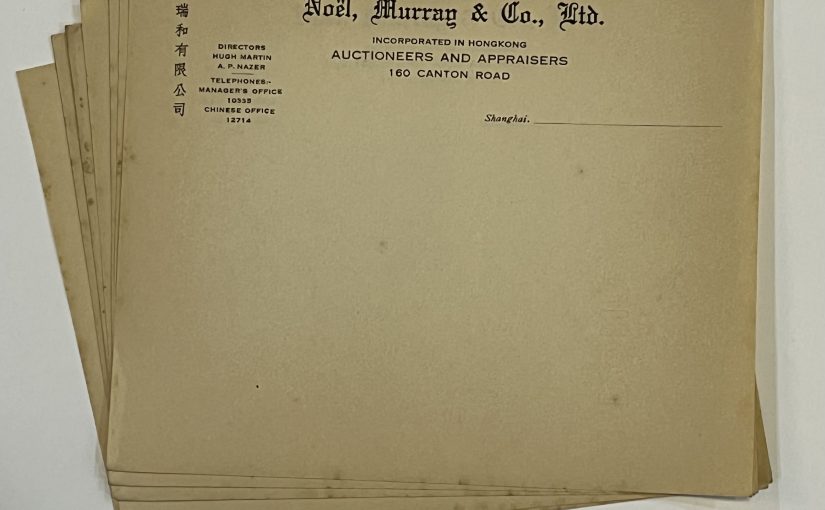
Full length letterhead paper for Noel, Murray & Co
Noel, Murray & Co Ltd, was the company where Hugh Martin worked most of his time in Shanghai. It was founded in 1881 by GW Noel, who in 1889 partnered with former Jardine & Matheson employee, WC Murray. The general Chinese name is 瑞和 / Tsay Wo in Cantonese as traditionally written in the Shanghai Hong List (Rui-he in modern Chinese), sometimes written as 瑞和洋行. After incorporation into a public company aroung 1906, the official Chinese name became 瑞和有限公司 (Tsay Wo public limited company). To show that it was a Brithish firm, the mention 英商 (Ying Shang = English Shop) is added on the above document. The comprador for 瑞和was 叶琢堂, a gentleman from Ningbo was also a banker and became one of the founders of the International Saving Society.
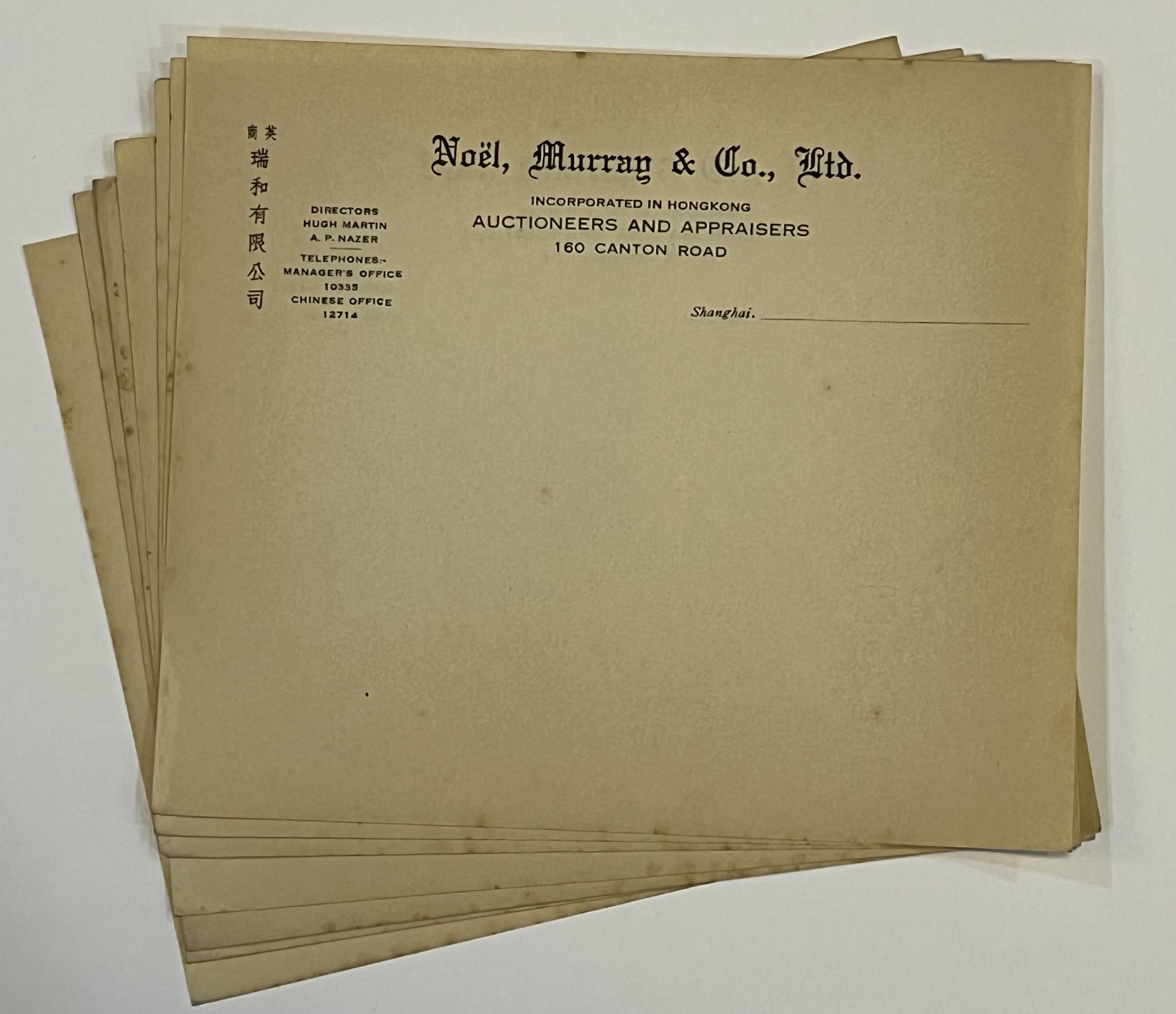
A few sheets of the shorter letter head paper for Noel, Murray & Co
The address written for the company is 160 Canton Road. Same adress was found in 1941 Hong List. I am not sure exactly when the company moved at this location, but surely a few years beforehand. Like many companies operating in Old Shanghai, it was actually incorporated in Hong Kong, not in Shanghai. Another director was listed, A. P. Nazer, whose own company also appears separately in the business directories.
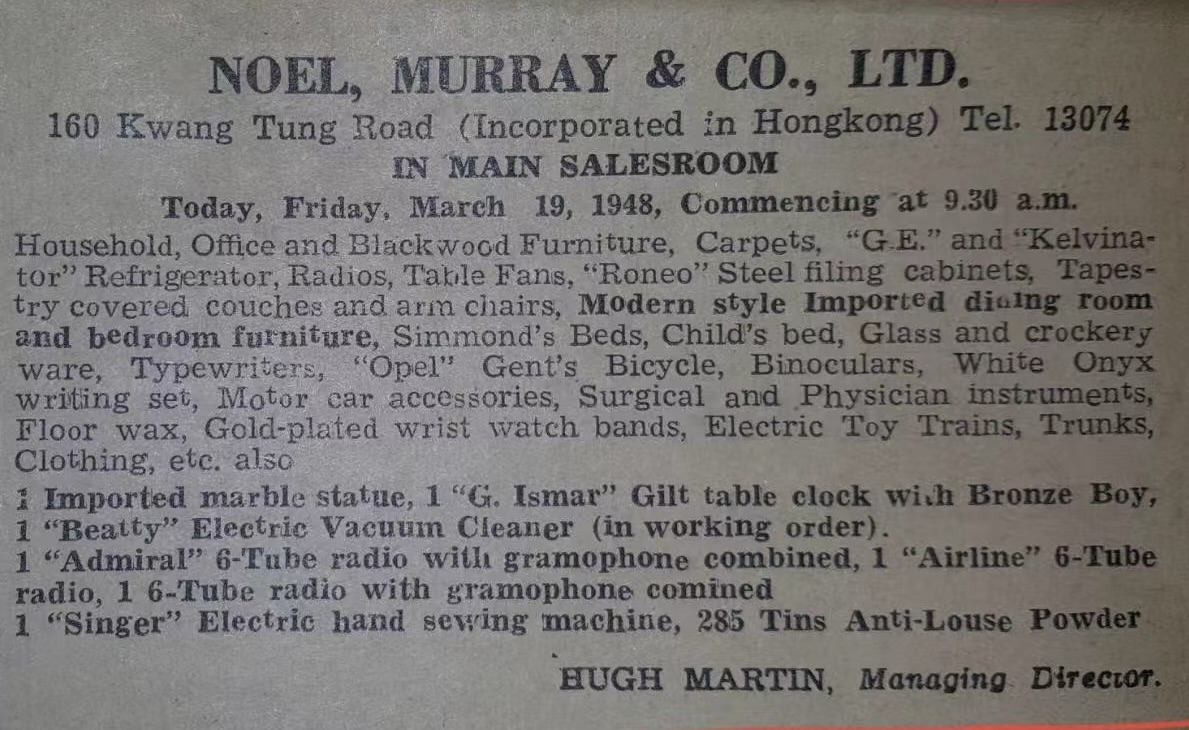
The company activity was mentioned as “Auctioneers, shares and general broker and commission agents”. Its most public activity was to run auctions. The location on 160 Guang Dong Road was their office but also the place where the auctions took place. I only got one insert in the press about an auction from the company, but they must have been organised very regularly and widely publicised.
Advertising an auction by Noel, Murray & Co Ltd in the North China Daily News 1948
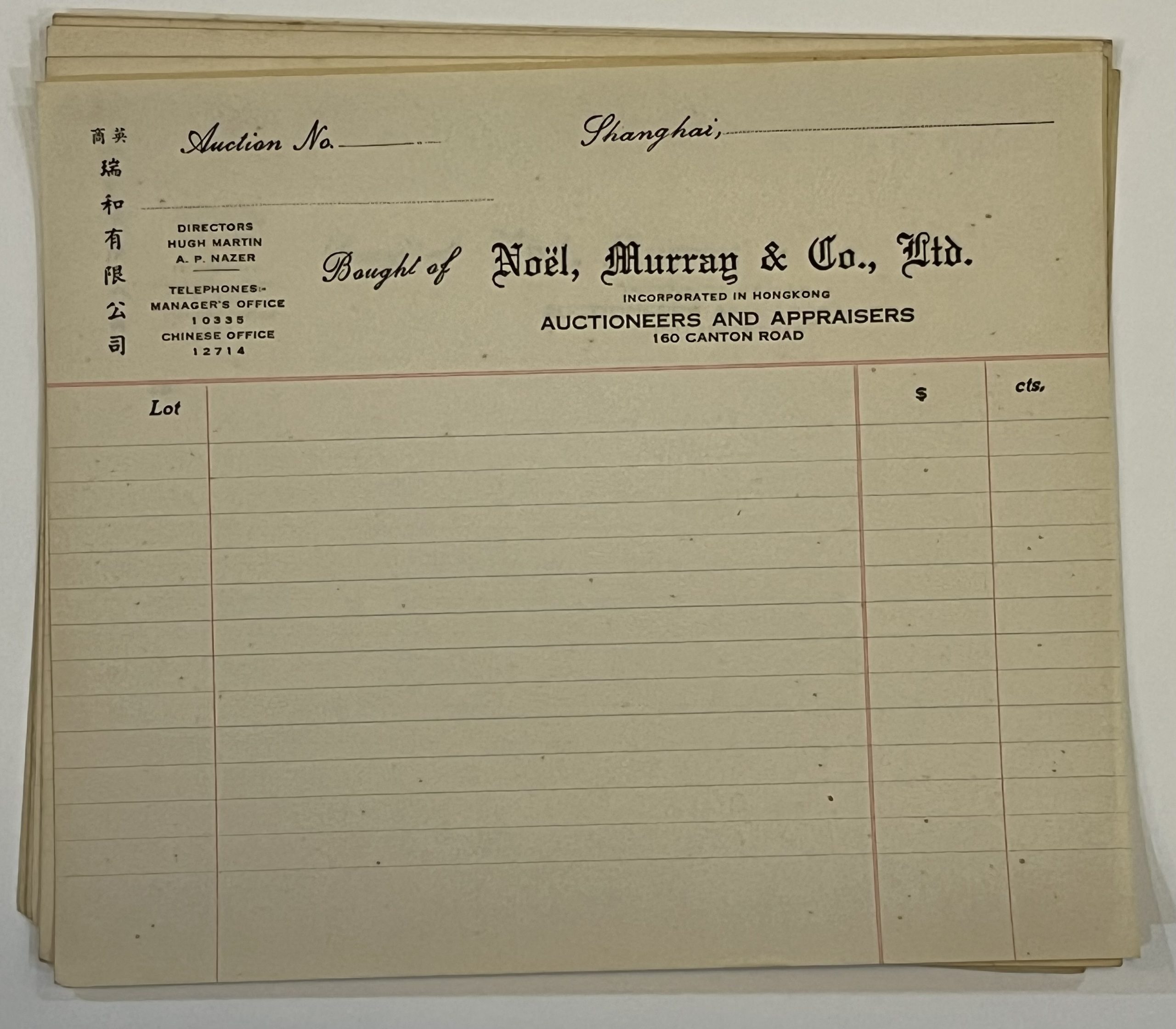
As the items are normally shown during and sometimes before an auction, the main salesroom must have been quite large to accomodate all thoses items. The company also had specific paper sheets given out to people when they had purchased items at auctions. Some of those papers were also with this piece of stationary (picture below).
The above auction announcement in from May 1948, with Hugh Martin still mentioned as Managing Director although he went back to England in May 1947. The current Hong Kong business register lists a company incorporated as “Noel, Murray & Co Ltd” in 1938 in Hong Kong and dissolved in 1952. There must have been an earlier incorporation but probably under different provisions.
This post is the 4th post about Hugh Martin in Shanghai. The beginning of this thread is post “Hugh Martin’s grave in Shanghai“.
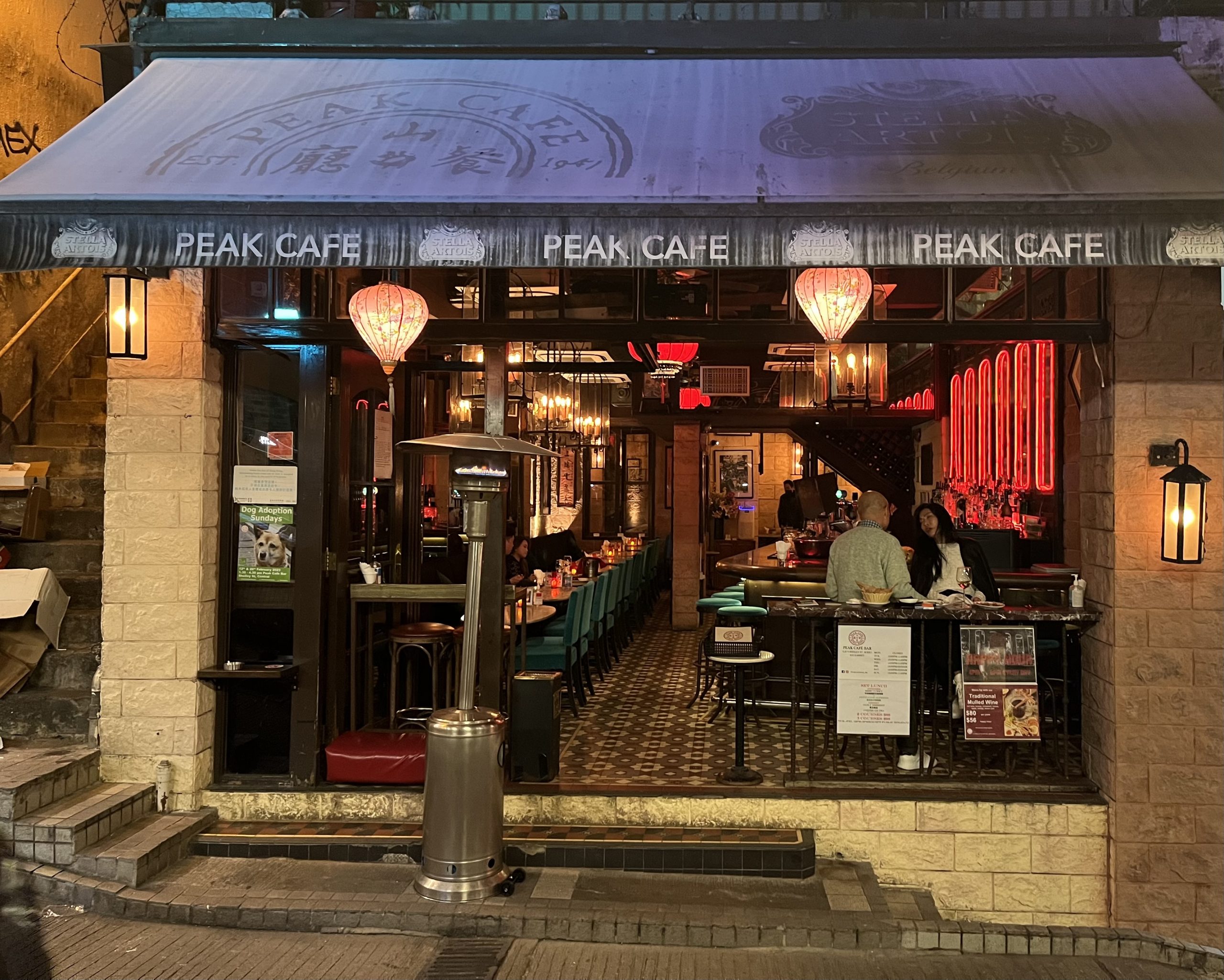
While Shanghai history is the focus of this blog, post on related locations are also added including Tianjin, Wuhan, Rangoon, Singapore, Paris, Budapest and many more. During my last business trip to Hong Kong, I visited a place that had lot of echoes from Old Shanghai.
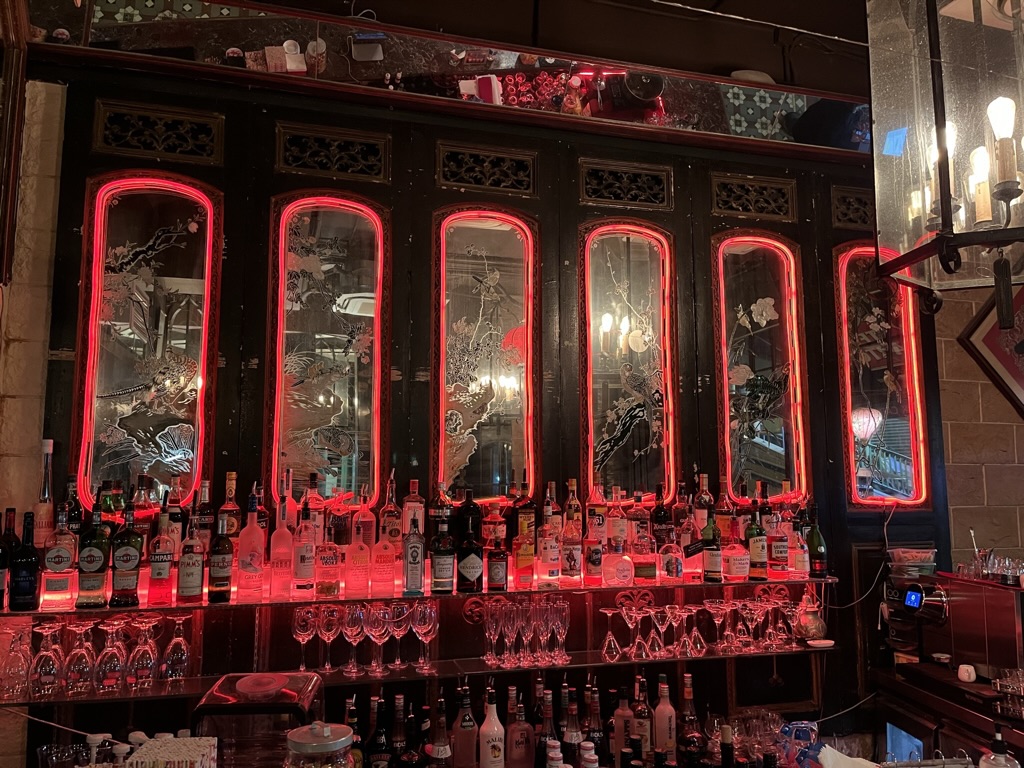
The Peak Cafe is located along the Lang Kwai Fong escalator. In the middle of the city, very close to the super modern skyscrapers, this place is a little bit of Old Hong Kong. Opened in 1947, it still has the feeling of Old time. The interior is surely not older than 1947 but it definitely feels much more like the 1920s or 1930s.
Although Hong Kong has kept very little of its history, with exception of the former jail and police station close by, this little spot feels like time travel to Old Hong Kong, or to Old Shanghai.
Peak Café: 9-13 Shelley street, Central, Hong Kong
AI chatbot ChatGPT has been a lot in the news recently. As I wanted to try it out, I asked him to “write about the life of Hugues Martin in Shanghai”. The result is below text. Although it’s totaly fake, it kind of really pleased me that the bot imagined the life of an Old Shanghai version of myself.
Hugues Martin was a prominent figure in the expat community in Shanghai in the early 20th century. He was a French architect who played a significant role in the development of the city’s iconic buildings, such as the Park Hotel, the Cathay Hotel, and the Grand Theatre. Martin was born in France in 1887 and trained at the prestigious École des Beaux-Arts in Paris. He arrived in Shanghai in 1919 and quickly established himself as one of the city’s top architects. His designs were influenced by the Art Deco movement, which was popular at the time. One of Martin’s most significant contributions to the city was his work on the Park Hotel. The hotel was built in 1934 and was the tallest building in Asia at the time. Martin’s design incorporated elements of Chinese architecture and featured a rooftop ballroom with stunning views of the city.
In addition to his architectural work, Martin was also an active member of the expat community in Shanghai. He was a founding member of the French Club and the Shanghai Municipal Council, which was responsible for governing the city. He also served as the president of the French Chamber of Commerce and was a member of the Shanghai Rotary Club. Martin’s career in Shanghai came to an abrupt end in 1941 with the outbreak of World War II. He was interned by the Japanese and spent the duration of the war in a prison camp. After the war, Martin returned to France, where he continued to work as an architect until his death in 1964. Today, Hugues Martin’s legacy can be seen in the many buildings he designed that still stand in Shanghai. His work has been recognized as an important part of the city’s architectural history, and he is remembered as a key figure in the development of Shanghai’s skyline.
The 1931 movie “Love and Duty” (恋爱与义务)was a great success in 1930s Shanghai. It was the first big movie with actress Ruang Linguy who would become the superstar of Shanghai cinema, until her suicide in 1935. I have written several posts about some of the location where the movie was made in Shanghai (see post “Love and Duty” for more details). This post is showing the video that was made of the location search.
You will find more information about Ruan Lingyu, the movie “Love and Duty” and film locations in posts “Love and Duty” Part 1 and 2.
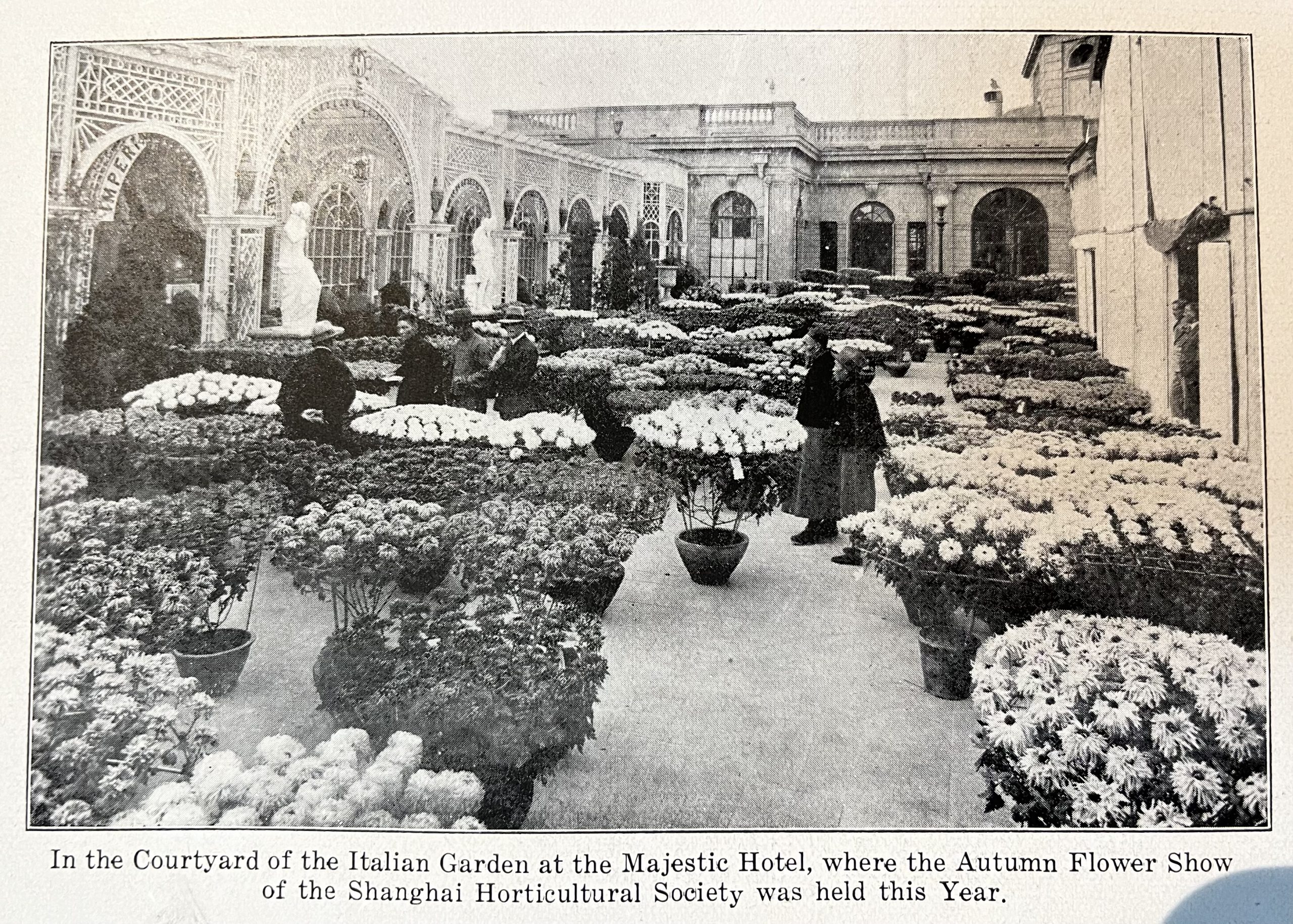
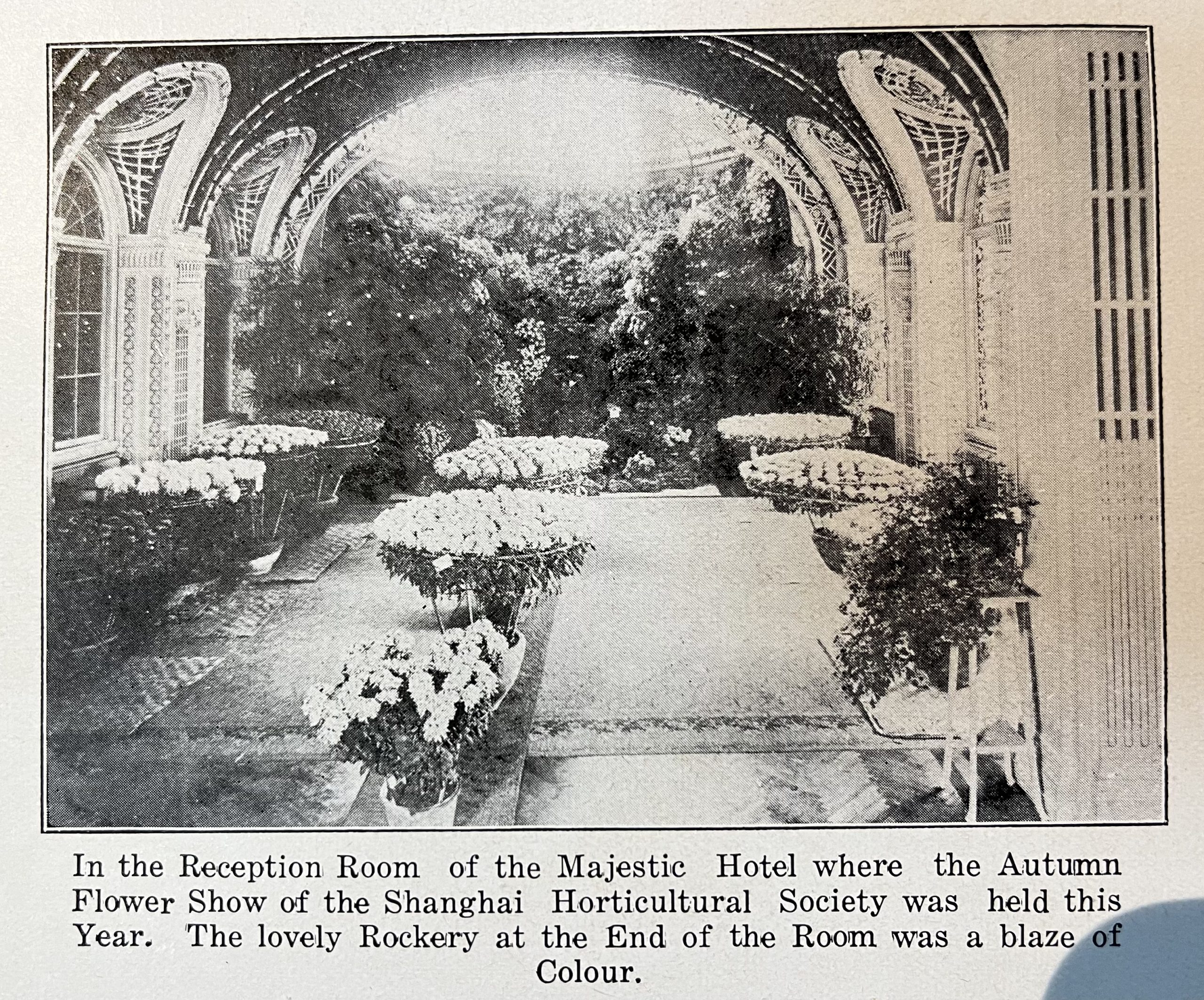
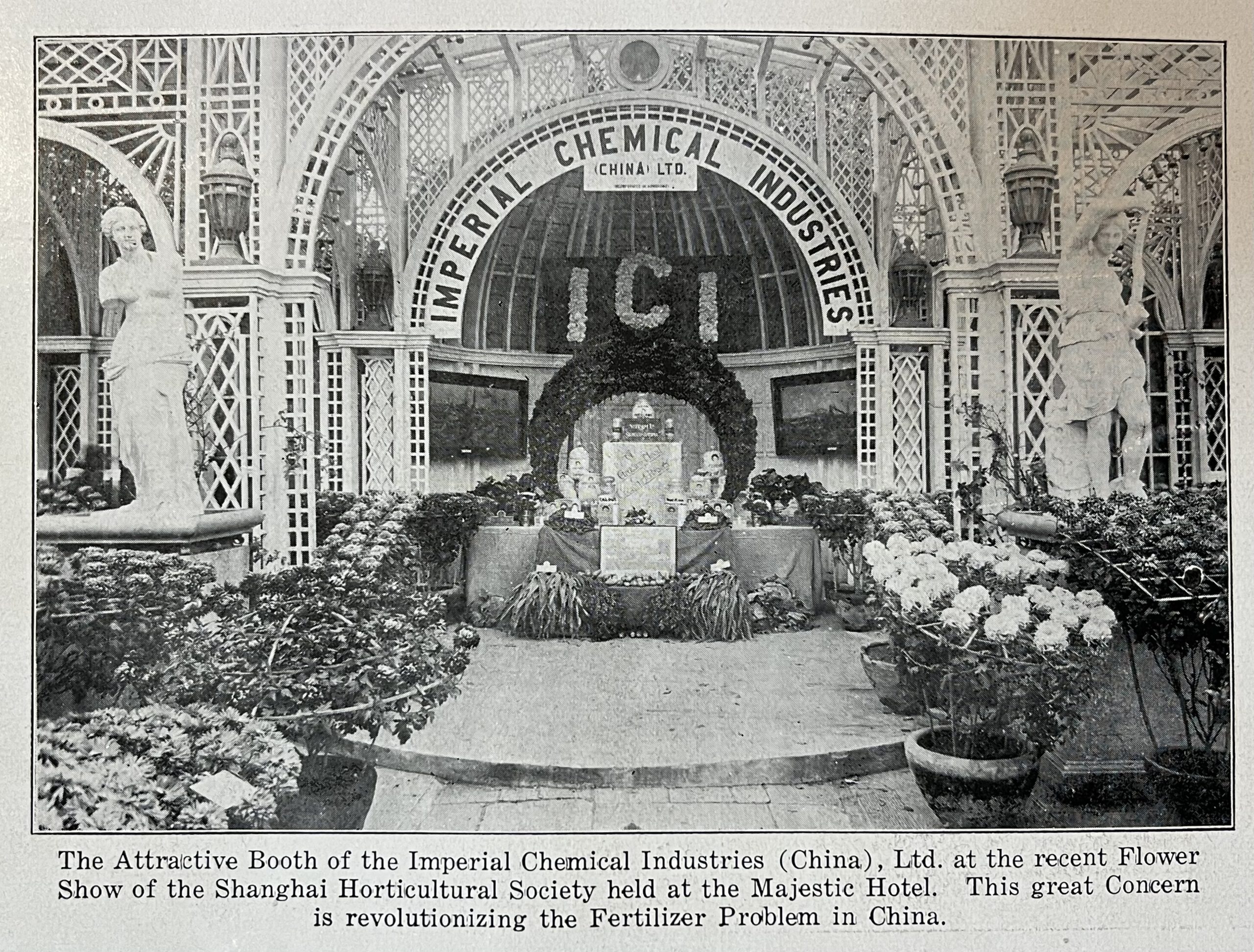
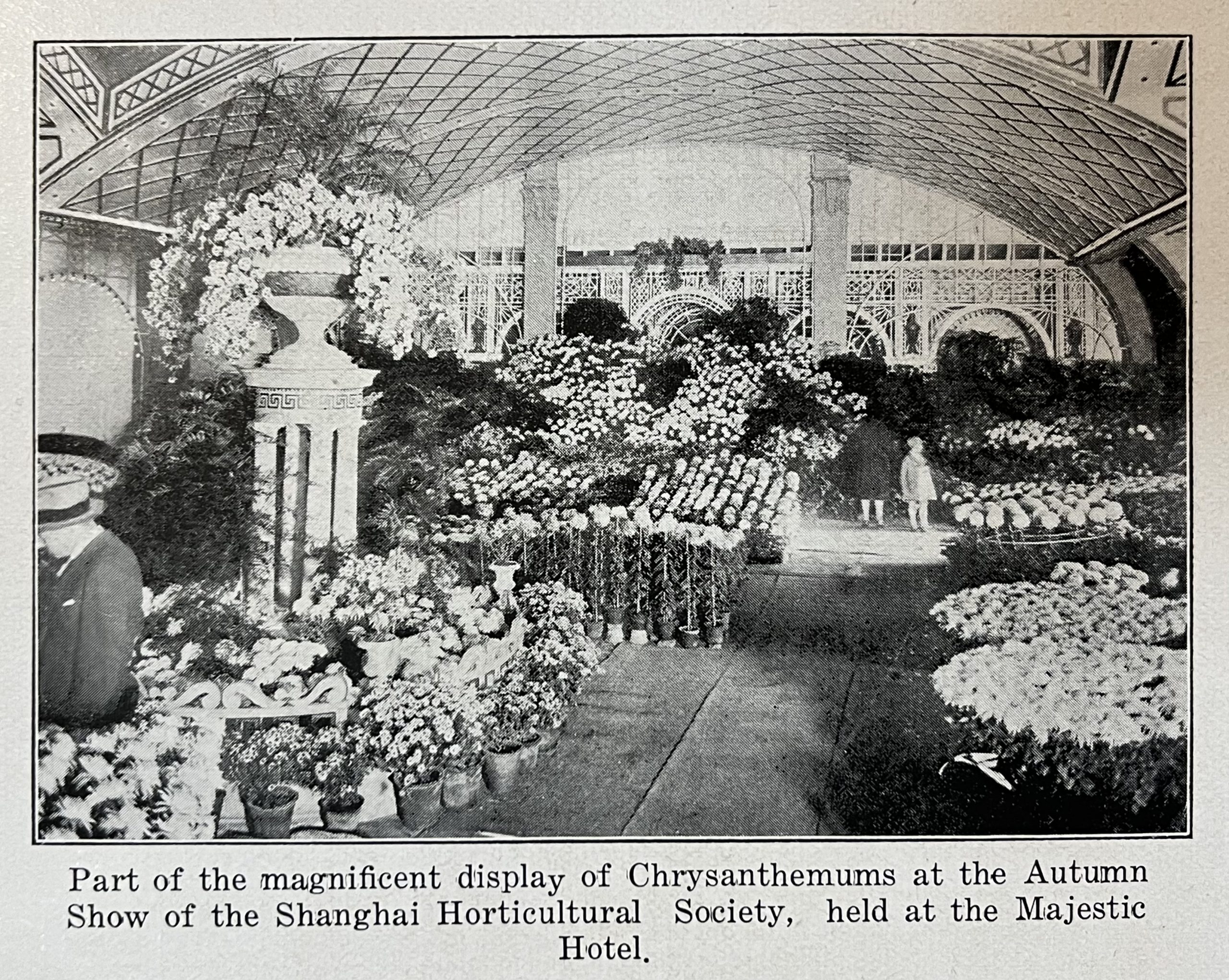
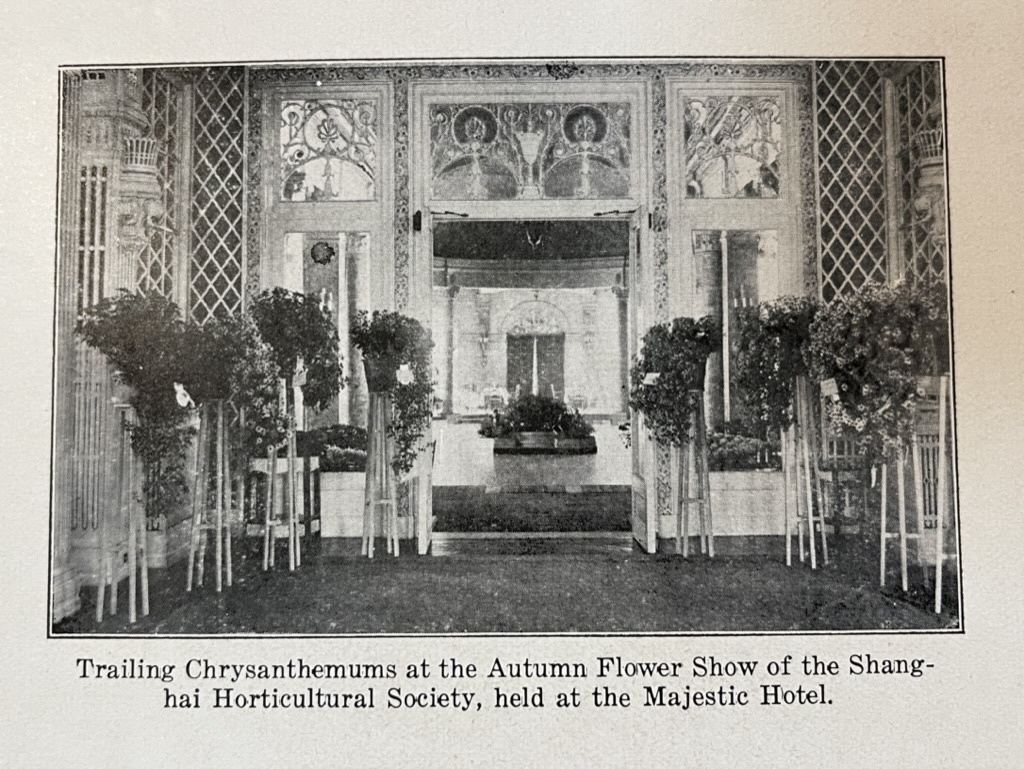
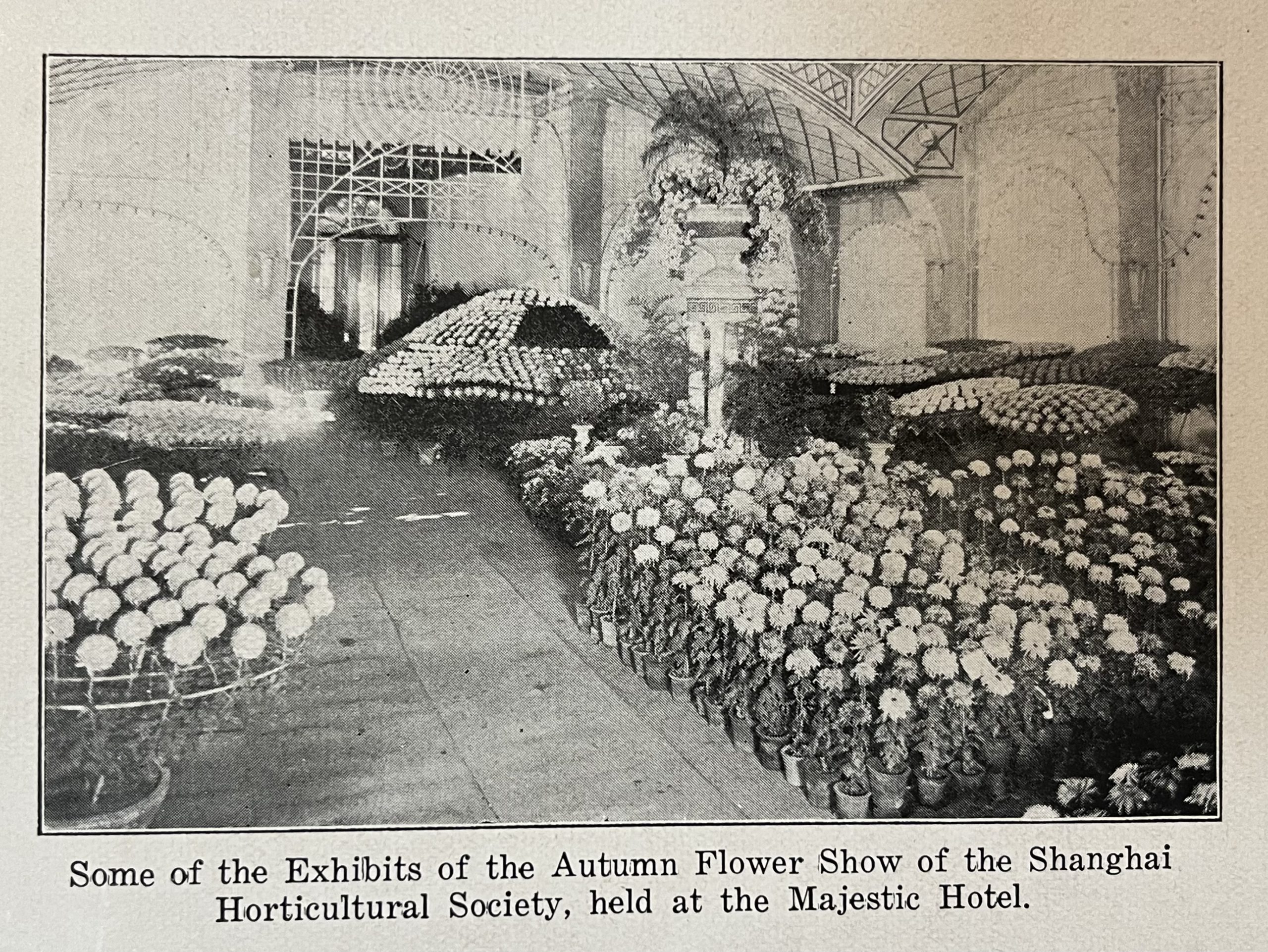
The Majestic Hotel in Shanghai (1924-1931) was a legendary hotel in Old Shanghai. I wrote a post several years ago about it, that is regularly toping the most read article list (See post “The rise and fall of the Majestic hotel” for more info). Since the building was destroyed in 1932, there are only few pictures of the hotel available. Going through my own collection, I recently realised that I have a few of them taken during a special occasion.
According to Nenad Djordjvic “Old Shanghai Clubs & Associations”, The Shanghai Horticultural Society was founded in the 1860’s. It had a yearly Autumn Flower Show, the last one taking place on 20-21 November 1940. It was certainly an important association as it received financial support from the Shanghai Municipal Council and was presided for many years by Horace Kadoorie, whose family owne the Hong Kong & Shanghai Hotels company owner of the Majestic Hotel. The above picture also appeared in the North-China Sunday News Magazine Supplement on 24 Nov 1929 (Thanks Katya Kniazeva for finding it!). So these pictures must be from the 1929 Autumn Flower Show.
This picture is taken from the hotel, looking toward the winter garden. The Italian garden of the Majestic hotel where the event takes place was designed by Abelardo Lafuente, a spanish architect in Shanghai.
One of the few pictures of the beautiful iron work inside the hotel.
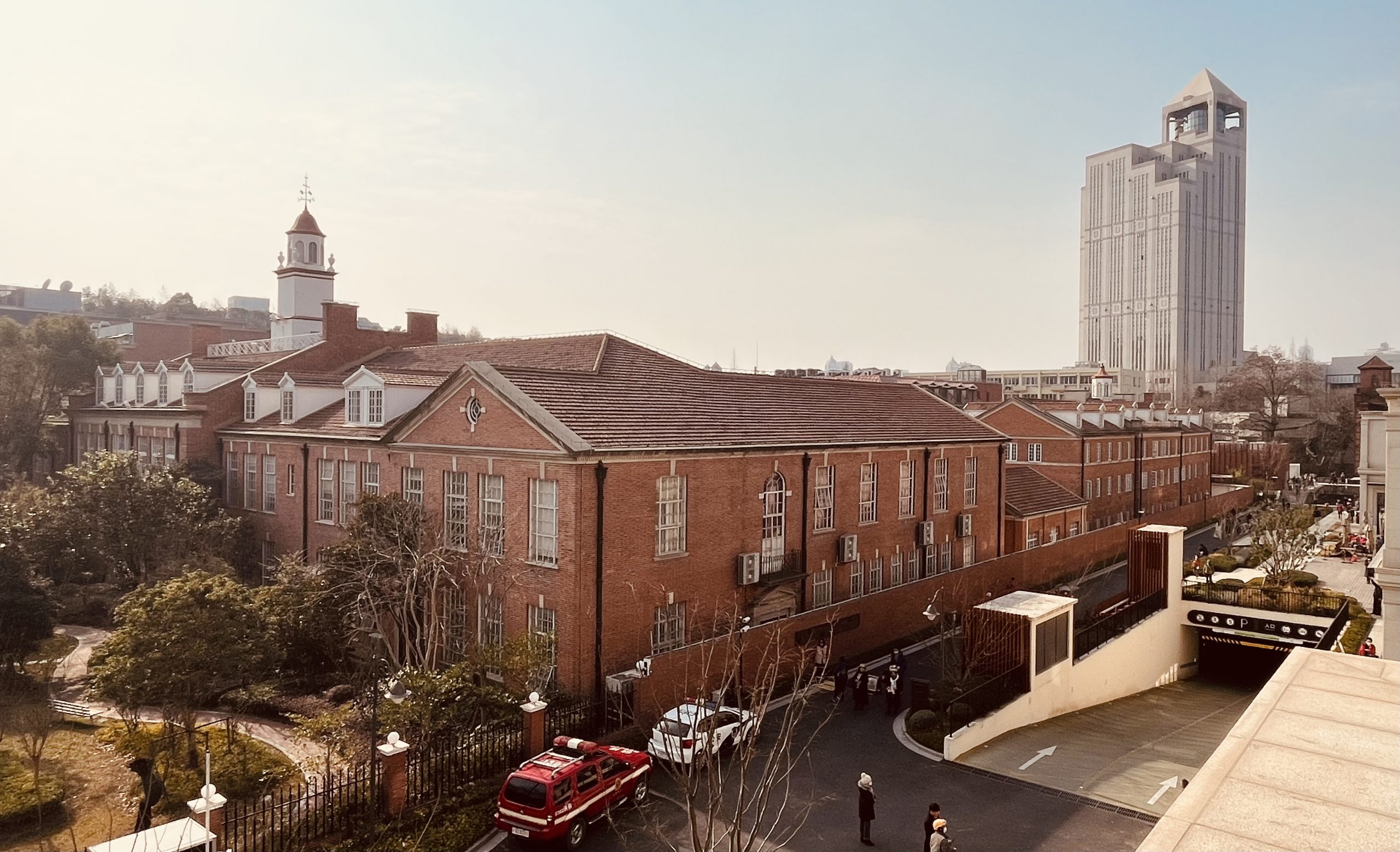
Founded in 1912, American School of Shanghai was one of the famous high level schools in old Shanghai. The campus on Avenue Pétain (today Hengshan lu) was opened in 1923. The building has long been off limit for visitors, and only part of the façade was still visible from the street. Fortunately, a building next door has just been renovated and turned into commercial. This gives an open view on the former Shanghai American School building.
Former American School building
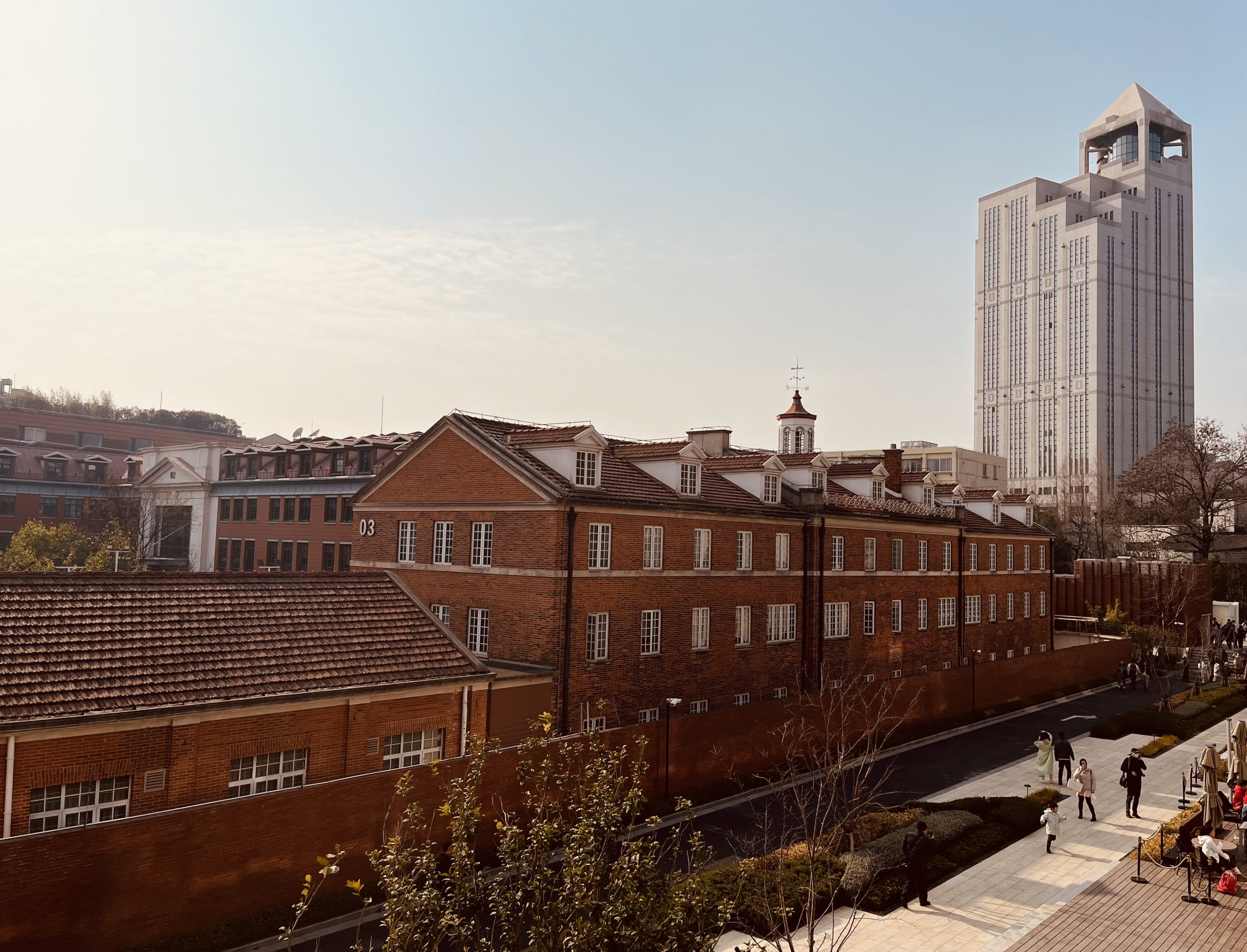
From this angle, it is clear that the streetside façade is only a short part of the whold building. Although I lived in this neighborhood for years, I was never able to see it before so clearly. The skyscraper in the background it the Shanghai library, located on the spot of the former Culty Dairy.
Back building of the Shanghai American School
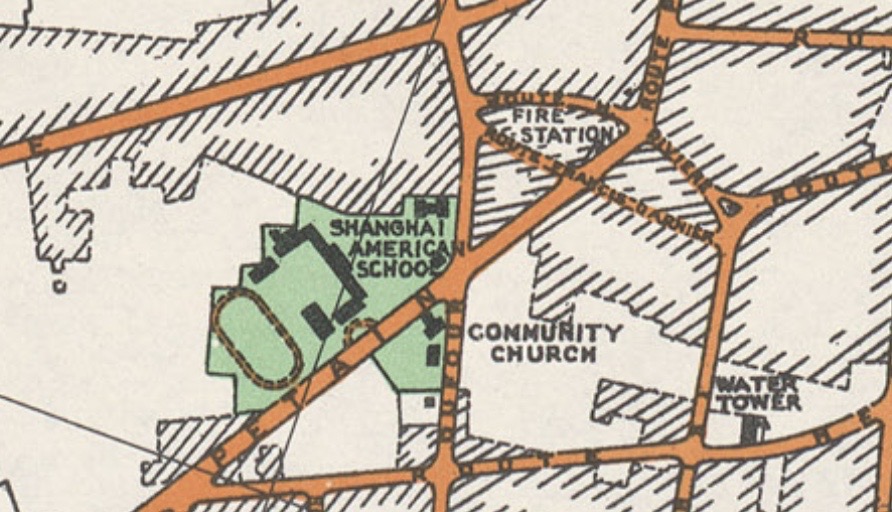
As seen on below map, there was a back wing the building. This part has been demolished and modern and larger building has been built instead. The commercial building where I took the pictures from is located on the part where “Shanghai American School is written”. This was an empty space when the school was operating. The former running track is not occupied by a commercial building.
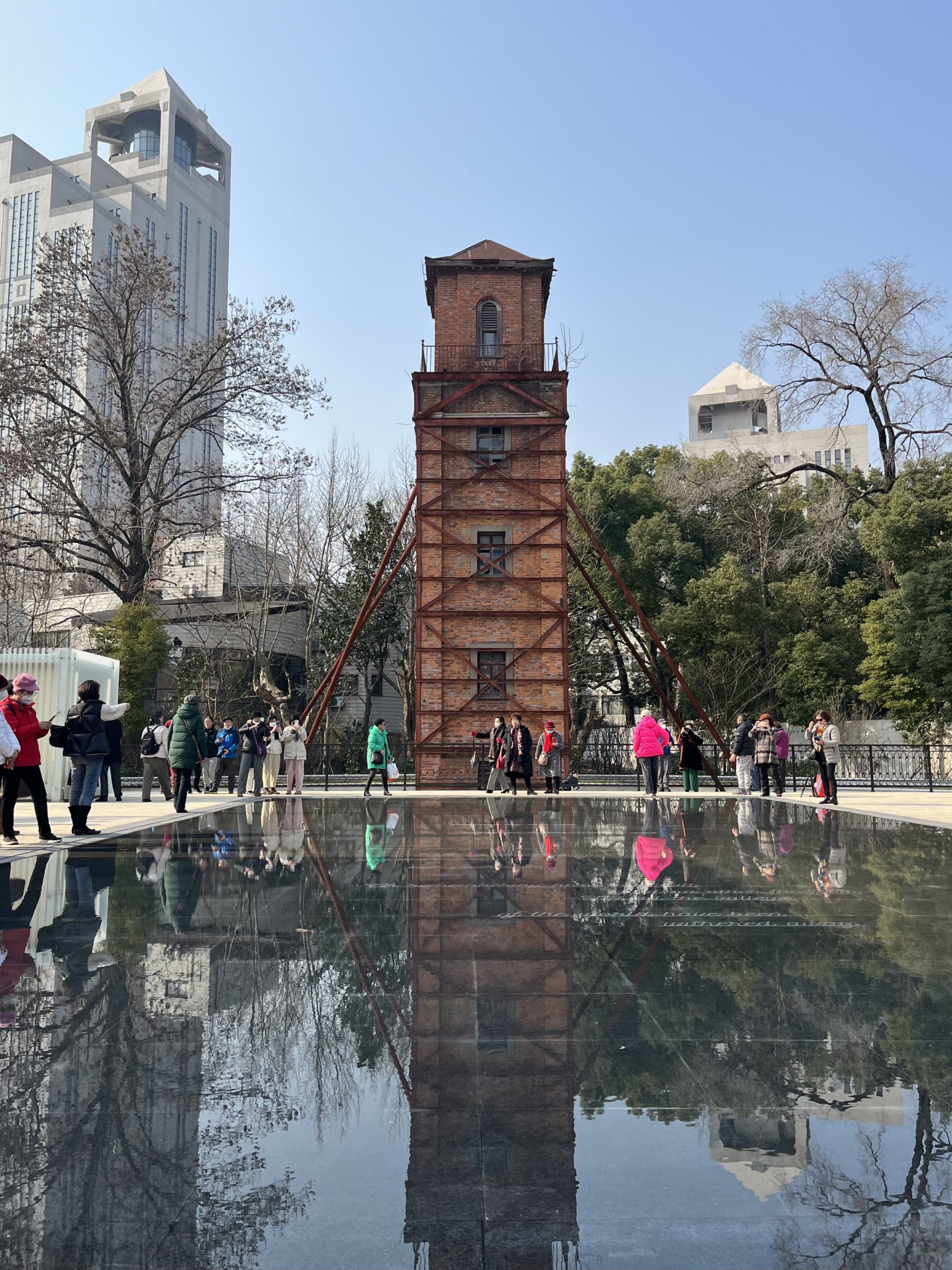
Walking down the alley next to the former school building, one can see the former school water tower. As mentioned by Betty Barr, who actually attended the school herself, “the tower was famous for romantic reason: couples used to climp up there to sign their names.” Looking at it today, it’s not recommended to climb it up, but it amazingly survived all those years.
The American school of Shanghai closed in 1950 but was been recreated in 1980 and still operating today in a different location. Their website is www.saschina.org .
This post is the second one focused on the 1931 Ruan Lingyu movie, Love and Duty (恋爱与义务) “Love and Duty (part 1)” was focused on showing modernity and westernisation in 1930s Shanghai through some scenes of the movie. This part is focused on searching for actual film locations in today’s Shanghai.
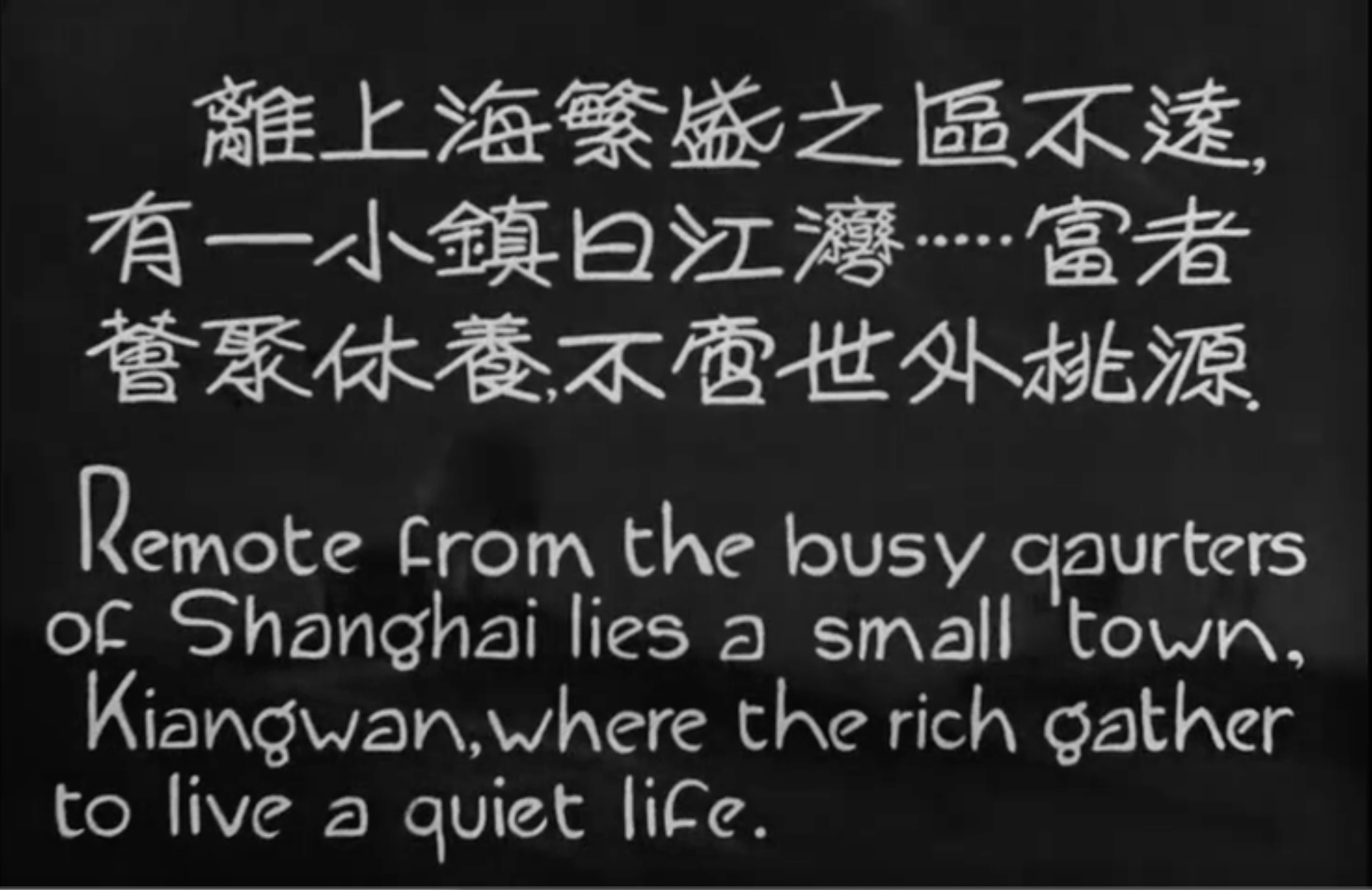
The first part of the movie is taking place in a upper class neighborhood called “Kiangwan”. Jiangwan (today spelling of Kiangwan) was then a far suburb of Shanghai, chosen by the nationalist government of Chiang Kai-shek to create a new city center away from the foreign concessions (See post “Ordinary metropolis” for more details). This was supposed to be the incarnation of modern upper class neighborhood in Shanghai. The movie “Love and Duty” was released in 1931. At that time, the plan for Jiangwan was already made, but the first building, the Jiangwan civic center, was still under construction, finished in 1`932. To illustrate this modernity and high level, the director used the streets of the French Concession as film location.
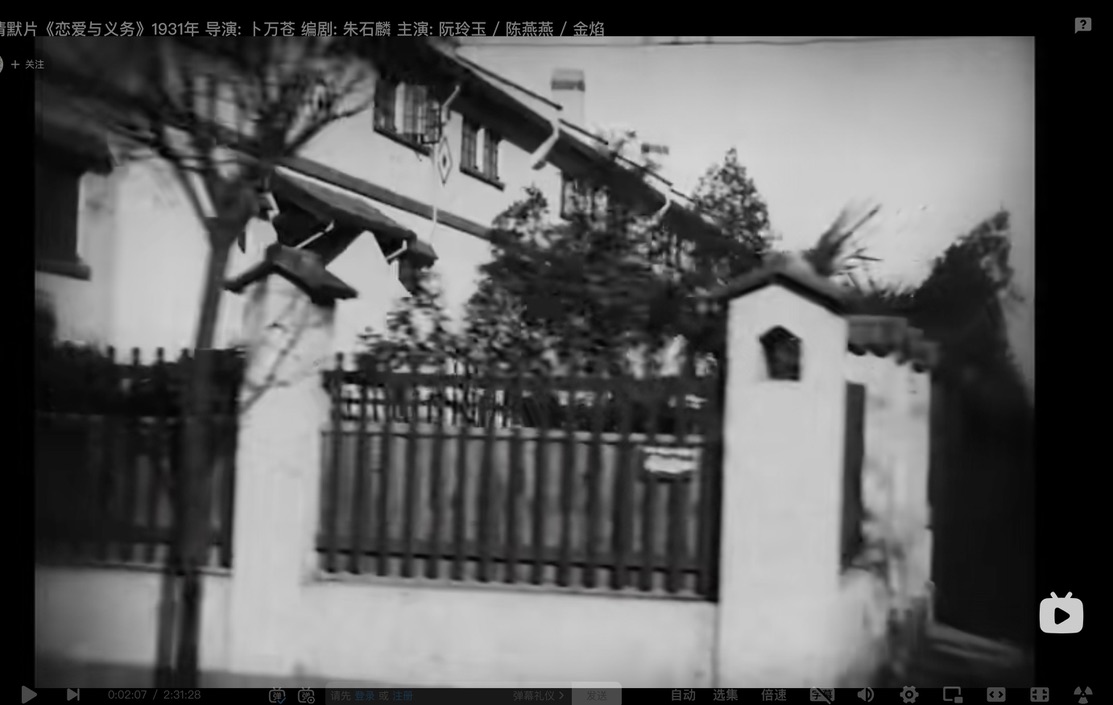
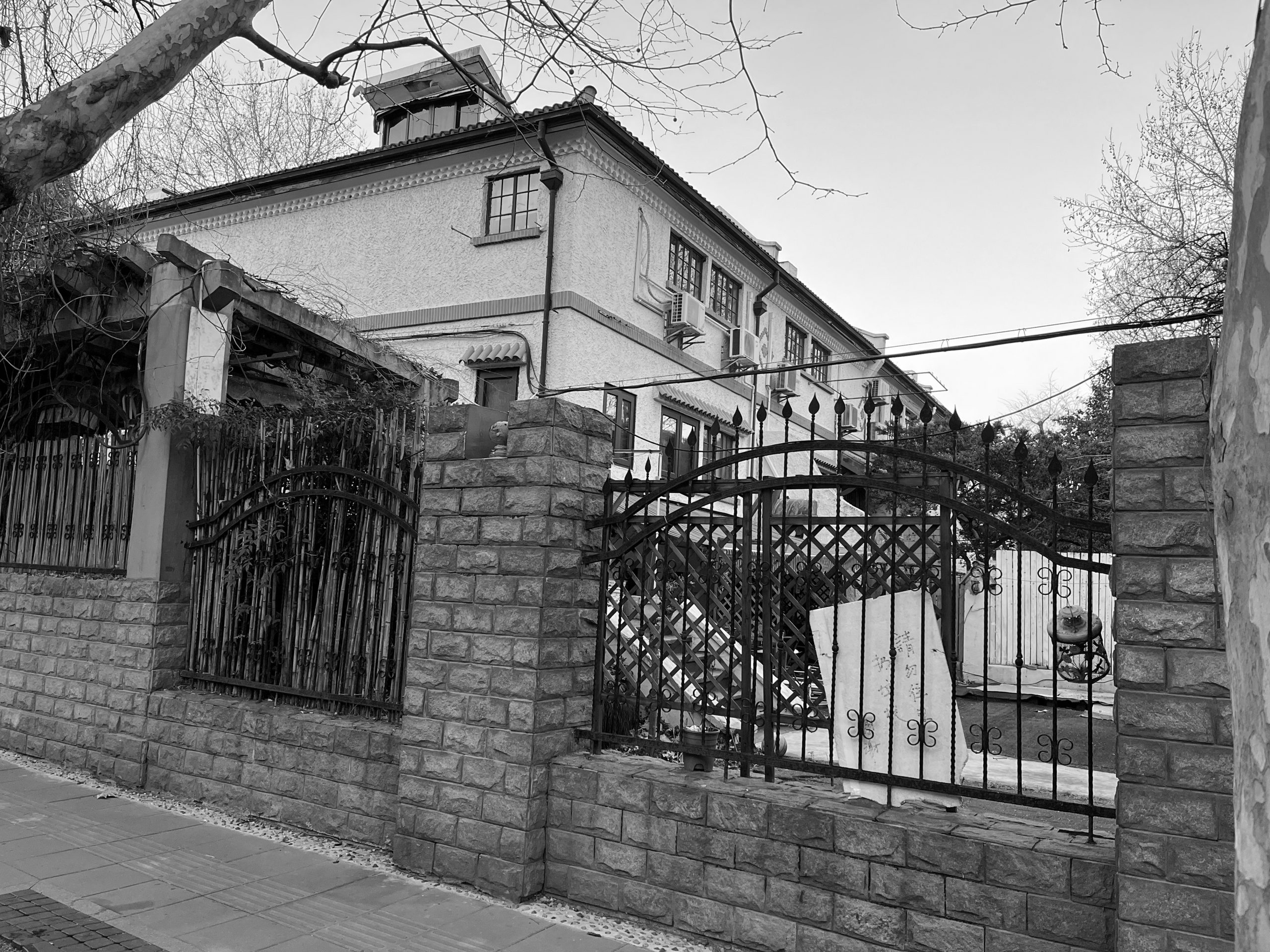
19312023
The first minutes of the movie shows view of the surroundings. Despite the changes, the above picture is the same as the right and below picture. The house is located on Route Delastre (today TaiYuan lu) and Route Remy (Today Yongkang lu). Design and marking on the front wall is very unique.
19312023
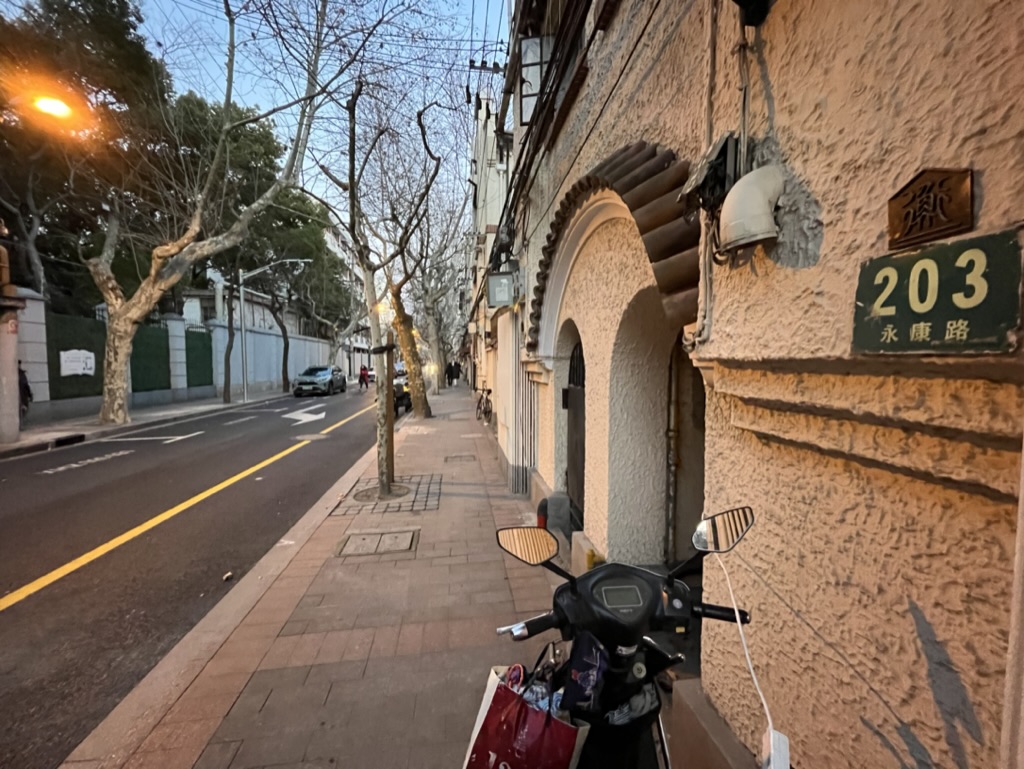
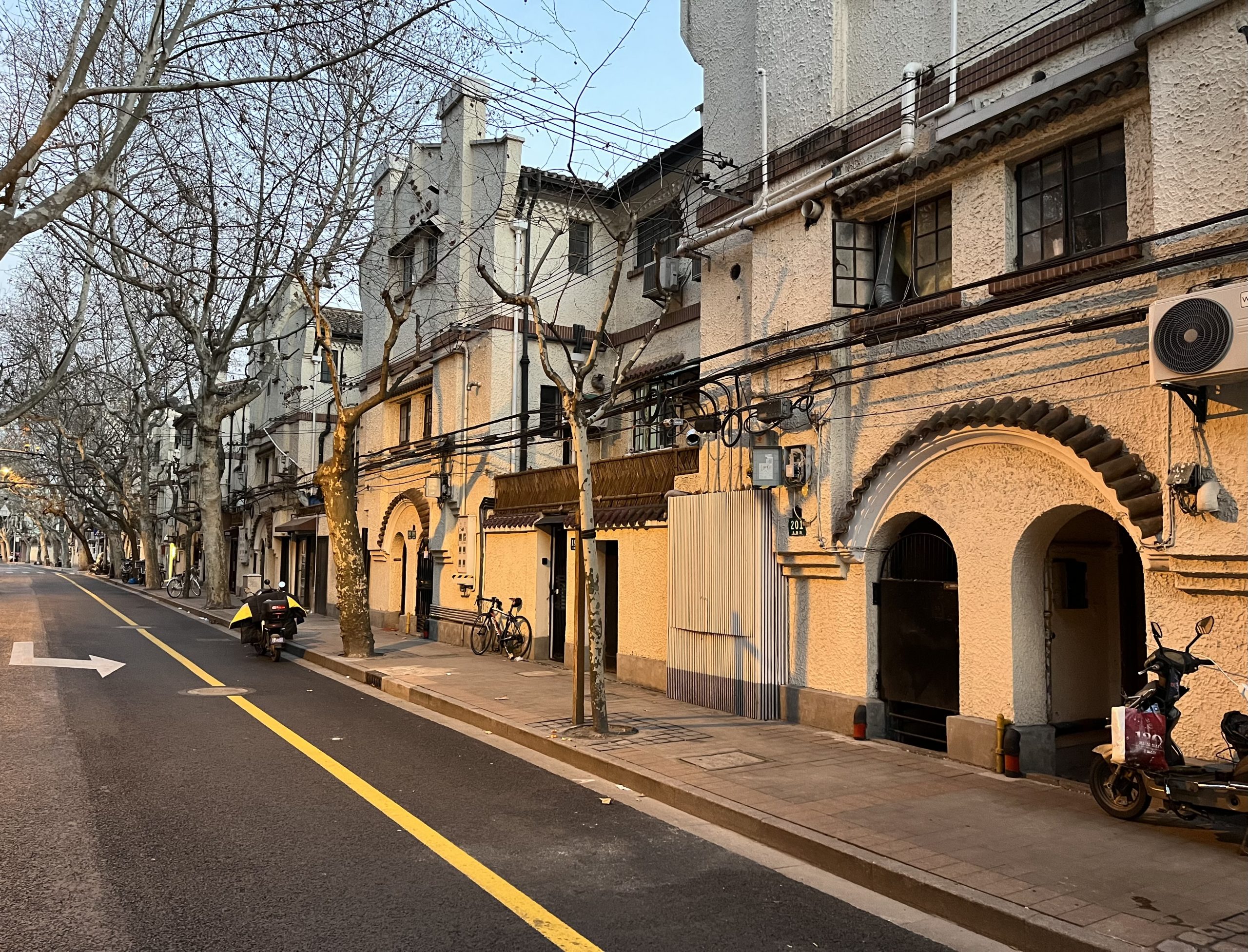
Even more unique are the arcs of this residence in the Yongkang road, shown a few minutes later. Although the structure of the buildings has been altered an little, it is easy to recognise, on former Route Rémy (today Yong Kang Lu). This location is a few meters from the above one on Taiyuan Lu.
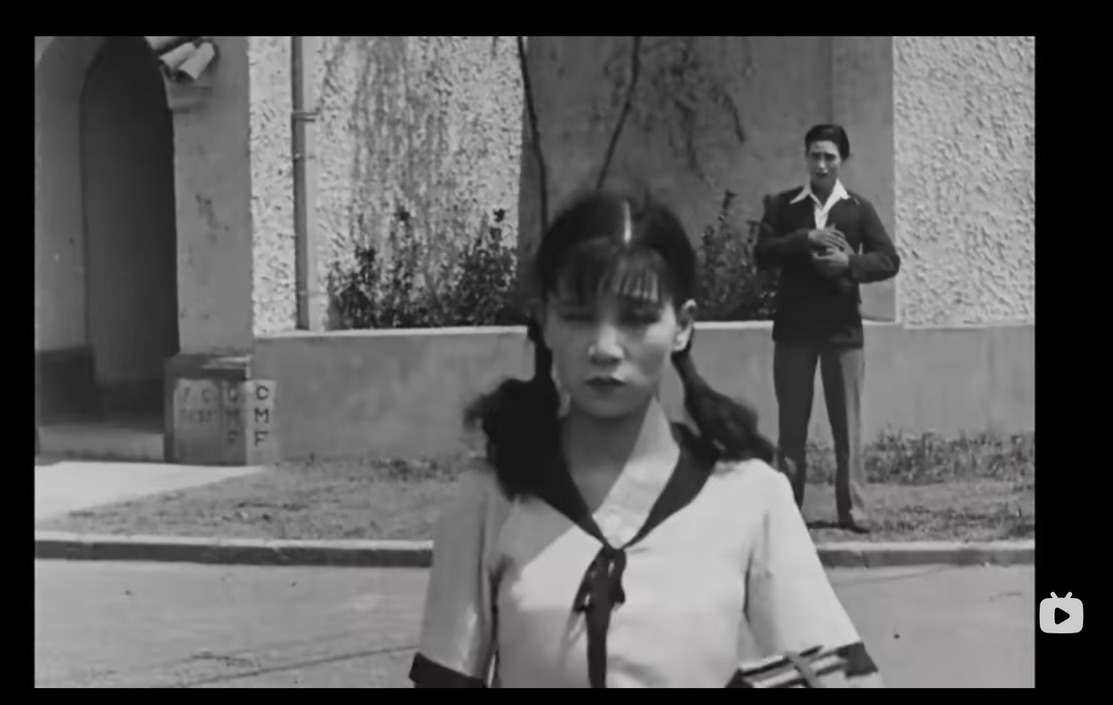
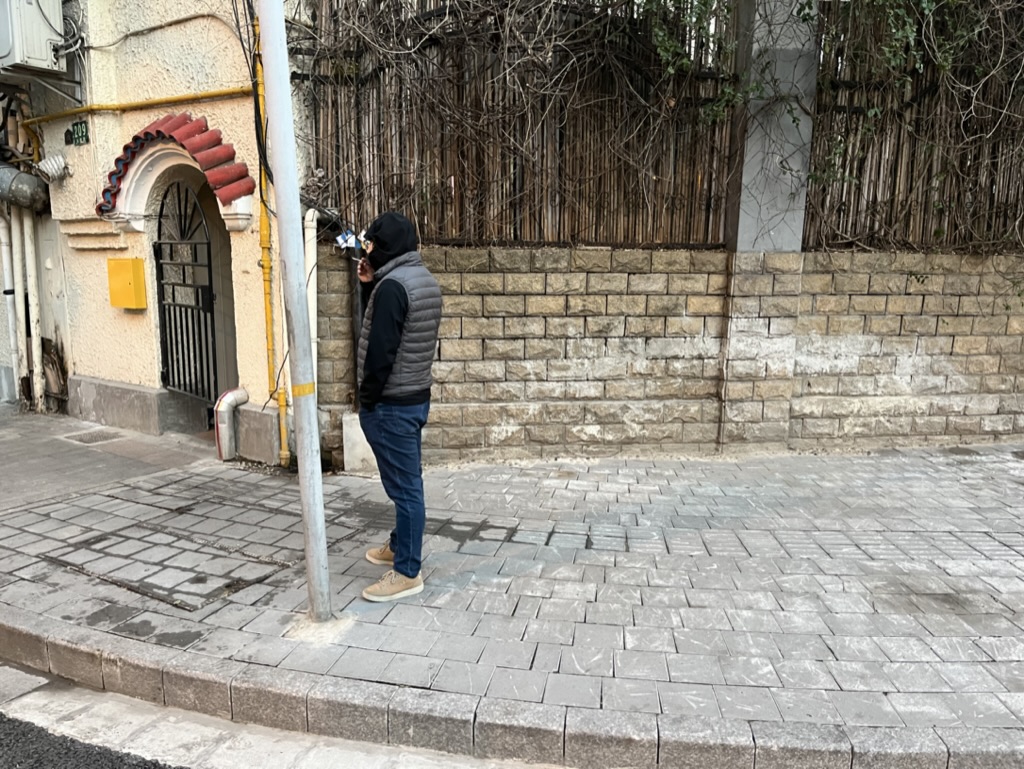
Above corner street corner is of Yongkang lu and Taiyuan lu. It has changed since 1931 and a small building on the right has been turned down but the location is still easy to recognise. The CMF stones have been covered or removed but the iconic door on the left side is still here. In 1931, this part of the city was recently built and urbanised. Like many buildings in this area, this settlement was owned by the “Société Fonci`ere et immobili`ère” also called Foncim, one of the major real estate company in the French Concession.
Later on in the movie, the main character goes to look for jobs in the business district. This is clearly filmed in the area behind the Bund, but exact locations are difficult to identify apart from one. In Old Shanghai, the French Concession was a residential area, and the International Settlement’s district behind the Bund was the location for finance and trading houses.
In front of Park Hotel
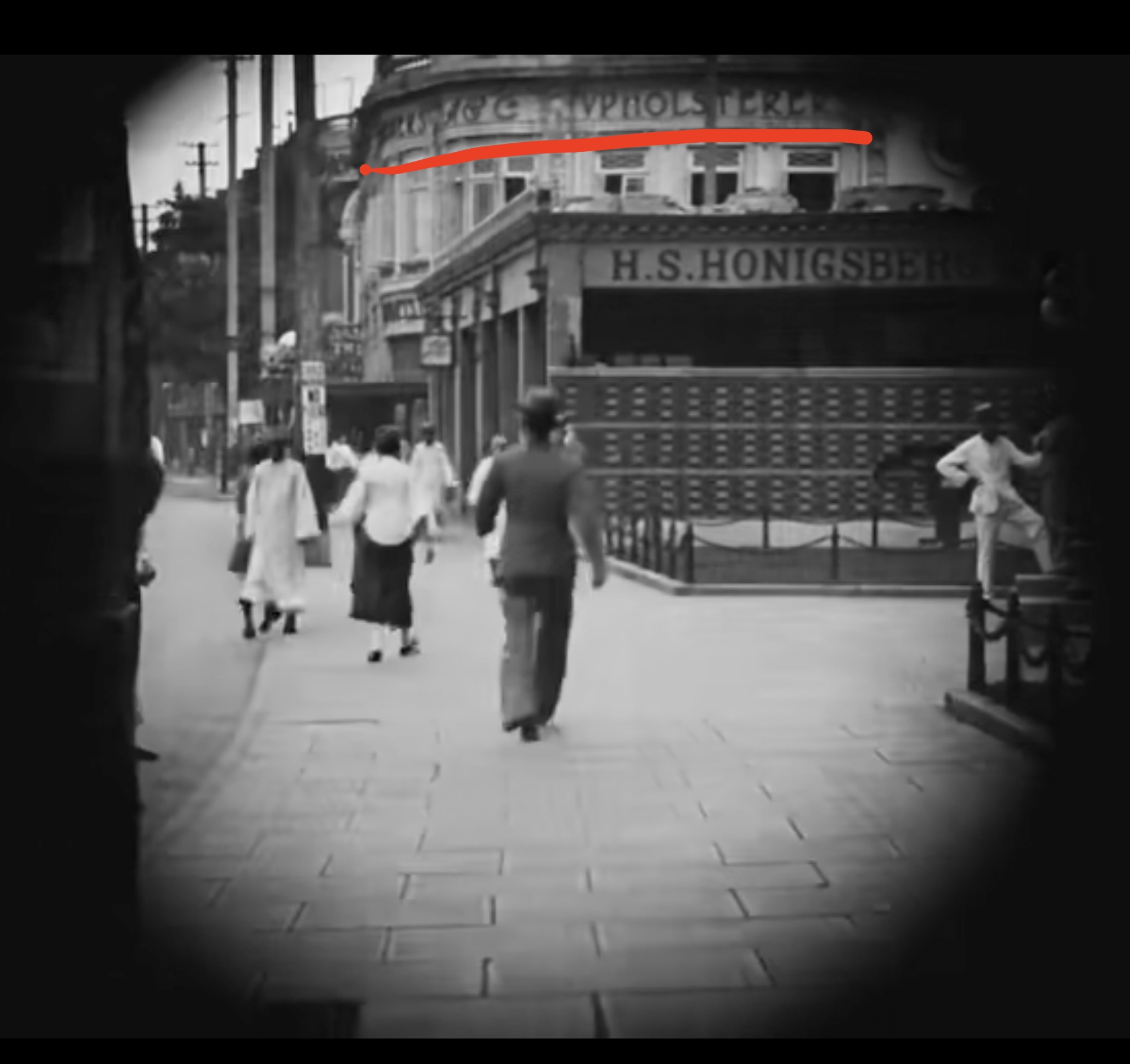
During his job search, the character walks up the street shown above. One can recognise the famous furniture store “Arts and Crafts Upholsters” that was located on the corner of Bubbling Well Road and Park Road (today Nanjing Xi Lu and HuangHe Lu). This particular building does not exist anymore and was replaced by a higher corner building. The space of the HS Honisberger building, is now occupied by Park Hotel (built in 1934). The scene was filmed in front of the Foreign YMCA (today Sport Museum), on the side of the horse race course (today people square). Just like the early scenes were filmed in the most modern residential district, this was filmed in the most modern business district of the city.
Follow this link for the next post from this thread, “Love and duty, the book“, focusing on the book used as a base for the movie. The movie “Love and Duty” can be viewed on the Chinese video platform bilibili.com (use this link to access it). A video about the search for “Love and Duty” locations has been published in post “Looking for Love and Duty“. For more analysis of the movie “Love and Duty” and the modernity of Shanghai life seen in the movie, please go to post “Love and Duty (Part 1)“.
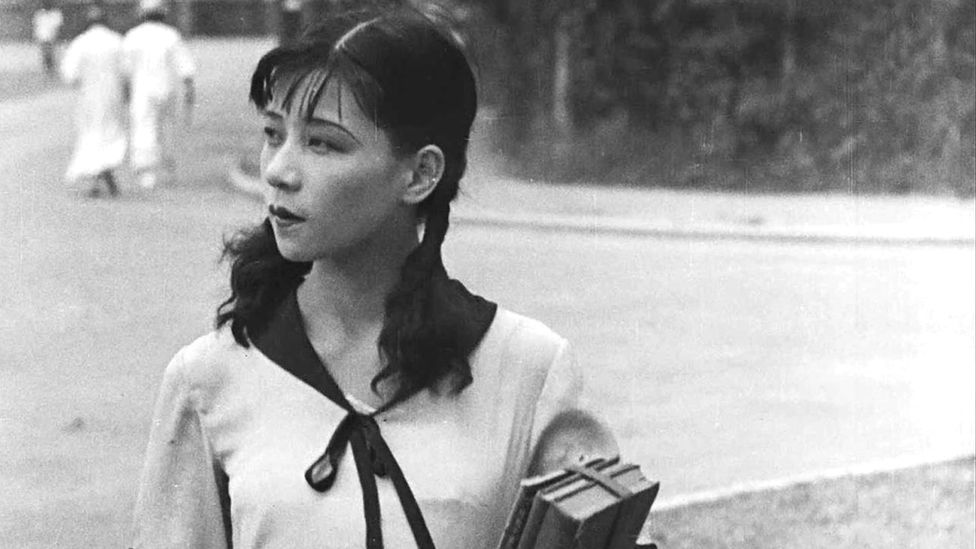
Ruan Lingyu (阮玲玉) was one of the stars of Old Shanghai movies. Acting in silent movies her career brutaly stopped when she committed suicide in 1935.
Ryan Lingyu in « Love and duty »
One of her main movies, “Love and Duty”(恋爱与义务)1931, was supposed to be lost until a full copy was found in Uruguay in the early 1990s. After restoration, the film was shown at Shanghai Film festival in 2014.
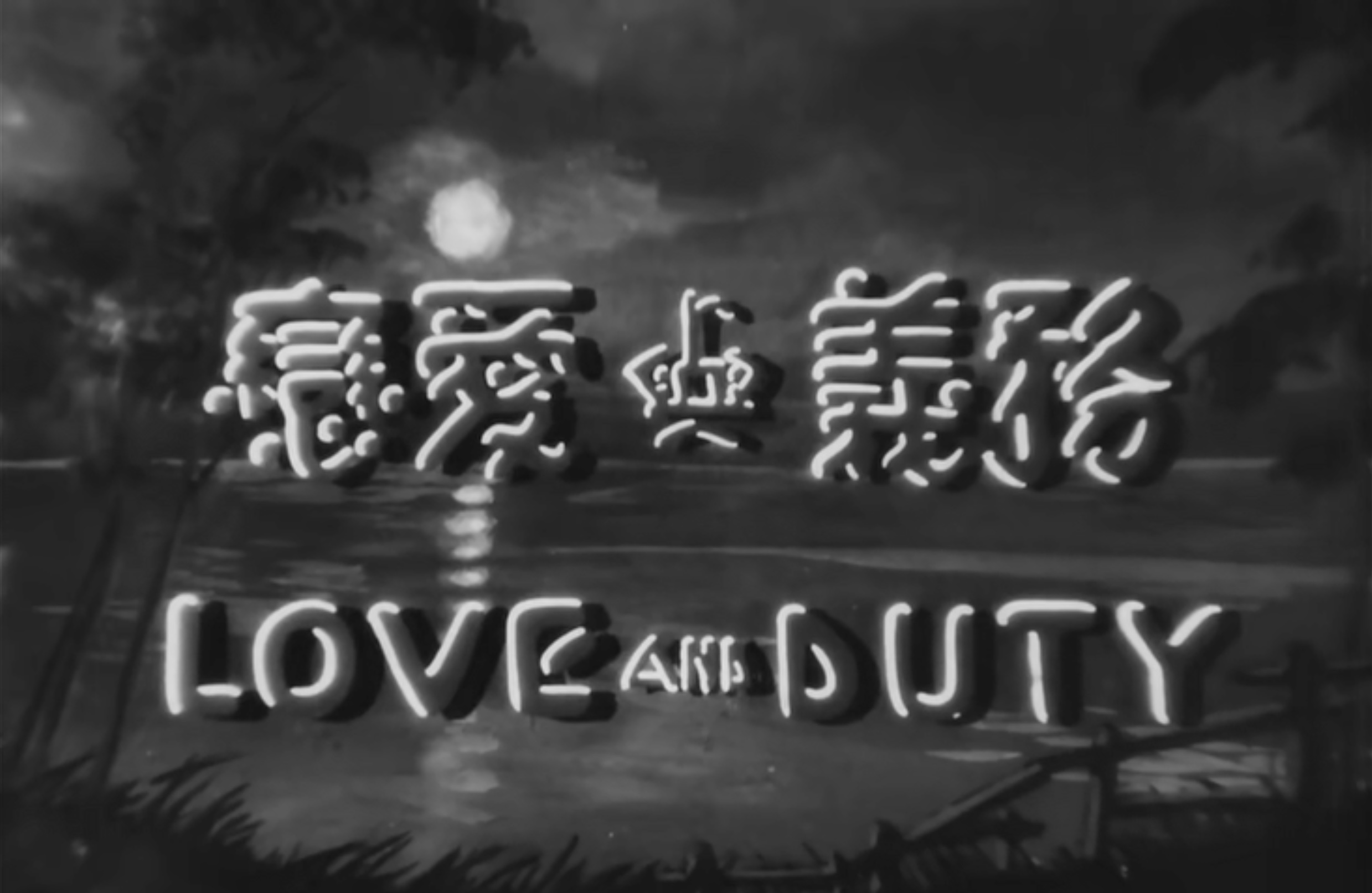
Love and Duty, movie title
Love and Duty is a melodramatic movie about the terrible choice of a lady between her high school sweetheart and her husband and family. It is a silent movie, with all intertitles both in English and in Chinese as it was often the case then in Shanghai. The first part of the movie is taking place in the high level neighborhood. It gives a great look into the life of upper class Chinese people in Old Shanghai. I have read many books about it (including ‘Remembering Shanghai“), or seen modern movies (see post “Shanghai the movie“) as well as tv series taking place in Old Shanghai. However, seeing a real movie from the area depicting the real life of people is amazing.
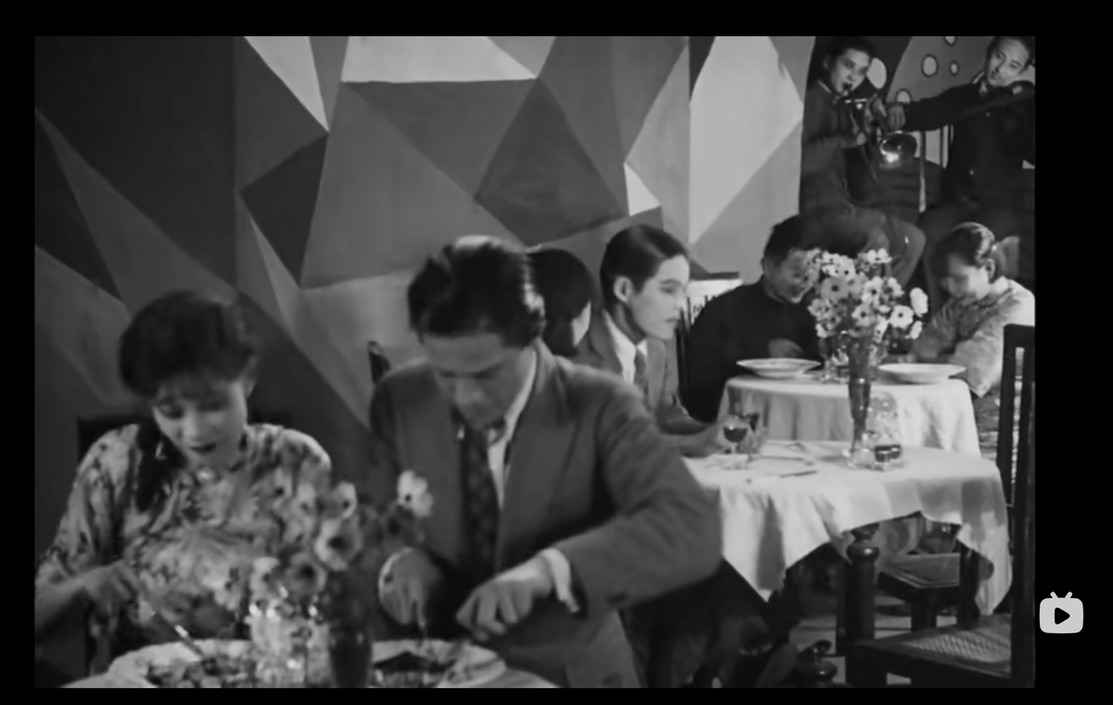
Eating in a 1930s western restaurant in Shanghai
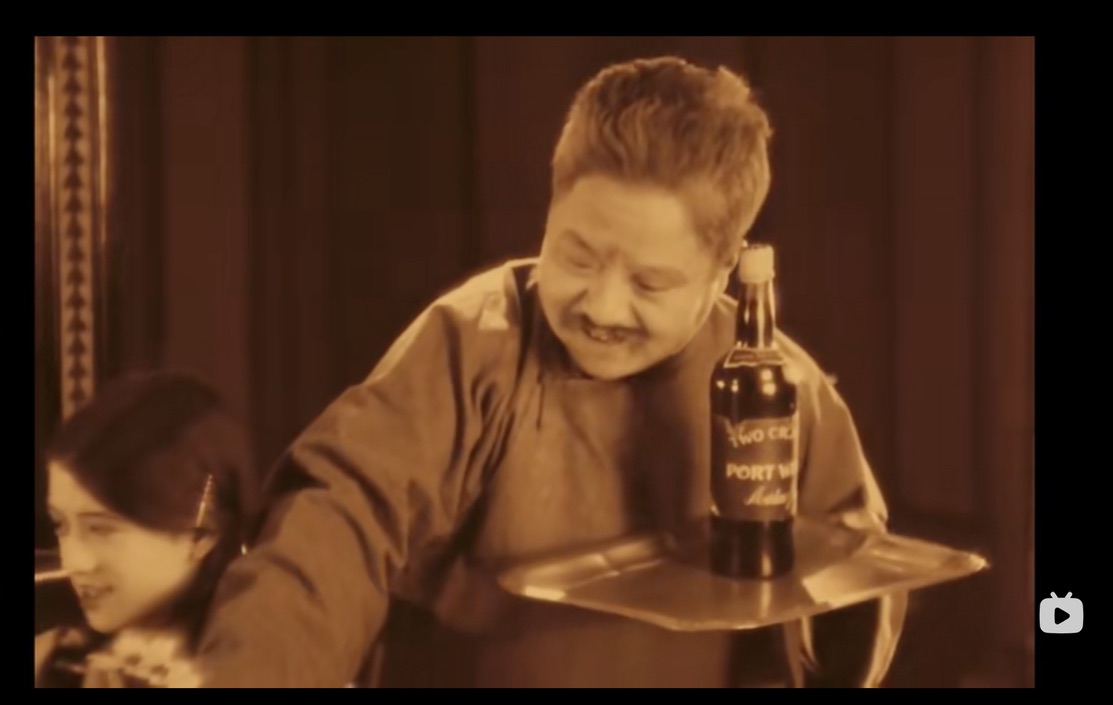
The restaurant scene in the movie is stunning. This is taking place in the early 1930’s. A couple in love goes for a date in a western restaurant, eating with fork and knife, drinking (imported) red wine (a few images before), while listening to Jazz music with Art Deco back ground. When I came to Shanghai about 20 years, this kind of scene was not so common in the city and very rare out of Shanghai. A place like legendary M on the Bund, opened only in 2002. It was really difficult to imagine that 1930s Shanghai was already so modern and westernised.
Just like today, imported drinks were readily available and consumed.
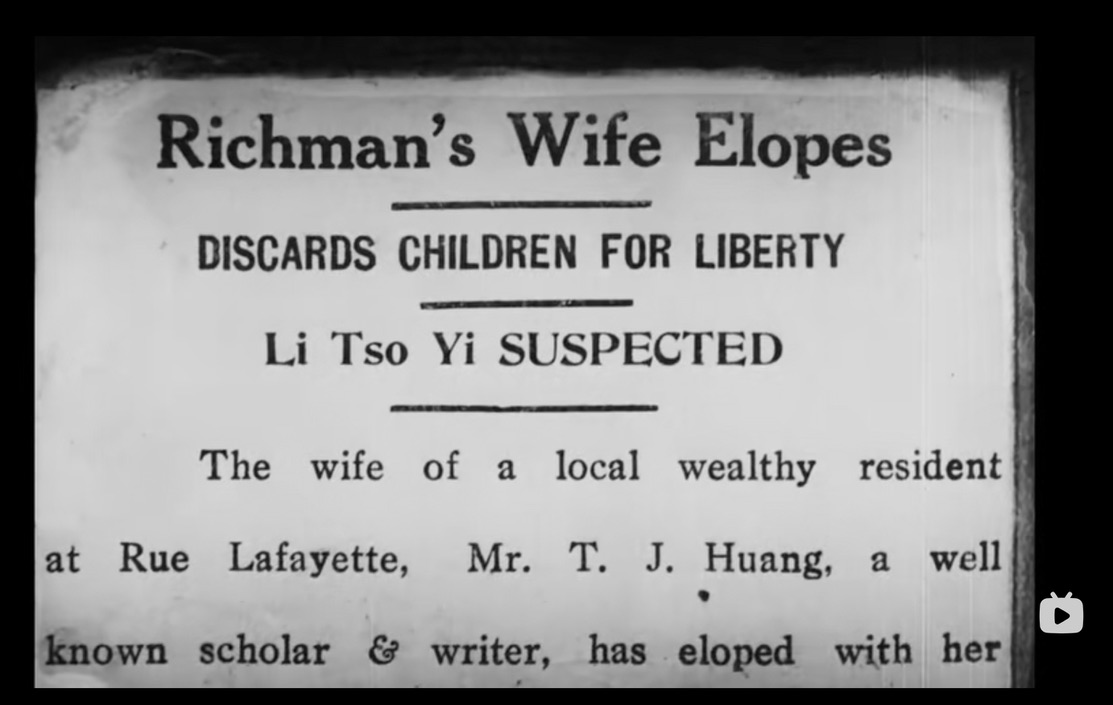
The former French Concession was clearly then one of the desired place to live. Above image is newspaper article read in the movie (first in Chinese, then in English), clearly mentionning Rue Lafayette (today Fuxing Lu) as a place of living for “a local wealthy resident”.
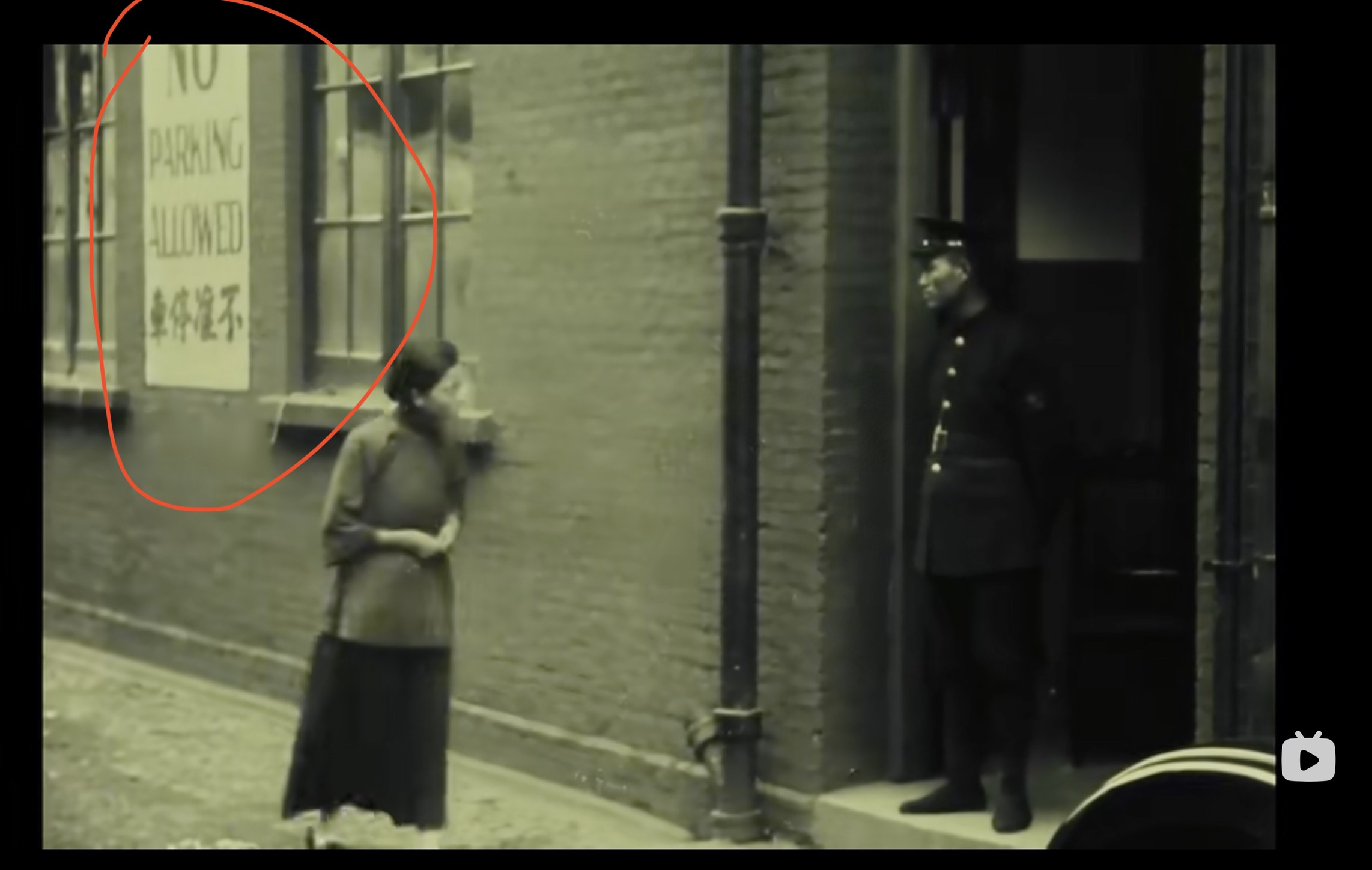
On the top of intertitles in Chinese and English, signage shown in the background is always bilingual, as it was surely usual in Shanghai then. A large part of the movie takes place in Shanghai city. Although it is not mentionned, it is either in the International Settlement or in the French Concession. I am working on a specific post will be dedicated to film locations.
Bilingual No parking allowed sign in English and Chinese
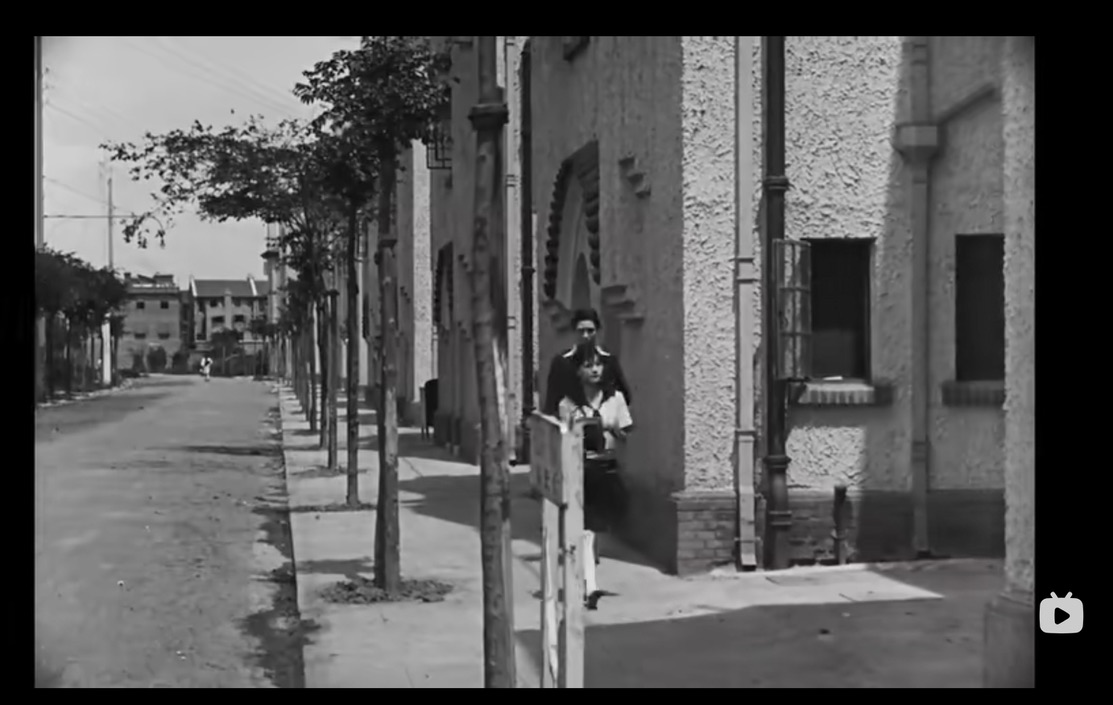
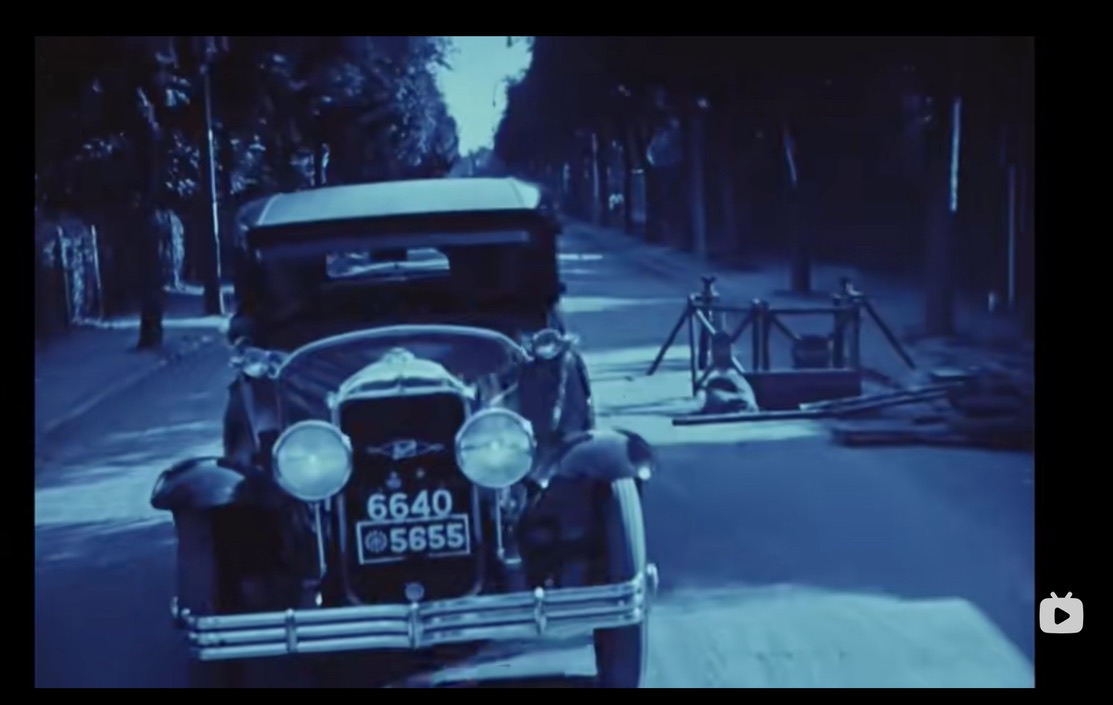
Cars were a luxury items but private cars and taxis were readily available for the upper part of the society. Old movies from the 1920 or 1930’s Shanghai ( see Old Shanghai short movie) often shows the busy streets of the international settlements. Some of the scenes are filmed along plane tree planted road that were surely located in the former French Concession. I have never seen this kind of pictures before. There are a few scenes of 1920s modernity with cars, including one with road work (!) as seen below.
Driving along the plane trees
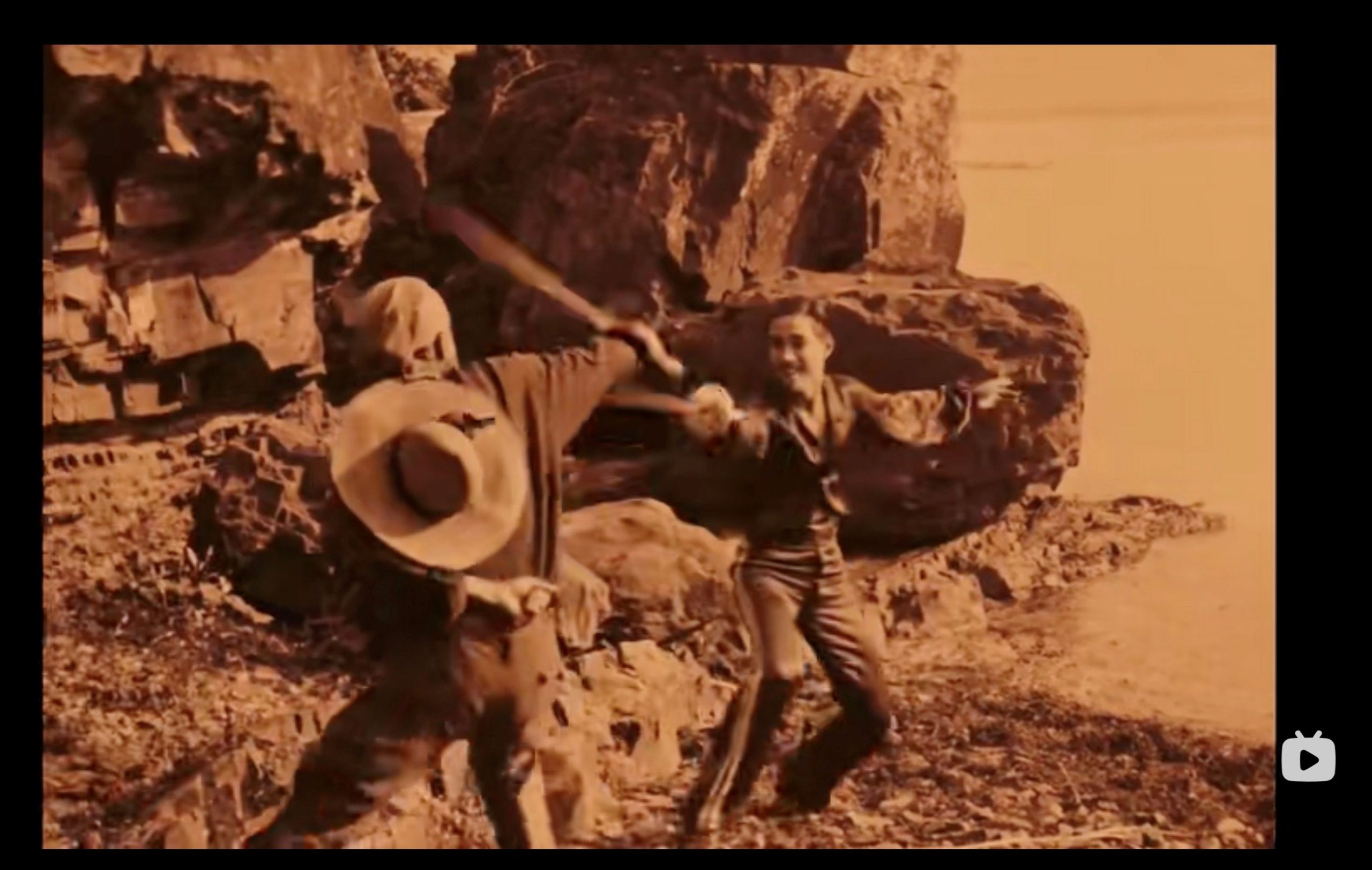
The last piece that I thought really showed that Shanghai was a very modern city is the hero scene. The main male characters reads a novel, called the hero. Then he dreams that he is saving his beloved after a pirate style sword fight.
This scene is very strongly inspired by some Hollywood movie scene from the period. Sword fight movies, also called swashnucklers, were really fashionnable at that time. The Hollywood start of the genre was Douglas Fairbanks, with movies including “The mark of Zorro” (1920) and “The three musketers” (1921). “The black pirate”(1926) clearly influenced the movie as seen in this sword fight scene. Hollywood movies were very popular in Shanghai. Douglas Fairbanks arctually visited Shanghai and stayed at the Majestic Hotel. The success of Hollywood moviedhelped to make the Spanish colonial revial architectural style popular in Shanghai (See post “Spanish revival architecture” for more details) as well as Art Deco. Hollywood movies also strongly inspired the local production, turning Shanghai into a little Hollywood in Asia.
For a look into actual film location of the movie “Love and Duty”, please go to post “Love and Duty (part 2)“. Before being a successful movie, “Love and Duty” was first a book written by mysterious author Horose. For more details, please follow the link “Love and duty, the book“.